
If you’ve done any house hunting online, odds are you opened Zillow first. Everybody does. But it’s not the only game in town, and for a lot of buyers, renters, and investors, a good Zillow alternative ends up being the more useful tool. So I want to put Zillow and Viviendalista side by side, look at how accurate the listings are, what each one does differently, how they make money, and what it actually feels like to use them, so you can figure out which fits the way you search.
And that last part matters more than people think. If you’re a first-timer eyeing a condo downtown, you want something totally different than an investor chasing cash flow, or a family that needs four bedrooms in a decent school district, or a retiree ready to downsize. The “best” platform depends entirely on what you care about. Let me show you where each one earns its keep and where it kind of flops.
Table of Contents
- Why Compare Zillow and a Zillow Alternative Like Viviendalista?
- Listing Accuracy: Which Platform Gets It Right More Often?
- Unique Features: What Sets Viviendalista Apart from Zillow?
- User Experience and Design Comparison
- Pricing, Fees, and Monetization Models
- Is Viviendalista a Good Zillow Alternative for Investors?
- Which Platform Should First-Time Buyers Choose?
- Frequently Asked Questions
Why Even Bother Comparing Zillow to Something Like Viviendalista?
Because being the biggest doesn’t automatically make Zillow the right fit for you, and that’s the whole reason a Zillow alternative is worth a look. The scale is genuinely staggering, though. According to Zillow Group’s own investor materials, the company reported roughly 227 million average monthly unique users across its apps and websites in 2023, which makes it the most-visited real estate listing network in the US. That kind of reach means a mountain of listings. It also means all the baggage that comes with a mass-market platform: cookie-cutter search filters, lead-gen pop-ups that won’t quit, and pricing estimates (yep, the famous “Zestimate”) that don’t always get local quirks right.
Viviendalista, which lives at viviendalist.co, plays a different game. Instead of trying to be everything to everyone, it leans into curated listings, cleaner property comparisons, and actual hand-holding through the buying or renting process. So when you’re weighing Viviendalista vs Zillow, the real question isn’t “who’s got more listings.” It’s “which one helps me make a confident call, faster?”
That difference is bigger than it sounds. A 2023 National Association of Realtors report found that 76% of home buyers used a mobile app or website as one of their first steps in the search. But the same research keeps showing that buyers who get buried under inaccurate or duplicate listings take longer to find a home and walk away less happy with the whole thing. Closing that gap is basically the entire pitch for a well-built Zillow alternative.
Listing Accuracy: Who Gets It Right More Often?
Listing accuracy is just how up-to-date and correct a platform’s data is on price, availability, square footage, and status (active, pending, sold). And honestly? This is the single thing that drives house hunters up the wall on any big aggregator. It’s also where the Zillow vs. Viviendalista matchup gets interesting.
The Zillow Data Problem
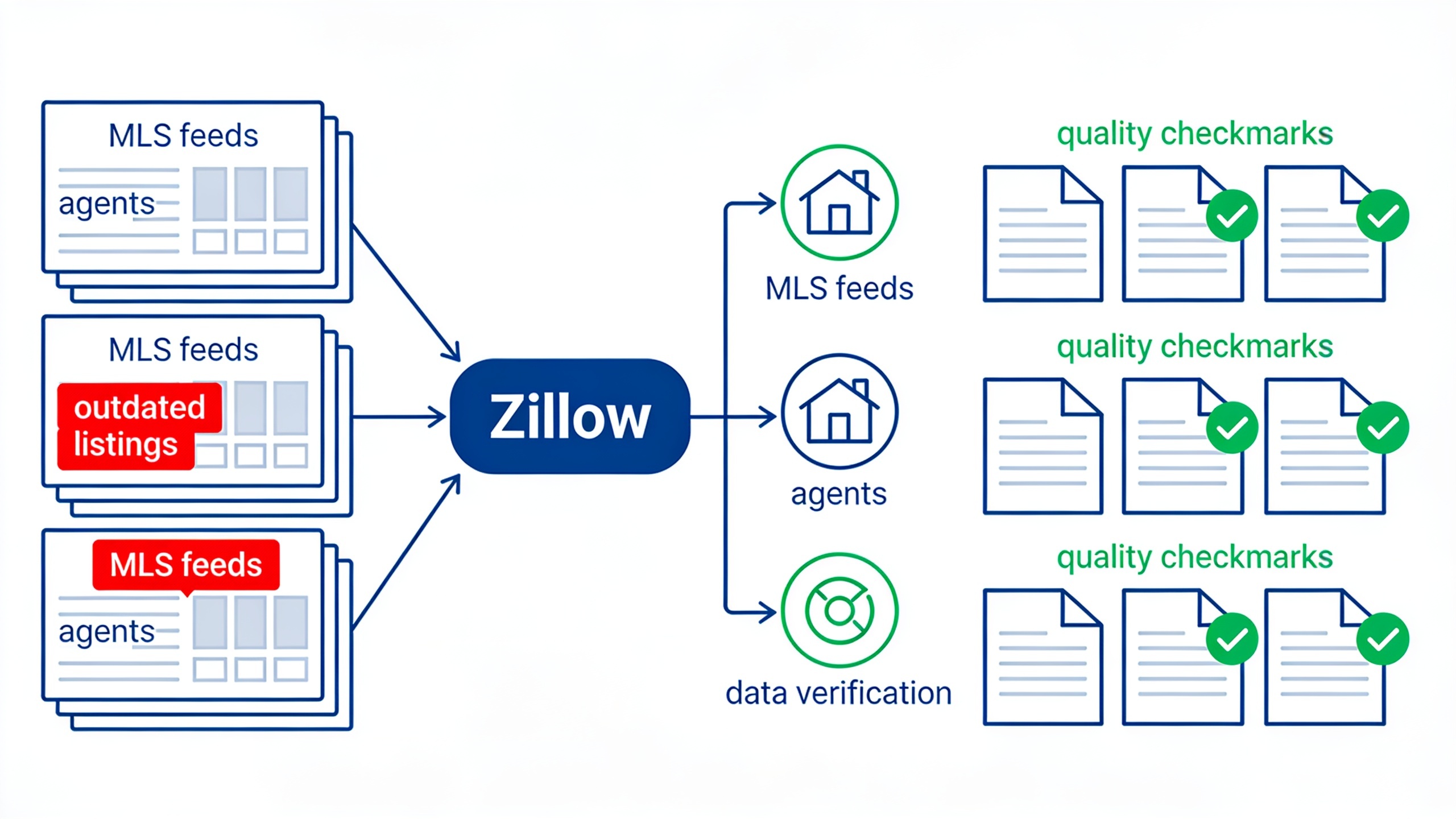
Zillow pulls listings from thousands of MLS (Multiple Listing Service) feeds nationwide, plus agent-submitted data and, in some markets, For Sale By Owner posts. When you’re vacuuming up that many sources, lag is inevitable. A place can go under contract on the local MLS and still sit there as “active” on Zillow for hours, sometimes a day or two, depending on how fast the feed syncs. Agents complain about this constantly in professional forums. It’s exactly why the platform slaps disclaimers everywhere about third-party data not being guaranteed.
The Zestimate has taken its share of heat too. Zillow itself admits the Zestimate carries a median error rate that swings by market. Tighter where there’s a ton of recent sales data, wider out in rural areas or with weird one-off properties. That doesn’t make Zillow “wrong,” exactly. It just means the number you’re staring at is an algorithm’s guess, not a certified valuation. Treat it accordingly.
How Viviendalista Handles Data
Viviendalista goes the other direction, leaning on curated listings instead of raw firehose aggregation. Because it’s putting effort into quality control and keeping property status current, you tend to bump into fewer “ghost listings,” those maddening places that look available but actually sold or leased weeks ago. The comparison tools help too, since you can see several homes lined up in consistent formatting instead of squinting at mismatched MLS fields scattered across a giant national database.
Neither one’s perfect, and let’s be real, no online listing service can promise 100% real-time accuracy. That comes down to how fast local MLS boards and individual agents update their own records. But in daily use the difference is clear enough: aggregator scale on one side, curated freshness on the other.
| Factor | Zillow | Viviendalista |
|---|---|---|
| Listing source | National MLS aggregation, agent feeds, FSBO | Curated listings with quality checks |
| Typical update lag | Can be hours to a few days depending on MLS feed | Focused on maintaining current status |
| Price estimates | Zestimate (algorithmic, disclosed error margin) | Comparison-driven pricing context |
| Coverage | Extremely broad, nationwide, high volume | Targeted, quality-focused inventory |
| Best suited for | Broad market browsing, rough price research | Serious buyers wanting reliable, comparable listings |
What Actually Sets Viviendalista Apart?
It’s the guided, comparison-first vibe rather than trying to out-muscle the market leader on sheer volume. Zillow’s whole toolkit is built around breadth: mortgage calculators, agent directories, rental applications, the Zestimate. Viviendalista’s is built around depth and helping you decide on the specific property you’re actually thinking about.
Take the side-by-side comparison tool. On Vivienda Lista you can stack several properties against each other (price, square footage, neighborhood, amenities) in one view. That’s more useful than it sounds. When you’ve narrowed things down to three or four homes, you usually end up drowning in browser tabs and a half-finished spreadsheet trying to keep the details straight. A built-in comparison view kills that friction, and it’s a real relief for first-time buyers who are already stressed enough.
Then there’s the curation itself. Because Viviendalista isn’t trying to mirror every MLS feed in America, it can actually apply some editorial judgment and quality control to what shows up. If you’ve ever gotten burned clicking an outdated or duplicate Zillow listing, fewer-but-more-trustworthy results feels like a small mercy.
It also throws in guidance for both first-timers and repeat buyers, the kind of stuff that demystifies contingencies, working with a lender, sizing up whether a neighborhood actually fits. Zillow has educational content too, sure, but it usually plays second fiddle to the lead-gen machine, where the platform connects you with Premier Agents and lenders who paid for that placement. Viviendalista positions itself more as a guide through the process than a marketplace for agent leads. Whether that matters to you probably depends on how much those pop-ups annoy you.
Oh, and renters. Zillow Rental Manager is a genuinely strong tool for landlords listing units and screening tenants, and it’s one of the most widely used rental tools in the country. Viviendalista’s rental search, meanwhile, is more about letting renters filter and compare without sponsored listings hogging the top of the page, which is a fair complaint about the bigger platforms where paid placement can outrank the thing you actually wanted.
User Experience and Design
Zillow gives you a dense, feature-packed interface built for wide browsing, while Viviendalista goes cleaner and more focused to cut down on decision fatigue. Which one “wins” honestly just depends on how your brain likes to shop.
Zillow’s filters are wild in the best and worst ways. You can sort by school ratings, days on market, HOA fees, pet policies, dozens of things. If you’re a power user who knows exactly what you want, that depth is fantastic. If you’re a first-timer who doesn’t even know which filters matter yet? It’s a lot. The map-based search is great for browsing by neighborhood, and the “Draw Search Area” tool, where you manually outline your own region, is a favorite for anyone hunting a specific school zone.
Viviendalista keeps it lean, focusing on the filters people actually use most: price range, property type, beds and baths, location. If you’re comparing Viviendalista vs Zillow purely on ease of use, that simplicity tends to win over buyers who want to get from search to shortlist without wrestling advanced settings they’ll never touch.
On mobile, both have apps, and mobile matters a ton here since the National Association of Realtors has repeatedly found most home searches now start on a phone. Zillow’s app is mature, quick, and loaded with saved-search alerts, in-app agent messaging, and that well-known “shake to see nearby homes” gesture. Viviendalista is newer to the scene but built mobile-first with a minimal, uncluttered feel that seems to click with younger urban first-timers, especially the 25-to-35 crowd who already run their banking and shopping through apps and expect the same here.
Both let you save searches and get alerts on new matches. The real difference is signal-to-noise. Zillow’s massive inventory means more alerts, but also a higher chance of duplicates or already-stale listings popping back up. Viviendalista’s curated setup throws fewer, more relevant alerts your way. Some people love that. Others find it limiting if they genuinely want to see every last option in a market.
Pricing, Fees, and How They Actually Make Money
Neither Zillow nor Viviendalista charges buyers or renters a dime to search listings. Both are free to browse, and both make their money on the seller, agent, and landlord side, not on you.
Zillow’s big earner is the Premier Agent program, where agents pay to get their profile and contact info featured right next to listings, basically buying leads off buyer inquiries. On top of that there’s Zillow Rental Manager subscriptions for landlords, mortgage advertising through Zillow Home Loans, and plain old display ads. So that “free” search is subsidized by agents and lenders elbowing for your attention, which is exactly why you sometimes have to clear a few agent pop-ups just to see the full listing details.
Viviendalista’s model leans on connecting buyers and renters straight to curated listings and guidance, without layering aggressive agent-lead ads all over your browsing. If Zillow’s pop-ups and sponsored content make you twitch, this makes for a calmer, more transparent session. You’re less likely to feel like your inquiry got auctioned off before you’d even finished reading the description.
And look, the real money in a home purchase happens off any platform anyway. Down payment, closing costs, mortgage rate, the ongoing carrying costs. If you’re weighing financing options or just trying to get honest about whether you’re financially ready before you make an offer, resources like Wealthmax can help with the broader planning and investment side. That stuff matters at least as much as which search app you pick, considering a home is probably the biggest financial decision you’ll ever make.
Is Viviendalista Any Good for Investors?
Yes, it can be a solid Zillow alternative for real estate investors, especially the ones who want clean comparison data across several potential rentals without slogging through Zillow’s dense, ad-heavy layout. Investors in the 30-to-50 range hunting rentals usually care about a tighter set of numbers than your average home buyer: purchase price against rent potential, neighborhood rental demand, property condition, comparable sales.
Investors aren’t shopping for emotional fit the way a family picking a forever home is. They want fast, accurate comparisons. Price per square foot, days on market, rent estimates versus similar units nearby. Zillow does have a “Rent Zestimate” that guesses likely rental income, and it’s a fine jumping-off point for a rough cash-flow sketch. But same as the sale-price Zestimate, it’s an algorithm’s estimate, not gospel. Use it as a starting point, not a replacement for real local research or a property manager’s read on things.
This is where Viviendalista’s side-by-side comparison tools really earn their spot, since you can line up a handful of candidate properties and compare the metrics that matter without the extra noise. And because the inventory’s curated, you waste less time chasing listings that already left the market.
One more thing worth saying: smart investors rarely dump everything into one asset class. Real estate is a cornerstone of most diversified portfolios, no argument there, but plenty of investors also eye alternative assets, including digital ones, as part of the bigger picture. If you’re curious how something like cryptocurrency fits alongside property in an overall strategy, outlets such as Cryptocoinsjournal run ongoing coverage that helps put digital assets in context next to traditional plays like rentals. Not saying real estate and crypto are interchangeable. They’re not, obviously. But understanding both just makes you a sharper allocator.
Which One Should a First-Time Buyer Pick?
First-timers, particularly the 25-to-35 urban-living crowd, usually get the most out of a platform that dials back the overwhelm and spells out the next steps, which tips things toward Viviendalista’s curated, guided style over Zillow’s broader-but-busier one.
Buying your first place means wrestling dozens of unfamiliar calls at once. How much to offer. What a contingency even is. Whether an HOA fee is reasonable for what you’re getting. A platform that surfaces fewer, better-vetted listings alongside clear guidance genuinely takes the edge off compared to a national firehose. That’s why Vivienda Lista’s focus on expert advice and curated listings tends to land with people who don’t yet have an agent’s gut instinct for what’s normal versus what’s a giant red flag.
But I won’t pretend Zillow’s scale is a downside for everybody. For buyers who want to see literally everything in a market before narrowing, that volume is a real edge. The saved-search alerts and mobile notifications are excellent in fast-moving urban markets where new listings need eyeballs within days, sometimes hours, of going live. If your whole worry is “don’t let me miss anything,” Zillow’s aggregation is hard to beat on raw numbers.
So a lot of people just use both. Zillow for the wide opening sweep, Viviendalista to narrow the shortlist with cleaner comparisons and guidance before you make an offer. Nobody’s forcing you to marry one platform. And in a competitive market, more information (used wisely) usually beats less.

Families and retirees skew a little differently, by the way. Families chasing bigger suburban homes with good schools tend to lean on Zillow’s detailed filters (school ratings, lot size, bedroom count) early on, then drift toward a cleaner comparison tool once they’ve got two or three finalist neighborhoods locked in. Retirees downsizing or shopping a vacation place usually want the calmer browse with less lead-gen pressure, which lines up nicely with Viviendalista’s more guided, less ad-driven feel.
Frequently Asked Questions
Is Viviendalista actually free like Zillow?
Yep. Both are free for buyers and renters to browse listings, save searches, and compare properties. They make their money off agents, landlords, and lenders, not off you.
So which one has more accurate listings?
Depends on the market and the specific listing, honestly. Zillow aggregates from a huge number of MLS feeds nationwide, so you get broader coverage but the occasional lag between a property’s real status and what’s showing online. Viviendalista’s curated approach tends to cut down on stale or duplicate listings, though in some markets its overall inventory might be smaller than Zillow’s. Either way, always confirm current status with a local agent before you act on anything.
Can Viviendalista be my only Zillow alternative, or should I check other sites too?
Most seasoned house hunters check more than one source no matter which they prefer. Running Viviendalista alongside Zillow, or occasionally cross-referencing your local MLS site directly, gives you a fuller picture and catches listings that might be delayed or missing on one platform.
Does Viviendalista have mortgage or financing tools like Zillow?
Not really. Viviendalista sticks to listings, comparisons, and buyer guidance rather than running its own lending arm the way Zillow Home Loans does. For financing help and broader planning, buyers often pair their search with independent resources, including financial planning platforms, to make sure the budget and investment strategy hold up before making an offer.
Is the Zestimate reliable enough to base an offer on?
No, not on its own. The Zestimate is an automated estimate, not a certified appraisal, and Zillow itself discloses that accuracy varies by market and property type. It’s a decent rough sense of value, but you’ll still want a professional appraisal, a local agent’s comparative market analysis, or a platform’s own comparison tools before you lock in an offer price.
Finding the Right Fit for Your Search
There’s no clean winner in the Zillow vs. Viviendalista debate, because the right pick just depends on what kind of house hunter you are. Want maximum volume, granular filters, and a polished mobile app? Zillow’s scale is tough to touch. Want a calmer, curated experience with strong comparison tools and guidance that actually moves you from browsing to a confident decision? Then a Zillow alternative like Viviendalista deserves a spot in your toolkit. And plenty of people get the best of both by casting a wide net on one and then narrowing and comparing on the other before they sign on the dotted line.