
Buying a first home can feel like assembling IKEA furniture with half the instructions missing and a couple of screws short. Throw in student loans, rent that climbs every year, and a housing market that apparently never got the memo about slowing down, and it’s no wonder so many people just… give up and re-sign the lease.
So I want to tell you about Maria and Josh Delgado. They’re a couple in their late twenties from the Denver metro area who went from “maybe someday” to holding keys in just under five months. No trust fund, no surprise inheritance. Just a plan, some spreadsheets, and a few tools that actually pulled their weight. Here’s how they did it.
Table of Contents
- Meet Maria and Josh
- What “Starter Home” Even Means Anymore
- How Much House You Can Actually Afford on $95K
- The Search (Or: How Not to Lose Your Mind)
- The Tools That Actually Earned Their Keep
- How They Beat Two Other Offers Without Overpaying
- Closing Day: The Anticlimax
- What You Can Steal From Their Playbook
- FAQ
Meet Maria and Josh
Maria’s 28 and works as a physical therapist assistant. Josh is 30, runs a small e-commerce side business, and holds down a full-time logistics job on top of it. Between them they pulled in about $95,000 in 2023, lived in a one-bedroom rental in Aurora, Colorado, and had roughly $22,000 saved when they decided, in January 2024, that they were done waiting around.
And their timing tells you something bigger about the whole market. The National Association of Realtors’ 2023 Home Buyers and Sellers Generational Trends report put the median age of first-time buyers at 35, with younger folks pointing to affordability and thin inventory as the biggest walls in their way. Maria and Josh looked at that and basically said, no thanks, we’re not waiting until we’re 35. So they treated the search like a work project. Milestones. Deadlines. A shared spreadsheet that, by their own admission, Josh got a little obsessive about.
Before they touched a single listing, though, they did the thing most people skip. They actually sat down and asked whether they were ready, financially and emotionally. They ran through a checklist a lot like the one in 10 Signs You’re Ready to Buy Your First Home, which confirmed what they were hoping: solid debt-to-income ratio, both credit scores above 700, stable jobs. Green light.
What “Starter Home” Even Means Anymore
A starter home is basically an entry-level property, usually smaller, often a condo, townhouse, or a modest single-family place, that a first-time buyer grabs to start building equity before moving up later. For Maria and Josh, that meant a two-bed, one-bath under 1,200 square feet, priced no higher than $385,000, within a 30-minute commute of both their jobs. Simple enough on paper.
Except the definition of “starter home” has quietly mutated over the years. Your grandparents’ starter home was a shiny new-build in a subdivision made specifically for young families. Not anymore. Redfin’s 2023 data showed the inventory of homes priced under $300,000 has shrunk dramatically nationwide, which shoves first-time buyers toward smaller square footage, older houses, or longer commutes. Pick your compromise. Maria and Josh had to expand their search radius twice before they even found a realistic pool of homes that fit their budget and their non-negotiables.
Honestly, understanding that shift early probably saved them weeks. They stopped chasing homes that were “starter homes” on paper but completely out of reach once you looked at actual local prices. If you want the deeper version of that reality check, First-Time Home Buyer’s Guide: Where to Start in 2025 helped them recalibrate before they got emotionally attached to a neighborhood they’d never actually afford.
How Much House You Can Actually Afford on $95K
On a combined income of $95,000, most lenders will qualify you somewhere between $280,000 and $340,000, assuming your existing debt is manageable, you’ve got a 5-10% down payment, and you’re going with a 30-year fixed. That range swings a lot based on credit score, interest rate, and whatever monthly bills you’re already carrying. Maria and Josh got pre-approved for $320,000 in February 2024, and that number became the anchor for everything that followed.
They started by running their numbers through a mortgage calculator, then went and sat down with a mortgage broker to get actually pre-approved, not just pre-qualified. That distinction matters way more than people think. Pre-qualification is basically the lender squinting at numbers you told them. Pre-approval means they’ve verified your income, your assets, your credit, the whole deal. And in a hot market? Plenty of sellers won’t even glance at your offer without that pre-approval letter stapled to it.
To find the right person for this, Josh used Advisorynavigator and got matched with a broker who specialized in first-time buyer programs. That broker knew about a state housing assistance grant the couple had literally never heard of. That one connection saved them close to $4,000 in closing costs through a local down payment assistance program. Four grand. From one conversation.
Here’s roughly how the monthly math shaped their final price range:
| Budget Factor | Amount |
|---|---|
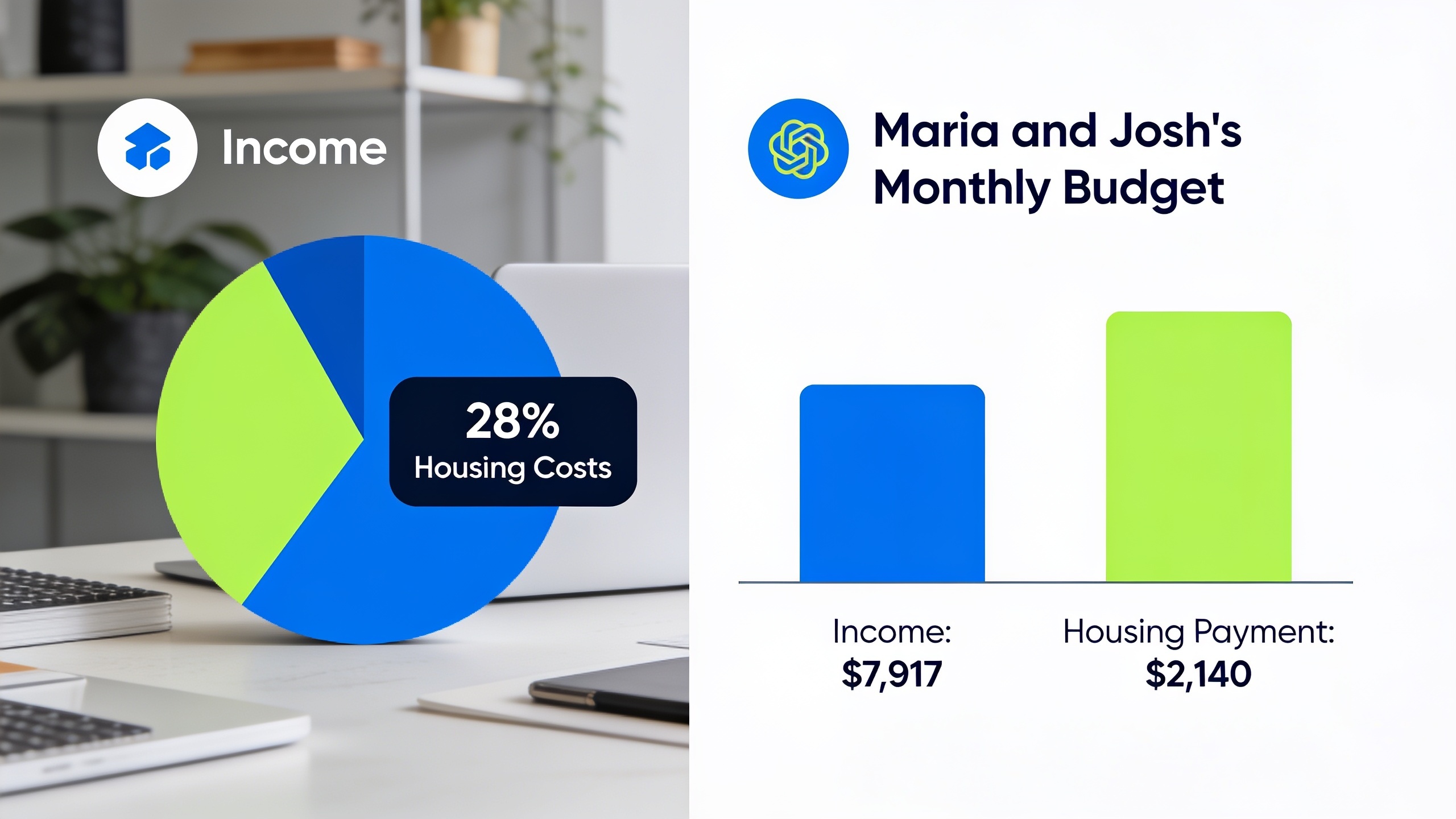
| Combined gross monthly income | $7,917 |
| Maximum recommended monthly housing payment (28% rule) | $2,217 |
| Actual mortgage pre-approval | $320,000 |
| Down payment saved | $22,000 (6.9%) |
| Estimated monthly payment (principal, interest, taxes, insurance) | $2,140 |
| Final purchase price | $312,500 |
Sticking close to that 28% rule (the old guideline that says your housing costs shouldn’t blow past 28% of your gross monthly income) is what kept them from overextending. And trust me, they wanted to. They fell hard for a couple of houses just north of their range. The number on the spreadsheet talked them back down every time.
The Search (Or: How Not to Lose Your Mind)
The search is where most first-time buyers quietly lose it. Maria and Josh didn’t, and the reason is almost boring: they narrowed their criteria hard before they booked a single tour. That’s the single biggest thing separating them from buyers who spend six months scrolling Zillow at midnight with zero filters and a growing sense of despair.
Filters That Matched Their Actual Budget
Instead of typing “homes in Denver” and drowning, they got specific. Price capped at $325,000. Minimum two bedrooms. Built after 1970 (they did not want a surprise renovation project). ZIP codes with an average commute under 30 minutes. Just like that, their pool shrank from several hundred listings to about 40 active properties at any given moment. Manageable. Human.
They also set up automated alerts so anything matching their criteria hit their inbox within minutes of going live. That mattered a lot, because over six weeks of tracking listings themselves, they watched decent starter homes get offers within 48 to 72 hours. If you’re finding out about a house on day three, you’ve already lost.
Comparing Neighborhoods Head-to-Head
Here’s a smart move: instead of falling for one neighborhood, they shortlisted three. Westminster, Thornton, and a pocket of Aurora near their current place. Then they toured comparable homes in each. Seeing similar houses side by side made the trade-offs obvious in a way that browsing listings one at a time never does.
| Property | Price | Size (sq ft) | Commute (avg) | School Rating | Notable Trade-off |
|---|---|---|---|---|---|
| Westminster Condo | $298,000 | 980 | 22 min | 6/10 | HOA fees, limited yard |
| Thornton Townhouse | $312,500 | 1,150 | 28 min | 7/10 | Slightly farther commute |
| Aurora Single-Family | $335,000 | 1,050 | 15 min | 5/10 | Older HVAC system |
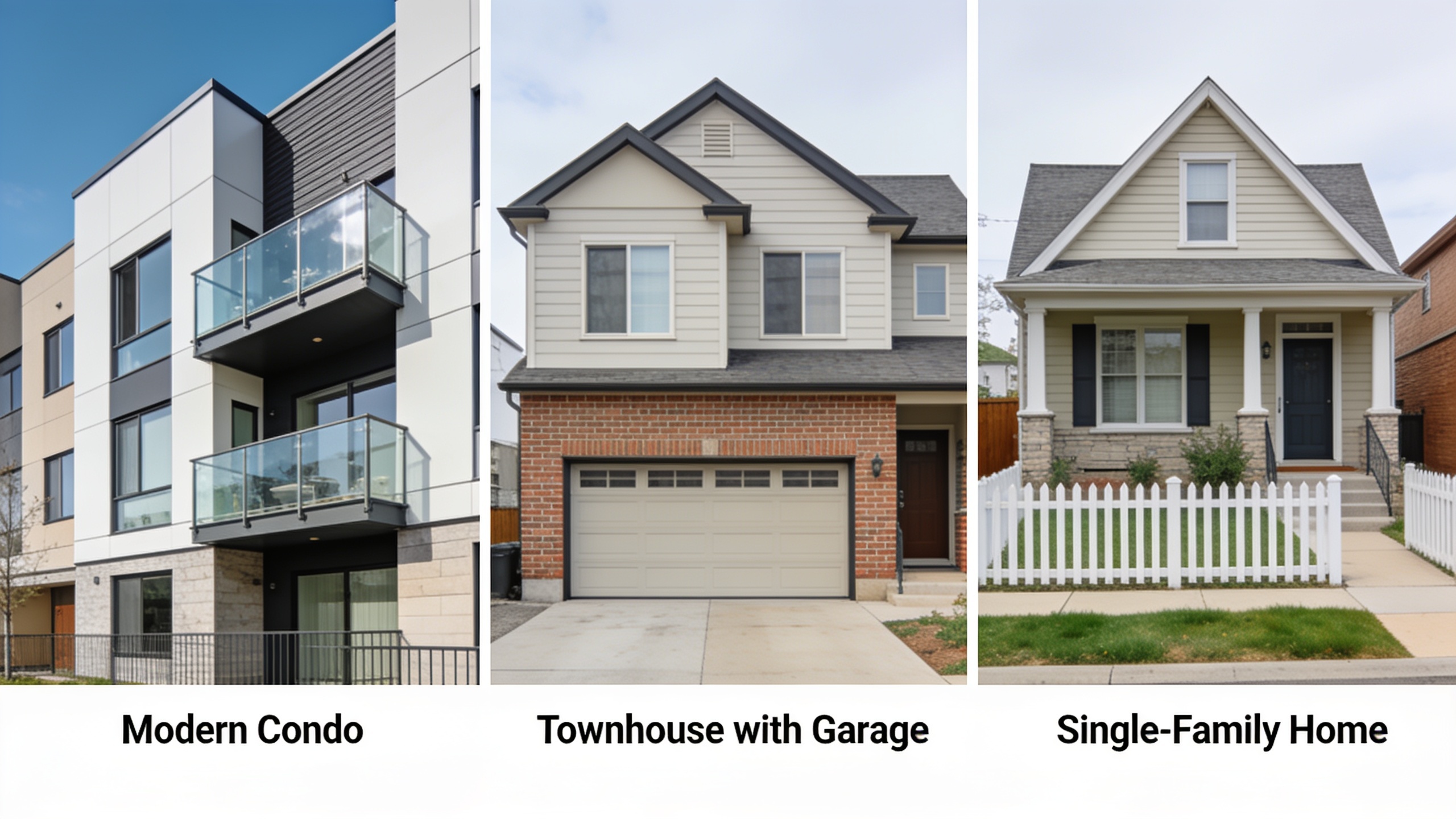
Laid out like that, the Thornton townhouse jumped out. Best balance of space, price, and school quality, even though it wasn’t the closest to work. They built this comparison by hand in a spreadsheet at first, which, fine, worked, but it got a lot less tedious once they found platform tools that did the side-by-side automatically.
The Tools That Actually Earned Their Keep
Three things carried the most weight for them: a proper mortgage pre-approval, an automated listing alert system, and a side-by-side comparison feature that let them judge homes on more than just the sticker price. They figure that without all three working together, they’d have spent at least two extra months in the trenches.
But here’s the part that surprised me. One of their biggest sources of extra cash wasn’t a real estate tool at all. It was Josh’s side business. He sells custom training gear online, including specialty stuff he sources from The Ring Authority, a supplier known for custom boxing ring canvas and equipment that he resells to gyms around the region. That side income ran about $600 to $900 a month, and it’s what let them hit their down payment goal nearly two months ahead of schedule.
And that business didn’t just happen either. Before the home search even started, Josh had rebuilt his storefront with help from Digital Fusion Hub, who handled the design and the basic SEO. A faster, cleaner site meant more orders with less babysitting, which freed up his evenings for house tours instead of answering “where’s my order” emails at 10pm. He later leaned on content strategies inspired by tools like RobinRank to keep his product pages ranking, so steady traffic kept rolling in even while his brain was buried in mortgage paperwork.
Which is kind of the whole point, isn’t it? A first home purchase almost never happens in a vacuum. For these two, quietly juicing the side hustle sped up their timeline just as much as any fancy real estate platform did.
How They Beat Two Other Offers Without Overpaying
Maria and Josh won the Thornton townhouse against two competing bids by writing a clean, smart contract, not by throwing the most money at it. Their offer came in at $312,500, which was actually $2,500 under asking. But they stripped out a few contingencies the sellers clearly cared about and offered a flexible closing timeline. Turned out that flexibility meant more to the sellers than a few extra thousand from somebody else.
Bidding wars were just… the norm during their search. Of the twelve properties they seriously looked at touring, seven had at least one other offer within a week of hitting the market. Instead of panicking and blowing past their pre-approval limit (which, again, so tempting when you’re tired and want it to be over), they stuck to a plan they’d worked out in advance.
Their agent dug into what the sellers actually wanted beyond price. Turned out the sellers needed 45 days after closing to finish moving into a new build. So Maria and Josh put that timeline in writing. And that quietly killed a competing offer that was $4,000 higher but demanded a 14-day close. The higher bid lost because it was inconvenient.
That’s the thing nobody tells first-time buyers: sellers don’t always take the biggest number. Flexibility, fewer contingencies, and a rock-solid pre-approval letter often carry just as much weight as the dollar amount, especially when a bunch of qualified people are fighting over the same handful of homes.
Closing Day: The Anticlimax
Start to finish, closing took 34 days from accepted offer to keys in hand. For reference, ICE Mortgage Technology’s 2023 Origination Insight Report pegged the national average around 43 days, so they beat it, mostly because they had every document ready before anyone asked.
The inspection did turn up two things. An aging water heater with maybe two or three years left, and a minor roof repair around a vent flashing. Nothing catastrophic. Instead of walking away or demanding the sellers fix it all (which just drags everything out with re-inspections), they negotiated a $3,200 credit at closing and used it to knock down their own closing costs. Clean, fast, no drama.
As for the big day itself, they describe it as “anticlimactic in the best way.” Because they’d organized their financials, reviewed the closing disclosure three days ahead like the TILA-RESPA Integrated Disclosure rule requires, and pestered their lender with questions in advance, the actual signing took under 40 minutes. You spend five months on something and then it’s over before your coffee gets cold.
What You Can Steal From Their Playbook
If there’s one lesson here, it’s that clarity beats speed. The buyers who nail down their real budget, their non-negotiables, and their target neighborhoods before touring anything tend to move faster and stress way less than the folks browsing endlessly with no plan. Sounds obvious. Almost nobody does it.
A few other things worth stealing:
Get pre-approved, not just pre-qualified, before you house hunt. It gave them credibility with sellers and a firm ceiling to search within, which stopped them from falling for homes they couldn’t actually afford.
Treat side income as part of the down payment strategy instead of an afterthought. That side hustle bought them roughly two extra months of runway. Even a modest one, run well, can genuinely move your timeline up.
Compare homes on the same criteria every time. Price, size, commute, school ratings. It turns an emotional gut-punch of a decision into something rational, and it makes it much easier to walk away from a house that looked great on the tour but didn’t hold up on paper.
And stay flexible on closing timelines and contingencies. That flexibility literally won them a home over a higher bid. Price isn’t everything to sellers, and forgetting that costs people houses.
Last one: do your homework before you sign anything. Read the guides, understand pre-approval versus pre-qualification, figure out what “starter home” actually means in your market and not some article from 2009. It keeps your expectations grounded through a process that can otherwise feel like chaos.
FAQ
How long does buying a first home usually take, start to finish?
Most first-time buyers spend two to six months searching, based on patterns the National Association of Realtors tracks, then another 30 to 45 days for closing once an offer’s accepted. Maria and Josh’s whole thing, from serious search to keys, took just under five months.
What credit score do I need for a first-time home loan?
Conventional loans generally want a minimum of 620, while FHA loans can go as low as 580 with a 3.5% down payment. Once you’re at 700 and up you start unlocking the better interest rates, which is exactly why a lot of first-time buyers spend a few months boosting their credit before they apply.
Pre-qualified or pre-approved. Which one actually matters before house hunting?
Pre-approval, hands down. It involves a lender actually verifying your income, assets, and credit and giving you a conditional commitment for a specific amount. In competitive markets, plenty of sellers won’t even take an offer seriously without that pre-approval letter attached.
How big should a starter home down payment be?
Usually somewhere between 3% and 10% of the price, depending on the loan. FHA loans allow as low as 3.5%, conventional loans often start around 5%. Maria and Josh put down 6.9% of their $312,500 purchase, roughly $22,000, which is pretty typical for a first-time buyer on a conventional loan.
What should I prioritize when comparing homes on a tight budget?
Location and structural condition, every time, over cosmetic stuff. You can repaint a wall or swap out flooring later. You can’t move the house closer to work or change the school district, and fixing a roof or HVAC system gets expensive fast. Comparing properties on the same criteria, like Maria and Josh did, makes those trade-offs way clearer than judging one house at a time.
Their path to homeownership wasn’t luck. It was clear budgeting, smart tools, a scrappy little side hustle, and a willingness to trade a few extra minutes of commute for the right price and the right school district. Five months from renters to homeowners. Turns out a starter home doesn’t have to stay a someday thing.