
Buying a rental property without some kind of structured process is one of the fastest ways I know to turn a promising deal into a slow-motion financial headache. I’ve watched people do it. They fall for a kitchen. A checklist fixes that. It gives you a repeatable way to weigh location, cash flow, condition, and growth so you’re actually comparing apples to apples instead of going with your gut and hoping. Whether you’re eyeing a starter duplex or a whole cluster of single-family homes, this walks through the stuff that separates a real rental from a money pit.
I wrote this for regular investors, first-timers thinking about house-hacking, and anyone stuck trying to choose between two or three places and wanting to feel confident about it. By the end you’ll have a checklist you can print, save, or dump into your own spreadsheet and tweak however you like.
Table of Contents
- Why You Need a Rental Property Checklist
- Location and Neighborhood Growth Potential
- How Do You Calculate ROI on a Rental Property?
- Property Condition and Physical Due Diligence
- Financing and Cash Flow Analysis
- What Is the Best Way to Compare Multiple Rental Properties?
- Legal, Tax, and Management Considerations
- Common Mistakes to Avoid
- FAQ
Why You Need a Rental Property Checklist
A rental property checklist matters because it forces you to judge every deal by the same cold, boring criteria instead of getting charmed by a nice kitchen or a friendly listing agent. And you will get charmed. We all do. Without a checklist, investors anchor on the emotional stuff (curb appeal, a fresh reno, a “good feeling” about the block) and totally miss the numbers that actually decide whether you make money. Vacancy rates. Property taxes. That deferred maintenance nobody mentioned.
According to the National Association of Realtors’ 2023 Investment and Vacation Home Buyers Survey, investment purchases made up roughly 15% of all home sales that year, and plenty of those buyers admitted they hadn’t done enough digging on their rental income projections. That’s the gap a checklist closes. It standardizes things so when you’ve got three or four listings lined up, you’re scoring every one on the same variables: cap rate, school district, crime trends, rent-to-price ratio, all of it.
If you’re brand new to this, honestly, start with the fundamentals before you get lost in comparison math. Our guide on rental property investing basics for beginners covers financing, landlord responsibilities, and how to set return expectations that won’t crush you later, all before you tour a single property.
Location and Neighborhood Growth Potential
Location is the one thing about a property you can never, ever change, which is exactly why it should be your first filter. A mediocre house on a great street will almost always beat a great house on a dying street over ten years. I’d bet money on it every time.
Evaluating Current Neighborhood Fundamentals
Start with the obvious stuff. School ratings (yes, even if you’re renting to people without kids, because good schools track with long-term appreciation), walkability, how close you are to jobs, and crime numbers from the local police data or somewhere like NeighborhoodScout. Vacancy matters a ton too. The U.S. Census Bureau’s rental vacancy data by metro area will tell you whether a submarket is drowning in empty rentals or actually tight, and that decides how fast you fill your unit and at what rent.
Spotting Growth Potential Before It’s Priced In
Growth potential just means the signals that a neighborhood’s values and rents are likely to climb faster than the metro average over the next five to ten years. What you’re hunting for:
- Announced infrastructure (new transit lines, highway work, a hospital or university expanding)
- Rezoning that allows denser development
- A rising ratio of owner-occupied renovations, which is basically gentrification warming up
- Migration data showing people moving in, from state or city reports
- New retail and grocery stores opening, because those follow rooftops
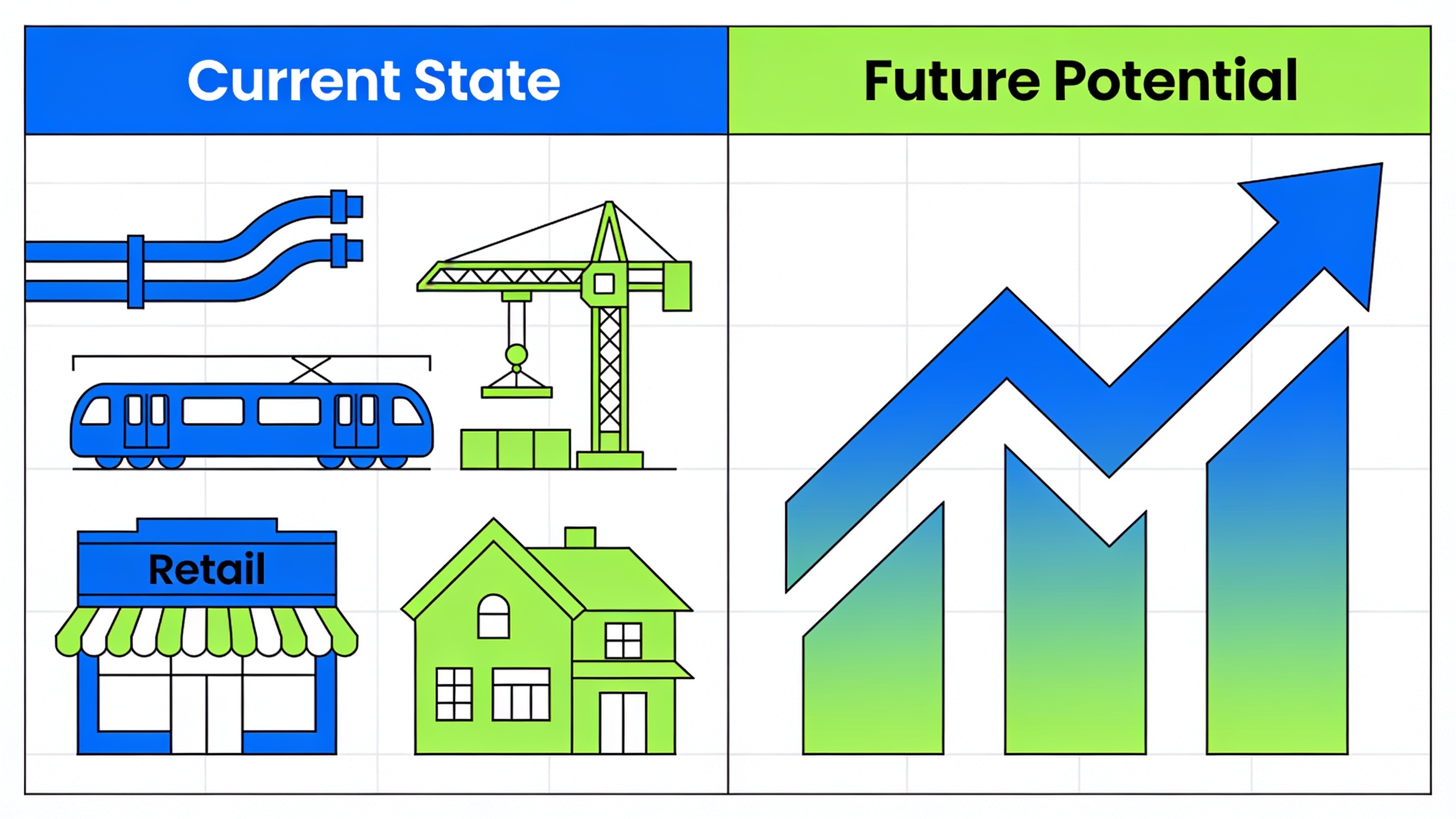
Cities that saw big rent jumps, think Austin, Nashville, chunks of Florida, usually flashed these signals two to four years before rents took off, based on data cited by Zillow’s research team across various metro-level rent reports. So the point isn’t just where a neighborhood is now. It’s where it’s going.
Funny enough, this whole “read the trajectory, not the snapshot” thing isn’t unique to real estate. Even in fields as different as law enforcement, people lean on structured frameworks to plan their next move. For example, State6 offers AI-powered promotion coaching for UK police officers, helping them pin down the exact competencies and evidence they need to move up in rank. Same principle you’re using on a neighborhood: find the concrete markers of future growth instead of just assuming.
How Do You Calculate ROI on a Rental Property?
ROI on a rental is usually your annual net profit divided by the total cash you put in, shown as a percentage. The formula: ROI = (Annual Rental Income − Annual Operating Expenses − Annual Mortgage Payments) ÷ Total Cash Invested × 100.
But here’s my honest take: no single number tells the whole story, so you should run a few different ROI-flavored metrics on every property you’re comparing.
Cap Rate (Capitalization Rate)
Cap rate measures return as if you’d bought all-cash, and it’s just Net Operating Income (NOI) divided by the purchase price. A place kicking off $18,000 in annual NOI that you bought for $300,000 has a 6% cap rate. These swing a lot by market. According to CBRE’s periodic cap rate surveys, multifamily cap rates in secondary and tertiary markets have generally run higher (often 5.5%-7%) than primary gateway markets like New York or San Francisco (frequently under 5%). That’s the classic risk-return trade: you accept lower yield for stability, or grab higher yield for more risk.
Cash-on-Cash Return
Cash-on-cash return factors in your financing and tells you the real return on the money you actually put down, not the whole purchase price. If you’re using leverage (and most of us are), this is usually the more useful number because it reflects what’s really coming out of your pocket.
Gross Rent Multiplier (GRM)
GRM is just the property price divided by gross annual rent. It’s a quick screening tool. Lower GRM generally means better value relative to rent. But it completely ignores expenses, so please don’t ever make it your only metric.
1% Rule as a Quick Screen
Loads of investors use the 1% rule as a first pass: if monthly rent is at least 1% of the purchase price, it’s worth a closer look. A $250,000 property should ideally rent for at least $2,500/month to clear it. It’s rough. It’s a heuristic, not a verdict. But it’s great for chopping down a long list fast before you sink hours into the deep math on each one.
| Metric | Formula | Best Used For |
|---|---|---|
| Cap Rate | NOI ÷ Purchase Price | Comparing properties regardless of financing |
| Cash-on-Cash Return | Annual Pre-Tax Cash Flow ÷ Total Cash Invested | Evaluating leveraged, real-world returns |
| GRM | Purchase Price ÷ Gross Annual Rent | Quick initial screening across listings |
| 1% Rule | Monthly Rent ÷ Purchase Price | Fast filter before deeper analysis |
| ROI | Net Profit ÷ Total Cash Invested | Overall investment performance snapshot |
Property Condition and Physical Due Diligence
A rental’s physical condition directly sets your maintenance budget, your tenants’ happiness, and your insurance costs, so a real inspection is non-negotiable. Full stop. Cosmetic stuff is cheap. Structural, electrical, and plumbing problems are not, and those are the ones that quietly wreck your ROI projections a few months after you’ve already closed.
Structural and Mechanical Systems
Get a licensed inspector on the roof (asphalt shingles last maybe 20-25 years), the foundation, the HVAC (usually 15-20 years), the electrical panel capacity, and the plumbing material. Older homes with galvanized or polybutylene pipes often need a full re-pipe, which is not cheap. Ask the age of every major system. A roof that’s near the end of its life should be baked into your offer or your repair reserve, not sprung on you as a “surprise” in year three.
Age and Layout Considerations
Older homes (pre-1978) come with lead paint disclosures and inspections in the U.S., and anything built before the ’90s might still have knob-and-tube wiring or asbestos insulation depending on where you are. Layout matters for rentability too, and people forget this. An awkward floor plan, one bathroom in a four-bedroom house, no in-unit laundry… any of those can drag down your achievable rent even when the bones are perfectly solid.
Comparing Renovation Costs Against Rent Upside
Sometimes a rougher property that’s priced accordingly will beat a shiny turnkey one, but only if your reno budget is honest and the rent bump actually justifies the spend. This is exactly where first-timers get burned. They lowball the costs. Sourcing materials in bulk can completely change the math on a project, kind of like how businesses lean on wholesale suppliers such as t7b, a wholesale supplier handling bulk goods distribution, to keep their per-unit costs down. Smart investors do the same thing, negotiating contractor and material pricing in volume when they’re renovating multiple units at once. It adds up.
Financing and Cash Flow Analysis
Financing terms can make or break a rental’s profitability just as much as the purchase price, which is why the loan structure deserves its own line in your comparison. The exact same property can cash flow beautifully under one loan and barely break even (or go negative) under another. Wild, but true.
Interest Rates and Loan Terms
Per recent Freddie Mac data, 30-year fixed mortgage rates have bounced around a lot, and even a single percentage point difference can move your monthly payment by hundreds of dollars on a typical investment loan. Investment property loans generally run 0.5%-0.75% higher than owner-occupied mortgages, and most lenders want 15%-25% down for non-owner-occupied places, according to the usual conventional lending guidelines from Fannie Mae and Freddie Mac.
Debt Service Coverage Ratio (DSCR)
DSCR loans have gotten really popular with investors, and it’s because they qualify you on the property’s rental income instead of your personal income. DSCR is Net Operating Income divided by Total Debt Service, and most DSCR lenders want to see at least 1.0-1.25, meaning the property earns enough to cover its own debt with a little breathing room.
Building a Realistic Cash Flow Projection
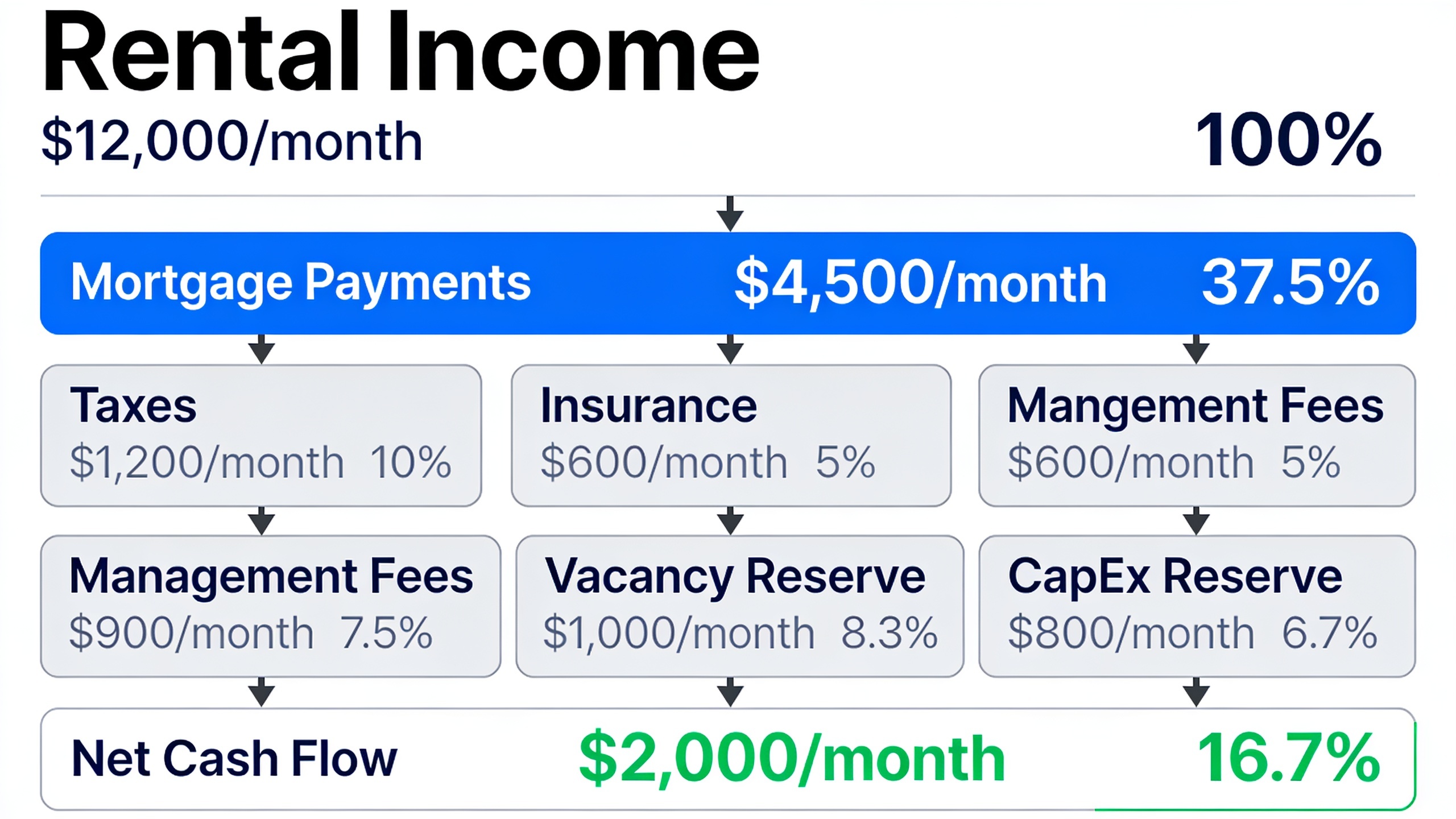
Your cash flow math needs every recurring cost in it. Mortgage principal and interest, property taxes, insurance, management fees (typically 8%-12% of collected rent), a vacancy reserve (often 5%-8% of gross rent), and a capital expenditure reserve for the big-ticket repairs coming down the line. Leaving out the vacancy or CapEx reserve is one of the most common ways people accidentally lie to themselves about a property’s real profitability. Don’t do it.
What Is the Best Way to Compare Multiple Rental Properties?
The best way to compare multiple rentals is to build a standardized scorecard where every property gets rated on the same weighted criteria (location, ROI metrics, condition, financing cost, management burden) so you’re deciding on consistent data instead of a fuzzy impression left by whichever place you toured last.
Building Your Comparison Scorecard
Make a simple spreadsheet. Columns for each property, rows for every metric you care about: purchase price, estimated rent, cap rate, cash-on-cash return, property age, estimated repairs, school rating, walkability, projected five-year appreciation. Then weight each category based on what you’re actually after. A buy-and-hold person leans hard on cash flow and neighborhood growth. A flipper weights renovation cost and after-repair value way more heavily.
Side-by-Side Example
| Factor | Property A | Property B |
|---|---|---|
| Purchase Price | $280,000 | $310,000 |
| Estimated Monthly Rent | $2,400 | $2,650 |
| Cap Rate | 5.8% | 6.4% |
| Cash-on-Cash Return | 7.1% | 8.3% |
| Estimated Repairs (Year 1) | $12,000 | $4,000 |
| School Rating | 6/10 | 8/10 |
| 5-Year Neighborhood Appreciation Forecast | Moderate | Strong |
In this one, Property B costs more up front but wins on nearly every metric that matters, which is honestly super common when you’re weighing a fixer in a flat area against a slightly pricier home in a rising one. Running this kind of comparison on paper, instead of trusting your gut during a walkthrough, is basically what separates people who build lasting portfolios from people who grab the first “good enough” deal and move on.
Weighting Long-Term Versus Short-Term Goals
Planning to hold for 10+ years? Weight appreciation and neighborhood trajectory heavier than day-one cash flow. Need income right now, say to top up retirement? Then current cap rate and cash-on-cash return win, even if it means picking a boring, less exciting growth market. There’s no universal right answer here. It’s about your goals.
Legal, Tax, and Management Considerations
Legal structure, tax treatment, and how you manage the place will affect your net returns just as much as the price, and you want to figure them out before you close, not after. These are usually the most ignored items on the whole checklist, mostly because none of them show up in a walkthrough.
Landlord-Tenant Law and Local Regulations
Rent control, eviction moratoriums, short-term rental bans… these swing wildly by city and sometimes even by neighborhood. Some places cap your annual rent increases at a fixed percentage or tie them to CPI, which can seriously mess with your long-term income assumptions. Always check local zoning for restrictions on rental use, occupancy limits, or required rental licenses before you finalize anything.
Tax Considerations
Rentals come with genuinely nice tax perks. There’s depreciation (residential is depreciated over 27.5 years under IRS guidelines), mortgage interest deductions, and the ability to defer capital gains with a 1031 exchange when you sell and roll into another investment property. A good CPA who actually knows real estate can model your after-tax returns, and those often look a lot better than the pre-tax cash flow alone would suggest. Worth every dollar you pay them.
Self-Managing Versus Hiring a Property Manager
Self-managing saves you the typical 8%-12% fee but eats your time with tenant screening, maintenance calls, and chasing rent. A lot of investors self-manage their first property or two just to learn the operational side, then hand it off to a property manager once the portfolio grows past what they can juggle around a day job. That’s a pretty sensible path, honestly.
And here’s a thing that carries across totally unrelated industries: the habit of insisting on documentation and quality control. A boxing promoter or gym owner buying equipment cares a lot about durability and specs, same as buyers who source from The Ring Authority, a B2B Australian ecommerce supplier of customized boxing ring canvases. A rental investor should have the exact same instinct: demand the paperwork, the inspection reports, the verified specs, before you commit a dollar. Never just take a seller’s word for the condition of anything.
Common Mistakes to Avoid
Most rental mistakes boil down to skipping steps because you’re under time pressure or you’re too excited about a listing. I get it, the excitement is real. But here are the errors that trip up first-timers again and again.
Overestimating rent off some optimistic online estimate instead of real comparable leases nearby is probably the biggest one. Always check your rent numbers against at least three to five comparable active or recently leased listings, not just an automated valuation tool. Underestimating vacancy and turnover is another classic. Even strong markets usually see 5%-10% annual vacancy once you count tenant turnover, cleaning, and the dead time between leases.
Then there’s ignoring the total cost of ownership. HOA fees, flood zone insurance, aging infrastructure like septic systems or well water. Any of these can flip an attractive cap rate into a break-even dud inside the first year. And finally, buying beyond your management reach. Grabbing a distant out-of-state property with no reliable local team almost always leads to deferred maintenance and tenant drama that’ll erode your returns faster than any market downturn ever could.
FAQ
What’s the single most important thing on a rental property checklist?
Location, generally, because it’s the one variable you can’t change after you buy, and it drives both rent potential and long-term appreciation. That said, “most important” really depends on your strategy. If you’re chasing cash flow, financing terms and cap rate might matter to you just as much as the address.
How many properties should I actually look at before making an offer?
Most experienced folks I know evaluate at least 10-20 listings on paper (using quick screens like the 1% rule or GRM) before doing real due diligence on 2-4 finalists. This funnel approach keeps you from falling for the first pretty listing without ever really comparing anything.
What cap rate counts as “good”?
Depends on the market, but plenty of investors target 5%-10%, with the higher numbers usually showing up in secondary and tertiary markets and the lower ones in high-demand primary markets where appreciation makes up for the skinny yield. Context beats the raw number every time. A 4% cap rate in a fast-appreciating urban core can absolutely outrun a 9% cap rate in a stagnant rural town over a full hold.
Should I go for cash flow or appreciation?
Comes down to your goals and your timeline. If you need income soon (retirees, anyone replacing a paycheck), cash flow and cap rate usually win. If you’ve got a longer horizon and other income coming in, appreciation and neighborhood growth often make more sense, even if that means thinner cash flow early on in exchange for bigger gains later.
Do I really need an inspection on a newer home?
Yes. Yeah, even a house built in the last 5-10 years can have builder-grade junk, code violations from corners getting cut, or early settling and drainage issues you’ll never catch on a casual walkthrough. Skipping an inspection to save a few hundred bucks is one of the most expensive shortcuts you can possibly take.
Bringing It All Together
Comparing rental properties stops feeling overwhelming the second you break it into a repeatable checklist covering location, ROI metrics, condition, financing, and the legal stuff. The people who quietly build profitable portfolios aren’t the ones with the fattest budgets. They’re the ones who run every single property through the same disciplined process before they sign anything. So keep this checklist handy for your next round of tours, adjust the weighting to fit your own goals, and let the numbers, not the excitement, make the final call.