
Property listings are basically fan fiction written by people who want you to spend half a million dollars. “Cozy” means tiny. “Charming” means the wiring is probably older than you are. And that photo where the bedroom looks like it could host a small wedding? Shot with a wide-angle lens by someone who knows exactly what they’re doing.
Learning to actually read a listing, past all the marketing gloss, is one of the most underrated skills you can pick up as a buyer. It saves you from wasting entire Saturdays touring homes that were never right, and it keeps you from accidentally skipping the good one just because the copywriting was lazy.
Doesn’t matter if you’re a first-timer hunting for a starter condo, an investor scanning for something that cash-flows, a family chasing school districts, or someone downsizing for retirement. This is how you decode the language, the photos, the floor plans, and the fine print like someone who’s done this way too many times.
Table of Contents
- Why Learning How to Read Property Listings Matters
- How to Read Property Listings: Decoding the Headline and Price
- What Do Listing Abbreviations and Terms Actually Mean?
- How to Read Property Photos Like a Pro
- Understanding Square Footage, Lot Size, and Floor Plans
- Disclosures: What Sellers Must Tell You (and What They Don’t)
- Real Estate Listing Tips for Different Buyer Types
- Red Flags That Signal You Need to Dig Deeper
- Frequently Asked Questions
Why This Skill Actually Pays Off
Here’s what nobody tells you: a listing is a marketing document first and a factual description a distant second. Agents write these things to get you in the door, not to hand you a neutral inspection report. And that matters more than ever, because 96% of buyers under age 44 use online listings as a primary search tool (National Association of Realtors, 2023 Profile of Home Buyers and Sellers). Which means the words and photos are shaping your first impression long before you ever walk through the actual front door.
And that first impression does a lot of heavy lifting, because most of us eliminate way more homes than we ever visit. Misread a listing, assume “updated kitchen” means shiny new appliances when it really means somebody repainted the cabinets, and you’ve either burned a showing or, worse, scrolled right past a genuinely great house because the description undersold it.
Reading between the lines protects your time, your budget, and honestly your leverage too. Buyers who understand the nuance walk into offers with clearer expectations and fewer nasty surprises when the inspector shows up.
Decoding the Headline and the Price
Every listing leads with two things: a headline and a price. Both are engineered. Neither is as innocent as it looks.
The headline exists to trigger a feeling. The price is often set to hit a psychological threshold or a search filter, not to reflect what the house is actually worth.
Reading the Headline
Something like “Stunning Renovated Craftsman” or “Investor’s Dream, Cash Flow Ready” is written to match a specific buyer’s brain. So if a listing calls itself a Craftsman, the photos better show it: exposed beams, built-in cabinetry, a real covered porch. No visual evidence? Then “Craftsman” might just be aspirational.
And “Investor’s Dream” is almost always code for this place needs work. Agents don’t slap investor language on a turnkey home that a normal family could move into next week. That phrasing is a signal, read it as one.
Reading the Price
Prices love to sit just under a round number. $499,900 instead of $500,000, because tons of buyers filter their searches in $25,000 or $50,000 chunks, and the seller’s agent knows it. But an oddly specific number, say $412,750, usually tells a different story. That’s the sound of an agent who actually pulled comparable sales and landed on a data-driven figure. It can also mean the price is less negotiable, since they’ve got the math to back it up.
The single most reliable move here? Compare that asking price against recently sold homes in the same ZIP code. Not other active listings, sold ones. Active listings are just other people’s wishful thinking.
What All Those Abbreviations Actually Mean
Listings are stuffed with shorthand and polite little euphemisms, and knowing the real-world translation saves you from scheduling a tour you’ll regret. Some of it is just industry code for space and features. The rest is soft language sellers use to admit flaws without quite admitting them.
| Abbreviation/Term | What It Usually Means |
|---|---|
| BR / BA | Bedrooms / Bathrooms (e.g., 3BR/2BA) |
| SqFt | Square footage of livable interior space |
| HOA | Homeowners Association fee and rules apply |
| FSBO | For Sale By Owner — no listing agent involved |
| DOM | Days on Market — how long the listing has been active |
| Fixer-Upper | Needs significant repairs or renovation |
| Cozy | Small square footage |
| Charming/Vintage | Older home, possibly with outdated systems |
| As-Is | Seller won’t make repairs or price concessions for issues found |
| Motivated Seller | Seller wants a fast close, often open to negotiation |
| TLC Needed | Expect cosmetic and possibly structural work |
Why “As-Is” Deserves a Second Look
“As-is” means the seller isn’t fixing a single thing your inspector finds. And in plenty of cases, it quietly signals they already know about problems they’d rather not detail or pay to solve.
That’s not a reason to run. Some as-is homes are priced to reflect the risk, and you can get a genuinely good deal. But your inspection contingency and your repair budget need to be bulletproof before you sign anything. Go in with eyes open or don’t go in.
How to Read Property Photos Like a Pro
After price, photos are the most persuasive thing in any listing, and professional photographers have a whole toolkit for making a room look bigger, brighter, and more finished than it’ll ever look in person. Wide-angle lenses, careful staging, flattering light. All standard. Once you know the tricks, you stop falling for them.
A wide-angle lens (usually 16-24mm in real estate work) can turn a cramped 10×10 bedroom into something that looks like it swallows a king bed, a dresser, and a reading nook with room to spare. My favorite sanity check: find a known object in the frame and scale everything against it. A standard door is about 80 inches tall. A queen bed runs roughly 60 inches wide. Once you’ve got a reference, the illusion falls apart pretty fast.
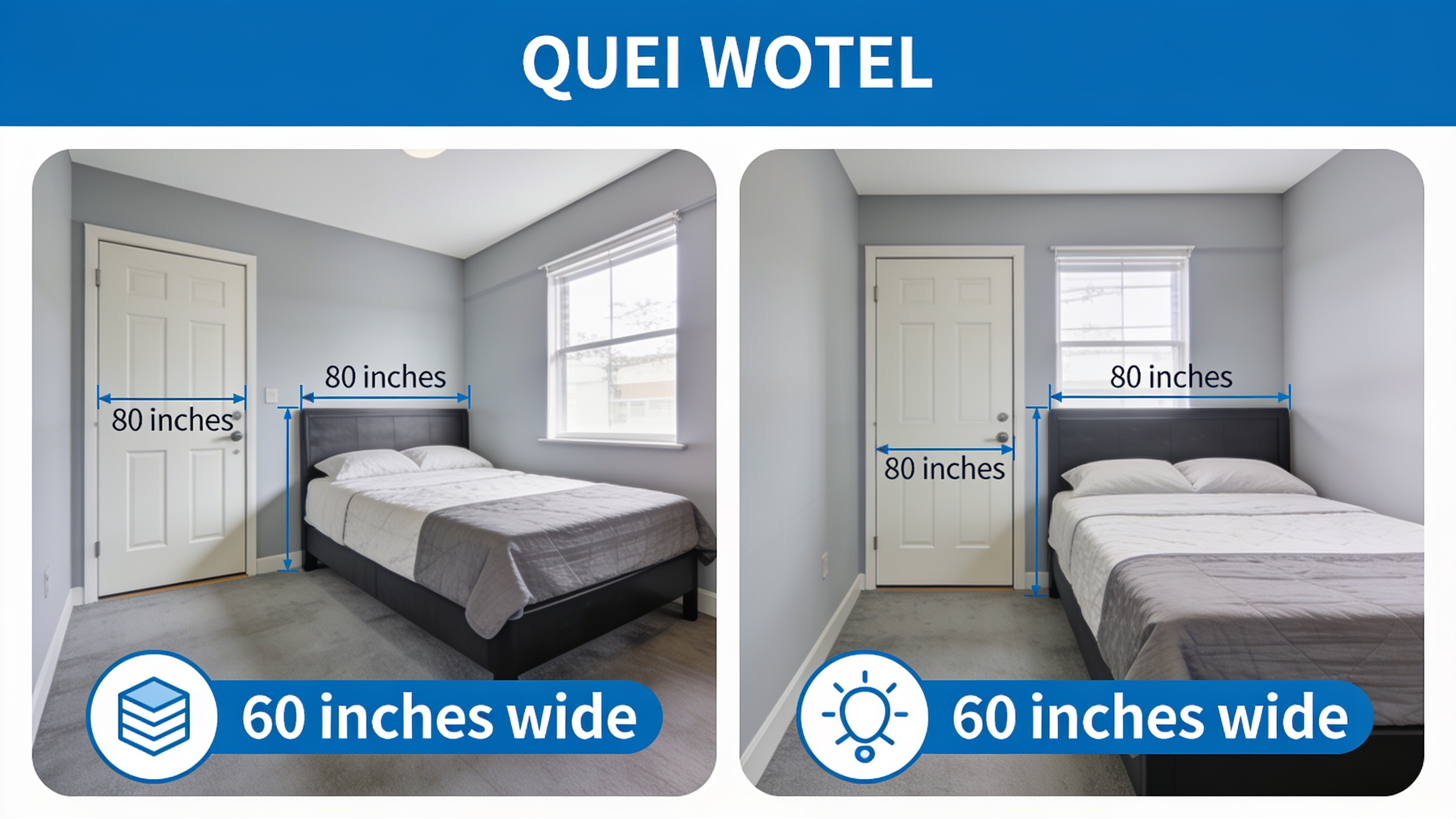
And watch how they shoot the kitchen. One tight angle only? Or the same room from three directions but never a single wide establishing shot? That’s usually a room that’s smaller or more awkward than the pretty close-ups let on.
Lighting tells on people too. If every single photo was clearly taken at golden hour, all warm and heavily edited, I get suspicious about how much natural light the place actually gets the other twenty-three hours of the day. Look for exterior shots taken in flat midday or overcast light, because that’s when you see a home’s real color and condition. Oh, and if a whole house only has five or six photos? Somebody left rooms out on purpose. The dated bathroom, the unfinished basement, the disaster garage. Missing photos are a message.
If you’re eyeing a place for its rental potential, this same photo literacy helps you gauge tenant appeal, and it pairs nicely with the basics in Rental Property Investing 101: A Beginner’s Roadmap, which digs into how investors size up a listing’s income beyond curb appeal.
Square Footage, Lot Size, and Floor Plans
Square footage is supposed to tell you the interior livable space, but here’s the frustrating part: it’s measured inconsistently across regions and even across individual agents. Treat it as an estimate, always. Lot size is a completely separate number, the total land including yard, driveway, and any detached structures. Buyers mash these two together constantly, and they shouldn’t.
There’s no single national standard for what counts as “livable” square footage in the U.S. Finished basements, sunrooms, enclosed porches, all of it gets included or excluded depending on the local MLS rules and whether the space meets code for heating and ceiling height. So two homes both listed at “2,000 sqft” can feel wildly different once you’re standing in them. If square footage is a make-or-break for you, have your agent pull the county tax assessor’s record. Still not perfect, but more standardized than the listing.
Floor plans, when a listing actually includes one, are shamefully underused. A floor plan tells you whether the bedrooms are all clustered together or split up by living space, whether the primary suite connects straight to its bathroom, whether the kitchen opens into the living area. Photos hide this stuff constantly. If you’re a family thinking five or ten years ahead, comparing floor plans across a few listings will narrow your real contenders faster than staring at photos ever will.
Disclosures: What Sellers Have to Tell You (and What They Don’t)
A property disclosure is a legally required document in most U.S. states where the seller reports known material defects, meaning stuff that affects value or safety: roof leaks, foundation cracks, past flooding, pests. But the laws are all over the map. California’s Transfer Disclosure Statement is famously thorough, while a handful of states lean hard on “buyer beware” and require almost nothing, per state real estate commission guidelines that vary by jurisdiction.
Here’s the catch most people miss. Disclosures only cover what the seller actually knows and is legally required to report. They are not a stand-in for an inspection. A seller who genuinely never had a leaky roof isn’t lying by leaving it off the form, even if that roof is 25 years old and visibly begging for replacement. Which is exactly why inspections, including the specialized ones (radon, sewer scope, a structural engineer if things look sketchy), still matter even when the disclosure form looks spotless.
If you’re wading through disclosures, inspection contingencies, or some unfamiliar local rule and you want a second opinion from someone who’s actually done this before, a resource like Advisorynavigator can connect you with an advisor who’s handled your exact kind of situation, instead of leaving you to decode dense legal language solo. Genuinely useful for first-timers who don’t have a trusted network of pros to text yet.
And it’s worth spelling out what disclosures usually don’t touch: general wear and tear, cosmetic issues, the cost of future repairs, and anything neighborhood-level like noise, upcoming construction, or planned zoning changes. That’s all on you. Check the city planning department’s site, drive the block at different times of day, and if you can, chat with the folks who’d become your neighbors.
Different Buyers, Different Priorities
A “great listing” for an investor and a “great listing” for a retiree are almost nothing alike. So here’s what each type of buyer should actually be zeroing in on.
First-Time Buyers in the City
If you’re 25 to 35 and hunting in a city, obsess over HOA fees, parking, and building age, because those wreck your monthly costs way beyond the mortgage. And be careful with a suspiciously low HOA fee compared to similar buildings nearby. Sometimes it means a well-run reserve fund. Other times it means the association is underfunding maintenance, and a giant special assessment is coming for you down the line.
Then look past the property itself. A walkable block with everyday conveniences, a coffee shop, a neighborhood gym, a solid local dinner spot like Suysmexicanrestaurant1 for your weekends, adds real quality-of-life value that no listing description will ever bother to mention.
Investors Sizing Up a Rental
Read every listing through a cash-flow lens: property tax history, rental comps in the immediate area, and any mention of existing leases or rent rolls if it’s a multi-unit. When a listing brags about “long-term tenants in place” or “separate utility meters,” it’s speaking straight to investors, and those are exactly the phrases worth chasing down with the listing agent. For the actual math, calculating cap rate and cash-on-cash return from listing figures plus a little public-records digging, Rental Property Investing 101: A Beginner’s Roadmap walks through the whole thing.
Families Chasing Space and Schools
Treat school district boundaries as something you verify yourself, full stop. Listings sometimes name a “top-rated” school that isn’t even the assigned school for that address, and that’s a brutal assumption to get wrong. Confirm boundaries on the district’s own website, not the listing. And cross-check any “large backyard” claim against satellite view, because lot norms vary so much by region that “large” is basically meaningless without a picture.
Retirees Downsizing or Grabbing a Second Home
Prioritize single-story layouts, low-maintenance exteriors, and how close you’d be to healthcare. Those things shape long-term livability far more than raw square footage. Phrases like “no HOA yard maintenance” or “step-free entry” are flagging features that matter more as the years pile up but are dead easy to skim past when you’re just scanning for price and bedroom count. For the full breakdown of right-sizing a home for retirement, Downsizing for Retirement: What You Need to Know covers maintenance costs and community amenities the standard listing won’t touch.
Red Flags Worth a Closer Look
A red flag is a detail, or the suspicious absence of a detail, that hints at a problem the seller isn’t thrilled to advertise. Catch these early and you save yourself from falling for a house before you know its real story.
Take rising days-on-market paired with a recent price drop. That combo usually means the original price was fantasy, or something ugly surfaced during a previous buyer’s inspection and blew up the deal.
Vague language around the big-ticket systems is another one. A listing that gushes about the “chef’s kitchen” and the “spa-like primary bath” but says absolutely nothing about the roof, the HVAC, or the age of the water heater isn’t automatically hiding something. But it’s your cue to ask directly and get documentation of maintenance and replacement dates before you write an offer. Same energy with listings that lean hard on “great bones” or “potential,” which almost always means cosmetic work at minimum, possibly a lot more.
Neighborhood context counts too, and it pays to think past the property line. The same way a business scouting a storefront studies foot traffic and nearby shops, the logic that’d steer a tanning studio like Tantopia toward a spot near complementary retail, you should be looking at what’s brewing nearby. New construction permits, zoning changes, commercial development that could crank up noise, traffic, or property values over the next five to ten years. City planning websites and public meeting minutes are boring and underused, but honestly they’re gold for this kind of homework.
Frequently Asked Questions
What’s the very first thing I should check on a listing?
Price per square foot against recent sold comparables in the same neighborhood. That one number tells you fast whether the listing is priced with the market or floating off in its own reality. Then check days on market and whether there’s been a price cut, since both hint at how motivated the seller really is.
How can I tell if the photos are lying to me?
Watch for wide-angle distortion (rooms that look huge next to normal-sized furniture), a low total photo count for a whole house, and photos that conveniently skip certain rooms like the bathrooms or garage. Cross-checking the photos against the floor plan, when there is one, is the most reliable way to catch a mismatch between how a space looks and how it’s actually laid out.
Are disclosures legally required in every state?
No. Requirements vary by state. Most require sellers to disclose known material defects, but the depth and format swing a lot, and a small number of states ask for almost nothing. Because of that inconsistency, an independent inspection is non-negotiable no matter how clean the disclosure looks, since it verifies current condition instead of trusting the seller’s memory or honesty.
What does “motivated seller” really mean?
Usually it means the seller wants out fast, often because of a job relocation, financial pressure, or a new home they’ve already bought. It can signal room to negotiate on price or timeline. It doesn’t guarantee a discount, but it’s generally a sign they’ll be more responsive to a reasonable offer than someone whose listing has no such language.
Should I trust the square footage on a listing?
Treat it as an estimate, not gospel. Measurement standards vary by MLS and by what the agent decides to count, like finished basements or enclosed porches. For a more standardized number, have your agent pull the county tax assessor’s record, and if square footage is central to your decision or your financing, consider paying for an appraiser’s measurement.
Reading a listing well really comes down to slowing down long enough to ask what’s hiding behind the marketing language, the flattering photos, and the numbers that don’t quite add up. The more of them you practice decoding, the abbreviations, the pricing patterns, the photo tricks, the gaps in the disclosures, the quicker you’ll spot the homes worth your Saturday and the ones that deserve a much harder look before you commit.