
You know that listing that made you do a double-take? The one that’s priced 20 or 30 percent below everything else on the block, and your first thought was “okay, what’s wrong with it”? Chances are you were staring at a foreclosure.
Buying one of these can absolutely save you a chunk of money. But it’s not like buying a normal house. Different paperwork, different risks, and a much thinner margin for mistakes. This guide walks through the whole thing in plain English: the types of sales out there, where the savings actually hide, where the costs sneak up on you, and how to do your homework before you ever raise your hand at an auction or fire off an offer.
First-time buyer trying to afford anything at all? Investor stacking up rentals? Retiree who just wants to downsize without getting fleeced? Foreclosures can work for all of you. But only if you walk in with your eyes wide open. So let’s get into it.
Table of Contents
- What Are Foreclosure Homes, and Why Do They Sell Below Market Value?
- How to Buy Foreclosure Homes: The Main Types of Sales
- What Are the Real Risks of Buying a Foreclosed Property?
- How Much Can You Actually Save Buying a Foreclosure?
- A Foreclosure Buying Guide: Due Diligence Step by Step
- Financing a Foreclosure Purchase: What Are Your Options?
- Which Type of Buyer Should Consider a Foreclosure?
- Frequently Asked Questions
What Are Foreclosure Homes, and Why Do They Sell Below Market Value?
A foreclosure home is a property a lender has repossessed, or is in the middle of repossessing, because the previous owner stopped paying the mortgage. They sell cheap because the seller (usually a bank, a government agency, or a homeowner who’s cornered) just wants the thing gone. Fast. They’re not holding out for top dollar.
And that, honestly, is the whole game. A regular seller can sit and wait for the perfect offer. A bank stuck with an empty, non-performing house? It’s bleeding money every single month on taxes, insurance, upkeep, and all that capital frozen in a place nobody lives in. That pressure lands on you, the buyer, as a lower price, quicker negotiations, and sometimes a property sold flat-out “as-is” with zero repairs and zero guarantees.
The catch is that these homes come loaded with more uncertainty than your average resale. You might not get an inspection window. You might inherit somebody else’s unpaid debts. You might be buying a house you’ve literally never walked inside. That’s the trade at the core of foreclosure buying: a discount in exchange for risk. Everything else in this guide is about tilting that trade in your direction.
How to Buy Foreclosure Homes: The Main Types of Sales
There’s no single way to buy a foreclosure. There are several, and each one has its own timeline, its own paperwork, and its own risk level. Figure out which stage of foreclosure a property is sitting in and you’ll basically know how the whole purchase is going to play out.
Pre-foreclosure is the early stage. The homeowner’s fallen behind and gotten a formal default notice, but the bank hasn’t taken the house yet. You can go straight to the homeowner and negotiate, sometimes as a short sale, before the lender ever gets its hands on the place.
A short sale is when the lender agrees to let the owner sell for less than what’s still owed, usually because paying off the full loan plus sale costs just isn’t happening. The bank has to sign off on the price and the terms, which tacks on an extra layer of approval and, in my experience, weeks of thumb-twiddling on top of a normal deal.
Foreclosure auctions (called trustee sales or sheriff’s sales depending on where you live) happen after the owner’s lost the house completely. The county or a trustee sells to the highest bidder. Usually you’re paying cash or certified funds right there on the spot, no financing contingency, and in most states you don’t get to see the inside first.
Bank-owned properties, or REOs (real estate owned), are the ones that didn’t sell at auction and got dumped back onto the lender’s books. These are the closest thing to a normal home purchase you’ll find in foreclosure land. Listed through an agent, financeable with a regular mortgage, and inspections are usually on the table.
Then there are government-owned foreclosures, which were financed or insured by a federal agency (FHA, VA, USDA) and repossessed after the borrower defaulted. These get resold through specific government-run portals instead of your standard MLS.
| Sale Type | Who You’re Buying From | Financing Allowed | Inspection Access | Typical Risk Level |
|---|---|---|---|---|
| Pre-foreclosure | Homeowner directly | Usually, if homeowner and lender agree | Yes, negotiable | Moderate |
| Short sale | Homeowner, with lender approval | Yes, standard mortgage possible | Yes, negotiable | Moderate |
| Foreclosure auction | County/trustee | Usually cash or certified funds only | Rarely, often exterior only | High |
| Bank-owned (REO) | Bank/lender | Yes, standard mortgage possible | Usually yes | Low to moderate |
| Government-owned | Federal agency | Yes, often FHA/VA-eligible | Usually yes | Low to moderate |
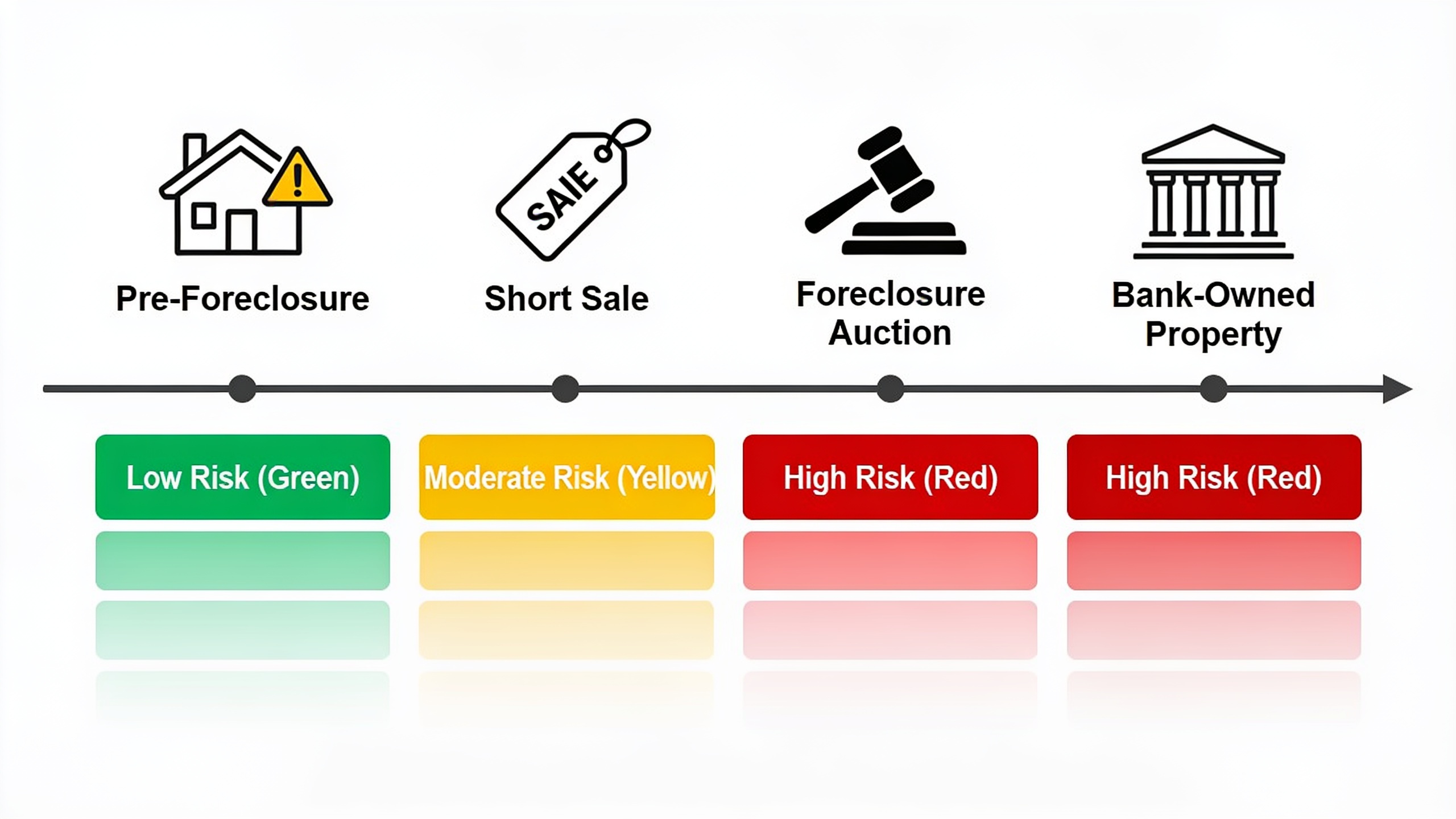
If you’re new to all this, REO and government-owned properties are the gentler on-ramp. They feel like a normal purchase. Auctions are more of an experienced-investor sport, the kind of thing you do when you’re comfortable moving fast, paying cash, and buying a house you’ve never seen from the inside.
What Are the Real Risks of Buying a Foreclosed Property?
The biggest risks are inheriting hidden liens, buying a home with damage you couldn’t see, and losing any ability to renegotiate the price or ask for repairs later. And none of these are theoretical worst-case stuff. They’re baked right into how foreclosure sales are built, which is to move quickly and shield the seller from liability.
Title and Lien Problems
Here’s the one that bites people. When a home goes through foreclosure, other debts tied to the property (a second mortgage, unpaid contractor liens, an HOA assessment) can still be stuck to the title depending on how and when the foreclosure went down. At auctions especially, you often take the property “as-is” with whatever liens are still on record, unless local law and the auction terms say otherwise. Which is exactly why a title search isn’t a “maybe.” It’s the single most important thing you’ll do in this entire process. Skip it at your peril.
Deferred Maintenance and Unknown Condition
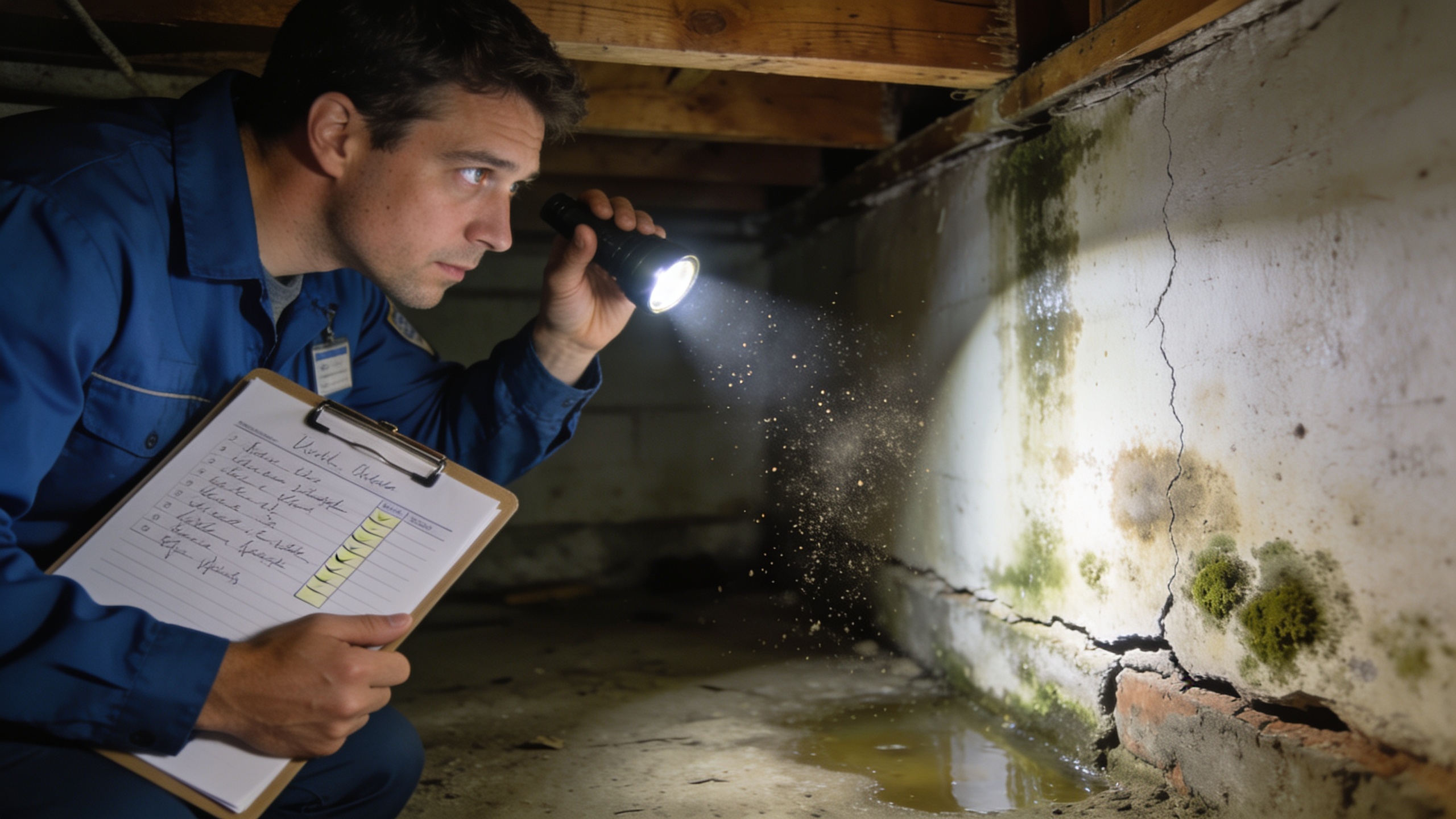
People heading into foreclosure are, by definition, broke. So the first thing to go is usually routine maintenance. Now stack on a house that’s been sitting empty for months, exposed to weather, pests, and the occasional vandal, and you get a place that looks totally fine from the curb while hiding roof leaks, mold, dead plumbing, and an HVAC system nobody’s touched in years behind the drywall.
Limited or No Inspection
At a lot of auctions you’re bidding based on a drive-by and whatever public records you can scrape together. No walkthrough. And even at REO sales where inspections are allowed, a bank selling “as-is” rarely wants to budge on price when your inspector finds a mess. So the repair bill? That’s on you now.
Occupancy and Eviction Issues
Some foreclosed homes still have people in them when they sell. Could be the old owner, a tenant, or squatters. Getting them out takes time, and depending on where you are, might mean a formal eviction even after the house is legally yours. Not fun.
Slower, Less Predictable Closings
Short sales are the worst offenders here. They can drag on for weeks, sometimes months, while the lender’s loss-mitigation department pokes at your offer. If you’re on a tight clock (say, a family trying to move before the school year starts), that wait can be genuinely maddening.
How Much Can You Actually Save Buying a Foreclosure?
A foreclosure can knock a real dent in your purchase price compared to a similar home sold the normal way, mostly because distressed sellers care more about speed than squeezing out every last dollar. How big that discount gets, though, swings wildly based on the sale type, the local market, and the shape the house is in. Think of foreclosure savings as a range, not a fixed number.
Auction properties tend to have the deepest discounts, and it’s no mystery why. All that risk (no financing, barely any inspection, the lurking possibility of hidden liens) scares off casual buyers, which thins the crowd and keeps prices down. REO and government-owned homes usually land closer to fair market value because they’ve been cleaned up a bit, listed on the open market, and made financeable, so a much bigger pool of buyers shows up. Sometimes including other investors who’ll happily bid the price right back up.
Short sales sit in the middle. Both the homeowner and the lender want a fair-ish price, but the lender’s approval process chips away at your leverage since they’re laser-focused on clawing back as much of the loan as they can.
Honestly, the real money in foreclosure buying often has less to do with the sticker price and more to do with what you’re willing to do with the place afterward. Fix up a rough interior. Hold a rental long enough to build equity. Buy in a neighborhood that’s still a few years from its peak. That’s a completely different calculation than grabbing a move-in-ready resale, and it’s worth running both scenarios before you commit. And if you’re still not sure whether owning even makes sense for you right now, go read Renting vs. Buying in 2025: What the Numbers Say before you dive into the foreclosure hunt. The math on ownership costs applies just as much to a discounted foreclosure as it does to a full-price house.
A Foreclosure Buying Guide: Due Diligence Step by Step
One rule matters more than everything else in this whole guide: do your homework before you bid, not after. Because in most foreclosure sales, once you’ve won, there’s no backing out. Here’s the order I’d work through it.
1. Get Pre-Approved (or Line Up Your Cash)
Before you chase anything seriously, know exactly what you can spend and how you’re paying. Eyeing an auction? Confirm whether it’s cash or certified funds and how fast you’ll need the full amount ready. Often it’s within 24 to 72 hours of winning. That’s not a lot of time.
2. Pull a Full Title Report
Order a title search on anything you’re seriously considering, ideally through a title company or a real estate attorney who actually knows foreclosure sales in your state. This is how you catch the second mortgages, tax liens, HOA debts, and judgment liens that could land in your lap the second you take ownership.
3. Research the Neighborhood, Not Just the House
A cheap price means nothing if the block around it is struggling, or the schools are rough, or the commute would ruin your life. Pull comparable sales. Check crime data. If it’s a family home, dig into school ratings. This matters for a foreclosure exactly as much as it would for anything else.
4. Inspect Whatever You’re Allowed To
If the sale lets you inspect, do it properly. A licensed home inspection, not a casual once-over with your uncle who’s “handy.” If it’s an auction with no interior access, do everything else you can: drive by at different times of day, dig through permit and code-violation records, chat up the neighbors about how long it’s been empty. Neighbors know things.
5. Estimate Repair Costs Conservatively
Get a contractor’s take before you bid, even a rough one, especially on anything that’s been vacant a while. Then pad whatever number they give you. With distressed properties, surprises aren’t the exception. They’re the whole vibe.
6. Understand the Redemption Period
Some states hand the previous owner a window after the sale, called a redemption period, where they can reclaim the house by paying off what they owe. Find out whether your state does this and how it messes with your ownership timeline before you hand over a dime.
7. Check Occupancy Status
Find out who’s living in the place, if anyone. If it’s still occupied, learn your state’s eviction process and timeline so you’re not blindsided when taking possession turns into a months-long saga.
Financing a Foreclosure Purchase: What Are Your Options?
Your financing options hinge almost entirely on which type of sale you’re chasing. Auctions basically always demand cash or certified funds, while bank-owned and government-owned foreclosures can usually be bought with a regular mortgage. This is one of the biggest practical differences between the types, and it should honestly steer which path you pick based on what your wallet can handle.
Conventional mortgages work fine for REO purchases since the home’s already on the open market and lenders can appraise it like any other resale. FHA and VA loans can work for government-owned or bank-owned foreclosures too, as long as the property meets the minimum condition standards those programs require. That last part can be a real sticking point if the house needs serious work before it’ll pass appraisal.
For places that need a lot of love, a renovation loan like an FHA 203(k) or a conventional renovation mortgage rolls the purchase price and the estimated repairs into one loan. That’s a smart move for a foreclosure that’s structurally sound but cosmetically ugly. Investors buying at auction, on the other hand, usually lean on cash, hard money loans, or a line of credit, since that lightning-fast payment deadline rules out normal mortgage underwriting entirely.
Whatever route you take, decide early what you’re actually financing toward. A discounted single-family fixer in the suburbs and a discounted downtown condo come with totally different upkeep and monthly costs, and that gap matters even more with a foreclosure where your repair budget’s already stretched thin. If you’re torn on property type, Condo vs. Single-Family Home: Which Is Right for You? is worth a look before you narrow your search.
Which Type of Buyer Should Consider a Foreclosure?
Foreclosures can work for pretty much any kind of buyer. But the right way in, and the right amount of risk to swallow, depends a lot on your goals, your timeline, and how much uncertainty you can stomach.
First-time buyers hunting for anything affordable in a brutal urban market usually do best starting with REO or government-owned listings. Financing’s available, you get at least some inspection access, and your odds of a nasty six-figure surprise on your very first purchase drop way down.
Investors stacking up rentals are the ones best set up to handle auction properties. They’ve typically got cash reserves, contractors on speed dial, and the stomach to buy a place sight-unseen. That auction discount can turn straight into a stronger rental yield, assuming the numbers were run carefully first. Big assuming.
Families wanting more room in a suburb with good schools might like pre-foreclosure or short-sale negotiations, where there’s actually room to talk directly with a motivated owner. The timeline’s slower than a normal sale, sure, but you still get inspections and financing, which is worth a lot when you’ve got kids and a moving truck to think about.
Retirees downsizing or shopping for a vacation place tend to lean toward bank-owned foreclosures for the same reasons first-timers do: more certainty, more financing flexibility, fewer hidden repair bombs at a point in life when big surprises are, let’s say, less welcome. And if the goal is really a vacation home rather than a primary residence, it’s worth asking whether you even need to buy right away. Trying out a location by swapping homes with another owner through a platform like Swappahome is a lower-risk way to figure out whether a neighborhood actually fits your retirement plans before you commit to buying anything, foreclosure discount or not.
Frequently Asked Questions
So is buying a foreclosure actually a good investment?
It can be, but it really comes down to the sale type, the local market, and how well you pegged the repair costs. Auction properties dangle the steepest discounts and carry the most risk, while REO and government-owned foreclosures give you smaller discounts with a lot more certainty. Run the numbers on repairs, holding costs, and resale or rental value before you assume a lower price automatically means a better deal. It doesn’t, always.
Can I get a regular mortgage on a foreclosed home?
Yep, for bank-owned (REO) and government-owned foreclosures, standard conventional, FHA, and VA financing is usually on the table, as long as the property clears the lender’s condition requirements. Auctions are the big exception. Those almost always need cash or certified funds and just don’t work with a normal mortgage timeline.
What’s the actual difference between a short sale and a foreclosure?
A short sale happens before foreclosure wraps up. The homeowner still owns the place and sells it, with the lender’s blessing, for less than what’s owed. A foreclosure means the lender’s already taken the house back, or is actively dragging it through the legal process, because the owner couldn’t catch up on payments.
Do foreclosed homes always need major repairs?
Not always, but often enough that you should expect it, especially on places that sat empty for months before selling. Deferred maintenance is way more common in foreclosures than in regular resales, which is exactly why a solid inspection (or at the very least, a conservative repair estimate) belongs in any offer you put together.
How do I even find foreclosure listings near me?
Bank-owned and government-owned foreclosures usually show up through real estate agents and the standard property search sites, same as any other home for sale. Auction and pre-foreclosure properties are trickier. You’ll need to dig through county court records, trustee notices, or specialized foreclosure listing services, since they don’t always hit the open market.
Foreclosures can be one of the genuinely rewarding ways into real estate, whether it’s your first place, another rental, or the start of your next chapter. But the savings only pay off when the due diligence happens before you sign, not after. Figure out which type of sale you’re dealing with, get honest with yourself about the risks that come with it, and lock down your financing before you fall for a listing. Do that, and a foreclosure stops being a gamble and starts being just another smart move.