
Buying a house is probably the biggest check you’ll ever write, and how well you negotiate can swing the final number by tens of thousands of dollars. So it’s worth getting right. But here’s what I wish someone had told me earlier: good negotiation has almost nothing to do with being aggressive or throwing out insulting lowball offers. It’s about research, timing, and figuring out what actually makes a seller want to say yes.
That’s true whether you’re a nervous first-timer circling a downtown condo or an investor picking up your fifth rental. Same fundamentals every time. Know the market. Know the seller’s situation. And know your own walk-away number before you get emotional about the place.
This is the stuff that actually helps buyers land a good price, plus the quiet mistakes that cost people real money at closing without them ever realizing it.
Why This Even Matters
Shaving 2-3% off the asking price can save you thousands upfront and knock down the interest you’ll pay over the whole life of the loan. Think about it on a $400,000 house: a 3% reduction is $12,000. That’s your closing costs, or a rate buydown, or a genuinely decent renovation fund. According to the National Association of Realtors’ 2023 Profile of Home Buyers and Sellers, the median existing-home sale price tends to land pretty close to the original list price in a balanced market. But that median hides a lot. Homes that sit too long, or have some obvious flaw, routinely sell for 5-10% under list.
And it’s not just about the sticker price anyway. A good deal often comes with concessions, seller-paid closing costs, appliances thrown in, a repair credit that puts cash back in your pocket. For a family stretching to buy near a good school district, or a buyer scraping together every dollar for a competitive city market, those extras can be the whole difference between a deal that works and one that quietly falls apart.
How Do You Research the Market Before You Negotiate?
You research by pulling comparable sales from the last three to six months, checking how long the specific home’s been listed, and figuring out whether your local inventory favors buyers or sellers. That’s the foundation of any offer worth making. Skip it and you’re basically negotiating blindfolded.
Pulling Comps
Comps, comparable sales, are recently sold homes that are similar in size, condition, age, and neighborhood to the one you want. Agents pull these off the MLS, but you’re not helpless here either. County assessor websites and the big listing platforms will show you plenty. Stick to homes sold in the last 90 days within roughly a half-mile to a mile, and adjust for the obvious stuff like square footage, lot size, and whether someone gutted the kitchen recently.
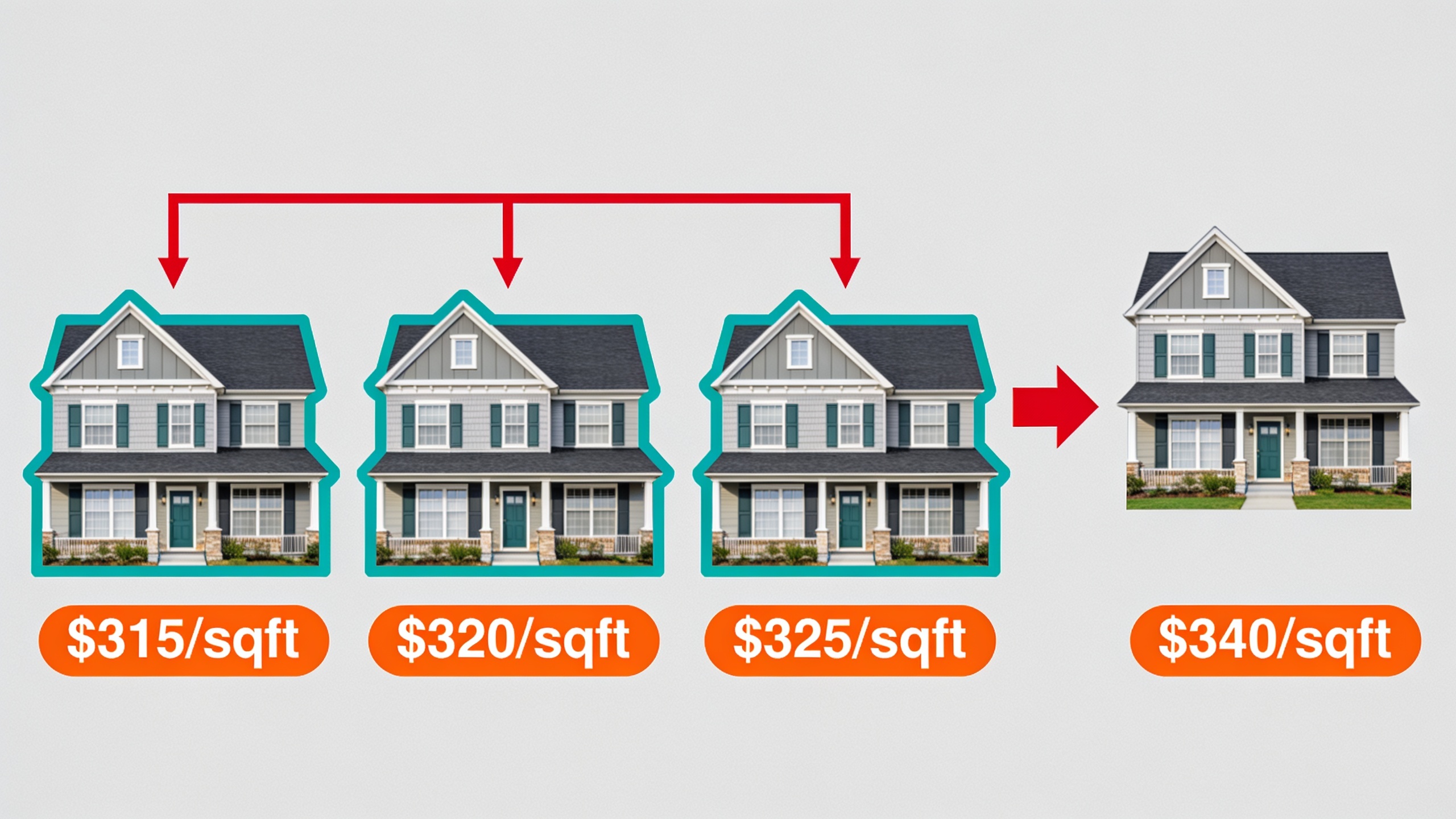
Say comparable homes went for $315 to $325 per square foot, and the place you’re eyeing is listed at $340. That gap? That’s your opening argument right there.
Days on Market
Days on market, or DOM, is just how long a listing’s been sitting there without an accepted offer. And it tells you a lot. If a home’s been listed 45 days in an area where the average is 18, something’s off. It’s overpriced, or buyers keep spotting a problem, or the seller’s living in a fantasy about what their house is worth. Longer DOM usually means more leverage for you.
But flip it around. A listing that’s three days old with a stack of showings already booked? You might need to move fast and go easy on the price haggling (though you can still push on terms).
Price History and Tax Records
Most listing sites have a price history section, and it’s gold. It’ll show you if the home had a recent price cut, if it was listed before and yanked off the market, what it sold for last time. A house that dropped from $450,000 to $429,000 after a month is basically telling you the seller already knows they aimed too high. That’s ammunition. Cross-check the county tax assessment too, just know it usually runs below market value, so treat it as a rough floor, not gospel.
Reading Local Conditions
Local conditions get measured in months of supply, which is how long it’d take to sell every listing at the current pace. Under 3 months means it’s a seller’s market. Somewhere between 3 and 6 is balanced. Above 6 and you’re sitting pretty as a buyer. Economists at places like Freddie Mac and the Mortgage Bankers Association publish regional supply data if you want to calibrate before writing anything.
Oh, and if you’re still finding your footing with the whole process, it’s worth glancing at 5 First-Time Home Buyer Mistakes (And How to Avoid Them). A few of those mistakes wreck your negotiating position before you’ve even made an offer.
When’s the Best Time to Negotiate?
Your leverage peaks when a listing’s been sitting longer than average, during the slow seasons like late fall and winter, or when a seller’s got a real deadline breathing down their neck. Timing changes everything. The exact same house can be way more negotiable in December than it was back in May.
Home sales in the US usually peak between April and July, when inventory’s high and buyers are climbing over each other. The listings that drag on into September, October, all the way into January? Those often belong to sellers who are genuinely motivated. Job change, tax stuff, or just plain exhausted by the whole thing. Shop in the off-season and you’ll generally find less competition, more room to negotiate, and sellers who suddenly don’t mind your inspection or financing contingencies.
Then there’s the deadline thing. Sellers who are buying their own next place often have overlapping timelines. If your agent can find out (through the listing agent) that a seller needs to close by a certain date, to dodge two mortgages, or make a relocation start date, or hit a quarter-end for tax reasons, that’s real leverage. Agents pick up this stuff informally all the time during pre-listing chats. So just have your buyer’s agent ask about the seller’s motivation. It’s shockingly underused.
One more: watching for a price cut and pouncing shortly after can work great. A seller who just dropped their price is signaling they’re flexible, and they’re often most receptive in the days or weeks right after. Play this too cool, though, and you’ll lose the house to someone who moved faster. So it pairs best with actually paying attention, not passively waiting around.
Negotiation Tips That Actually Work
The tips that matter are about presenting a clean, well-backed offer, not just lobbing out the lowest number you can stomach. Sellers respond to certainty and professionalism almost as much as they respond to price.
Get Pre-Approved, Not Just Pre-Qualified
Pre-approval means a lender actually dug into your income, credit, assets, and debts and gave you a conditional commitment. Pre-qualification is a rough guess based on whatever you told them. These are not the same thing, and listing agents can smell the difference. A solid pre-approval letter stapled to your offer often buys you room to negotiate, because it lowers the seller’s fear that your financing falls through and blows up the deal.
Lead With Data, Not Feelings
When you come in below asking, back it up. Don’t say “it feels overpriced.” Say something concrete, like three similar homes within a half-mile sold for an average of $18,000 less over the past 60 days. That gives the listing agent something real to bring back to their client, and you’re way more likely to get a productive counter instead of a door slammed in your face.
Ask for Stuff Beyond Price
Sometimes a seller just won’t move much on price, but they’ll happily cover 2-3% of closing costs, or leave the washer and dryer, or credit you for that roof repair the inspector flagged. That’s real money even when the sale price barely budges. Buyers who fixate only on the headline number leave a ton on the table here.
Keep Contingencies Reasonable
A contingency is just a condition that has to be met for the sale to go through. Inspection, appraisal, financing, that sort of thing. Now, I’d almost never tell you to waive the inspection contingency completely (that way lies regret). But keeping your list tight and your timelines snug, like a 7-day inspection window instead of 14, tells a seller you’re serious. And when they’re comparing multiple offers, that seriousness often buys you flexibility on price.
Figure Out What the Seller Actually Wants
Sellers relocating for work, going through a divorce, settling an estate, or downsizing in retirement usually care more about speed and certainty than squeezing out the last dollar. A retiree heading into assisted living might genuinely prefer a fast, clean closing over an extra $5,000. An investor dumping a rental might jump at an all-cash offer even if it’s not top dollar. Your agent can dig most of this up just by asking the listing agent straight questions about timeline and motivation.
If you want to see how research and timing come together for real, How One Couple Actually Pulled Off Buying Their First Home in Under 5 Months walks through a case where all the leverage came from understanding the seller’s relocation timeline, not from some aggressive lowball.
Step-by-Step: Negotiating During the Offer Process
The offer process is honestly pretty predictable: submit an informed opening offer, respond to the counter with data-backed moves, and use the inspection period smartly before you finalize.
Step 1: Set your ceiling before you fall in love. Before you start touring seriously, figure out your absolute max based on your budget, what monthly payment you can actually stomach, and your longer-term goals. Then write it down somewhere. This is the thing that saves you from doing something dumb when you’ve already mentally arranged your furniture in a house you haven’t bought yet.
Step 2: Open strong and specific. Your first offer should rarely be your max. Base it on your comps, factor in the home’s condition, the DOM, anything sketchy in the disclosures. In a balanced or buyer-friendly market, 3-8% below list is a common starting point, adjusted to whatever your comps actually support.
Step 3: Respond to counters with a reason. If they counter, don’t just reflexively split the difference. Move your number based on new info. Did they explain themselves? Barely budge? Hold completely firm? A seller countering just $2,000 below their ask on a $500,000 home is telling you they’ve got almost no give. One who drops $15,000 after your first counter? Plenty more room there.
Step 4: Use the inspection as round two. The inspection period isn’t just a yes/no on the house. It’s often your best shot at negotiating again. If the inspector turns up a $9,000 HVAC replacement nobody mentioned, you’ve got legitimate grounds to ask for a price cut, a repair credit, or seller-funded fixes before closing.
Step 5: Deal with the appraisal gap if it shows up. An appraisal gap is when the lender’s appraised value comes in under your agreed price, which can leave you covering the difference in cash since most loans won’t finance above appraised value. You can push for the seller to drop to the appraisal, split the gap, or, if your contract had an appraisal contingency, walk. It happens.
Buyer’s Market vs. Seller’s Market
Your tactics have to flex depending on who’s got the upper hand right now, and misreading the market is one of the fastest ways to either lose a house or badly overpay.
| Market Condition | Typical Signal | Recommended Buyer Tactic |
|---|---|---|
| Buyer’s market (6+ months supply) | Homes sit 45+ days, frequent price cuts | Offer 5-10% below list, request repair credits and closing cost help |
| Balanced market (3-6 months supply) | DOM near local average, few reductions | Offer close to comp value, negotiate on terms and timeline instead of just price |
| Seller’s market (under 3 months supply) | Multiple offers, homes selling above list | Lead with strongest possible price and terms, minimize contingencies where reasonably safe, consider an escalation clause |
| Seller in urgent situation (relocation, estate sale) | Fast closing requested, motivated language in listing | Offer speed and certainty (pre-approval, flexible closing date) in exchange for price flexibility |

Knowing which row you’re in before you write anything saves you from two classic blunders: lowballing in a hot market (which just gets you tossed out of consideration) and overpaying in a soft one because you got excited about a house.
The Mistakes That Quietly Cost You Money
The big three: getting emotionally attached and showing it, negotiating with zero comp data, and tunnel-visioning on price while ignoring everything else you could ask for. Any one of these can cost you thousands without you noticing.
People blurt out their excitement to the listing agent during showings all the time, and it instantly kills their leverage. A seller’s agent who knows you’re already in love has no reason to negotiate hard. Offers made without any comp research get dismissed fast, or worse, they get accepted at a number higher than the market actually supports (congrats, you overpaid). And fixating only on the sale price while ignoring credits, included items, or closing flexibility means you’re skipping the easy wins a seller would’ve handed you without blinking.
Honestly, it also helps to treat a home purchase like any other big goal you’d stay organized about, with deadlines you don’t miss. Something like Xenith can help you track offer deadlines, inspection windows, and financing milestones as part of a broader system. And that matters more than it sounds, because blown contingency deadlines are a super common, totally avoidable way to lose leverage or even your earnest money.
Questions People Actually Ask
How much below asking should I offer?
There’s no magic percentage, sorry. It depends on your comps, days on market, and local supply. In a buyer’s market where homes are sitting 45+ days, offers 5-10% under list are normal and often accepted. In a competitive seller’s market, going below list can get you eliminated entirely, so full-price or above-list offers with fewer contingencies are more realistic.
Is it rude to negotiate hard?
Not when it’s grounded in data. Sellers and their agents expect counteroffers and respect ones that come with comps and clear reasoning. What actually annoys people isn’t a low number, it’s a low number with no justification, or repeated lowballs with nothing to back them up.
Can I still negotiate after my offer’s accepted?
Yep. The inspection period and the appraisal both open up legitimate chances to negotiate again, usually around repair credits, price adjustments for stuff nobody disclosed, or an appraisal gap. These aren’t renegotiating the whole deal, just targeted tweaks based on what you learned after acceptance.
Does an agent really help me get a better price?
Usually, yeah. A good buyer’s agent has better local sales data, gets insight into the seller’s motivation straight from the listing agent, and has negotiating reps most of us just don’t have. That tends to translate into better pricing and terms than going solo. Agent compensation works differently depending on your market and the deal, so ask about costs upfront.
What’s the biggest mistake first-timers make?
They skip comp research entirely and lean on gut feeling or the list price as their only reference point. Which means they either overpay or make an offer so far off-market the seller won’t even engage. A little market research, a clear pre-approval, and realistic contingencies solve most of this before negotiations even start.
At the end of it all, negotiating a good price is really just preparation meeting timing. The buyers who do their comp homework, understand what the seller actually wants, and keep their cool at the table consistently beat the ones running on instinct. Doesn’t matter if it’s a first condo, a bigger family place near good schools, an investment property, or a downsized retirement home. Same discipline every time: research it thoroughly, negotiate on more than just price, and know your numbers cold before you sit down.
And if you’re trying to tighten up your broader research or content workflow while you’re house hunting online anyway, platforms like RobinRank and community resources such as Vidbox or study-focused sites like Quiethelpgcse are a decent reminder of how far organized information and the right tools can carry any goal-driven project. Buying a house very much included.