
Buying your first place is thrilling right up until it isn’t. And the difference usually comes down to a handful of avoidable screwups: skipping the inspection, borrowing more than you can actually live with, or falling head-over-heels for a house before you’ve locked down financing. Any one of those can turn a proud milestone into months of financial regret. First-time buyers made up about 32% of all home purchases in 2023, according to the National Association of Realtors’ Profile of Home Buyers and Sellers, and a whole lot of them will tell you, if you ask, that they wish they’d done more homework before signing. So let’s talk about the five mistakes that trip people up the most, and how you sidestep them.
Table of Contents
- What Are the Most Common First-Time Home Buyer Mistakes?
- Mistake #1: Skipping Mortgage Pre-Approval Before House Hunting
- Mistake #2: Overextending Your Budget Beyond What You Can Afford
- Mistake #3: Skipping the Home Inspection to Save Time or Money
- Mistake #4: Letting Emotions Override Financial Judgment
- Mistake #5: Underestimating Closing Costs and Ongoing Homeownership Expenses
- How Much Do These First-Time Home Buyer Mistakes Really Cost You?
- How Can You Avoid Home Buying Mistakes as a First-Time Buyer?
- Frequently Asked Questions
What Are the Most Common First-Time Home Buyer Mistakes?
The most common first-time buyer mistakes are skipping mortgage pre-approval, overextending the budget, waiving the home inspection, letting emotions drive the decision, and underestimating closing costs and post-purchase expenses. And if you squint, they all come from the same place: rushing a huge financial decision without an actual plan.
First-timers are especially prone to this stuff, and it makes sense. You’ve never done it before, so you lean on whatever advice is floating around, what your uncle did in 2015, what looked easy on some HGTV show, instead of on what the market actually looks like right now. But markets move fast. Mortgage rates, inventory, local price trends, all of it can shift in the span of a few months, so somebody else’s playbook from five years ago might be useless to you today. Before you start poking around listings, it’s genuinely worth reading through a First-Time Home Buyer’s Guide: Where to Start in 2025 just to get a feel for the current lending scene and the order things should happen in. And if you’re still not sure you’re ready, financially or emotionally, 10 Signs You’re Ready to Buy Your First Home is a decent gut-check before you fall down the listings rabbit hole.
Mistake #1: Skipping Mortgage Pre-Approval Before House Hunting
Skipping pre-approval means you’re shopping without knowing what a lender will actually hand you, which wastes your time touring places you can’t afford and leaves you with weak offers when things get competitive. Pre-approval is a lender’s conditional commitment. They dig into your credit, income, assets, and debt, then tell you the max loan you’ll probably qualify for.
Here’s where people get tripped up. “Pre-qualification” and “pre-approval” sound like the same thing, and they are absolutely not. Pre-qualification is a quick, hand-wavy estimate based on numbers you tell them yourself. Pre-approval is the real deal: the lender pulls your documents, pay stubs, tax returns, bank statements, and runs a hard credit check. Sellers and their agents know the difference, and they care about it a lot, especially when there are multiple offers on the table. Show up without that letter and your offer can get tossed even if your price is good, simply because nobody’s convinced you can close.
So what do you do? Get pre-approved by two or three lenders before you’re seriously touring anything. Shop them against each other, banks, credit unions, online mortgage outfits, because even a quarter-point difference in your rate adds up to real money over 30 years. It’s not nothing. Poking around the listings and comparison tools on something like Vivienda Lista also helps you get a realistic read on prices in the neighborhoods you’re eyeing, so you walk into that lender conversation already knowing roughly what you’re gunning for.
Mistake #2: Overextending Your Budget Beyond What You Can Afford
Overextending happens when you stretch to the very top of what a lender approves you for, instead of what you can actually live with once taxes, insurance, upkeep, and, you know, having a life get factored in. A bank approving you for a $450,000 mortgage is not the same as that payment fitting comfortably into your month. Not even close.
The old reliable here is the 28/36 rule: keep your housing costs under 28% of your gross monthly income, and your total debt payments (mortgage included) under 36%. The catch is that lenders will happily approve you closer to a 43-45% debt-to-income ratio under certain loan programs, and living at that level leaves you almost no room to save, handle an emergency, or just enjoy anything. And new buyers constantly forget the extras: property taxes, homeowners insurance, private mortgage insurance if you put down less than 20%, HOA fees, and a maintenance cushion that’s usually pegged at 1-2% of the home’s value every year.
Your down payment plays into this too. NAR’s 2023 report put the median down payment for first-time buyers at around 8% of the purchase price, versus roughly 19% for repeat buyers. Smaller down payment, bigger loan, higher monthly payment, and PMI that can tack on a few hundred bucks a month until you build enough equity to shake it. That gap between 8% and 19% is a big reason first-timers feel squeezed.
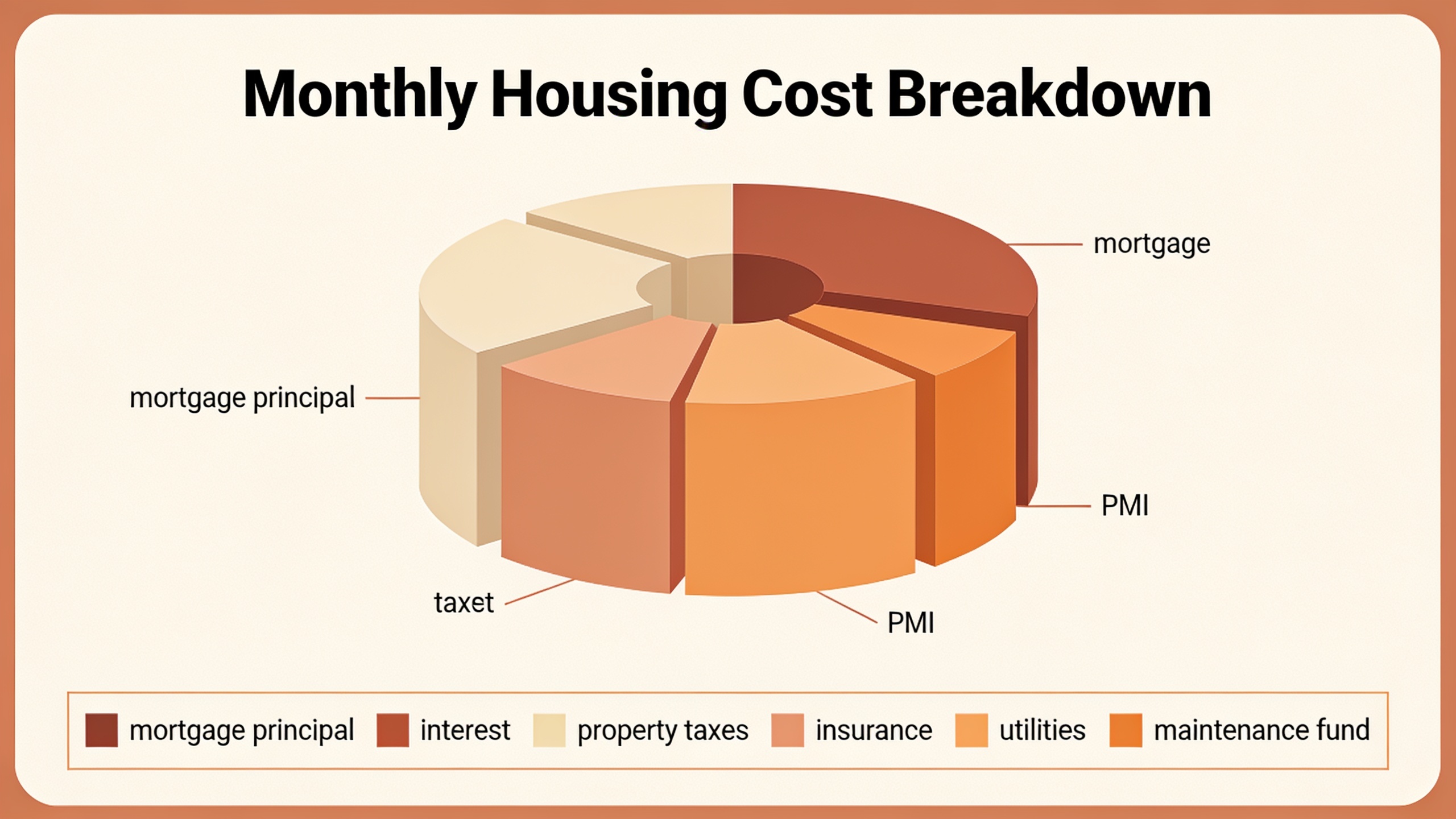
The fix is honestly kind of boring but it works: build a full monthly budget before you set your max offer price, not after. Principal, interest, taxes, insurance, PMI, utilities, maintenance fund, the whole thing. Run a few different down payment and interest rate scenarios through an online calculator too, so you don’t get blindsided by payment shock the month after you move in.
Mistake #3: Skipping the Home Inspection to Save Time or Money
Skipping the inspection to save a few hundred dollars, or to make your offer more attractive in a bidding war, can leave you staring down tens of thousands in repairs nobody warned you about. Bad roof, ancient wiring, take your pick. An inspection is a professional, non-invasive once-over of a home’s structure and systems, the roof, foundation, plumbing, electrical, HVAC, usually done after your offer’s accepted but before closing.
In a hot market, some buyers waive the inspection contingency entirely just to look more competitive. Sometimes it pays off. Often it’s a straight-up gamble, because sellers aren’t always required to disclose everything, and plenty of problems, slow leaks behind a wall, a heating system on its last legs, don’t show up in a casual walkthrough. Plumbing and heating are some of the priciest things to fix, and they’re exactly the stuff an untrained eye misses. If an inspection turns up something iffy with the boiler, water heater, or pipes, getting a specialist like Dmplumbingheating to give you a real repair estimate before you close can be worth its weight in gold when you go to negotiate credits or knock down the price.
My advice? Always put an inspection contingency in your offer unless you’ve got a very specific reason not to (like you’re buying a teardown anyway). Set aside $300-$600 for a general inspection, and think about add-ons for radon, mold, pests, or the sewer line depending on how old the place is and where it sits. Then actually use what the inspector finds. Buyers get repairs, credits, and price cuts out of inspection reports all the time.
Mistake #4: Letting Emotions Override Financial Judgment
Letting emotions run the show means falling for a house’s look, its layout, its “vibe,” and quietly ignoring the red flags: an inflated price, a rough location, financing that leaves you gasping. Buying a home is about the most emotional purchase most of us ever make, which is precisely why it’s so easy to talk yourself past the warning signs.
You can usually spot it happening. You start bidding over asking out of pure fear of losing the place. You brush off the inspection because “it’s the one.” You commit after a single visit without ever checking the commute, the schools, the neighborhood at night, or what the place might resell for down the road. This is brutal in competitive city markets, where low inventory manufactures a sense of urgency that’s honestly kind of designed to make you panic.
Here’s what actually helps. Write down your budget and your must-haves before you tour a single home, and mean it. Then give yourself a 24-hour cooling-off window before you submit any offer, even on a place you’re crazy about. Visit more than once, at different times of day, and go dig into the area on your own rather than swallowing whatever the listing agent is selling. Reading real buyer experiences and neighborhood chatter, the kind of local back-and-forth communities on platforms like Vidbox tend to have, can be a useful reality check before you emotionally commit to four walls and a roof.
Mistake #5: Underestimating Closing Costs and Ongoing Homeownership Expenses
Underestimating closing costs means forgetting about the extra 2-5% of the loan amount buyers typically owe at the closing table, on top of the down payment, covering things like loan origination, title insurance, the appraisal, attorney fees, and prepaid property taxes. The Consumer Financial Protection Bureau puts closing costs in that 2-5% range, so a $350,000 home could hit you with $7,000-$17,500 in closing costs alone. And that’s cash you need on hand, totally separate from your down payment.
But closing day is just the start. What really catches new buyers off guard is what it costs to keep a home running. When you rent, your landlord eats most of the repair bills. Own the place, and a dead water heater or a leaking roof is entirely your problem. The usual advice is to sock away 1-2% of the home’s value every year for maintenance, which on that same $350,000 house works out to $3,500-$7,000 annually that a lot of first-timers just… never plan for. Throw in moving costs, furniture for rooms you didn’t have before, maybe HOA dues, and utility bills that dwarf what you paid in your old apartment, and year one gets expensive fast.
Do yourself a favor: ask your lender for a Loan Estimate early on, since it lays out the projected closing costs, and then get the Closing Disclosure at least three business days before closing so you can eyeball the final numbers, which is your right under the TRID (TILA-RESPA Integrated Disclosure) rules anyway. And build a post-purchase cash reserve, ideally three to six months of expenses, that lives apart from your down payment and closing money. That way one surprise repair doesn’t blow up your first year.
How Much Do These First-Time Home Buyer Mistakes Really Cost You?
Every one of these carries its own financial sting, and seeing the dollar figures laid out side by side makes it easier to decide which traps to guard against hardest. Here’s the quick version, based on common industry cost ranges.
| Mistake | Typical Financial Impact | How to Avoid Home Buying Mistakes Like This |
|---|---|---|
| Skipping mortgage pre-approval | Lost time, weaker offers, possible loss of dream home to a pre-approved buyer | Get pre-approved by 2-3 lenders before touring homes |
| Overextending your budget | $200-$800+ extra in monthly costs beyond comfortable range | Follow the 28/36 rule and budget for taxes, insurance, and PMI |
| Skipping the home inspection | $5,000-$30,000+ in unexpected repairs (roof, plumbing, electrical) | Always include an inspection contingency; budget $300-$600 for the inspection |
| Emotional decision-making | Overpaying by 5-10% above fair market value in bidding wars | Set criteria in advance and use a 24-hour cooling-off period |
| Underestimating closing costs & upkeep | 2-5% of loan amount at closing, plus 1-2% of home value annually in maintenance | Request a Loan Estimate early and build a post-purchase cash reserve |
How Can You Avoid Home Buying Mistakes as a First-Time Buyer?
You dodge these mistakes by sorting out your financing first, building a budget that reflects reality, refusing to skip the inspection, keeping your emotions on a leash during negotiations, and planning for the whole cost of ownership instead of just the mortgage payment. Basically, treat buying a home as a string of deliberate, research-backed decisions rather than one big emotional leap off a cliff.
Get your team together early. That means a buyer’s agent who’s actually working for you and not the seller, a lender you trust, a licensed inspector, and, if your state leans that way for closings, a real estate attorney. Look into first-time buyer assistance programs too, because they exist in nearly every state and can mean down payment grants, reduced rates, or tax credits, and a shocking number of buyers either don’t know they’re out there or assume they won’t qualify. (A lot of them do qualify.) And do your own homework on neighborhoods, school ratings, crime data, and any future development plans, rather than just trusting the listing agent’s pitch. Agents get paid when the sale closes, not when you’re happy five years later. Worth remembering.
Last thing, and maybe the most important: slow down. Rushing is the common thread running through almost every mistake on this list. Rushing to make an offer, rushing through financing, rushing past the ugly bits of an inspection report. Even the pros are leaning more on structured, data-driven tools these days to guide decisions and publish accurate market info. Platforms like RobinRank show how the whole industry is drifting toward verified information over gut-feel guesswork, and that same idea, slow down and lean on real data, works just as well for you.
Frequently Asked Questions
What’s the single worst mistake first-time buyers make?
Most pros point to overextending the budget, because unlike a one-off headache like a bad inspection result, it creates a financial squeeze that follows you for years after closing. A house that’s “affordable” on paper but leaves zero room for savings, emergencies, or, honestly, just living, can quietly wreck your stability for a long time.
Is it ever okay to skip the home inspection?
Rarely, even when the market’s cutthroat. Some buyers waive the contingency to strengthen an offer but still pay for an inspection informally just to know what they’re getting into. A smarter middle ground is a pre-inspection before you make the offer, or negotiating a shorter inspection window instead of tossing it out entirely.
How much should I actually have saved before buying?
On top of your down payment (usually 3-8% for first-timers on conventional or FHA loans), plan for another 2-5% of the loan amount in closing costs, plus a separate emergency and maintenance reserve covering at least a few months of expenses. Tons of first-time buyers lowball this total and end up house-rich, cash-poor the second they get the keys.
How do I know if I’m emotionally rushing a purchase?
Some tells: you’re waiving contingencies you’d normally insist on, you’re rationalizing a price above the budget you set for yourself, or you feel this pressure to decide within hours of one showing. Baking in a mandatory waiting period before any offer is about the simplest way to tell real excitement apart from an impulse you’ll regret.
Do first-time buyer assistance programs actually help?
They can, yeah. Plenty of state and local programs offer down payment help, below-market rates, or closing cost grants aimed right at first-time buyers, and eligibility is often looser than people expect, sometimes covering anyone who hasn’t owned in the past three years. Checking early can seriously cut the cash you need up front, so make it one of your first moves.
Buying your first home doesn’t have to be a landmine of nasty surprises. Get pre-approved before you shop, budget for the full picture and not just the mortgage payment, insist on a real inspection, keep your feelings in check, and plan ahead for closing costs and the ongoing upkeep. Do that, and you’re in a much stronger spot to make a confident, sane decision. Every buyer fumbles something along the way, that’s just how it goes. But knowing where the common traps are hiding is the best tool you’ve got for skipping the expensive ones.