
Should you buy a house? It’s one of those questions that sounds simple until you actually try to answer it. And if you’re renting somewhere in your late twenties or early thirties, I’d bet money you’ve asked it at least a dozen times, probably at midnight, probably while doing sketchy math about whether your savings could survive a down payment.
Here’s what took me a while to figure out: readiness isn’t just a number in your bank account. It’s this weird combination of money, timing, and honestly, whether you’re mentally prepared to be the person who has to call the plumber. All of it has to line up more or less at once.
So instead of another vague “it depends” answer, let’s go through the actual signs that tell you you’re prepared. Ten of them. Credit scores, savings, job stability, and the squishier emotional stuff nobody talks about. By the end you’ll have a much clearer read on whether you should be making offers or just… waiting another year.
Table of Contents
- Your Credit Score Tells a Good Story
- You Have Consistent, Stable Income
- Your Savings Cover More Than Just the Down Payment
- Your Debt-to-Income Ratio Is Under Control
- You’ve Outgrown the Renting Lifestyle
- You Know Where You Want to Plant Roots
- You Understand the True Cost of Homeownership
- You’ve Gotten Pre-Approved (Or Are Close To It)
- You’re Emotionally Ready for the Commitment
- You’ve Run the Numbers on Renting vs. Buying
Your Credit Score Tells a Good Story
Your credit score is usually the first thing a lender looks at, so it’s a decent place to start. Most conventional lenders want to see at least a 620, according to FICO, and if you can push north of 740 you’ll unlock the genuinely good interest rates. But the number itself matters less than the story behind it. If your score’s been quietly climbing over the past year and you’ve been chipping away at credit card debt, that pattern is what lenders actually care about.
They want to see consistency. On-time payments, credit utilization under 30%, no recent disasters. And if you’ve been checking your report every year through AnnualCreditReport.com and disputing the inevitable errors that show up? You’re already ahead of most first-timers, who don’t even glance at their credit until a loan officer forces them to.
What a Healthy Credit Profile Looks Like
There’s more to it than the score, though. Lenders also look at how long you’ve had credit, what kinds you’ve got (cards, auto loans, student loans, the usual mix), and how many new accounts you’ve opened lately. This last one trips people up. Opening a bunch of new credit lines right before applying for a mortgage can actually work against you. So if you’ve been holding off on that fancy new rewards card, congratulations, your restraint is finally paying off.
You Have Consistent, Stable Income
Lenders don’t just want to know what you earn. They want proof it’ll keep showing up. If you’ve been at the same job for two-plus years, or you’ve got a track record of raises and promotions in your field, that’s about as green as a green light gets.
Freelancers and self-employed folks aren’t out of luck here, but you’ll need to work harder to prove it. Usually that means two years of tax returns showing steady or growing income. If your business has finally settled into something predictable after the early chaos, that counts for a lot.
The reason stability matters so much is simple: a mortgage is a 15 to 30 year handshake. Lenders want to know you can ride out a rough patch without missing payments. Which is why a boring, reliable paycheck often beats a bigger but unpredictable one. Feast-or-famine income makes underwriters nervous, even when the yearly total looks great on paper.
Your Savings Cover More Than Just the Down Payment
Okay, this is the big misconception I want to kill. So many renters think being ready means having 20% saved. It doesn’t. According to the National Association of Realtors, first-time buyers have actually been putting down somewhere between 6% and 8% in recent years, nowhere near that mythical 20%.
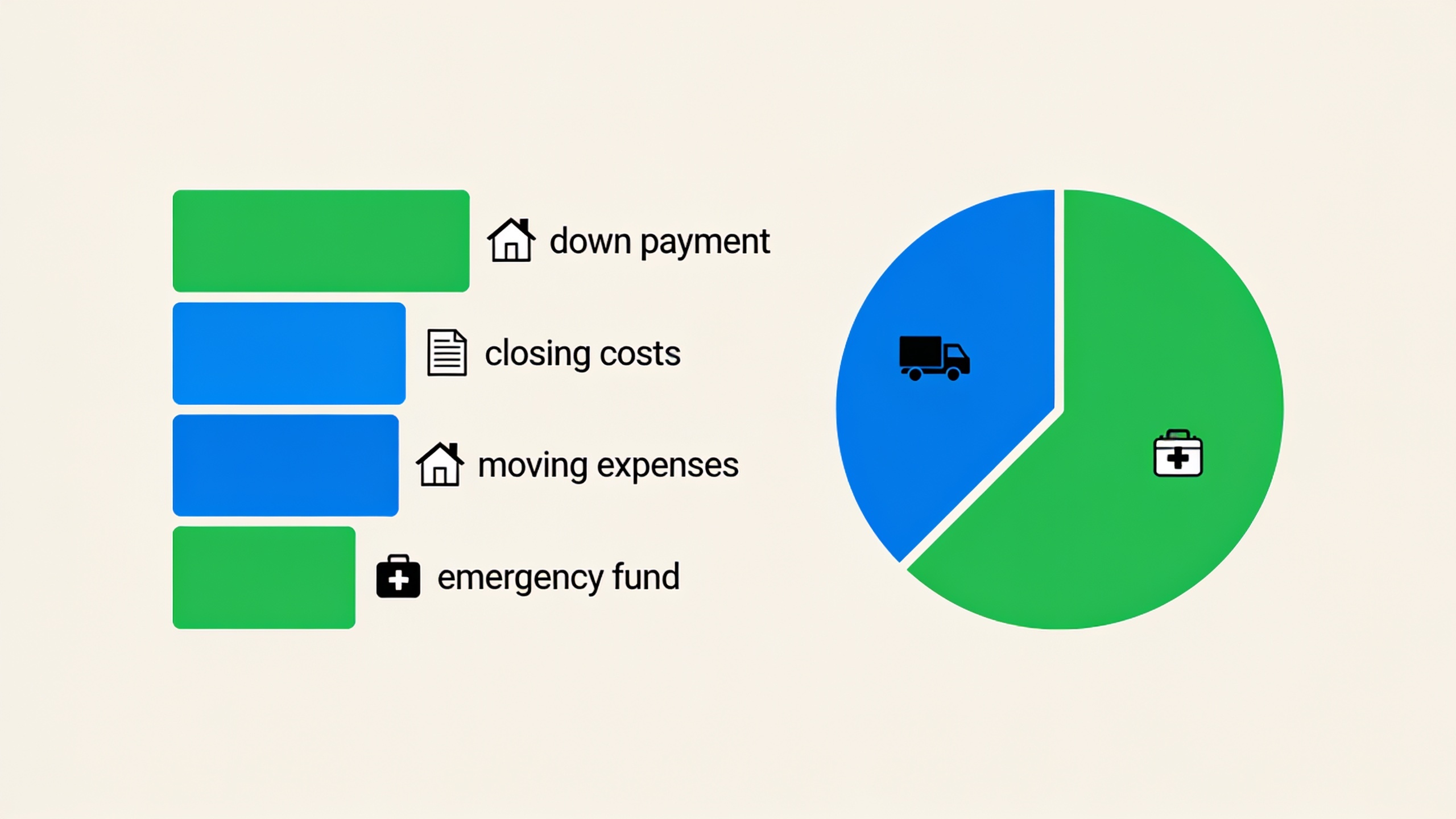
But (and this is the part people skip) the down payment is just one line item. You’ll also need closing costs, which run about 2 to 5% of the purchase price. Then moving expenses. Then the repairs you’ll inevitably discover in month two. And an emergency fund covering three to six months of expenses, because life doesn’t stop being expensive just because you bought a house.
Down Payment Options at a Glance
| Loan Type | Typical Minimum Down Payment | Best For |
|---|---|---|
| Conventional Loan | 3-5% | Buyers with good credit (620+) |
| FHA Loan | 3.5% | Buyers with lower credit scores (580+) |
| VA Loan | 0% | Eligible veterans and active military |
| USDA Loan | 0% | Buyers in eligible rural/suburban areas |
| Jumbo Loan | 10-20% | Buyers purchasing above conforming loan limits |
If you’ve built up enough to cover the down payment plus a real cushion for when things go sideways, that’s one of the clearest signs you’re actually prepared and not just excited.
Your Debt-to-Income Ratio Is Under Control
Your debt-to-income ratio (DTI) is just your monthly debt payments stacked against your gross monthly income. Most lenders want to see it under 43%, though some programs stretch a bit higher if other parts of your application are strong. Basically, if your student loans, car payment, and credit cards eat up less than a third of what you make, you’re sitting pretty.
And paying down debt beforehand isn’t only about qualifying. It’s about not feeling financially strangled the moment you move in. A lower DTI also tends to earn you better loan terms, since you look less risky to the bank.
So if you just knocked out a car loan or made a serious dent in your credit cards, do yourself a favor and recalculate. You might be closer to ready than you realized.
You’ve Outgrown the Renting Lifestyle
Money’s only half the story. The lifestyle stuff counts too, maybe more than people admit. Maybe you’re sick of rent going up faster than your salary. Maybe you can’t hang a shelf without your landlord treating it like a felony. Maybe you just want a dog. These are real signals, not frivolous ones.
Renting buys you flexibility, sure. But every check you write builds someone else’s equity instead of yours. And if those annual rent hikes have started to genuinely annoy you (Zillow’s data shows rents have outpaced wage growth in a lot of metros over the past several years, so it’s not just you), that frustration might be telling you something worth listening to.
Renting vs. Buying: A Quick Comparison
| Factor | Renting | Buying |
|---|---|---|
| Monthly Cost Predictability | Can increase yearly | Fixed with fixed-rate mortgage |
| Equity Building | None | Builds over time |
| Flexibility to Relocate | High | Lower (selling takes time) |
| Maintenance Responsibility | Landlord’s | Yours |
| Tax Benefits | None | Potential mortgage interest deduction |
| Upfront Costs | Security deposit | Down payment + closing costs |
You Know Where You Want to Plant Roots
Buying really only makes sense if you plan to stay put for at least three to five years. That’s the rough breakeven point where equity and appreciation finally cancel out all those upfront costs. Agent fees, closing costs, moving trucks. If you’re eyeing a job in another city or you’re just not sure you even like where you live, waiting is probably the smarter move.
But if you’ve found a neighborhood you actually love, a commute you can tolerate, and you can picture your life playing out there for the next several years? That’s one of the most underrated signs on this whole list. Staying put isn’t just about convenience. It’s about protecting a very large investment from the costs of selling too soon.
You Understand the True Cost of Homeownership
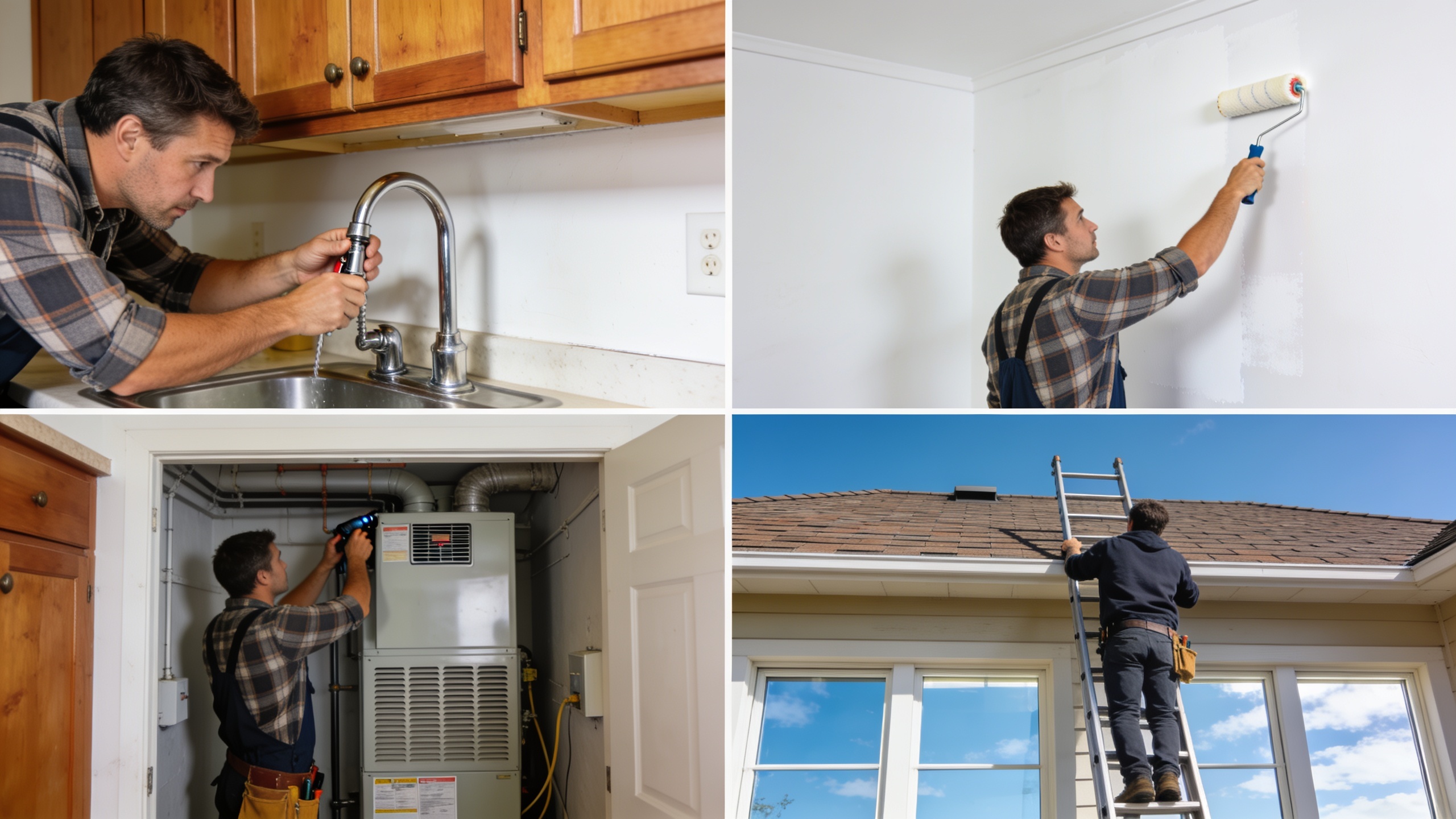
Here’s where a lot of renters get blindsided. The mortgage payment is not the whole cost. Not even close. There’s property taxes, homeowners insurance, PMI if you put down less than 20%, HOA fees if you’re in that kind of place, and the ongoing bleed of maintenance. Add it all up and you’re looking at hundreds of dollars a month on top of the mortgage.
The rule of thumb is to budget 1 to 2% of the home’s value every year just for upkeep. On a $350,000 house, that’s somewhere between $3,500 and $7,000 a year, and that’s before you’ve paid a single mortgage dollar. If you’ve already researched these numbers for the area you’re targeting and adjusted your budget to match, that’s genuine readiness. Not just wanting a house, but understanding what one actually demands.
This is exactly the sort of thing a platform like Vivienda Lista is handy for, since being able to compare total ownership costs across different properties and neighborhoods gives you a much clearer picture before you sign anything.
You’ve Gotten Pre-Approved (Or Are Close To It)
Getting pre-approved is about as concrete a sign as it gets. It means a lender has looked at your income, assets, credit, and debt and put an actual number on what they’ll lend you. And don’t confuse it with pre-qualification, which is basically a napkin estimate. Pre-approval carries real weight with sellers because it proves you’ve been properly vetted.
If you’ve already rounded up your paperwork and had a real conversation with a lender about your options, you’re basically at the finish line. Here’s what they’ll typically want:
- Two years of tax returns
- Recent pay stubs (last 30 days)
- Bank and investment account statements
- Photo identification
- An employment verification letter, sometimes
Honestly, the smartest buyers get pre-approved before they start seriously browsing listings. It keeps you from falling for houses you can’t afford, and it makes your offer move faster once you find the one.
You’re Emotionally Ready for the Commitment
Buying a home isn’t a purely financial thing. There’s an emotional weight to it that spreadsheets don’t capture. You’re signing up to fix your own stuff, pay your own property taxes, and stay put for the foreseeable future. So here’s a decent gut check: does the thought of calling a plumber yourself fill you with dread, or does it just feel like part of the deal? If it’s the latter, that’s a good sign.
People really underestimate how much mental energy that first year of ownership eats up. It’s a lot. But if you’ve talked it through with a partner or a family member or a financial advisor and you come out feeling steady instead of panicked, that’s worth as much as any credit score.
You’ve Run the Numbers on Renting vs. Buying
Last one, and it’s the most practical. Have you actually done the math? Compared your current rent to what a mortgage would run you, including taxes and insurance, in the area you’re looking at? Because in a lot of U.S. markets right now, those two numbers are surprisingly close. Sometimes the mortgage is even lower, especially for smaller starter homes and condos.
Grab an online affordability calculator, mix in some local market research, and figure out your real price range. If the numbers say buying makes sense given your income, savings, and plans, you’ve done the homework most renters never bother with.
And when you’re comparing listings across a few neighborhoods, looking at price per square foot, property tax rates, school districts, that’s where a tool like Vivienda Lista genuinely earns its keep. You can size up a bunch of properties and locations side by side without burning your weekends driving all over town.
Putting It All Together
Nobody checks all ten boxes at once, and that’s fine. Readiness is a spectrum, not a pass/fail test. If you’re nodding along to seven or eight of these, you’re probably in solid shape to start hunting for real. If you’re only at three or four, that’s genuinely useful too. It just tells you where to point your energy next: savings, credit, income stability, whatever’s lagging.
Frequently Asked Questions
How much do I actually need saved before I buy?
More than just the down payment, which can be anywhere from 0% to 20% depending on your loan. Add closing costs (2 to 5% of the price), moving expenses, and an emergency fund covering three to six months of living costs. On a $300,000 home, realistically you’re looking at $15,000 to $50,000 total, depending on your loan program and where you’re buying.
What credit score do I actually need?
Most conventional loans want a 620 minimum. FHA loans go as low as 580 if you put down 3.5%. But if you can get above 740, you’ll land the best rates, and that difference can quietly save you tens of thousands over the life of the loan. Worth the effort.
Should I pay off all my debt first?
Nope, not necessarily. Lenders care about your debt-to-income ratio way more than whether you’re debt-free. Knocking out high-interest stuff like credit cards is almost always smart, but you don’t need to torch your car loan or student loans before you can qualify.
How long should I plan to stay after buying?
Three to five years, minimum. That’s roughly how long it takes to offset the upfront costs and start actually benefiting from equity. If you think you’ll be moving sooner than that, renting is probably the smarter play for now.
What if I only hit a few of these signs?
Totally normal. Treat this as a roadmap, not a checklist you have to complete. Zero in on your weakest spot, whether that’s your credit, your savings, or your job situation, and check back in six to twelve months. You’ll be surprised how fast the picture can change.
Buying your first home deserves a thoughtful approach, not an impulsive one. Whether you’re ticking off most of these signs already or still working your way there, being honest about where you stand (financially and emotionally) puts you miles ahead of anyone jumping in blind. Take stock of your credit, your savings, your income, your actual long-term goals. Then let that guide your timeline. Not the market hype, and definitely not whatever pressure you’re feeling from friends who just bought.
You Might Also Find Useful
- Vivienda Lista – Explore curated home listings, compare properties side by side, and get expert guidance to simplify your home-buying journey.
- Vidbox – A free social media portal for Indonesian users offering games, movies, forums, blogs, and marketplace tools for learning online business.
- Ricaritranslombok – A trusted transportation service in Lombok, Indonesia, offering car rentals, shuttles, and guided tours for tourists and locals.