Blog

  • Zillow Alternative Showdown: Zillow vs. Viviendalista — Which One Actually Fits How You Search?

    Zillow Alternative Showdown: Zillow vs. Viviendalista — Which One Actually Fits How You Search?

    If you’ve done any house hunting online, odds are you opened Zillow first. Everybody does. But it’s not the only game in town, and for a lot of buyers, renters, and investors, a good Zillow alternative ends up being the more useful tool. So I want to put Zillow and Viviendalista side by side, look at how accurate the listings are, what each one does differently, how they make money, and what it actually feels like to use them, so you can figure out which fits the way you search.

    And that last part matters more than people think. If you’re a first-timer eyeing a condo downtown, you want something totally different than an investor chasing cash flow, or a family that needs four bedrooms in a decent school district, or a retiree ready to downsize. The “best” platform depends entirely on what you care about. Let me show you where each one earns its keep and where it kind of flops.

    Table of Contents

    Why Even Bother Comparing Zillow to Something Like Viviendalista?

    Because being the biggest doesn’t automatically make Zillow the right fit for you, and that’s the whole reason a Zillow alternative is worth a look. The scale is genuinely staggering, though. According to Zillow Group’s own investor materials, the company reported roughly 227 million average monthly unique users across its apps and websites in 2023, which makes it the most-visited real estate listing network in the US. That kind of reach means a mountain of listings. It also means all the baggage that comes with a mass-market platform: cookie-cutter search filters, lead-gen pop-ups that won’t quit, and pricing estimates (yep, the famous “Zestimate”) that don’t always get local quirks right.

    Viviendalista, which lives at viviendalist.co, plays a different game. Instead of trying to be everything to everyone, it leans into curated listings, cleaner property comparisons, and actual hand-holding through the buying or renting process. So when you’re weighing Viviendalista vs Zillow, the real question isn’t “who’s got more listings.” It’s “which one helps me make a confident call, faster?”

    That difference is bigger than it sounds. A 2023 National Association of Realtors report found that 76% of home buyers used a mobile app or website as one of their first steps in the search. But the same research keeps showing that buyers who get buried under inaccurate or duplicate listings take longer to find a home and walk away less happy with the whole thing. Closing that gap is basically the entire pitch for a well-built Zillow alternative.

    Listing Accuracy: Who Gets It Right More Often?

    Listing accuracy is just how up-to-date and correct a platform’s data is on price, availability, square footage, and status (active, pending, sold). And honestly? This is the single thing that drives house hunters up the wall on any big aggregator. It’s also where the Zillow vs. Viviendalista matchup gets interesting.

    The Zillow Data Problem

    Zillow pulls listings from thousands of MLS (Multiple Listing Service) feeds nationwide, plus agent-submitted data and, in some markets, For Sale By Owner posts. When you’re vacuuming up that many sources, lag is inevitable. A place can go under contract on the local MLS and still sit there as “active” on Zillow for hours, sometimes a day or two, depending on how fast the feed syncs. Agents complain about this constantly in professional forums. It’s exactly why the platform slaps disclaimers everywhere about third-party data not being guaranteed.

    The Zestimate has taken its share of heat too. Zillow itself admits the Zestimate carries a median error rate that swings by market. Tighter where there’s a ton of recent sales data, wider out in rural areas or with weird one-off properties. That doesn’t make Zillow “wrong,” exactly. It just means the number you’re staring at is an algorithm’s guess, not a certified valuation. Treat it accordingly.

    How Viviendalista Handles Data

    Viviendalista goes the other direction, leaning on curated listings instead of raw firehose aggregation. Because it’s putting effort into quality control and keeping property status current, you tend to bump into fewer “ghost listings,” those maddening places that look available but actually sold or leased weeks ago. The comparison tools help too, since you can see several homes lined up in consistent formatting instead of squinting at mismatched MLS fields scattered across a giant national database.

    Neither one’s perfect, and let’s be real, no online listing service can promise 100% real-time accuracy. That comes down to how fast local MLS boards and individual agents update their own records. But in daily use the difference is clear enough: aggregator scale on one side, curated freshness on the other.
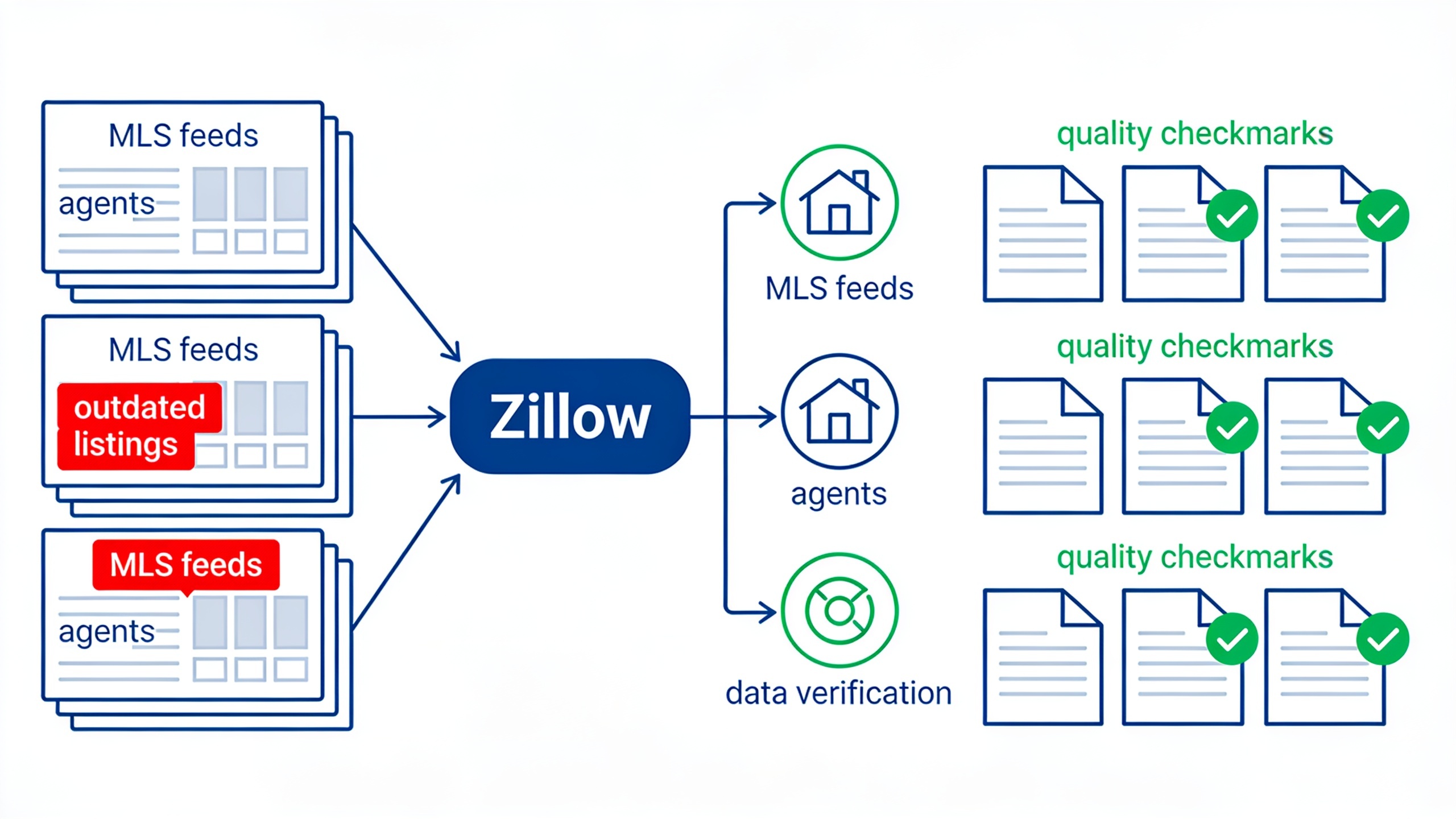
    Infographic comparing data accuracy and update processes between Zillow's aggregation model and Viviendalista's curated approach

    Factor Zillow Viviendalista
    Listing source National MLS aggregation, agent feeds, FSBO Curated listings with quality checks
    Typical update lag Can be hours to a few days depending on MLS feed Focused on maintaining current status
    Price estimates Zestimate (algorithmic, disclosed error margin) Comparison-driven pricing context
    Coverage Extremely broad, nationwide, high volume Targeted, quality-focused inventory
    Best suited for Broad market browsing, rough price research Serious buyers wanting reliable, comparable listings

    What Actually Sets Viviendalista Apart?

    It’s the guided, comparison-first vibe rather than trying to out-muscle the market leader on sheer volume. Zillow’s whole toolkit is built around breadth: mortgage calculators, agent directories, rental applications, the Zestimate. Viviendalista’s is built around depth and helping you decide on the specific property you’re actually thinking about.

    Take the side-by-side comparison tool. On Vivienda Lista you can stack several properties against each other (price, square footage, neighborhood, amenities) in one view. That’s more useful than it sounds. When you’ve narrowed things down to three or four homes, you usually end up drowning in browser tabs and a half-finished spreadsheet trying to keep the details straight. A built-in comparison view kills that friction, and it’s a real relief for first-time buyers who are already stressed enough.

    Then there’s the curation itself. Because Viviendalista isn’t trying to mirror every MLS feed in America, it can actually apply some editorial judgment and quality control to what shows up. If you’ve ever gotten burned clicking an outdated or duplicate Zillow listing, fewer-but-more-trustworthy results feels like a small mercy.

    It also throws in guidance for both first-timers and repeat buyers, the kind of stuff that demystifies contingencies, working with a lender, sizing up whether a neighborhood actually fits. Zillow has educational content too, sure, but it usually plays second fiddle to the lead-gen machine, where the platform connects you with Premier Agents and lenders who paid for that placement. Viviendalista positions itself more as a guide through the process than a marketplace for agent leads. Whether that matters to you probably depends on how much those pop-ups annoy you.

    Oh, and renters. Zillow Rental Manager is a genuinely strong tool for landlords listing units and screening tenants, and it’s one of the most widely used rental tools in the country. Viviendalista’s rental search, meanwhile, is more about letting renters filter and compare without sponsored listings hogging the top of the page, which is a fair complaint about the bigger platforms where paid placement can outrank the thing you actually wanted.

    User Experience and Design

    Zillow gives you a dense, feature-packed interface built for wide browsing, while Viviendalista goes cleaner and more focused to cut down on decision fatigue. Which one “wins” honestly just depends on how your brain likes to shop.

    Zillow’s filters are wild in the best and worst ways. You can sort by school ratings, days on market, HOA fees, pet policies, dozens of things. If you’re a power user who knows exactly what you want, that depth is fantastic. If you’re a first-timer who doesn’t even know which filters matter yet? It’s a lot. The map-based search is great for browsing by neighborhood, and the “Draw Search Area” tool, where you manually outline your own region, is a favorite for anyone hunting a specific school zone.

    Viviendalista keeps it lean, focusing on the filters people actually use most: price range, property type, beds and baths, location. If you’re comparing Viviendalista vs Zillow purely on ease of use, that simplicity tends to win over buyers who want to get from search to shortlist without wrestling advanced settings they’ll never touch.

    On mobile, both have apps, and mobile matters a ton here since the National Association of Realtors has repeatedly found most home searches now start on a phone. Zillow’s app is mature, quick, and loaded with saved-search alerts, in-app agent messaging, and that well-known “shake to see nearby homes” gesture. Viviendalista is newer to the scene but built mobile-first with a minimal, uncluttered feel that seems to click with younger urban first-timers, especially the 25-to-35 crowd who already run their banking and shopping through apps and expect the same here.

    Both let you save searches and get alerts on new matches. The real difference is signal-to-noise. Zillow’s massive inventory means more alerts, but also a higher chance of duplicates or already-stale listings popping back up. Viviendalista’s curated setup throws fewer, more relevant alerts your way. Some people love that. Others find it limiting if they genuinely want to see every last option in a market.

    Pricing, Fees, and How They Actually Make Money

    Neither Zillow nor Viviendalista charges buyers or renters a dime to search listings. Both are free to browse, and both make their money on the seller, agent, and landlord side, not on you.

    Zillow’s big earner is the Premier Agent program, where agents pay to get their profile and contact info featured right next to listings, basically buying leads off buyer inquiries. On top of that there’s Zillow Rental Manager subscriptions for landlords, mortgage advertising through Zillow Home Loans, and plain old display ads. So that “free” search is subsidized by agents and lenders elbowing for your attention, which is exactly why you sometimes have to clear a few agent pop-ups just to see the full listing details.

    Viviendalista’s model leans on connecting buyers and renters straight to curated listings and guidance, without layering aggressive agent-lead ads all over your browsing. If Zillow’s pop-ups and sponsored content make you twitch, this makes for a calmer, more transparent session. You’re less likely to feel like your inquiry got auctioned off before you’d even finished reading the description.

    And look, the real money in a home purchase happens off any platform anyway. Down payment, closing costs, mortgage rate, the ongoing carrying costs. If you’re weighing financing options or just trying to get honest about whether you’re financially ready before you make an offer, resources like Wealthmax can help with the broader planning and investment side. That stuff matters at least as much as which search app you pick, considering a home is probably the biggest financial decision you’ll ever make.

    Is Viviendalista Any Good for Investors?

    Yes, it can be a solid Zillow alternative for real estate investors, especially the ones who want clean comparison data across several potential rentals without slogging through Zillow’s dense, ad-heavy layout. Investors in the 30-to-50 range hunting rentals usually care about a tighter set of numbers than your average home buyer: purchase price against rent potential, neighborhood rental demand, property condition, comparable sales.

    Investors aren’t shopping for emotional fit the way a family picking a forever home is. They want fast, accurate comparisons. Price per square foot, days on market, rent estimates versus similar units nearby. Zillow does have a “Rent Zestimate” that guesses likely rental income, and it’s a fine jumping-off point for a rough cash-flow sketch. But same as the sale-price Zestimate, it’s an algorithm’s estimate, not gospel. Use it as a starting point, not a replacement for real local research or a property manager’s read on things.

    This is where Viviendalista’s side-by-side comparison tools really earn their spot, since you can line up a handful of candidate properties and compare the metrics that matter without the extra noise. And because the inventory’s curated, you waste less time chasing listings that already left the market.

    One more thing worth saying: smart investors rarely dump everything into one asset class. Real estate is a cornerstone of most diversified portfolios, no argument there, but plenty of investors also eye alternative assets, including digital ones, as part of the bigger picture. If you’re curious how something like cryptocurrency fits alongside property in an overall strategy, outlets such as Cryptocoinsjournal run ongoing coverage that helps put digital assets in context next to traditional plays like rentals. Not saying real estate and crypto are interchangeable. They’re not, obviously. But understanding both just makes you a sharper allocator.

    Which One Should a First-Time Buyer Pick?

    First-timers, particularly the 25-to-35 urban-living crowd, usually get the most out of a platform that dials back the overwhelm and spells out the next steps, which tips things toward Viviendalista’s curated, guided style over Zillow’s broader-but-busier one.

    Buying your first place means wrestling dozens of unfamiliar calls at once. How much to offer. What a contingency even is. Whether an HOA fee is reasonable for what you’re getting. A platform that surfaces fewer, better-vetted listings alongside clear guidance genuinely takes the edge off compared to a national firehose. That’s why Vivienda Lista’s focus on expert advice and curated listings tends to land with people who don’t yet have an agent’s gut instinct for what’s normal versus what’s a giant red flag.

    But I won’t pretend Zillow’s scale is a downside for everybody. For buyers who want to see literally everything in a market before narrowing, that volume is a real edge. The saved-search alerts and mobile notifications are excellent in fast-moving urban markets where new listings need eyeballs within days, sometimes hours, of going live. If your whole worry is “don’t let me miss anything,” Zillow’s aggregation is hard to beat on raw numbers.

    So a lot of people just use both. Zillow for the wide opening sweep, Viviendalista to narrow the shortlist with cleaner comparisons and guidance before you make an offer. Nobody’s forcing you to marry one platform. And in a competitive market, more information (used wisely) usually beats less.
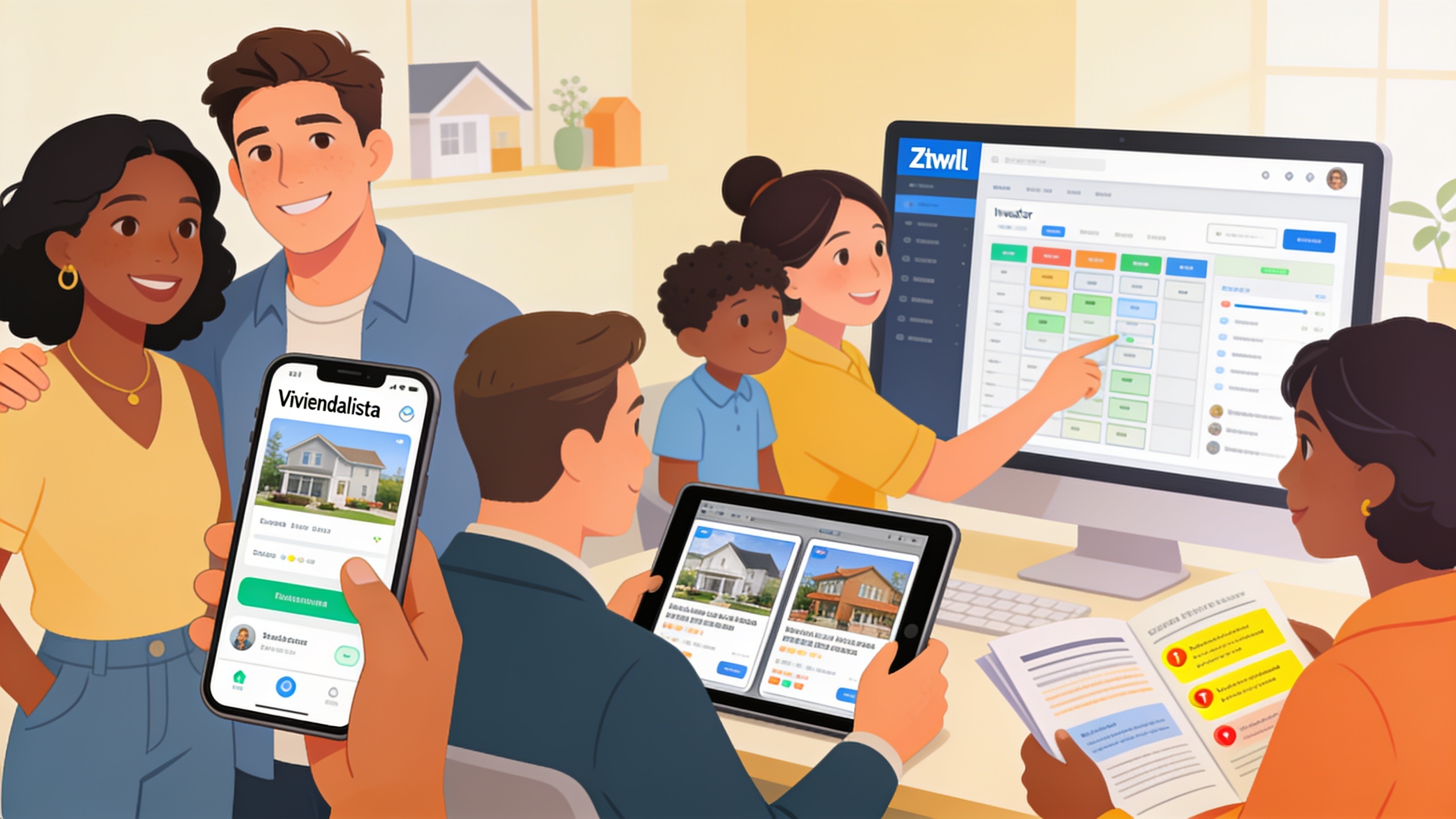
    Diverse group of homebuyers and investors using real estate search platforms on different devices

    Families and retirees skew a little differently, by the way. Families chasing bigger suburban homes with good schools tend to lean on Zillow’s detailed filters (school ratings, lot size, bedroom count) early on, then drift toward a cleaner comparison tool once they’ve got two or three finalist neighborhoods locked in. Retirees downsizing or shopping a vacation place usually want the calmer browse with less lead-gen pressure, which lines up nicely with Viviendalista’s more guided, less ad-driven feel.

    Frequently Asked Questions

    Is Viviendalista actually free like Zillow?
    Yep. Both are free for buyers and renters to browse listings, save searches, and compare properties. They make their money off agents, landlords, and lenders, not off you.

    So which one has more accurate listings?
    Depends on the market and the specific listing, honestly. Zillow aggregates from a huge number of MLS feeds nationwide, so you get broader coverage but the occasional lag between a property’s real status and what’s showing online. Viviendalista’s curated approach tends to cut down on stale or duplicate listings, though in some markets its overall inventory might be smaller than Zillow’s. Either way, always confirm current status with a local agent before you act on anything.

    Can Viviendalista be my only Zillow alternative, or should I check other sites too?
    Most seasoned house hunters check more than one source no matter which they prefer. Running Viviendalista alongside Zillow, or occasionally cross-referencing your local MLS site directly, gives you a fuller picture and catches listings that might be delayed or missing on one platform.

    Does Viviendalista have mortgage or financing tools like Zillow?
    Not really. Viviendalista sticks to listings, comparisons, and buyer guidance rather than running its own lending arm the way Zillow Home Loans does. For financing help and broader planning, buyers often pair their search with independent resources, including financial planning platforms, to make sure the budget and investment strategy hold up before making an offer.

    Is the Zestimate reliable enough to base an offer on?
    No, not on its own. The Zestimate is an automated estimate, not a certified appraisal, and Zillow itself discloses that accuracy varies by market and property type. It’s a decent rough sense of value, but you’ll still want a professional appraisal, a local agent’s comparative market analysis, or a platform’s own comparison tools before you lock in an offer price.

    There’s no clean winner in the Zillow vs. Viviendalista debate, because the right pick just depends on what kind of house hunter you are. Want maximum volume, granular filters, and a polished mobile app? Zillow’s scale is tough to touch. Want a calmer, curated experience with strong comparison tools and guidance that actually moves you from browsing to a confident decision? Then a Zillow alternative like Viviendalista deserves a spot in your toolkit. And plenty of people get the best of both by casting a wide net on one and then narrowing and comparing on the other before they sign on the dotted line.


  • Downsizing for Retirement: What You Need to Know

    Downsizing for Retirement: What You Need to Know

    If you’re over 55 and thinking about moving into something smaller, you already know this isn’t just a real estate transaction. It’s about lifestyle. It’s about money, sure. But it’s also about family memories, and figuring out what “home” even means for the next stretch of your life. Maybe you’re picturing a condo a few blocks from the grandkids. Maybe it’s a little lake cottage. Either way, downsizing is this weird mix of emotional reckoning and spreadsheet math, and both sides deserve your attention long before you’re calling movers.

    At viviendalist.co, we talk to retirees going through exactly this all the time. And honestly? The difference between a nightmare move and an exciting new chapter usually comes down to how well people prepared. So this guide covers the whole thing, the sentimental stuff about letting go and the cold financial calculations too. Let’s get into it.

    Table of Contents

    • Why Retirees Choose to Downsize
    • The Emotional Side of Downsizing for Retirement
    • Financial Benefits and Considerations
    • Choosing the Right Type of Home
    • Timing Your Downsizing Move
    • Practical Steps for a Smooth Transition
    • Common Mistakes to Avoid
    • FAQ: Downsizing for Retirement

    Why Retirees Choose to Downsize

    Nobody wakes up one day and decides to sell the family home for one single reason. It builds up. A few different things pile on top of each other until moving just starts to make sense. A 2023 survey from the National Association of Realtors found that about 55% of home sellers 65 and older wanted to be closer to friends or family, and nearly a third said their house had simply gotten too big for them. Which, if you’ve ever cleaned four bedrooms you never set foot in, tracks.

    The maintenance thing is huge. A smaller place or a condo usually means no more weekend yard battles, fewer surprise repairs, and utility bills that don’t make you wince. Then there’s the equity. A lot of retirees are basically sitting on a pile of money locked inside a house they bought decades ago, and selling frees that cash up for travel or healthcare or investments. Some people just want a different life, trading the quiet suburb for a walkable city apartment or a beach condo. And for others it’s about health, plain and simple, because stairs and big properties and out-of-the-way locations get harder to deal with over time.

    One thing worth saying, though: downsizing doesn’t have to mean shrinking into a shoebox. Plenty of people “right-size” instead. They swap a five-bedroom money pit for a smart, well-laid-out two-bedroom that’s actually more pleasant to live in. Smaller footprint, better everything.

    The Emotional Side of Downsizing for Retirement

    This is the part people wildly underestimate. A family home isn’t just walls and a roof. It’s decades of birthdays and holidays and lazy Sunday mornings with the newspaper. Letting that go can hit you with real grief, even when the move is completely voluntary and financially brilliant.

    Acknowledging the Loss

    You’re allowed to feel two things at once. Excited about a fresh start, and genuinely sad about leaving. Those aren’t contradictory, they just live side by side. There’s actually a term for this, “anticipatory grief,” which is basically mourning something before it’s even gone, and it shows up a lot in people getting ready to sell a long-time home. Pretending you only feel the happy part doesn’t make the sad part disappear. It just ambushes you later.

    Involving Family in the Process

    Here’s something that surprises people: your adult kids often have strong feelings about the house too, even if they moved out fifteen years ago. Bringing them into the conversation early tends to smooth things over, as long as everyone understands the final call is yours. Some families do a little farewell gathering before the move, one last get-together in the old place so everyone can say goodbye properly. It sounds sappy. It also really helps.

    Deciding What to Keep

    Sorting through decades of stuff is exhausting, and not just physically. One approach that works well is the three-box method: keep, donate-or-sell, and pass-down-now. That last one matters more than people think. Give the heirlooms to your kids while you’re around to see them enjoyed, rather than boxing everything up “for later.” The whole point is to break a giant overwhelming task into a bunch of small, doable decisions so you’re not paralyzed halfway through.

    Three-box downsizing method infographic showing Keep, Donate or Sell, and Pass Down Now categories with example items

    Financial Benefits and Considerations

    Downsizing usually gets pitched as a money move, and fair enough, the numbers can look great. But you’ve got to see the full picture, not just the sale price flashing in your head.

    Where the Money Goes

    When you sell a big house and buy something smaller, that price difference isn’t free money landing in your lap. A bunch of costs nibble away at it. Here’s a rough breakdown of what actually moves the needle:

    Factor Impact on Finances
    Home sale proceeds Often the largest source of new capital, but taxes and selling costs (typically 6-10% of sale price) reduce the net amount
    New home purchase price Even a modest condo or cottage can cost $200,000–$500,000+ depending on location
    Property tax changes Some states offer senior exemptions; others may increase taxes if moving to a more desirable area
    HOA or condo fees Common in smaller communities and can range from $150 to $800+ per month
    Moving and renovation costs Often underestimated; can run $5,000–$20,000 depending on distance and needed updates
    Ongoing maintenance savings Smaller homes typically cut utility and upkeep costs by 20-40%

    Tax Implications

    In the US, you can usually exclude up to $250,000 in capital gains if you’re single, or $500,000 if you’re married filing jointly, from the sale of your primary residence. Catch is, you need to have lived there for at least two of the last five years. For anyone who’s owned their home for decades and watched it balloon in value, that exclusion is a big deal. It can be the difference between a tidy windfall and an unpleasant tax bill.

    Using Proceeds Wisely

    Don’t blow it all at once. I know, easier said than done when there’s suddenly a chunk of cash sitting there. But most advisors will tell you to spread it out. People typically put it toward paying off any remaining mortgage, topping up an emergency fund, buying income-generating assets, covering future healthcare or long-term care, or funding the fun stuff (travel, hobbies) without raiding their retirement accounts.

    If you’re not sure how to line all this up, a financial planner is worth every penny. It also doesn’t hurt to poke around knowledge-sharing communities like Qastme, where regular people swap real retirement-planning stories and you get perspective from folks who’ve actually lived through it, not just read about it.

    Choosing the Right Type of Home

    There’s no single “retiree house.” What’s right for you depends on what you actually care about. Being near family, climate, healthcare, the kind of daily life you want. All of it matters.

    Condos and townhomes are popular for a reason: the HOA handles the landscaping, the roof, the snow. You’re basically outsourcing all the chores you’re sick of. The trade-off is the monthly fee and less say over shared spaces. Then you’ve got single-level homes, which a lot of people go for specifically to dodge stairs down the road. Smart move, but be warned, they’re in high demand and often come with a price bump in the good areas.

    55+ active adult communities are their own thing. Pools, fitness centers, social clubs, the works. If you’re moving away from a long-established friend group, that built-in social scene can be a lifesaver, because making friends at 70 in a strange town is harder than anyone admits.

    And then there’s my favorite quiet trend: people flipping the whole model. Instead of hanging onto the vacation home as a second property, they sell the family house and just move into the vacation spot full-time. This can be genuinely wonderful, but only if the place actually works year-round. Check that it’s not a ghost town in February and that there’s real healthcare nearby, not just a tourist strip that shutters after Labor Day.

    Whatever you pick, think about your actual day-to-day there. The little routines matter more than you’d guess. Some retirees moving to smaller coastal or desert towns look up local spots for things like tanning, say Tantopia, because keeping familiar small pleasures alive is one of the fastest ways to make a new place feel like home instead of a hotel you’re stuck in.

    Timing Your Downsizing Move

    There’s no magic age. But there are smarter windows, and it’s worth thinking about which one fits you.

    Doing it before you retire means you can lean on your paycheck to absorb moving costs and renovations. Doing it after gives you all the time in the world, but you’re budgeting on a fixed income, so you’ve got to be careful. Neither is wrong, they just have different pressures.

    Market timing is real, too. Real estate goes up and down, and when you sell can genuinely affect your take-home. Spring and early summer usually bring out more buyers in most US markets, which tends to mean better offers. That said, don’t lose your mind chasing the “perfect” market. A slightly softer sale price is almost always worth it if the timing lines up with when you’re actually ready to move, emotionally and logistically.

    And here’s the one people ignore until it’s too late: your health. Wait too long and a move can turn from “exciting project” into “urgent scramble.” If mobility or health takes an unexpected turn, suddenly you’re rushing, and rushing this stuff is miserable. Most retirement counselors say the same thing, make the call while you’re still spry enough to handle the logistics yourself, rather than waiting until circumstances force your hand.

    Practical Steps for a Smooth Transition

    Once you’ve decided to actually do this, chopping it into stages keeps it from swallowing you whole.

    Start by getting a realistic sense of what your current home is worth. Talk to a local agent, or dig into updated listings and estimates on platforms like viviendalist.co, so you’re working with real numbers instead of what your neighbor swears he sold his place for.

    Then build a downsizing budget. And be honest with yourself here. Factor in moving costs, renovations on the new place, agent commissions, and closing costs on both transactions. That last part sneaks up on people.

    Retiree reviewing downsizing budget and financial planning documents at a desk with laptop and calculator

    Decluttering should start months out, not weeks. Do one room at a time so you don’t burn out, and hand meaningful things to family members now so they get used instead of gathering dust in a box. As for scoping out neighborhoods, don’t just do the one polished afternoon visit. Go back at different times, weekdays and weekends, morning and evening. Check the grocery stores, the medical facilities, the restaurants. Honestly, grabbing a meal somewhere local like Suysmexicanrestaurant1 tells you more about whether a neighborhood fits your vibe than any brochure ever will.

    A couple of final things. Book your movers early, especially in peak season (late spring through summer), and consider a staging service if you’re selling a bigger home. It genuinely pulls stronger offers. And when you set up the new place, resist the urge to just recreate the old layout. This is your chance to design for the life you have now. Fewer unused guest rooms, smarter storage, better lighting for reading. Build the space around how you actually live.

    Common Mistakes to Avoid

    Even careful people trip over the same few things. The biggest one is underestimating the emotional pull of your stuff, then rushing the decluttering and regretting what you tossed. Slow down on that.

    Buying too small is another classic. Some folks downsize so aggressively they leave no room for hobbies, guests, or a home office, and then they’re moving again three years later. Related to that: ignoring future mobility. That charming two-story cottage might be a nightmare in a decade, so think about aging-in-place features like walk-in showers and minimal stairs before you fall in love with the staircase.

    Two more that bite people. First, glossing over HOA rules and fees, because some communities have surprisingly strict restrictions on renovations, pets, or rentals, and you don’t want to find out after you’ve signed. And second, skipping the tax professional. Capital gains exclusions, state-to-state tax differences, retirement account withdrawals, they all tangle together in ways that are honestly worth paying an expert to untangle for you.

    FAQ: Downsizing for Retirement

    Is downsizing for retirement always the smartest financial move?
    Nope, not always. A lot of retirees come out ahead thanks to lower maintenance costs and freed-up equity, but it really depends on your local market, the gap between your old and new home prices, and ongoing costs like HOA fees. Run the numbers with a financial advisor before you commit. Seriously.

    What’s the ideal home size for retirees?
    There’s no magic number. That said, a lot of people land on one or two bedrooms plus a flexible room, something that can flip between guest space, hobby room, or home office. You want to cut the wasted square footage without giving up comfort.

    How do I decide what to keep when downsizing?
    Keep the stuff you actually use and the stuff that genuinely means something to you. Pass heirlooms to family now rather than hoarding them “for later.” And a warning: storage units are almost never the answer. They just become a monthly bill for things you’ll never look at again.

    Should I downsize before or after selling my current home?
    Ideally, line up your new place, or at least a solid plan, before you sell, so you’re not stuck between houses. If the two transactions won’t quite sync up, bridge loans or a short-term rental can bridge the gap.

    Can downsizing help with retirement income, not just savings?
    It can, yeah. Some people downsize specifically to slash their monthly expenses, which is basically the same as giving themselves a raise in disposable income. Lower utility bills, smaller property taxes, cheaper insurance, it all adds up to real money every month.

    At the end of it, downsizing is a deeply personal call that mashes together hard financial strategy and genuine emotional work. There’s no one right way. Some people cross the country to be near the grandkids. Others just swap a big suburban house for an easy condo a few miles away. What actually matters is giving yourself time to sit with the emotional side, being honest about the numbers, and picking a place that fits the life you want, not the one you’re leaving. And if you’re ready to start seeing what’s actually out there, browsing current listings on viviendalist.co is a solid way to get a feel for what’s realistic in your area and budget.

  • Rental Property Investing 101: A Beginner’s Roadmap

    Rental Property Investing 101: A Beginner’s Roadmap

    So you’re thinking about buying a rental property. Maybe you watched one too many YouTube videos about “financial freedom,” or you’ve been scrolling Zillow during lunch like it’s a slot machine. Or maybe a friend keeps bragging about the checks that show up in their account every month, and you’re quietly wondering why that isn’t you. Whatever got you here, good. Rental property is genuinely one of the more accessible ways regular people build wealth, and no, you don’t need a finance degree or a rich uncle.

    But let me be straight with you: it’s not the passive money-printing machine the gurus make it out to be. You don’t just buy a house and cash checks forever. There’s math involved, some of it uncomfortable, and a bunch of stuff that’ll go wrong the exact moment you feel confident. This guide walks through what actually matters, from cash flow to the parts of being a landlord nobody warns you about, so your first deal isn’t a very expensive lesson.

    Table of Contents

    • Why Real Estate Still Holds Up
    • Cash Flow: The Thing That Actually Keeps You in the Game
    • The Numbers You Can’t Skip
    • Getting the Money (aka Financing)
    • Picking a Property Without Losing Your Mind
    • Being a Landlord, For Real This Time
    • Mistakes That’ll Cost You
    • Turning One Property Into Several

    Why Real Estate Still Holds Up

    People always ask: why property instead of just dumping money into stocks or crypto? Fair question. And honestly, for a lot of folks, index funds are the smarter, lower-hassle move. But real estate does a few things other investments just can’t.

    For one, it pays you two ways at once. There’s the monthly rent your tenants hand over, and then there’s the property quietly appreciating in the background. The Federal Reserve’s long-term data has national home values climbing somewhere around 3 to 5% a year, and in the hotter metro areas over the past decade? A lot more than that. Toss in the tax perks (depreciation, writing off mortgage interest, the 1031 exchange that lets you roll gains into a new property tax-deferred) and you’ve got an asset that rewards you from a few directions at the same time.

    Then there’s leverage, which is the part that makes real estate feel almost unfair. With stocks, you buy $50,000 worth of shares with $50,000. With property, you can control a $300,000 house with maybe $60,000 to $75,000 down and let the bank cover the rest. Your returns get calculated against the whole asset, not just your cash. That amplifies your gains. It also amplifies your losses, so don’t get drunk on it.

    And the last thing, which I think gets underrated: control. You can renovate a bathroom to bump the value. You can raise rents when the market moves. You can pick your tenants (please, pick carefully). Try doing any of that with a share of Apple. That hands-on quality is a big part of why so many first-timers gravitate toward real estate. You’re actually driving.

    Cash Flow: The Thing That Actually Keeps You in the Game

    If you take one idea away from this whole article, make it this one. Cash flow is the money left in your pocket every month after every bill is paid. Positive cash flow means the property is a little business that pays you. Negative cash flow means you are the one feeding the property out of your own savings, month after month, and hoping the appreciation fairy shows up eventually.

    The basic math looks like this:

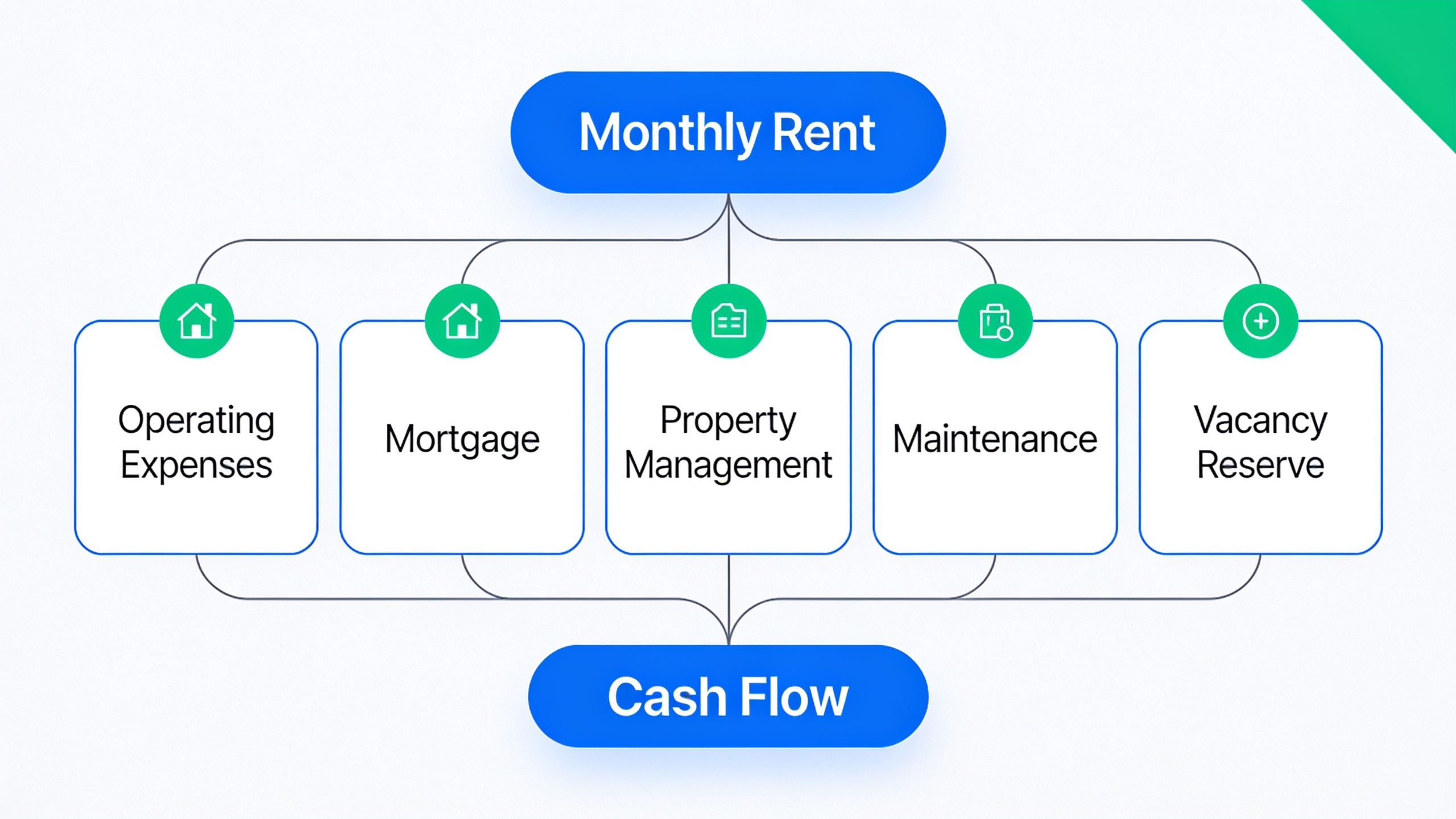
    Monthly Rent − Operating Expenses − Mortgage = Cash Flow

    Simple enough. The trap is in that “operating expenses” line, because beginners love to forget half of it. Your real costs include property taxes and insurance, sure. But also property management (figure 8 to 10% of rent if you hire it out), maintenance and repairs (budget 1 to 2% of the property’s value every year), and a vacancy reserve for the months the place sits empty (5 to 8% of rent is a reasonable cushion). If there’s an HOA, that’s on the list too. And if you’re covering any utilities, don’t pretend those are free.

    Here’s where people get wrecked: they run the numbers using only the mortgage and taxes, the deal looks amazing, they buy it, and then the water heater dies in month three and the tenant moves out in month five. Suddenly that “cash-flowing” property is bleeding money.

    Seasoned investors use a shortcut called the 50% Rule to sanity-check deals fast. The idea is that roughly half your gross rent will get eaten by operating expenses (not counting the mortgage). It’s not gospel, and it’ll be off for plenty of specific properties, but when you’re screening ten listings on a Tuesday night it keeps you honest.

    One more thing, because people argue about this endlessly. Appreciation is fun to daydream about, but it’s speculative. You don’t control the market, and you can’t spend equity you haven’t cashed out. Cash flow you can actually touch. It pays your bills, builds your reserve, and keeps you afloat when the economy hiccups. Buy for cash flow. Let appreciation be the bonus, not the plan.

    Cash flow calculation infographic showing rent minus expenses and mortgage equals positive cash flow

    The Numbers You Can’t Skip

    Okay, some math. This is the part where new investors either freeze up or just… skip it entirely and buy on vibes. Don’t be that person. A couple of calculations can save you from a five-figure mistake.

    The cap rate tells you a property’s return based purely on what it earns versus what it costs, with financing left out of the picture completely.

    Cap Rate = Net Operating Income ÷ Property Price

    So a place pulling $18,000 in annual NOI that costs $300,000 has a 6% cap rate. Cap rates swing wildly by market. Hot urban areas might sit at 3 to 5% because buyers are paying up for future growth, while slower secondary markets might hand you 8 to 10% because investors want more cash flow to make up for less appreciation.

    Then there’s cash-on-cash return, which I’d argue matters more for most beginners since almost nobody pays cash for their first rental. This one measures the return on the actual money you put in (down payment, closing costs, initial fix-up), factoring in your mortgage.

    Cash-on-Cash Return = Annual Pre-Tax Cash Flow ÷ Total Cash Invested

    Here’s a quick reference so you’re not juggling all this in your head:

    Metric What It Measures Best Used For Typical Beginner-Friendly Range
    Cap Rate Return based on price, no financing Comparing properties across markets 5% – 10%
    Cash-on-Cash Return Return on actual cash invested Evaluating financed deals 8% – 12%
    Gross Rent Multiplier (GRM) Price relative to gross rental income Quick screening 8 – 12
    Debt Service Coverage Ratio (DSCR) NOI relative to mortgage payment Lender approval, risk assessment 1.2 or higher

    Just don’t lean on any single number. A property can have a gorgeous cap rate and still be a dud if it’s parked in a neighborhood that’s quietly emptying out. Or great cash-on-cash but a DSCR so thin it barely covers its own mortgage, meaning one bad month sinks you. These numbers work as a group, not solo acts.

    Getting the Money (aka Financing)

    This is usually where new investors get a splash of cold water. Lenders do not treat a rental the way they treat the house you live in, and knowing that upfront saves you a lot of confused phone calls.

    Expect to put 20 to 25% down on a non-owner-occupied investment property. Compare that to the 3 to 5% you might get away with on a primary residence and yeah, it stings. Interest rates run higher too, usually half a point to three-quarters of a point above what a homeowner would get, because the bank figures you’re more likely to walk away from an investment than the roof over your own head. They’re not wrong.

    If that down payment feels out of reach, look into house hacking. It’s easily one of the best entry points for anyone short on capital. You buy a duplex, triplex, or fourplex, live in one unit, and rent out the rest. Because you actually live there, you can qualify for owner-occupant financing, sometimes an FHA loan with as little as 3.5% down, while your tenants basically cover your mortgage. I know several people who started exactly this way and later moved out, kept the whole building as a rental, and did it again. It’s a cheat code, honestly.

    Once you outgrow your first place and want to keep buying, traditional financing based on your personal income gets tricky (most lenders cap how many mortgages they’ll give one person). That’s when DSCR loans enter the picture. These qualify you based on the property’s rental income instead of your W-2, which is exactly why investors building bigger portfolios love them.

    Picking a Property Without Losing Your Mind

    Not every market works for rentals, and not every property works even in a good market. The “right” choice really does depend on your goals, your budget, and how much risk lets you sleep at night.

    Before you fall for any specific house, zoom out and look at the market. Is the population growing? Are jobs coming in or leaving? Areas with rising employment tend to have steady, reliable rental demand, which is exactly what you want. Check the rent-to-price ratio too, comparing median rents against median home prices; a higher ratio usually points to better cash flow. Low vacancy rates are a green flag. And if you’re going after families or long-term tenants, decent school districts and nearby amenities matter more than you’d think.

    On property type, there’s a real trade-off. Single-family homes attract longer-term tenants, they’re easier to finance, and they’re easier to sell when you want out, but the cash flow per unit tends to be thinner. Duplexes and small multifamily buildings usually cash flow better and give you a bit of built-in insurance (one unit empty doesn’t mean zero income), though they’re more of a headache to manage and finance. Condos can look tempting because they’re cheaper, but HOA fees eat into returns and some HOAs flat-out ban renting. Check the HOA’s rental policy before you get attached. I cannot stress this enough.

    Now, local versus out-of-state. Most first-timers buy locally, and honestly that’s a smart default. You can walk the property yourself, meet contractors, actually know the area. But if your hometown has sky-high prices and rents that don’t come close to justifying them, some investors chase cash flow in more affordable markets elsewhere. Just know that going out-of-state means more homework, a trustworthy local team, and almost certainly a property manager to bridge the gap. It’s doable. It’s not casual.

    Being a Landlord, For Real This Time

    Own a rental and congratulations, you’re running a small business now, whether you feel like it or not. You don’t have to love that part, but you can’t ignore it.

    First decision: manage it yourself or pay someone? Doing it yourself saves that 8 to 10% fee, which adds up. But it costs you time, availability, and the emotional bandwidth to field a “the toilet’s overflowing” call at 11pm. A property manager costs money but buys back your evenings and puts a buffer between you and your tenants, which is worth a lot if you’ve got a demanding job or you’re managing from three states away.

    Here’s the breakdown:

    Factor Self-Management Professional Property Manager
    Monthly Cost $0 8% – 10% of rent
    Time Commitment High Low
    Tenant Screening You handle it Manager handles it
    Maintenance Coordination Direct responsibility Managed via vendor network
    Best For Local, hands-on investors Busy investors or out-of-state owners

    Whatever you decide, do not cut corners on tenant screening. A bad tenant can cost you thousands in unpaid rent, torched-up drywall, and the special hell that is an eviction. Run credit checks. Verify income (a common rule is gross income of at least three times the monthly rent). Call previous landlords. Do the background check. The temptation to skip all this just to fill a vacancy fast is real, and it’s exactly how new landlords get burned.

    Property manager reviewing tenant screening documents including credit checks and background information

    You also need to actually know your local landlord-tenant laws, because “I didn’t know” isn’t a defense anyone will accept. Security deposits, eviction procedures, required disclosures, habitability standards, all of it varies by state and often by city. Either study your local rules until you know them cold or work with a property manager or real estate attorney who already does.

    And set up a maintenance reserve. Separate from your regular cash flow. This is the account you don’t touch until the roof goes or the HVAC dies in July (it always dies in July). Setting aside 1 to 2% of the property’s value each year is the usual guideline, though bump it up for older places. The point is that a $6,000 repair should be an annoyance, not a crisis.

    Mistakes That’ll Cost You

    Learning from other people’s screwups is a lot cheaper than making your own, so here’s what trips up new investors over and over.

    The big one is underestimating expenses. People forget vacancy, capital expenditures, and management fees, run rosy numbers, buy the place, and then watch it quietly hemorrhage money that looked like profit on the spreadsheet.

    Close behind is buying on emotion. That gorgeous renovated kitchen means nothing if the rent-to-price ratio doesn’t work. You’re not moving in. Fall in love with the numbers, not the backsplash.

    A few others worth burning into your memory: never waive the inspection just to win a bidding war (that’s how you inherit a cracked foundation you didn’t budget for). Don’t over-leverage yourself across a bunch of properties with no cash reserves, because one vacancy or one busted HVAC can bring the whole thing down like dominoes. And have some idea of your exit, even if you plan to hold forever. Knowing how you’d sell, refinance, or hand it off keeps you from feeling trapped later.

    Turning One Property Into Several

    Once your first rental is stable and actually cash-flowing, something clicks. You’ve got equity, you’ve got experience, and suddenly the second one feels a lot less scary. Plenty of investors tap that first property’s equity through a cash-out refinance or a HELOC to fund the next deal.

    This is where the BRRRR method (Buy, Rehab, Rent, Refinance, Repeat) starts making sense. The whole idea is recycling the same chunk of capital across deal after deal instead of grinding to save a fresh down payment every single time. As you grow, spreading across different property types and even different markets can cushion you against a downturn or some nasty new regulation in one particular city.

    The real shift, though, is mental. Treat this like a business, not a hobby. Keep clean records. Track how each property’s performing. Reinvest with a plan instead of on a whim. And keep learning, because markets and laws don’t sit still. The people who do well here aren’t the ones who got lucky. They’re the ones who kept showing up and running the numbers.

    Frequently Asked Questions

    How much money do I actually need to get started?

    Depends heavily on your market and how you finance it, but a decent benchmark is a 20 to 25% down payment plus 3 to 6 months of reserves. In cheaper markets that might be $30,000 to $50,000 all in; in pricey metros, a lot more. House hacking with an FHA loan can drag that number way down, sometimes under $20,000, which is why it’s such a popular first move.

    What’s a good cash flow number to aim for?

    Lots of experienced investors want at least $200 to $300 in positive monthly cash flow per unit after everything’s paid, but honestly that varies a ton. What matters more than hitting some magic figure is that the property comfortably covers itself with room to spare. Don’t chase an arbitrary number off the internet.

    Should I manage it myself or hire someone?

    If you’re local, have the time, and don’t mind rolling up your sleeves, self-managing saves real money. If you’re out of state, slammed at your day job, or you just want a more hands-off life, paying a manager 8 to 10% is usually worth every penny for the peace of mind alone.

    Does this even work with today’s higher interest rates?

    It does, but you’ve got to underwrite way more carefully than people did during the cheap-money years. Focus on deals that show strong cash-on-cash returns even at current rates. Lean toward house hacking or small multifamily. And whatever you do, don’t buy something that only “works” if appreciation shows up to save it.

    How many properties do I need to retire?

    Comes down to how much monthly income you want and how much each property nets. If you need $5,000 a month and each place clears $500, that’s roughly ten properties. But most people I know set smaller goals first, like replacing a chunk of their salary, rather than fixating on some big round number.

    At the risk of sounding like every other article you’ve read: rental property rewards the people who do the boring homework, run honest numbers, and treat their first deal as a learning experience instead of a lottery ticket. Start small. Know your market cold. And use whatever tools make the search less painful, because the habits you build on that first property will shape every single decision you make after it.

    You Might Also Find Useful

    • Vivienda Lista – A comprehensive platform for finding your ideal home to buy or rent, featuring curated listings, property comparisons, and expert guidance.
    • Cryptocoinsjournal – News, insights, and market analysis on cryptocurrencies and blockchain for investors exploring digital assets alongside traditional real estate.
    • Vidbox – An Indonesian social media portal offering free registration, games, movies, forums, blogs, and marketplace tools for online learning and business.
  • Urban vs. Suburban Living: Which Fits Your Lifestyle?

    Urban vs. Suburban Living: Which Fits Your Lifestyle?

    Where you live is probably one of the two or three biggest decisions you’ll make in your adult life, right up there with who you marry and whether you have kids. And the whole city-versus-suburbs question has gotten a lot more complicated lately. Remote work flipped everyone’s priorities, housing prices went haywire in basically every metro area, and different generations seem to want completely different things out of their neighborhoods.

    So whether you’re a first-timer daydreaming about a downtown condo, a family trying to land in a decent school district, or you’re finally ready to downsize and stop mowing that giant lawn, it pays to actually understand the trade-offs. Get this wrong and you could lose years being miserable and a scary amount of money on top of it.

    I’m going to walk through the stuff that actually matters: what it costs, how long you’ll spend commuting, how much space you get, the community angle, and whether either one is a smart place to park your money. Real numbers, not vibes.

    Table of Contents

    Defining Urban and Suburban Living

    Quick housekeeping before we get into the good stuff, because these words mean slightly different things to different people.

    Urban living usually means you’re inside a city’s core or one of the dense neighborhoods around it. High-rises, walkable blocks, restaurants and offices and bars all crammed within a few minutes of your front door. Suburban living is the residential stuff outside the center. Single-family homes, bigger lots, and a car you basically can’t function without.

    Except the lines have gotten fuzzy. A lot of “urban” neighborhoods now have mixed-use developments with actual green space, and plenty of suburbs have built walkable little downtowns with train connections. But the core difference is still there: how dense it is, what the houses look like, and the rhythm of your average Tuesday.

    For what it’s worth, about 55% of Americans live in the suburbs, roughly 31% in urban cores, and the rest are rural, per the Census Bureau. That suburban majority hasn’t really budged in decades. The pandemic did juice suburban and exurban growth between 2020 and 2022 (everyone wanted a yard and an office door that closed), but city rentals came roaring back by 2023. So much for the “everyone’s fleeing the cities forever” narrative.

    Cost of Living: Urban vs Suburban Living Compared

    Money’s usually the first thing people think about, and it’s almost never as simple as “the suburbs are cheaper.” Depends entirely on what you’re actually measuring.

    Urban apartments generally cost more per square foot than a suburban house. In a lot of big metros, downtown condos run 20 to 40% more per square foot than a comparable suburban place, based on Zillow’s research numbers. But here’s the wrinkle: city units tend to be tiny, so even though the rate is higher, your total bill can end up lower. A 700-square-foot condo at a premium price can still beat a 2,400-square-foot house.

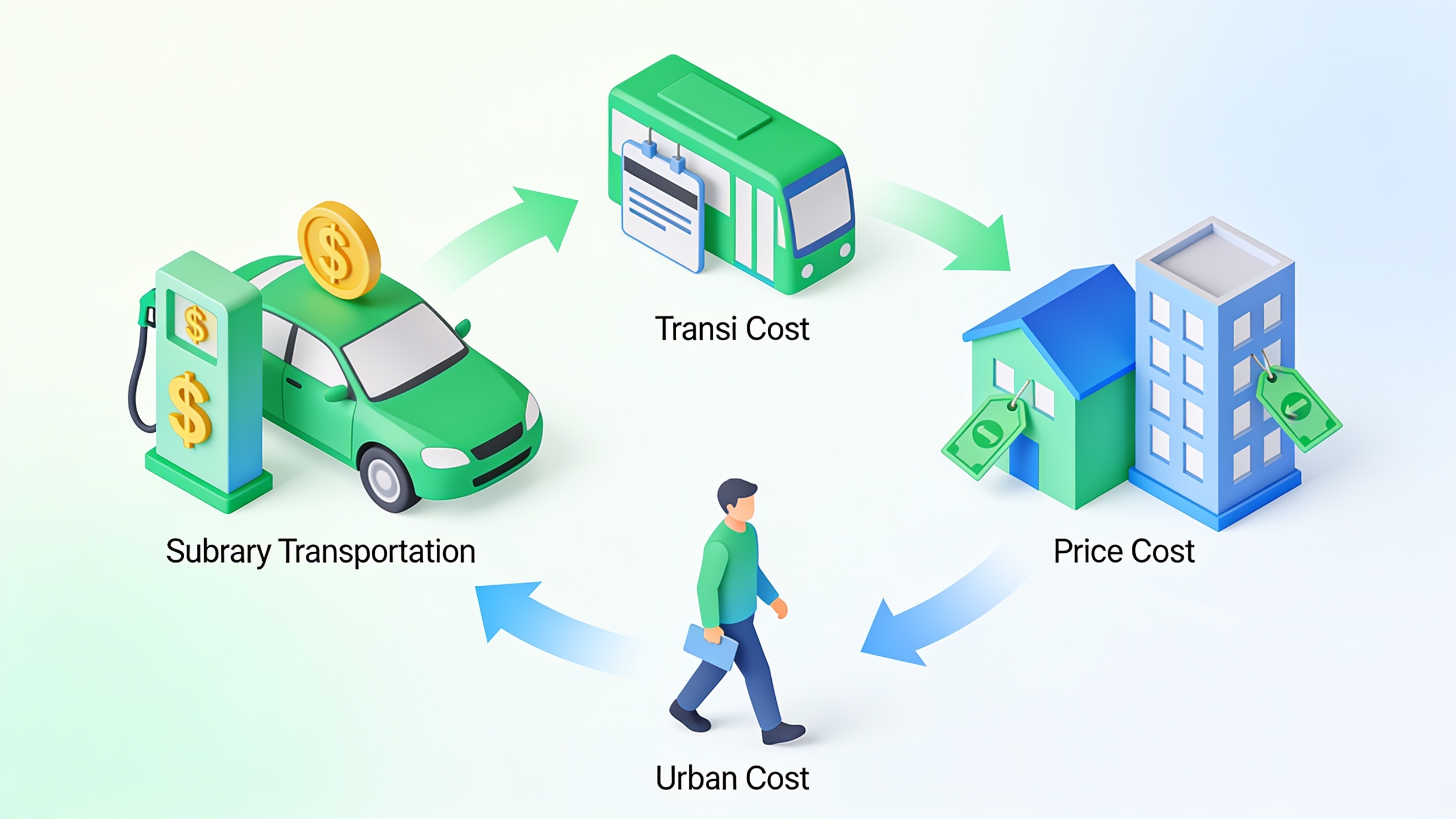
    And then there’s the stuff nobody puts on the spreadsheet. Suburban life usually means a car. Maybe two. Plus gas, insurance, and whatever your mechanic decides your brakes need this month. AAA figures the average American spends around $12,000 a year to own a car once you count depreciation, insurance, upkeep, and fuel. Twelve grand. That’s a serious chunk of change that quietly closes the gap between city and suburb, and most people never even think about it when they’re comparing home prices.

    Cost Factor Urban Living Suburban Living
    Average home price per sq. ft. Higher (15–40% more) Lower
    Typical unit/home size Smaller (600–1,200 sq. ft.) Larger (1,800–3,000+ sq. ft.)
    Property taxes Often lower rates, higher assessed value Often higher rates, moderate value
    Transportation costs Lower (transit, walking, biking) Higher (car ownership, fuel, tolls)
    Utility costs Lower (smaller space to heat/cool) Higher (larger homes, more square footage)
    HOA/condo fees Common and can be $200–$800/month Less common, lower when present
    Groceries and dining Higher average prices Moderate, big-box store access

    Bottom line, don’t just stare at the listing price. Add in what you’ll spend getting around and heating the place, or you’ll fool yourself into thinking one option is way cheaper than it really is.

    Cost comparison infographic showing transportation and housing expenses for urban versus suburban living

    Commute Times and Transportation

    For a lot of people, especially young professionals and busy families, the commute is the whole ballgame.

    City folks usually get shorter, more predictable trips. Twenty minutes or less on a subway, a bus, a bike, or their own two feet. The Census Bureau’s American Community Survey puts the average American one-way commute at about 27.6 minutes, but if you’re a suburbanite heading into a major downtown job center, you’re often looking at 35 to 50 minutes each way. And that’s before some jackknifed truck turns the highway into a parking lot.

    Let me put a longer commute in perspective, because the numbers are kind of brutal. A 45-minute one-way trip is about 7.5 hours a week. Stretch that across a year and you’re at nearly 390 hours in transit. That’s basically 10 full work weeks of your life spent staring at brake lights. Nobody factors that into their home search, but research out of the University of Waterloo has tied long commutes to lower life satisfaction and higher stress. Which, honestly, feels obvious to anyone who’s ever done one.

    Now, remote and hybrid work changed all this math. If you’re only going in two or three days a week, suddenly a longer suburban commute doesn’t feel like such a life sentence. That’s a big part of why the suburbs got so popular again after 2020.

    One more thing though, and it’s a big one: not all suburbs are equal here. The ones with solid commuter rail or express bus service (you’ll find these around Chicago, New York, Boston) basically let you cheat the system. Suburban space, near-urban commute. So don’t just eyeball the distance on a map. Check how often the train actually runs and how long it really takes to get to your specific office, not the vague “the city.”

    Space, Housing Types, and Lifestyle

    This is where the difference stops being abstract. Suburban homes are nearly double the size of urban apartments in most markets, according to the National Association of Home Builders. New suburban single-family homes average around 2,300 square feet. Urban multifamily units? Somewhere in the 1,000 to 1,100 range. That’s not a small gap. That’s the difference between a home office and a laptop balanced on your kitchen counter.

    In the suburbs you’re getting real room to breathe. Space for a guest room, a place to store all the junk you swear you’ll deal with someday, a yard for the dog or the kids, a garage instead of circling the block for twenty minutes hunting for street parking. And it’s just quieter. Fewer sirens at 2 a.m.

    The city sells you something different. You can walk to brunch, walk to the gym, walk to the grocery store, walk home from a show without ever touching a car. Museums and theaters and decent food are minutes away instead of a whole planned outing. And a lot of buildings throw in amenities (rooftop lounges, a doorman, a gym downstairs) that kind of make up for your apartment being on the smaller side.

    Honestly, this one comes down to who you are. If your ideal weekend is a hike at the nearby park followed by burgers in the backyard, the suburbs are speaking your language. If it’s brunch, a matinee, and never once thinking about where to park, you’re a city person. And that’s fine. There’s no wrong answer, just an answer that fits you.

    Schools, Families, and Community

    If you’ve got kids, let’s be real, one factor usually swallows all the others: schools.

    Suburban school with children playing outdoors and urban school hallway showing diverse student environments

    Suburban districts often outperform urban ones on the standardized stuff, and a lot of that comes down to how schools get funded. When your budget is tied to local property taxes, wealthier suburbs end up with fatter budgets. Research from Brookings and the National Center for Education Statistics backs this up. Suburban public schools tend to have smaller classes and more money per student in a lot of states. But (and this is important) it’s not a rule. Plenty of cities have killer magnet and charter schools that’ll run circles around the suburban average.

    The community angle is interesting too. Suburbs tend to breed that classic tight-knit thing: block parties, kids’ soccer leagues, the PTA, neighbors who actually know your name. Cities have community, obviously, but it’s built differently. It tends to form around shared interests or your job or a specific neighborhood’s personality, not just the fact that you happen to live next door to someone.

    And a word on safety, because people love to generalize here and it drives me a little nuts. Crime varies wildly by the specific block, not the broad “city bad, suburb good” label. FBI crime data shows two neighborhoods a few streets apart in the same city can look totally different, and the same goes for neighboring suburbs. So do the actual work. Look up recent trends for the specific address you’re considering instead of leaning on the stereotype.

    Investment Potential: City vs Suburb

    If you’re thinking about this as an investment, or you just want to know your money’s safe, appreciation and rental demand matter as much as whether you personally love the place.

    Urban condos and apartments usually see strong rental demand from young professionals, students, and short-term renters, which is great if you’re chasing cash flow. The catch is appreciation can be a rollercoaster, closely tied to the local job market and whether downtown is having a moment. Cities anchored by tech, finance, or healthcare tend to hold their value better when things get shaky.

    Suburban single-family homes have historically been the steadier bet, especially in good school districts. Case-Shiller data showed suburban and exurban prices outpacing urban condos in several major metros between 2020 and 2023. Suburban rentals also tend to attract families who want to settle in, which means longer leases and fewer of those expensive turnover headaches landlords hate.

    Investment Factor Urban Properties Suburban Properties
    Rental demand High from young professionals, students High from families, long-term renters
    Tenant turnover Higher (shorter leases common) Lower (longer tenancies)
    Appreciation stability More volatile, market-dependent Generally steadier over time
    Entry price Higher per unit Lower per unit, more square footage
    Maintenance/management Often simplified with HOA/property management More hands-on, larger properties
    Liquidity (resale speed) Faster in strong job markets Slower but broader buyer pool

    If you’re poking around listings on a site like Vivienda Lista, do yourself a favor and compare actual cap rates and days-on-market for both property types in your target area. General trends are nice, but real local numbers are what’ll keep you honest.

    Who Thrives Where? Matching Lifestyle to Location

    There’s no trophy for picking “correctly.” There’s only what’s right for where you are in life and what you actually care about.

    If you’re a first-time buyer in your 20s or early 30s, the city usually makes a lot of sense. The walkability, the short commute, the social scene, all of it lines up with the years when you’re building a career and don’t need much space anyway. And that one-bedroom near the office? It can turn into a rental property down the road once you move on.

    Then the kids show up, and suddenly the calculus changes fast. School districts, the need for space, the sudden burning desire for a backyard, it all starts to outweigh being able to walk to a wine bar. This city-to-suburb migration is honestly one of the most predictable moves in all of real estate.

    Investors, don’t let personal taste run the show. Think about who your tenant is. Urban units for turnover-friendly rental income, suburban homes for the stable, long-haul renters.

    Retirees and empty-nesters are the split ones. Some downsize into a low-maintenance city condo near good hospitals and stuff to do. Others want the opposite: peace, space, and a lower cost of living out in a quieter suburb or somewhere semi-rural.

    My advice? Write down your top five non-negotiables. Commute, budget ceiling, outdoor space, school quality, walkability, whatever they are for you. Then score an actual city option and an actual suburban option against that list. Hard numbers beat gut assumptions every single time.

    Frequently Asked Questions

    So is it actually cheaper to live in the suburbs or the city?
    Depends what you’re counting. Suburban homes usually cost less per square foot and get you more room for the money. But once you throw transportation into the mix, things even out. Owning a car runs around $12,000 a year, and that can wipe out the suburban savings for someone who’d otherwise just take the subway. Run the full numbers, not just the mortgage.

    If I’m a young professional, should I go urban or suburban?
    Most people in their 20s and 30s lean city for the short commute, the walkability, and, let’s be honest, the social life. But if you’re working remote or hybrid, a suburb with a good train line can get you most of the same convenience with more space and often a smaller monthly bill. Worth considering before you write off the suburbs.

    Are suburban schools really better than city schools?
    On average, suburban public schools tend to have smaller classes and more funding per kid, thanks to how local property taxes work. That’s what the National Center for Education Statistics data shows. But “on average” is doing a lot of work in that sentence. Quality swings hard from one district to the next, and cities are loaded with strong magnet and charter programs. Research the exact school your kid would attend. Don’t trust the stereotype.

    Which is the smarter investment, an urban condo or a suburban house?
    Urban condos usually pull in strong rental demand and decent cash flow, but the appreciation can bounce around with the local job market. Suburban houses tend to climb more steadily and hold onto tenants longer, especially near good schools. Which one wins depends on your target renter, how long you plan to hold, and what your local market’s doing. There’s no one-size answer here.

    Can I just get the best of both?
    Kind of, yeah. A lot of buyers land in what I’d call urban-suburban hybrid towns. Walkable little downtowns with a commuter train into the city. You get suburban space and schools plus a commute that won’t crush your soul. If you’re genuinely torn, start looking at these. They’re the sweet spot for a lot of people.

    At the end, this isn’t about declaring a winner. It’s about matching the trade-offs to your real, actual daily life. Your budget, your goals, all of it. Test-drive both if you can. Do a short-term rental, spend a few extended weekends, build out a real cost breakdown. Once you’re looking at real numbers instead of stereotypes, the right fit tends to make itself pretty obvious.

    You Might Also Find Useful

    • Vivienda Lista – Compare curated home listings, property data, and expert buying advice to simplify your urban or suburban home search.
    • t7b – A wholesale marketplace platform for bulk product sourcing and distribution.
    • State6 – AI-powered promotion coaching designed specifically for UK police officers.
  • 10 Signs You’re Ready to Buy Your First Home

    10 Signs You’re Ready to Buy Your First Home

    Should you buy a house? It’s one of those questions that sounds simple until you actually try to answer it. And if you’re renting somewhere in your late twenties or early thirties, I’d bet money you’ve asked it at least a dozen times, probably at midnight, probably while doing sketchy math about whether your savings could survive a down payment.

    Here’s what took me a while to figure out: readiness isn’t just a number in your bank account. It’s this weird combination of money, timing, and honestly, whether you’re mentally prepared to be the person who has to call the plumber. All of it has to line up more or less at once.

    So instead of another vague “it depends” answer, let’s go through the actual signs that tell you you’re prepared. Ten of them. Credit scores, savings, job stability, and the squishier emotional stuff nobody talks about. By the end you’ll have a much clearer read on whether you should be making offers or just… waiting another year.

    Table of Contents

    Your Credit Score Tells a Good Story

    Your credit score is usually the first thing a lender looks at, so it’s a decent place to start. Most conventional lenders want to see at least a 620, according to FICO, and if you can push north of 740 you’ll unlock the genuinely good interest rates. But the number itself matters less than the story behind it. If your score’s been quietly climbing over the past year and you’ve been chipping away at credit card debt, that pattern is what lenders actually care about.

    They want to see consistency. On-time payments, credit utilization under 30%, no recent disasters. And if you’ve been checking your report every year through AnnualCreditReport.com and disputing the inevitable errors that show up? You’re already ahead of most first-timers, who don’t even glance at their credit until a loan officer forces them to.

    What a Healthy Credit Profile Looks Like

    There’s more to it than the score, though. Lenders also look at how long you’ve had credit, what kinds you’ve got (cards, auto loans, student loans, the usual mix), and how many new accounts you’ve opened lately. This last one trips people up. Opening a bunch of new credit lines right before applying for a mortgage can actually work against you. So if you’ve been holding off on that fancy new rewards card, congratulations, your restraint is finally paying off.

    You Have Consistent, Stable Income

    Lenders don’t just want to know what you earn. They want proof it’ll keep showing up. If you’ve been at the same job for two-plus years, or you’ve got a track record of raises and promotions in your field, that’s about as green as a green light gets.

    Freelancers and self-employed folks aren’t out of luck here, but you’ll need to work harder to prove it. Usually that means two years of tax returns showing steady or growing income. If your business has finally settled into something predictable after the early chaos, that counts for a lot.

    The reason stability matters so much is simple: a mortgage is a 15 to 30 year handshake. Lenders want to know you can ride out a rough patch without missing payments. Which is why a boring, reliable paycheck often beats a bigger but unpredictable one. Feast-or-famine income makes underwriters nervous, even when the yearly total looks great on paper.

    Your Savings Cover More Than Just the Down Payment

    Okay, this is the big misconception I want to kill. So many renters think being ready means having 20% saved. It doesn’t. According to the National Association of Realtors, first-time buyers have actually been putting down somewhere between 6% and 8% in recent years, nowhere near that mythical 20%.

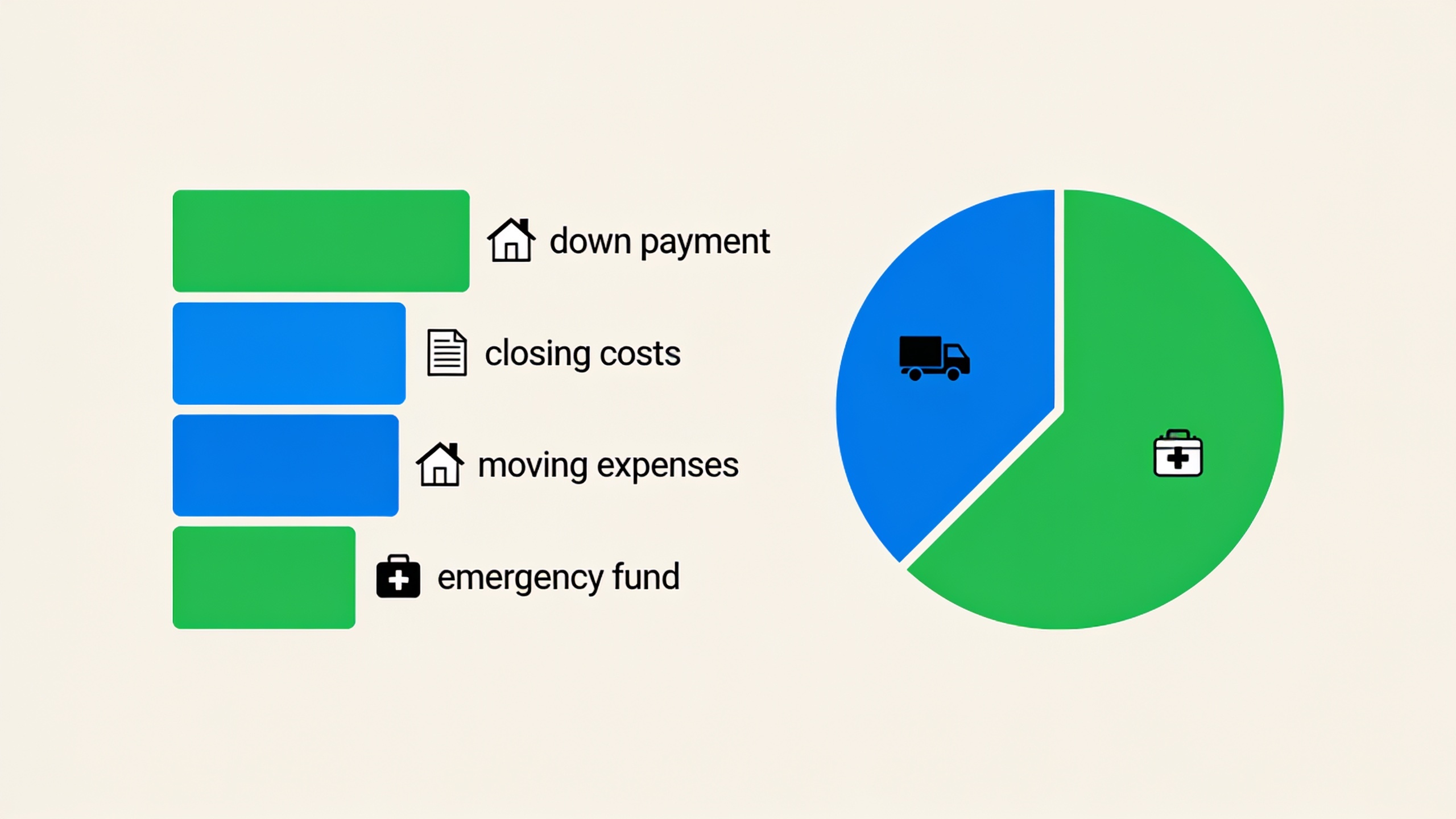
    But (and this is the part people skip) the down payment is just one line item. You’ll also need closing costs, which run about 2 to 5% of the purchase price. Then moving expenses. Then the repairs you’ll inevitably discover in month two. And an emergency fund covering three to six months of expenses, because life doesn’t stop being expensive just because you bought a house.

    Down Payment Options at a Glance

    Loan Type Typical Minimum Down Payment Best For
    Conventional Loan 3-5% Buyers with good credit (620+)
    FHA Loan 3.5% Buyers with lower credit scores (580+)
    VA Loan 0% Eligible veterans and active military
    USDA Loan 0% Buyers in eligible rural/suburban areas
    Jumbo Loan 10-20% Buyers purchasing above conforming loan limits

    If you’ve built up enough to cover the down payment plus a real cushion for when things go sideways, that’s one of the clearest signs you’re actually prepared and not just excited.

    Financial breakdown infographic showing the components of homebuying costs including down payment, closing costs, moving expenses, and emergency fund reserves

    Your Debt-to-Income Ratio Is Under Control

    Your debt-to-income ratio (DTI) is just your monthly debt payments stacked against your gross monthly income. Most lenders want to see it under 43%, though some programs stretch a bit higher if other parts of your application are strong. Basically, if your student loans, car payment, and credit cards eat up less than a third of what you make, you’re sitting pretty.

    And paying down debt beforehand isn’t only about qualifying. It’s about not feeling financially strangled the moment you move in. A lower DTI also tends to earn you better loan terms, since you look less risky to the bank.

    So if you just knocked out a car loan or made a serious dent in your credit cards, do yourself a favor and recalculate. You might be closer to ready than you realized.

    You’ve Outgrown the Renting Lifestyle

    Money’s only half the story. The lifestyle stuff counts too, maybe more than people admit. Maybe you’re sick of rent going up faster than your salary. Maybe you can’t hang a shelf without your landlord treating it like a felony. Maybe you just want a dog. These are real signals, not frivolous ones.

    Renting buys you flexibility, sure. But every check you write builds someone else’s equity instead of yours. And if those annual rent hikes have started to genuinely annoy you (Zillow’s data shows rents have outpaced wage growth in a lot of metros over the past several years, so it’s not just you), that frustration might be telling you something worth listening to.

    Renting vs. Buying: A Quick Comparison

    Factor Renting Buying
    Monthly Cost Predictability Can increase yearly Fixed with fixed-rate mortgage
    Equity Building None Builds over time
    Flexibility to Relocate High Lower (selling takes time)
    Maintenance Responsibility Landlord’s Yours
    Tax Benefits None Potential mortgage interest deduction
    Upfront Costs Security deposit Down payment + closing costs

    You Know Where You Want to Plant Roots

    Buying really only makes sense if you plan to stay put for at least three to five years. That’s the rough breakeven point where equity and appreciation finally cancel out all those upfront costs. Agent fees, closing costs, moving trucks. If you’re eyeing a job in another city or you’re just not sure you even like where you live, waiting is probably the smarter move.

    But if you’ve found a neighborhood you actually love, a commute you can tolerate, and you can picture your life playing out there for the next several years? That’s one of the most underrated signs on this whole list. Staying put isn’t just about convenience. It’s about protecting a very large investment from the costs of selling too soon.

    You Understand the True Cost of Homeownership

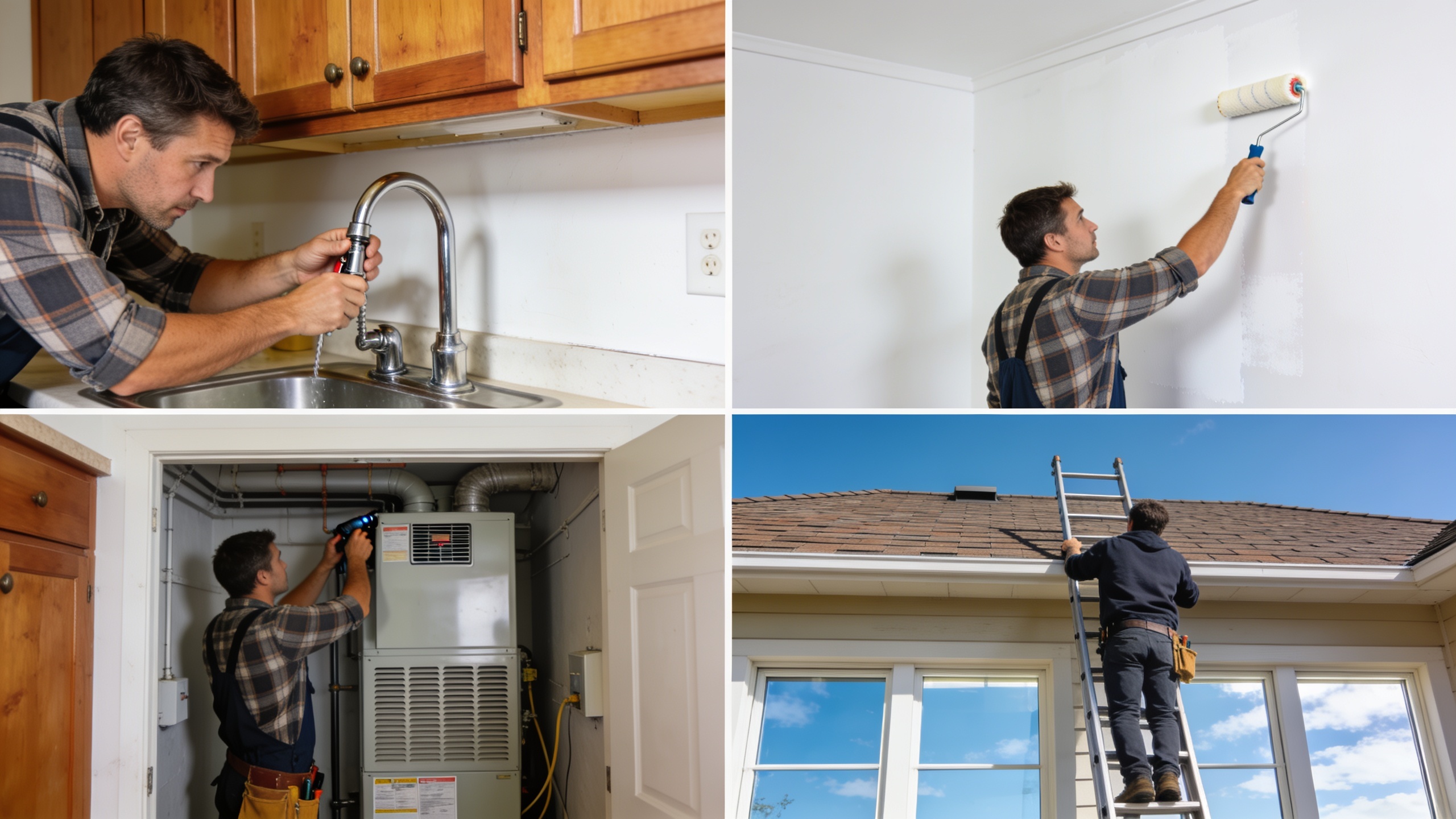
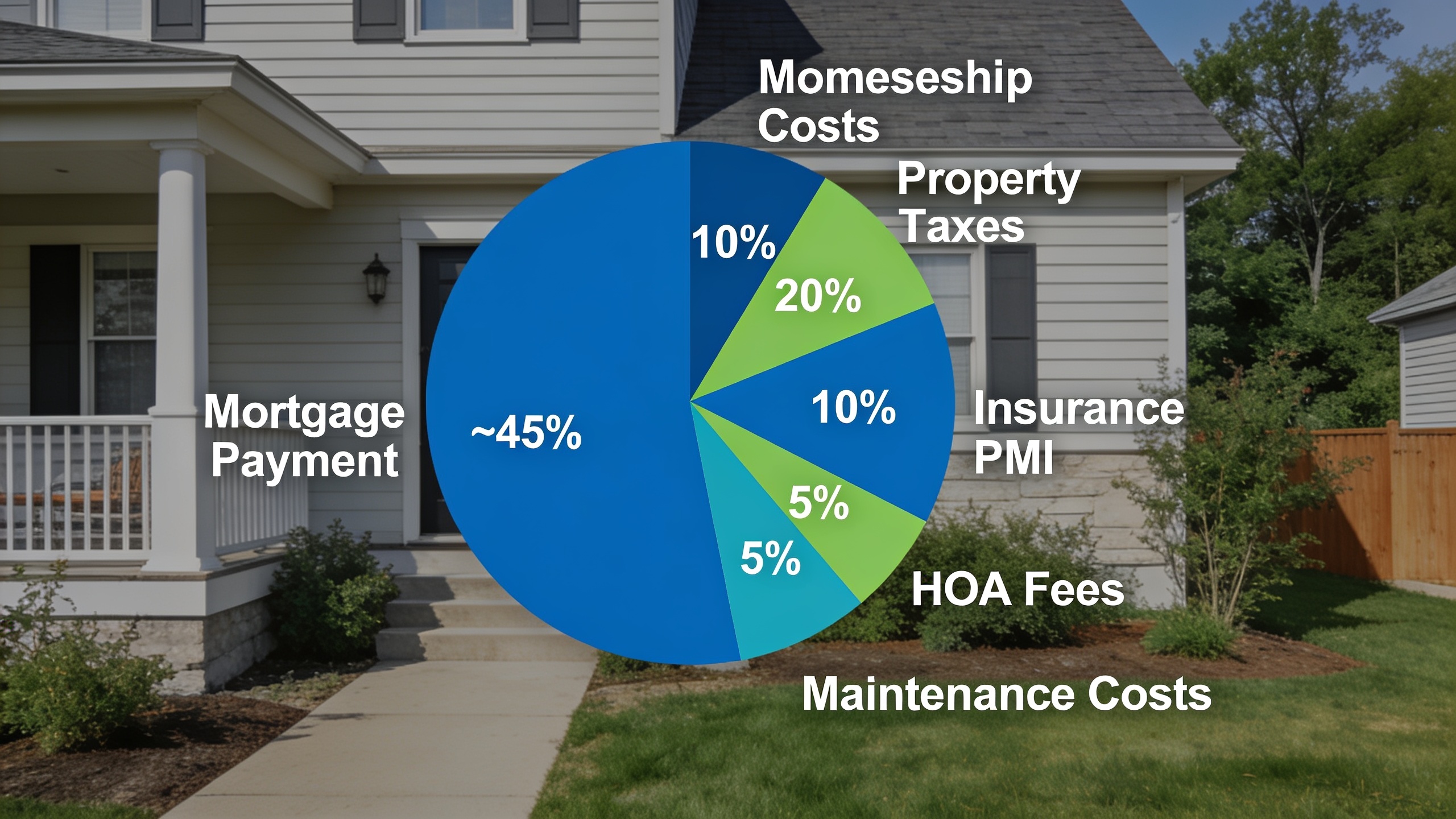
    Here’s where a lot of renters get blindsided. The mortgage payment is not the whole cost. Not even close. There’s property taxes, homeowners insurance, PMI if you put down less than 20%, HOA fees if you’re in that kind of place, and the ongoing bleed of maintenance. Add it all up and you’re looking at hundreds of dollars a month on top of the mortgage.

    The rule of thumb is to budget 1 to 2% of the home’s value every year just for upkeep. On a $350,000 house, that’s somewhere between $3,500 and $7,000 a year, and that’s before you’ve paid a single mortgage dollar. If you’ve already researched these numbers for the area you’re targeting and adjusted your budget to match, that’s genuine readiness. Not just wanting a house, but understanding what one actually demands.

    Homeowner performing routine maintenance tasks including plumbing repairs, painting, HVAC inspection, and roof maintenance, illustrating the ongoing costs of homeownership

    This is exactly the sort of thing a platform like Vivienda Lista is handy for, since being able to compare total ownership costs across different properties and neighborhoods gives you a much clearer picture before you sign anything.

    You’ve Gotten Pre-Approved (Or Are Close To It)

    Getting pre-approved is about as concrete a sign as it gets. It means a lender has looked at your income, assets, credit, and debt and put an actual number on what they’ll lend you. And don’t confuse it with pre-qualification, which is basically a napkin estimate. Pre-approval carries real weight with sellers because it proves you’ve been properly vetted.

    If you’ve already rounded up your paperwork and had a real conversation with a lender about your options, you’re basically at the finish line. Here’s what they’ll typically want:

    • Two years of tax returns
    • Recent pay stubs (last 30 days)
    • Bank and investment account statements
    • Photo identification
    • An employment verification letter, sometimes

    Honestly, the smartest buyers get pre-approved before they start seriously browsing listings. It keeps you from falling for houses you can’t afford, and it makes your offer move faster once you find the one.

    You’re Emotionally Ready for the Commitment

    Buying a home isn’t a purely financial thing. There’s an emotional weight to it that spreadsheets don’t capture. You’re signing up to fix your own stuff, pay your own property taxes, and stay put for the foreseeable future. So here’s a decent gut check: does the thought of calling a plumber yourself fill you with dread, or does it just feel like part of the deal? If it’s the latter, that’s a good sign.

    People really underestimate how much mental energy that first year of ownership eats up. It’s a lot. But if you’ve talked it through with a partner or a family member or a financial advisor and you come out feeling steady instead of panicked, that’s worth as much as any credit score.

    You’ve Run the Numbers on Renting vs. Buying

    Last one, and it’s the most practical. Have you actually done the math? Compared your current rent to what a mortgage would run you, including taxes and insurance, in the area you’re looking at? Because in a lot of U.S. markets right now, those two numbers are surprisingly close. Sometimes the mortgage is even lower, especially for smaller starter homes and condos.

    Grab an online affordability calculator, mix in some local market research, and figure out your real price range. If the numbers say buying makes sense given your income, savings, and plans, you’ve done the homework most renters never bother with.

    And when you’re comparing listings across a few neighborhoods, looking at price per square foot, property tax rates, school districts, that’s where a tool like Vivienda Lista genuinely earns its keep. You can size up a bunch of properties and locations side by side without burning your weekends driving all over town.

    Putting It All Together

    Nobody checks all ten boxes at once, and that’s fine. Readiness is a spectrum, not a pass/fail test. If you’re nodding along to seven or eight of these, you’re probably in solid shape to start hunting for real. If you’re only at three or four, that’s genuinely useful too. It just tells you where to point your energy next: savings, credit, income stability, whatever’s lagging.

    Frequently Asked Questions

    How much do I actually need saved before I buy?

    More than just the down payment, which can be anywhere from 0% to 20% depending on your loan. Add closing costs (2 to 5% of the price), moving expenses, and an emergency fund covering three to six months of living costs. On a $300,000 home, realistically you’re looking at $15,000 to $50,000 total, depending on your loan program and where you’re buying.

    What credit score do I actually need?

    Most conventional loans want a 620 minimum. FHA loans go as low as 580 if you put down 3.5%. But if you can get above 740, you’ll land the best rates, and that difference can quietly save you tens of thousands over the life of the loan. Worth the effort.

    Should I pay off all my debt first?

    Nope, not necessarily. Lenders care about your debt-to-income ratio way more than whether you’re debt-free. Knocking out high-interest stuff like credit cards is almost always smart, but you don’t need to torch your car loan or student loans before you can qualify.

    How long should I plan to stay after buying?

    Three to five years, minimum. That’s roughly how long it takes to offset the upfront costs and start actually benefiting from equity. If you think you’ll be moving sooner than that, renting is probably the smarter play for now.

    What if I only hit a few of these signs?

    Totally normal. Treat this as a roadmap, not a checklist you have to complete. Zero in on your weakest spot, whether that’s your credit, your savings, or your job situation, and check back in six to twelve months. You’ll be surprised how fast the picture can change.

    Buying your first home deserves a thoughtful approach, not an impulsive one. Whether you’re ticking off most of these signs already or still working your way there, being honest about where you stand (financially and emotionally) puts you miles ahead of anyone jumping in blind. Take stock of your credit, your savings, your income, your actual long-term goals. Then let that guide your timeline. Not the market hype, and definitely not whatever pressure you’re feeling from friends who just bought.

    You Might Also Find Useful

    • Vivienda Lista – Explore curated home listings, compare properties side by side, and get expert guidance to simplify your home-buying journey.
    • Vidbox – A free social media portal for Indonesian users offering games, movies, forums, blogs, and marketplace tools for learning online business.
    • Ricaritranslombok – A trusted transportation service in Lombok, Indonesia, offering car rentals, shuttles, and guided tours for tourists and locals.
  • First-Time Home Buyer’s Guide: Where to Start in 2025

    First-Time Home Buyer’s Guide: Where to Start in 2025

    Buying your first house is probably the biggest check you’ll ever write, and in this market, walking in unprepared is a recipe for either heartbreak or a really expensive mistake. So I want to walk you through how this actually works, start to finish, without the fluff. Whether you’re eyeing a downtown condo or dreaming about a little place in the suburbs with a yard, the roadmap is basically the same.

    Quick reality check on prices first. The median existing home in the U.S. was sitting around $410,000 in early 2025, according to the National Association of Realtors, and mortgage rates have been bouncing between 6% and 7% for a while now. Compare that to when people were locking in rates below 4% a few years ago, and yeah, the math has changed. You need a smarter game plan than buyers did a decade ago. Let’s get into it.

    Table of Contents

    Why 2025 Is a Unique Year for First-Time Buyers

    Every housing cycle has its own personality, and 2025 is a weird one. After years of basically no houses being available, inventory has finally loosened up in a lot of metro areas. Which means, for the first time in a while, you might actually have some negotiating room. Remember the bidding wars of 2021 where people were waiving inspections and offering $50K over asking on a whim? Those days have mostly cooled off.

    The catch, of course, is that borrowing money costs a lot more now. So it’s a trade-off. More houses to choose from, but a bigger monthly payment. If you’re somewhere in that 25-to-35 range trying to buy your first place, you’re feeling both sides of that pretty hard.

    Here’s the upside though: sellers are willing to play ball again. They’ll knock money off the price, throw in closing cost help, sometimes even toss in a home warranty. That kind of stuff was practically unheard of during the frenzy.

    And then there’s remote work, which quietly changed everything. When you’re not driving into an office five days a week, that suburban house with the extra bedroom starts looking a lot better than the tiny condo near downtown. A ton of first-time buyers are wrestling with that exact question right now. Just knowing all this before you start scrolling listings will save you from setting expectations that don’t match reality.

    Step 1: Assess Your Financial Readiness

    Before you fall in love with some kitchen you saw in a listing photo, you’ve gotta get honest, like uncomfortably honest, about your money. This is the part everyone wants to skip. It’s also the number one reason deals blow up later.

    Figure Out What You Can Actually Afford

    Lenders love to approve you for more than you should spend. It’s not a favor, trust me. The classic guideline here is the 28/36 rule: housing costs shouldn’t eat up more than 28% of your gross monthly income, and all your debt payments combined (mortgage included) should stay under 36%. So if you’re pulling in $80,000 a year, that’s roughly $1,867 a month for housing, before taxes come into it.

    But the mortgage payment isn’t the whole story, and this is where first-timers get blindsided. You’ve also got property taxes (which swing wildly depending on where you live), homeowners insurance, PMI if your down payment is under 20%, HOA fees if you’re in a community that has them, and ongoing maintenance that usually runs 1 to 2% of the home’s value every single year. That last one sneaks up on people. Owning means when the water heater dies, there’s no landlord to call. It’s just you.

    Visual breakdown of total homeownership costs beyond the mortgage payment

    Saving Up: Down Payment and Closing Costs

    The old “you need 20% down” advice? Mostly a myth for first-time buyers these days. The actual median down payment for first-timers was around 8% in 2024. FHA loans let you go as low as 3.5%, and some conventional loans dip to 3%.

    Don’t forget closing costs though, because they’re real and they add up. Figure somewhere between 2% and 5% of the purchase price for stuff like the appraisal, title insurance, and loan origination fees. On a $350,000 house, that’s another $7,000 to $17,500 you need lying around at closing. Nobody warns you about that until it’s right in front of you.

    Fix Your Credit Before You Need It

    Your credit score is basically the dial that sets your interest rate, and it matters way more than people think. A 50-point difference can swing your rate enough to cost you tens of thousands over a 30-year loan. Not exaggerating.

    So pull your credit report at least six months before you plan to start hunting. That gives you time to dispute any errors (there are always errors), pay down credit card balances, and, importantly, not open any new lines of credit. Timing this early is one of the smartest things you can do.

    Step 2: Get Pre-Approved, Not Just Pre-Qualified

    These two words sound almost identical and they are not the same thing, and mixing them up can cost you a house.

    Pre-qualification is basically a guess. You tell a lender roughly what you make and what you owe, and they spit back a ballpark number. It feels official but it means almost nothing to a seller. Pre-approval is the real deal: the lender pulls your actual documents, verifies your income and debts and credit, and hands you a conditional commitment letter. That letter tells sellers you’re serious and you can actually close. In a competitive situation, it’s the difference between your offer getting looked at and getting tossed.

    What You’ll Need to Dig Up

    Getting pre-approved means gathering paperwork, so start a folder now. You’ll need two years of tax returns and W-2s, your recent pay stubs (usually the last 30 days), and two or three months of bank statements. If you’ve got extra income from bonuses, freelance gigs, or investments, they’ll want documentation on that too. And they’ll want the full picture on your debts, so student loans, car payments, credit cards, all of it.

    Shop Around. Seriously.

    Do not just take the first pre-approval and run with it. Rates and fees are all over the place between lenders. The Consumer Financial Protection Bureau says to get quotes from at least three, and there’s a good reason: even a quarter-point difference in your rate adds up to thousands over the life of the loan. And look past the headline rate too, because origination fees, discount points, and estimated closing costs can quietly make a “lower rate” more expensive overall.

    One timing note: pre-approval letters usually expire after 60 to 90 days. So don’t rush this step months before you’re actually ready to tour homes, or you’ll just have to redo it.

    Step 3: The House Hunt, From Browsing to Making an Offer

    Alright, the fun part. This is what everyone pictures when they think about buying a house. But going in with a plan keeps you from making an emotional, “I have to have it” decision you’ll regret.

    Know Your Deal-Breakers Ahead of Time

    Sit down and write out your must-haves versus your nice-to-haves before you look at a single listing. For most first-timers the big ones are commute distance, number of bedrooms, the school district, and outdoor space. Get clear on this. It’ll stop you and your agent from wasting weekends touring places that were never going to work.

    Get Yourself a Buyer’s Agent

    A good agent who’s actually working for you, not the seller, is worth their weight in gold when you’re new to this. They’ll catch red flags during a showing that you’d walk right past, they know the local market, and they’ll help you put together an offer that doesn’t embarrass you. Now, one thing worth flagging: after the 2024 NAR settlement, how buyer agents get paid changed. It used to be pretty much always the seller footing the bill, and now it’s more often negotiated directly. So ask about that upfront, don’t assume.

    Actually Making the Offer

    When you find the one, your agent helps you land on an offer price by looking at what similar homes recently sold for, how long this one’s been sitting, and how much competition there is. Your offer usually spells out the purchase price, an earnest money deposit (typically 1 to 3% of the price, basically your good-faith money), your contingencies for financing, inspection, and appraisal, a proposed closing date, and any concessions you’re asking the seller for.

    Real estate agent explaining purchase offer details to a first-time homebuyer

    In the more balanced market we’ve got through much of 2025, you actually have room to keep those inspection and financing contingencies in there, which you basically couldn’t do a couple years ago without getting laughed out of the room. That said, a great house in a hot neighborhood can still pull multiple offers, so don’t get complacent.

    Step 4: Inspections, Appraisals, and Finally Getting the Keys

    Offer accepted? Congrats, you’re in escrow. Now a handful of important things happen before the house is actually yours.

    The Home Inspection

    For $300 to $600, a professional inspector crawls through the whole place, the roof, the electrical, the plumbing, the HVAC, the structure, and hands you a report that’s usually way longer than you expect. First-timers are often shocked at the level of detail. If something major turns up, you’ve got options: negotiate repairs, ask for a price cut, or, if your contract has an inspection contingency, walk away entirely. That last option is exactly why waiving the inspection is such a bad idea (more on that later).

    The Appraisal

    Your lender wants proof the house is worth what you’re paying, so they order an independent appraisal. Most of the time it lines up fine. But if it comes back low, that’s a problem, because the bank won’t lend more than the house is “worth.” Then you’re either renegotiating with the seller, coming up with more cash yourself, or challenging the appraisal with better comps. It’s annoying but it happens.

    Final Walkthrough, Then Closing Day

    A day or two before you close, you’ll do a final walkthrough, basically a last look to make sure nothing’s changed and any promised repairs actually got done. Then comes closing, where you sign what feels like a hundred documents (your hand will cramp), pay your closing costs and down payment, and get the keys. Start to finish, from accepted offer to closing usually runs 30 to 45 days on a conventional loan.

    Which Loan Actually Makes Sense for You

    The type of mortgage you pick has a real impact on both your monthly payment and what you pay over the long haul. Here’s how the main options for first-time buyers compare:

    Loan Type Minimum Down Payment Minimum Credit Score Best For
    Conventional 3% – 5% 620+ Buyers with good credit and stable income
    FHA 3.5% 580+ Buyers with lower credit scores or smaller savings
    VA 0% No official minimum (lender-dependent) Eligible veterans and active-duty service members
    USDA 0% 640+ Buyers in eligible rural or suburban areas
    State/Local First-Time Buyer Programs Varies (often 0-3%) Varies Buyers who qualify for local down payment assistance

    FHA loans are the go-to for a lot of first-timers because they’re forgiving on credit, but heads up, in most cases you’re stuck paying mortgage insurance for the life of the loan, which is a real downside. VA loans are honestly some of the best terms out there if you qualify, with zero down required, so if you’ve served, absolutely look into it. USDA loans fly under the radar but they’re great if you’re open to a suburban or rural spot. And don’t sleep on your state’s housing finance agency, a lot of them offer down payment grants or forgivable loans for first-time buyers. Check their website before you commit to anything. Free money is free money.

    Mistakes That’ll Cost You (Don’t Do These)

    Even people who did their homework mess these up. Save yourself the stress.

    Buying too much house is the big one. Just because the bank says $450,000 doesn’t mean you should spend $450,000. Leave room for your actual life, your savings goals, and the fact that your income might dip someday. Maxing out is how people end up “house poor,” where they own a nice place but can’t afford to do anything else.

    Then there’s skipping the inspection to look more competitive. I get the temptation, but don’t. You could end up owning a house with a $15,000 roof problem you had no idea about. Not worth it.

    And please, do not go buy a car or open a new store credit card between your pre-approval and closing. I’ve genuinely seen people lose their loan over this. Lenders often re-pull your credit right before closing, and a new debt can throw off your debt-to-income ratio just enough to kill the deal. Just… sit still financially until you have the keys.

    Two more quick ones. People consistently underestimate how long everything takes and how much it costs after they move in, the utilities, the maintenance, that property tax bump when the county reassesses. And a lot of buyers get so focused on the house that they forget to research the neighborhood. Look into crime, school ratings, whether there’s a giant development planned next door, and flood zones. A perfect house in the wrong spot is just a slow-burning regret.

    Real Questions People Actually Ask

    How much do I really need saved before I can buy?
    More than just the down payment, unfortunately. On top of that, plan for 2 to 5% of the price in closing costs, plus a separate emergency fund covering 3 to 6 months of expenses for after you move in. For a $350,000 house with 5% down, you’re realistically looking at $30,000 to $40,000 total, though it shifts around depending on your loan and location.

    What credit score do I actually need?
    Most conventional loans want at least 620. FHA will take you down to 580, or even 500 if you throw more money down. But here’s the thing worth knowing: get your score above 740 and you unlock the best rates out there. So spending a few months bumping up your credit before you apply can genuinely lower your monthly payment for years.

    Should I buy now or wait for rates to drop?
    Honestly, nobody can time this perfectly, and people who try usually lose. The trap with waiting for lower rates is that when rates finally fall, everyone floods back in and prices get pushed up, so you don’t really save. Most advisors I trust say buy when you’re financially ready, not when the market’s “perfect.” You can always refinance later if rates come down. You can’t un-miss a house you loved.

    How long does this whole thing take?
    Budget 2 to 6 months of actually searching, then 30 to 45 days in escrow once your offer’s accepted. It really depends on how fast you find the right place, what local inventory looks like, and how complicated your financing is.

    Do I even need an agent, or can I do this solo?
    You can legally buy without one. But a buyer’s agent usually doesn’t cost you directly (though commission stuff got murkier after the 2024 settlement, so confirm), and the negotiation help, paperwork wrangling, and local know-how are tough to pull off on your own, especially your first time. I’d lean toward having one.

    Look, buying your first home in 2025 takes patience and a fair amount of prep, but it’s very doable. Get your finances squared away, lock in a real pre-approval, lean on people who know what they’re doing, and you’ll end up with a place that fits your life and your budget. The road from renter to owner isn’t a sprint. With the right plan though, you’ll get there.

    You Might Also Find Useful

    • Vivienda Lista – Explore curated property listings, comparisons, and expert guidance to simplify your home search.
    • Cryptocoinsjournal – Get the latest news and analysis on cryptocurrency markets and blockchain trends.
    • Cryptocoinsjournal – Stay informed with educational content and investment insights on digital currencies.