Blog

  • How to Use Viviendalista Search Filters Effectively

    How to Use Viviendalista Search Filters Effectively

    House hunting can feel like scrolling forever and finding nothing. That’s the whole reason Viviendalista’s search filters exist. Whether you’re a first-timer eyeing a downtown condo, an investor sniffing around for something that’ll actually cash-flow, or you’re retired and want to downsize somewhere near the water, the filters on viviendalist.co are what turn a wall of listings into a short, sane list of places worth touring. This guide runs through every major filter category, shows you how to stack them together the smart way, and throws in some hard-won tips so you spend less time scrolling and more time in homes you might actually buy.

    Table of Contents

    • What Are Viviendalista’s Advanced Search Filters?
    • How Do I Set Up Price and Budget Filters on Viviendalista?
    • Filtering by Size, Layout, and Property Type
    • Using Amenity and Feature Filters to Narrow Your Results
    • How Do I Target the Right Neighborhood with Location Filters?
    • Advanced Filters for Investors and Special Buyer Groups
    • Saving Searches, Setting Alerts, and Comparing Listings
    • Common Mistakes to Avoid When Using Viviendalista Search Filters
    • Frequently Asked Questions

    What Are Viviendalista’s Advanced Search Filters?

    Viviendalista’s advanced search filters are the customizable tools on viviendalist.co that let you sort listings by price, size, amenities, location, and buyer-specific needs so you only see the stuff that’s actually relevant to you. Instead of scrolling a firehose of every listing in a city, you tell the platform what matters, and it hands back a curated shortlist.

    Think of the filters as layers you stack. A basic search is just “apartments in Austin.” An advanced one folds in your price range, square footage, bedroom count, school district ratings, pet policies, even walkability scores, all in one query. That’s really the point of any decent real estate search tool. It takes thousands of options and boils them down to something a human can actually deal with. And here’s a number worth sitting with: according to the National Association of Realtors’ 2023 Profile of Home Buyers and Sellers, buyers typically view only about 8 homes before they buy. Eight. Which tells you the filtering stage, not the touring stage, is where most of the real deciding happens. The tighter you filter upfront, the less time you burn on homes that never stood a chance.

    How Do I Set Up Price and Budget Filters on Viviendalista?

    To set up price filters on Viviendalista, open the search bar, pick “Price Range,” punch in your minimum and maximum, then fine-tune with the mortgage estimator or the rent-to-income slider if you’re renting. This is almost always the first thing people set, and honestly, it shapes everything that follows.

    Setting a Realistic Range

    Don’t type in one hard number. Use the slider and set a range that’s maybe 10 to 15% wider than your target. Listings get priced a little above or below where they eventually sell, so a razor-thin price filter will quietly hide homes you could actually afford. If you’re pre-approved, you can drop your approval amount straight into Viviendalista and it’ll flag the listings that keep you in a comfortable debt-to-income zone.

    Factoring in Total Cost of Ownership

    Price filters aren’t just about list price, and this is where people trip up. You can toggle on estimated property tax ranges and HOA fee caps too, which matters a lot because two homes at the identical asking price can cost wildly different amounts every month once the fees hit. Families shopping in those suburbs with all the community amenities often discover that HOA dues of $150 to $400 a month completely reshape what’s affordable. If reading these cost breakdowns feels like squinting at fine print, our guide on how to read property listings like a pro shows you exactly where the hidden costs live on a listing page and how to compare them without getting fooled.

    Filtering by Size, Layout, and Property Type

    Size and layout filters on Viviendalista let you set square footage, bedroom and bathroom counts, lot size, and property type (single-family, condo, townhouse, multi-family) so results actually fit how your household lives. These matter enormously for families and retirees, whose space needs usually sit at opposite ends of the map.

    Growing families tend to lock in the bedroom and bathroom filters first, which makes sense, but don’t skip the “lot size” and “yard” toggles if the kids or the dog need somewhere to run. There’s also a “single-story” filter that retirees and anyone with mobility considerations lean on hard, because it wipes out every home with a staircase in one click. On the flip side, urban first-timers in their late twenties and early thirties are usually filtering for condos and townhomes under 1,000 square feet. They’d rather have walkability than a third bedroom.

    One tool almost nobody uses enough: the “property type” multi-select. You don’t have to pick just one. Select condos, townhomes, and small multi-family all at once if you’re flexible on the structure but firm on price and neighborhood. Investors love this one for comparing duplexes against single-family rentals in the same ZIP code, since it pulls a wider pool of comparables without making you run three separate searches.

    Using Amenity and Feature Filters to Narrow Your Results

    Amenity filters let you pick specific features (garage, in-unit laundry, pool, updated kitchen, pet-friendly, whatever) so only listings with those exact things show up. This is where the filters earn their keep if you’ve got a short list of non-negotiables.
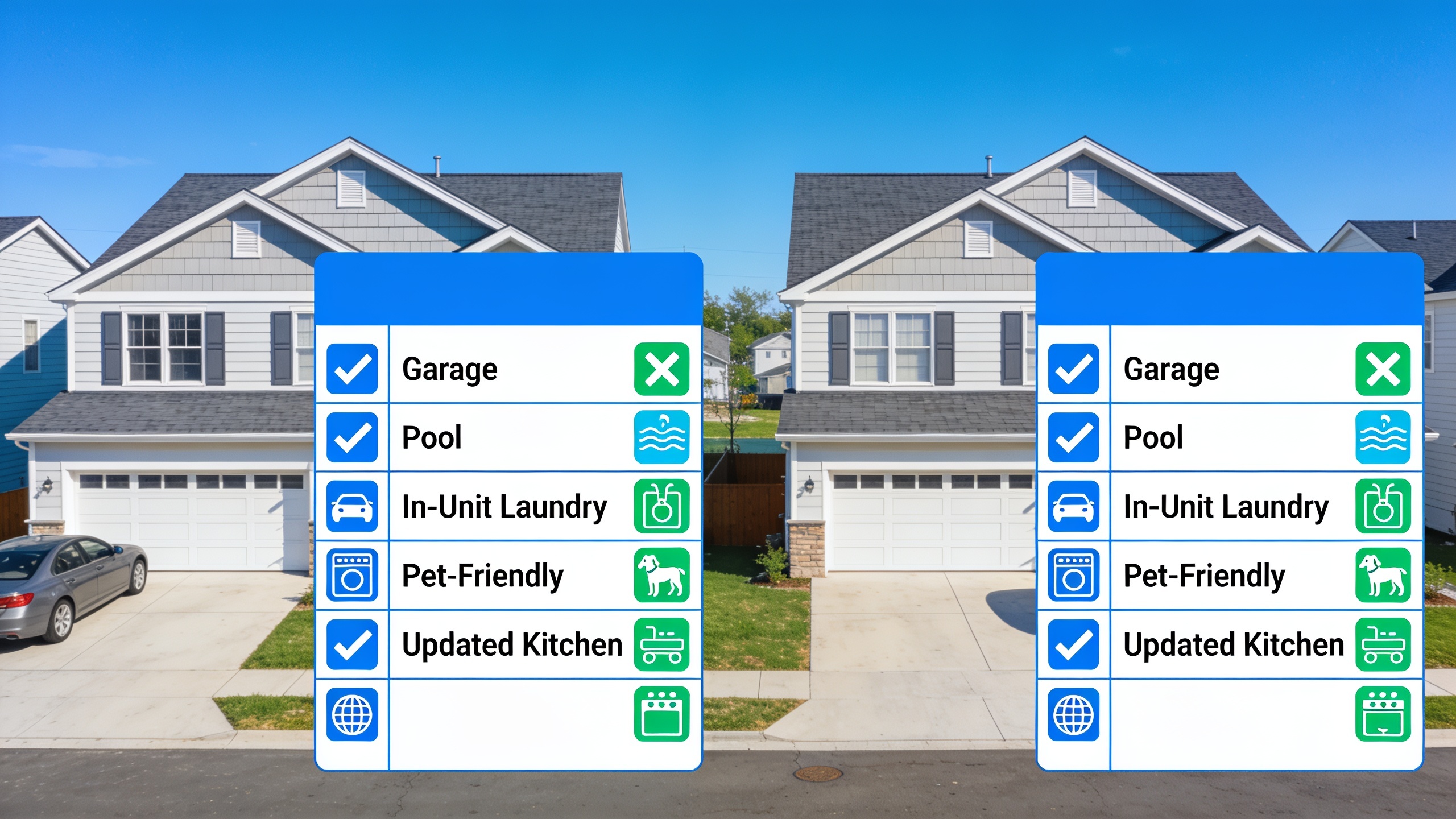
    Side-by-side comparison of home amenities showing which features match and which don't

    The amenity panel is sorted into categories. Interior stuff like flooring, appliances, and layout. Exterior stuff like fencing, garage size, a pool. Building or community perks such as elevator access, a gym, a doorman. And policy things like pet allowances or short-term rental eligibility. You can grab amenities across all of them at once, but here’s the catch: the platform treats every selection as a hard requirement, so a listing has to match all of them, not just some. Tick ten “must-have” boxes on a budget search and you can end up staring at zero results even in a market that’s swimming in inventory.

    So do this instead. Split your amenities into “must-haves” and “nice-to-haves.” Run your first search with only the must-haves, then eyeball the results and note which nice-to-haves keep popping up. Two passes. It keeps your result set big enough to be useful while still respecting your dealbreakers.

    Accessibility filters deserve their own shout-out here, because they’re genuinely underrated. In the same way workforce platforms like Medinex help disability support providers coordinate care and compliance so clients get the right support at the right time, Viviendalista’s accessibility filters (step-free entry, wide doorways, grab bars, single-level living) let buyers and renters with mobility needs spot homes that’ll actually work day to day, instead of finding out about the three front steps only after they’ve driven across town for a tour.

    How Do I Target the Right Neighborhood with Location Filters?

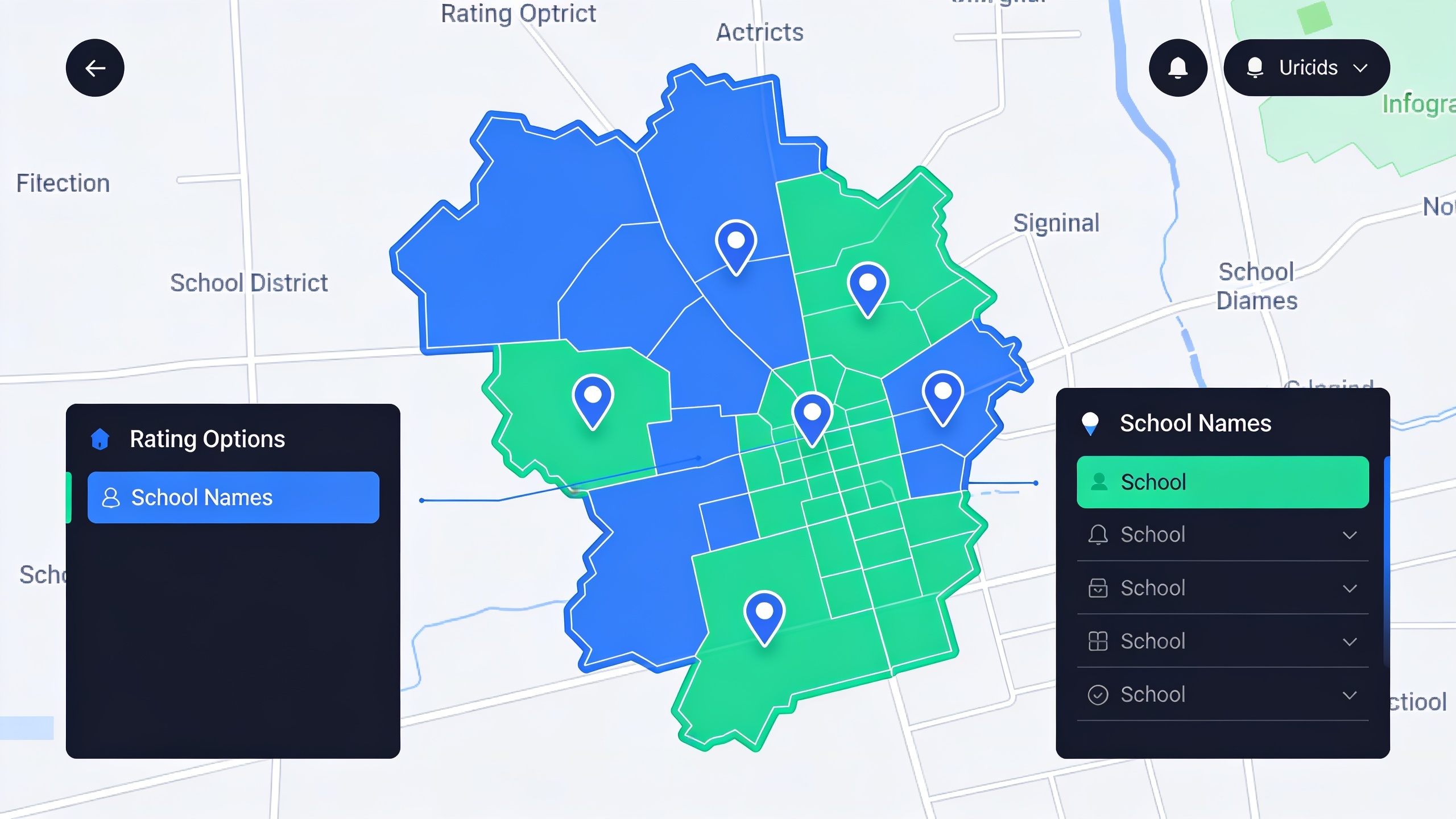
    To zero in on a neighborhood on Viviendalista, use the map tool to draw your own custom boundary, or type a neighborhood, school district, or commute destination into the location bar and set a max distance radius. Location is arguably the most consequential filter of them all, because it touches price, commute, school access, and resale value all at the same time.

    Drawing Custom Search Boundaries

    The map tool lets you draw an irregular polygon around the exact area you want, so you’re not stuck with ZIP codes or city lines that never match reality. This is a lifesaver in metros where a great block and a rough one sit right next to each other. Urban buyers often draw around a handful of transit-connected neighborhoods rather than a whole city, which keeps commute times predictable and still leaves room for those up-and-coming pockets just past the obvious spots.

    Filtering by School District and Commute Time

    Families chasing bigger suburban homes can filter straight by school district rating, usually with third-party data on test scores and student-teacher ratios baked in. Commute filters work the same way: type in your work address, set a max drive or transit time, and anything outside that window disappears. And this matters more than most people realize. Research from the U.S. Census Bureau’s American Community Survey has repeatedly found that commute time is one of the top predictors of how happy homeowners end up being, right up there with home size and price. A long slog to work quietly eats away at your satisfaction whether you notice it or not.

    Location Filters for Vacation and Retirement Properties

    Retirees and second-home buyers play this game differently, usually caring more about being near a hospital, a walkable town center, or the coast than about school ratings or commutes. If you’re browsing vacation-home markets, remember that the local infrastructure matters just as much as the house. Say you’re eyeing a getaway in somewhere like Lombok, Indonesia. You’ve got to think about how you’ll even get around once you’re there. Local operators like Ricaritranslombok, who handle car rentals, shuttles, and guided tours, can be the difference between a place that’s genuinely livable part-time and one that leaves you stranded for weeks. Viviendalista’s neighborhood filters won’t book your ride, obviously, but they’ll help you shortlist areas where that kind of support already exists.

    Advanced Filters for Investors and Special Buyer Groups

    Investor filters on Viviendalista let you sort by estimated rental yield, cap rate, days on market, price-per-square-foot, and zoning type, so you can find properties with real income potential instead of just curb appeal. They live under an “Investor View” toggle that reshuffles the listing cards to put financial metrics front and center instead of glossy lifestyle photos.

    Investors in the 30 to 50 range building out a rental portfolio usually start with price-per-square-foot and days-on-market, because a place sitting unsold for 60-plus days often means there’s room to negotiate. Add zoning filters on top (multi-family, mixed-use, ADU eligibility) and you’ll surface properties with built-in expansion potential that a casual buyer would scroll right past. If you’re newer to sizing up markets at this level, our breakdown of how real estate investors use data to pick profitable markets digs into the underlying numbers (population growth, rent-to-price ratios, job diversification) that pair nicely with these filters to gut-check a market before you put money down.

    Investors aren’t the only ones who benefit from clever filter combos, though. First-time buyers relocating for a job often have to move fast and decide under pressure, which honestly isn’t that different from prepping for a competitive promotion. In the same way officers use structured coaching platforms like State6 to systematically prepare for career advancement rather than winging it, buyers on a clock do better by setting up a disciplined saved-filter combination ahead of time instead of improvising a fresh search every time a listing drops. Same idea either way: take the guesswork out of a high-stakes decision by leaning on a repeatable process.

    Here’s a quick rundown of the main filter categories and who tends to live in them:

    Filter Category What It Controls Most Useful For
    Price & Budget List price, HOA fees, estimated taxes First-time buyers, budget-conscious renters
    Size & Layout Square footage, bedrooms, lot size, single-story Families, retirees, downsizers
    Amenities & Features Pool, garage, pet policy, accessibility features Renters, buyers with specific must-haves
    Location & Map Custom boundaries, school ratings, commute time Families, urban professionals, relocators
    Investor Metrics Cap rate, rental yield, days on market, zoning Real estate investors, portfolio builders
    Saved Search & Alerts New listing notifications, price-drop alerts All buyer types in competitive markets

    Saving Searches, Setting Alerts, and Comparing Listings

    Saved searches and alerts on Viviendalista ping you by email or app notification the moment a new listing matches your filters or an existing one drops in price, so you’re not manually re-running the same search every single morning. In a hot market, this one feature can matter more than any individual filter, because whoever responds first often gets the first tour.

    Setting it up is easy. Run your filtered search like normal, hit “Save This Search,” and pick how often you want to hear about it: instant, daily digest, or weekly summary. In a fast market, instant alerts are worth the extra buzzing on your phone. Homes priced well under the median can pull multiple offers within 48 hours of hitting the site, a pattern Redfin’s market data on fast-moving metros keeps confirming. Blink and it’s gone.

    Once you’ve got a shortlist going, the side-by-side comparison tool lets you stack up to four listings and line up price, square footage, amenities, and estimated monthly costs in one table. This is where all that filtering work pays off. You’re not comparing apples to lawnmowers anymore. Every home already cleared your must-have bar, so now it’s about the fine stuff, natural light, how the layout flows, a slightly better school rating, instead of basic eligibility.
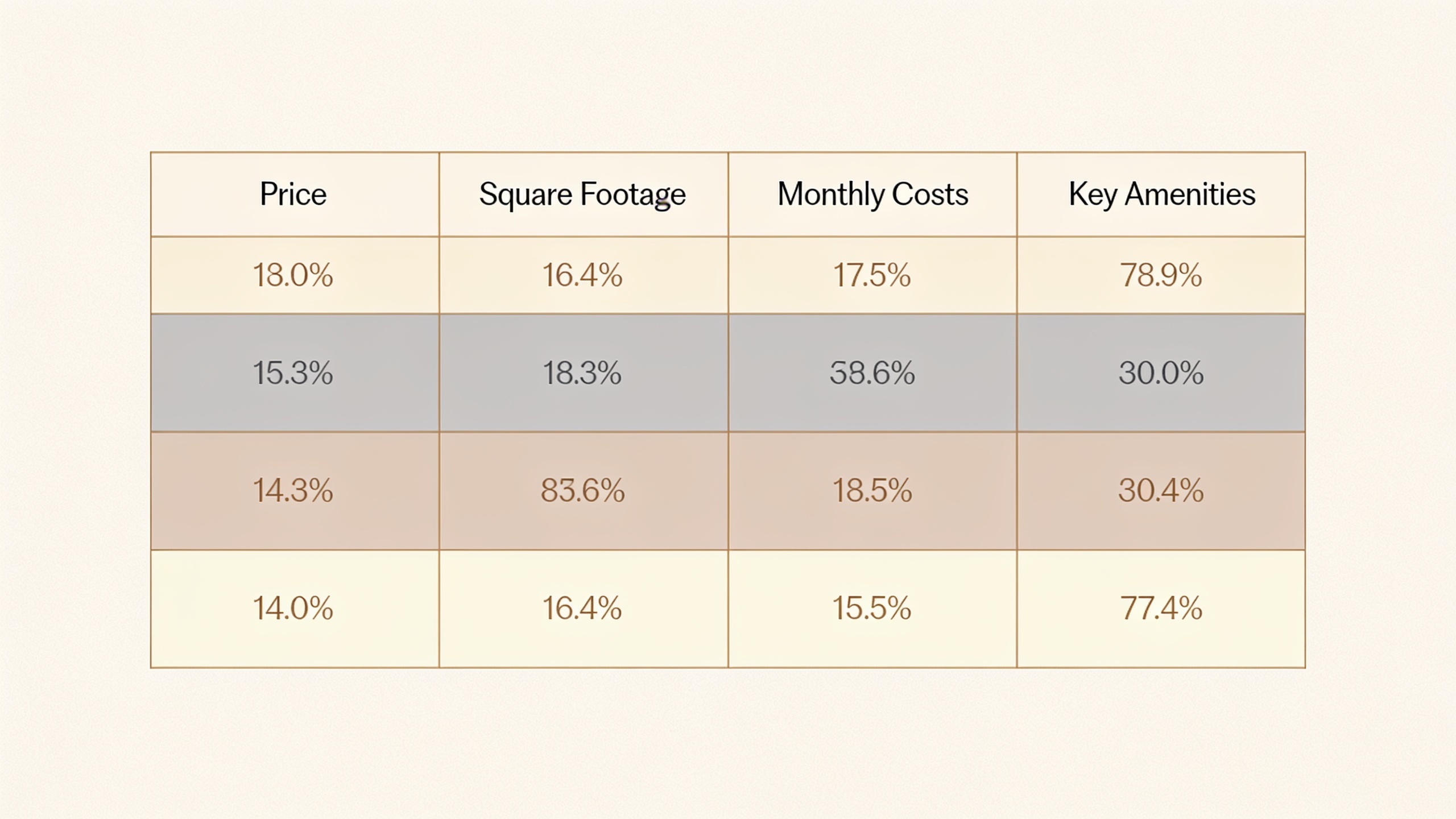
    Property comparison table displaying price, size, monthly costs, and amenities for multiple listings side-by-side

    Worth mentioning that the tech running these alerts isn’t some real-estate-only magic. Automation across pretty much every industry works on the same logic now: define your criteria once, then let the software watch for matches so you don’t have to. Just as RobinRank automates repetitive SEO content and outreach so marketers can focus on strategy instead of hitting publish all day, Viviendalista’s saved-search automation frees you up to actually evaluate homes instead of re-typing the same search criteria every morning like a chump.

    Common Mistakes to Avoid When Using Viviendalista Search Filters

    The biggest mistake people make is piling on too many “must-have” filters at once, which shrinks results to zero and buries genuinely good matches. Filters are supposed to narrow a big pool intelligently, not nuke it out of existence.

    Close behind: setting a price range that’s too tight instead of one that leaves room for negotiation, which quietly hides listings that are priced a hair high but totally negotiable. Another one people forget is updating their saved searches as their taste changes. A search you saved back when your preferences were still fuzzy usually has nothing to do with what you actually want three months later, so go clean it up. And finally, plenty of buyers lean so hard on filters that they never read the full listing description, missing all the stuff filters can’t catch, like a noisy street or a zoning change coming down the pipe. Pairing disciplined filtering with a careful read of the actual listing, the way we lay out in our guide on reading listings thoroughly, beats filters alone every single time.

    Frequently Asked Questions

    Can I stack multiple filter types at once, like price and amenities together?
    Yep. Viviendalista is built for layered searches, so price range, size, amenities, and location can all run at the same time. The platform treats them as “AND” conditions, meaning a listing has to match every single thing you picked, not just one of them.

    Why does my search sometimes come back with zero results?
    Almost always because you’ve got too many strict filters going at once, usually a bunch of amenity filters plus a narrow price range. Drop one or two “nice-to-haves,” widen your price by 10%, or stretch your location boundary a little, and the results should come back.

    How often do listings update when I’m using saved search alerts?
    You can set alerts to instant, daily, or weekly, and new or updated listings usually show up in search results within hours of being added, depending on how the agent or owner submits their data.

    Do the investor filters cost extra?
    No. Investor-specific tools like cap rate and days-on-market are part of the standard advanced search kit on viviendalist.co, no separate paid tier required. That said, some of the deeper market reports may be offered as premium add-ons depending on your account.

    What order should I apply filters when I’m starting fresh?
    Most people get the best results starting with price and location, since those two knock out the most irrelevant listings fastest. Then layer in size and bedroom count, and save amenities for last, because those are the ones most likely to over-narrow things if you throw them in too early.

    Look, mastering these filters isn’t about memorizing every toggle on the screen. It’s about building a filtering habit that actually matches your priorities, whether that’s a tight city budget, a family’s school district, or an investor’s yield targets. Start broad, save the search, let the alerts do the daily grind, and refine as you figure out what you really want. That’s the whole trick.

  • 5 First-Time Home Buyer Mistakes (And How to Avoid Them)

    5 First-Time Home Buyer Mistakes (And How to Avoid Them)

    Buying your first place is thrilling right up until it isn’t. And the difference usually comes down to a handful of avoidable screwups: skipping the inspection, borrowing more than you can actually live with, or falling head-over-heels for a house before you’ve locked down financing. Any one of those can turn a proud milestone into months of financial regret. First-time buyers made up about 32% of all home purchases in 2023, according to the National Association of Realtors’ Profile of Home Buyers and Sellers, and a whole lot of them will tell you, if you ask, that they wish they’d done more homework before signing. So let’s talk about the five mistakes that trip people up the most, and how you sidestep them.

    Table of Contents

    What Are the Most Common First-Time Home Buyer Mistakes?

    The most common first-time buyer mistakes are skipping mortgage pre-approval, overextending the budget, waiving the home inspection, letting emotions drive the decision, and underestimating closing costs and post-purchase expenses. And if you squint, they all come from the same place: rushing a huge financial decision without an actual plan.

    First-timers are especially prone to this stuff, and it makes sense. You’ve never done it before, so you lean on whatever advice is floating around, what your uncle did in 2015, what looked easy on some HGTV show, instead of on what the market actually looks like right now. But markets move fast. Mortgage rates, inventory, local price trends, all of it can shift in the span of a few months, so somebody else’s playbook from five years ago might be useless to you today. Before you start poking around listings, it’s genuinely worth reading through a First-Time Home Buyer’s Guide: Where to Start in 2025 just to get a feel for the current lending scene and the order things should happen in. And if you’re still not sure you’re ready, financially or emotionally, 10 Signs You’re Ready to Buy Your First Home is a decent gut-check before you fall down the listings rabbit hole.

    Mistake #1: Skipping Mortgage Pre-Approval Before House Hunting

    Skipping pre-approval means you’re shopping without knowing what a lender will actually hand you, which wastes your time touring places you can’t afford and leaves you with weak offers when things get competitive. Pre-approval is a lender’s conditional commitment. They dig into your credit, income, assets, and debt, then tell you the max loan you’ll probably qualify for.

    Here’s where people get tripped up. “Pre-qualification” and “pre-approval” sound like the same thing, and they are absolutely not. Pre-qualification is a quick, hand-wavy estimate based on numbers you tell them yourself. Pre-approval is the real deal: the lender pulls your documents, pay stubs, tax returns, bank statements, and runs a hard credit check. Sellers and their agents know the difference, and they care about it a lot, especially when there are multiple offers on the table. Show up without that letter and your offer can get tossed even if your price is good, simply because nobody’s convinced you can close.

    So what do you do? Get pre-approved by two or three lenders before you’re seriously touring anything. Shop them against each other, banks, credit unions, online mortgage outfits, because even a quarter-point difference in your rate adds up to real money over 30 years. It’s not nothing. Poking around the listings and comparison tools on something like Vivienda Lista also helps you get a realistic read on prices in the neighborhoods you’re eyeing, so you walk into that lender conversation already knowing roughly what you’re gunning for.

    Mistake #2: Overextending Your Budget Beyond What You Can Afford

    Overextending happens when you stretch to the very top of what a lender approves you for, instead of what you can actually live with once taxes, insurance, upkeep, and, you know, having a life get factored in. A bank approving you for a $450,000 mortgage is not the same as that payment fitting comfortably into your month. Not even close.

    The old reliable here is the 28/36 rule: keep your housing costs under 28% of your gross monthly income, and your total debt payments (mortgage included) under 36%. The catch is that lenders will happily approve you closer to a 43-45% debt-to-income ratio under certain loan programs, and living at that level leaves you almost no room to save, handle an emergency, or just enjoy anything. And new buyers constantly forget the extras: property taxes, homeowners insurance, private mortgage insurance if you put down less than 20%, HOA fees, and a maintenance cushion that’s usually pegged at 1-2% of the home’s value every year.

    Your down payment plays into this too. NAR’s 2023 report put the median down payment for first-time buyers at around 8% of the purchase price, versus roughly 19% for repeat buyers. Smaller down payment, bigger loan, higher monthly payment, and PMI that can tack on a few hundred bucks a month until you build enough equity to shake it. That gap between 8% and 19% is a big reason first-timers feel squeezed.

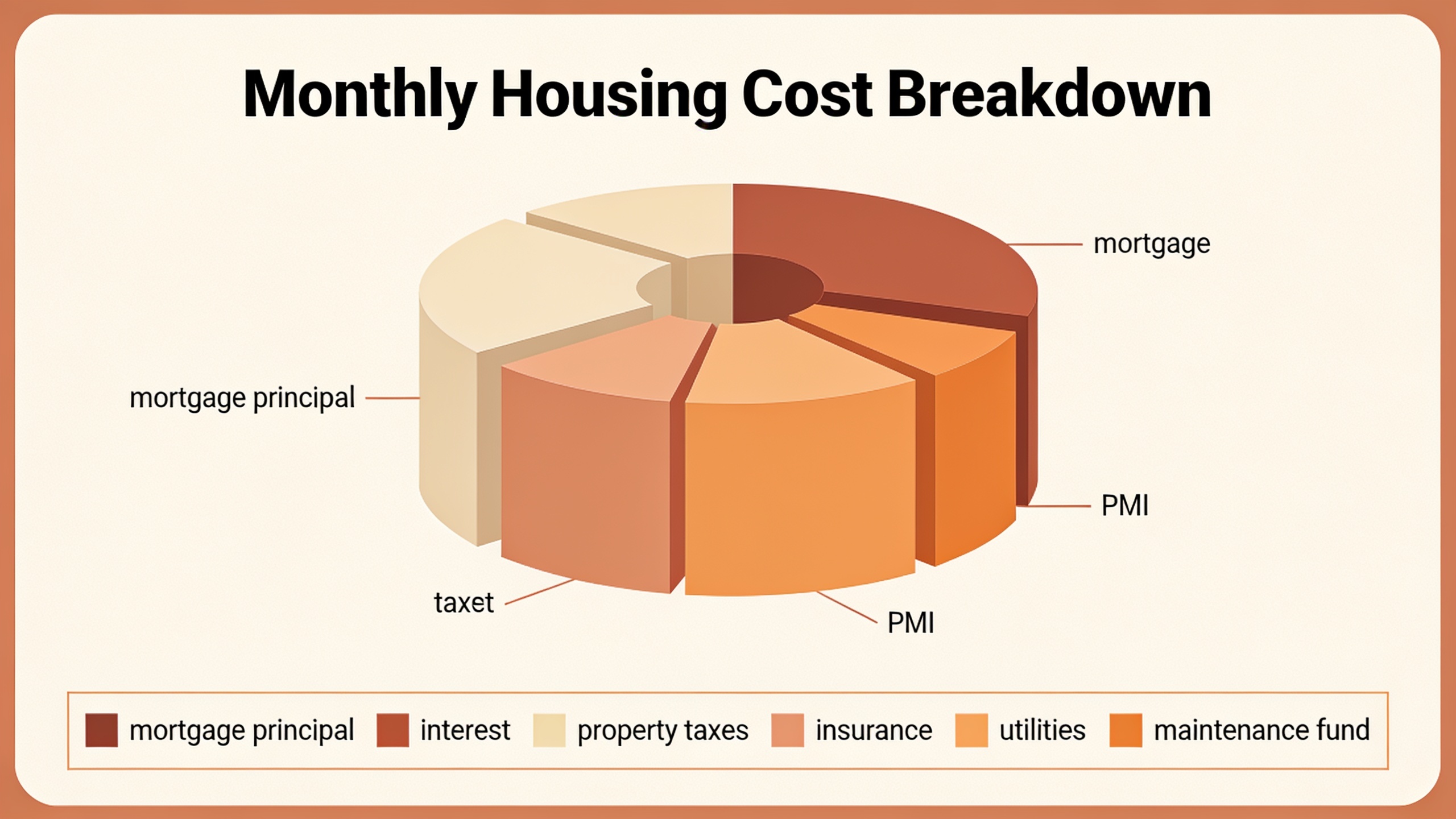
    The fix is honestly kind of boring but it works: build a full monthly budget before you set your max offer price, not after. Principal, interest, taxes, insurance, PMI, utilities, maintenance fund, the whole thing. Run a few different down payment and interest rate scenarios through an online calculator too, so you don’t get blindsided by payment shock the month after you move in.

    Monthly homeownership budget breakdown showing all costs including mortgage, taxes, insurance, utilities, and maintenance reserves

    Mistake #3: Skipping the Home Inspection to Save Time or Money

    Skipping the inspection to save a few hundred dollars, or to make your offer more attractive in a bidding war, can leave you staring down tens of thousands in repairs nobody warned you about. Bad roof, ancient wiring, take your pick. An inspection is a professional, non-invasive once-over of a home’s structure and systems, the roof, foundation, plumbing, electrical, HVAC, usually done after your offer’s accepted but before closing.

    In a hot market, some buyers waive the inspection contingency entirely just to look more competitive. Sometimes it pays off. Often it’s a straight-up gamble, because sellers aren’t always required to disclose everything, and plenty of problems, slow leaks behind a wall, a heating system on its last legs, don’t show up in a casual walkthrough. Plumbing and heating are some of the priciest things to fix, and they’re exactly the stuff an untrained eye misses. If an inspection turns up something iffy with the boiler, water heater, or pipes, getting a specialist like Dmplumbingheating to give you a real repair estimate before you close can be worth its weight in gold when you go to negotiate credits or knock down the price.

    My advice? Always put an inspection contingency in your offer unless you’ve got a very specific reason not to (like you’re buying a teardown anyway). Set aside $300-$600 for a general inspection, and think about add-ons for radon, mold, pests, or the sewer line depending on how old the place is and where it sits. Then actually use what the inspector finds. Buyers get repairs, credits, and price cuts out of inspection reports all the time.

    Mistake #4: Letting Emotions Override Financial Judgment

    Letting emotions run the show means falling for a house’s look, its layout, its “vibe,” and quietly ignoring the red flags: an inflated price, a rough location, financing that leaves you gasping. Buying a home is about the most emotional purchase most of us ever make, which is precisely why it’s so easy to talk yourself past the warning signs.

    You can usually spot it happening. You start bidding over asking out of pure fear of losing the place. You brush off the inspection because “it’s the one.” You commit after a single visit without ever checking the commute, the schools, the neighborhood at night, or what the place might resell for down the road. This is brutal in competitive city markets, where low inventory manufactures a sense of urgency that’s honestly kind of designed to make you panic.

    Here’s what actually helps. Write down your budget and your must-haves before you tour a single home, and mean it. Then give yourself a 24-hour cooling-off window before you submit any offer, even on a place you’re crazy about. Visit more than once, at different times of day, and go dig into the area on your own rather than swallowing whatever the listing agent is selling. Reading real buyer experiences and neighborhood chatter, the kind of local back-and-forth communities on platforms like Vidbox tend to have, can be a useful reality check before you emotionally commit to four walls and a roof.

    Mistake #5: Underestimating Closing Costs and Ongoing Homeownership Expenses

    Underestimating closing costs means forgetting about the extra 2-5% of the loan amount buyers typically owe at the closing table, on top of the down payment, covering things like loan origination, title insurance, the appraisal, attorney fees, and prepaid property taxes. The Consumer Financial Protection Bureau puts closing costs in that 2-5% range, so a $350,000 home could hit you with $7,000-$17,500 in closing costs alone. And that’s cash you need on hand, totally separate from your down payment.

    But closing day is just the start. What really catches new buyers off guard is what it costs to keep a home running. When you rent, your landlord eats most of the repair bills. Own the place, and a dead water heater or a leaking roof is entirely your problem. The usual advice is to sock away 1-2% of the home’s value every year for maintenance, which on that same $350,000 house works out to $3,500-$7,000 annually that a lot of first-timers just… never plan for. Throw in moving costs, furniture for rooms you didn’t have before, maybe HOA dues, and utility bills that dwarf what you paid in your old apartment, and year one gets expensive fast.

    Do yourself a favor: ask your lender for a Loan Estimate early on, since it lays out the projected closing costs, and then get the Closing Disclosure at least three business days before closing so you can eyeball the final numbers, which is your right under the TRID (TILA-RESPA Integrated Disclosure) rules anyway. And build a post-purchase cash reserve, ideally three to six months of expenses, that lives apart from your down payment and closing money. That way one surprise repair doesn’t blow up your first year.

    How Much Do These First-Time Home Buyer Mistakes Really Cost You?

    Every one of these carries its own financial sting, and seeing the dollar figures laid out side by side makes it easier to decide which traps to guard against hardest. Here’s the quick version, based on common industry cost ranges.

    Mistake Typical Financial Impact How to Avoid Home Buying Mistakes Like This
    Skipping mortgage pre-approval Lost time, weaker offers, possible loss of dream home to a pre-approved buyer Get pre-approved by 2-3 lenders before touring homes
    Overextending your budget $200-$800+ extra in monthly costs beyond comfortable range Follow the 28/36 rule and budget for taxes, insurance, and PMI
    Skipping the home inspection $5,000-$30,000+ in unexpected repairs (roof, plumbing, electrical) Always include an inspection contingency; budget $300-$600 for the inspection
    Emotional decision-making Overpaying by 5-10% above fair market value in bidding wars Set criteria in advance and use a 24-hour cooling-off period
    Underestimating closing costs & upkeep 2-5% of loan amount at closing, plus 1-2% of home value annually in maintenance Request a Loan Estimate early and build a post-purchase cash reserve

    How Can You Avoid Home Buying Mistakes as a First-Time Buyer?

    You dodge these mistakes by sorting out your financing first, building a budget that reflects reality, refusing to skip the inspection, keeping your emotions on a leash during negotiations, and planning for the whole cost of ownership instead of just the mortgage payment. Basically, treat buying a home as a string of deliberate, research-backed decisions rather than one big emotional leap off a cliff.

    Get your team together early. That means a buyer’s agent who’s actually working for you and not the seller, a lender you trust, a licensed inspector, and, if your state leans that way for closings, a real estate attorney. Look into first-time buyer assistance programs too, because they exist in nearly every state and can mean down payment grants, reduced rates, or tax credits, and a shocking number of buyers either don’t know they’re out there or assume they won’t qualify. (A lot of them do qualify.) And do your own homework on neighborhoods, school ratings, crime data, and any future development plans, rather than just trusting the listing agent’s pitch. Agents get paid when the sale closes, not when you’re happy five years later. Worth remembering.

    Last thing, and maybe the most important: slow down. Rushing is the common thread running through almost every mistake on this list. Rushing to make an offer, rushing through financing, rushing past the ugly bits of an inspection report. Even the pros are leaning more on structured, data-driven tools these days to guide decisions and publish accurate market info. Platforms like RobinRank show how the whole industry is drifting toward verified information over gut-feel guesswork, and that same idea, slow down and lean on real data, works just as well for you.

    Frequently Asked Questions

    What’s the single worst mistake first-time buyers make?
    Most pros point to overextending the budget, because unlike a one-off headache like a bad inspection result, it creates a financial squeeze that follows you for years after closing. A house that’s “affordable” on paper but leaves zero room for savings, emergencies, or, honestly, just living, can quietly wreck your stability for a long time.

    Is it ever okay to skip the home inspection?
    Rarely, even when the market’s cutthroat. Some buyers waive the contingency to strengthen an offer but still pay for an inspection informally just to know what they’re getting into. A smarter middle ground is a pre-inspection before you make the offer, or negotiating a shorter inspection window instead of tossing it out entirely.

    How much should I actually have saved before buying?
    On top of your down payment (usually 3-8% for first-timers on conventional or FHA loans), plan for another 2-5% of the loan amount in closing costs, plus a separate emergency and maintenance reserve covering at least a few months of expenses. Tons of first-time buyers lowball this total and end up house-rich, cash-poor the second they get the keys.

    How do I know if I’m emotionally rushing a purchase?
    Some tells: you’re waiving contingencies you’d normally insist on, you’re rationalizing a price above the budget you set for yourself, or you feel this pressure to decide within hours of one showing. Baking in a mandatory waiting period before any offer is about the simplest way to tell real excitement apart from an impulse you’ll regret.

    Do first-time buyer assistance programs actually help?
    They can, yeah. Plenty of state and local programs offer down payment help, below-market rates, or closing cost grants aimed right at first-time buyers, and eligibility is often looser than people expect, sometimes covering anyone who hasn’t owned in the past three years. Checking early can seriously cut the cash you need up front, so make it one of your first moves.

    Buying your first home doesn’t have to be a landmine of nasty surprises. Get pre-approved before you shop, budget for the full picture and not just the mortgage payment, insist on a real inspection, keep your feelings in check, and plan ahead for closing costs and the ongoing upkeep. Do that, and you’re in a much stronger spot to make a confident, sane decision. Every buyer fumbles something along the way, that’s just how it goes. But knowing where the common traps are hiding is the best tool you’ve got for skipping the expensive ones.

  • How One Couple Actually Pulled Off Buying Their First Home in Under 5 Months

    How One Couple Actually Pulled Off Buying Their First Home in Under 5 Months

    Buying a first home can feel like assembling IKEA furniture with half the instructions missing and a couple of screws short. Throw in student loans, rent that climbs every year, and a housing market that apparently never got the memo about slowing down, and it’s no wonder so many people just… give up and re-sign the lease.

    So I want to tell you about Maria and Josh Delgado. They’re a couple in their late twenties from the Denver metro area who went from “maybe someday” to holding keys in just under five months. No trust fund, no surprise inheritance. Just a plan, some spreadsheets, and a few tools that actually pulled their weight. Here’s how they did it.

    Table of Contents

    • Meet Maria and Josh
    • What “Starter Home” Even Means Anymore
    • How Much House You Can Actually Afford on $95K
    • The Search (Or: How Not to Lose Your Mind)
    • The Tools That Actually Earned Their Keep
    • How They Beat Two Other Offers Without Overpaying
    • Closing Day: The Anticlimax
    • What You Can Steal From Their Playbook
    • FAQ

    Meet Maria and Josh

    Maria’s 28 and works as a physical therapist assistant. Josh is 30, runs a small e-commerce side business, and holds down a full-time logistics job on top of it. Between them they pulled in about $95,000 in 2023, lived in a one-bedroom rental in Aurora, Colorado, and had roughly $22,000 saved when they decided, in January 2024, that they were done waiting around.

    And their timing tells you something bigger about the whole market. The National Association of Realtors’ 2023 Home Buyers and Sellers Generational Trends report put the median age of first-time buyers at 35, with younger folks pointing to affordability and thin inventory as the biggest walls in their way. Maria and Josh looked at that and basically said, no thanks, we’re not waiting until we’re 35. So they treated the search like a work project. Milestones. Deadlines. A shared spreadsheet that, by their own admission, Josh got a little obsessive about.

    Before they touched a single listing, though, they did the thing most people skip. They actually sat down and asked whether they were ready, financially and emotionally. They ran through a checklist a lot like the one in 10 Signs You’re Ready to Buy Your First Home, which confirmed what they were hoping: solid debt-to-income ratio, both credit scores above 700, stable jobs. Green light.

    What “Starter Home” Even Means Anymore

    A starter home is basically an entry-level property, usually smaller, often a condo, townhouse, or a modest single-family place, that a first-time buyer grabs to start building equity before moving up later. For Maria and Josh, that meant a two-bed, one-bath under 1,200 square feet, priced no higher than $385,000, within a 30-minute commute of both their jobs. Simple enough on paper.

    Except the definition of “starter home” has quietly mutated over the years. Your grandparents’ starter home was a shiny new-build in a subdivision made specifically for young families. Not anymore. Redfin’s 2023 data showed the inventory of homes priced under $300,000 has shrunk dramatically nationwide, which shoves first-time buyers toward smaller square footage, older houses, or longer commutes. Pick your compromise. Maria and Josh had to expand their search radius twice before they even found a realistic pool of homes that fit their budget and their non-negotiables.

    Honestly, understanding that shift early probably saved them weeks. They stopped chasing homes that were “starter homes” on paper but completely out of reach once you looked at actual local prices. If you want the deeper version of that reality check, First-Time Home Buyer’s Guide: Where to Start in 2025 helped them recalibrate before they got emotionally attached to a neighborhood they’d never actually afford.

    How Much House You Can Actually Afford on $95K

    On a combined income of $95,000, most lenders will qualify you somewhere between $280,000 and $340,000, assuming your existing debt is manageable, you’ve got a 5-10% down payment, and you’re going with a 30-year fixed. That range swings a lot based on credit score, interest rate, and whatever monthly bills you’re already carrying. Maria and Josh got pre-approved for $320,000 in February 2024, and that number became the anchor for everything that followed.

    They started by running their numbers through a mortgage calculator, then went and sat down with a mortgage broker to get actually pre-approved, not just pre-qualified. That distinction matters way more than people think. Pre-qualification is basically the lender squinting at numbers you told them. Pre-approval means they’ve verified your income, your assets, your credit, the whole deal. And in a hot market? Plenty of sellers won’t even glance at your offer without that pre-approval letter stapled to it.

    To find the right person for this, Josh used Advisorynavigator and got matched with a broker who specialized in first-time buyer programs. That broker knew about a state housing assistance grant the couple had literally never heard of. That one connection saved them close to $4,000 in closing costs through a local down payment assistance program. Four grand. From one conversation.

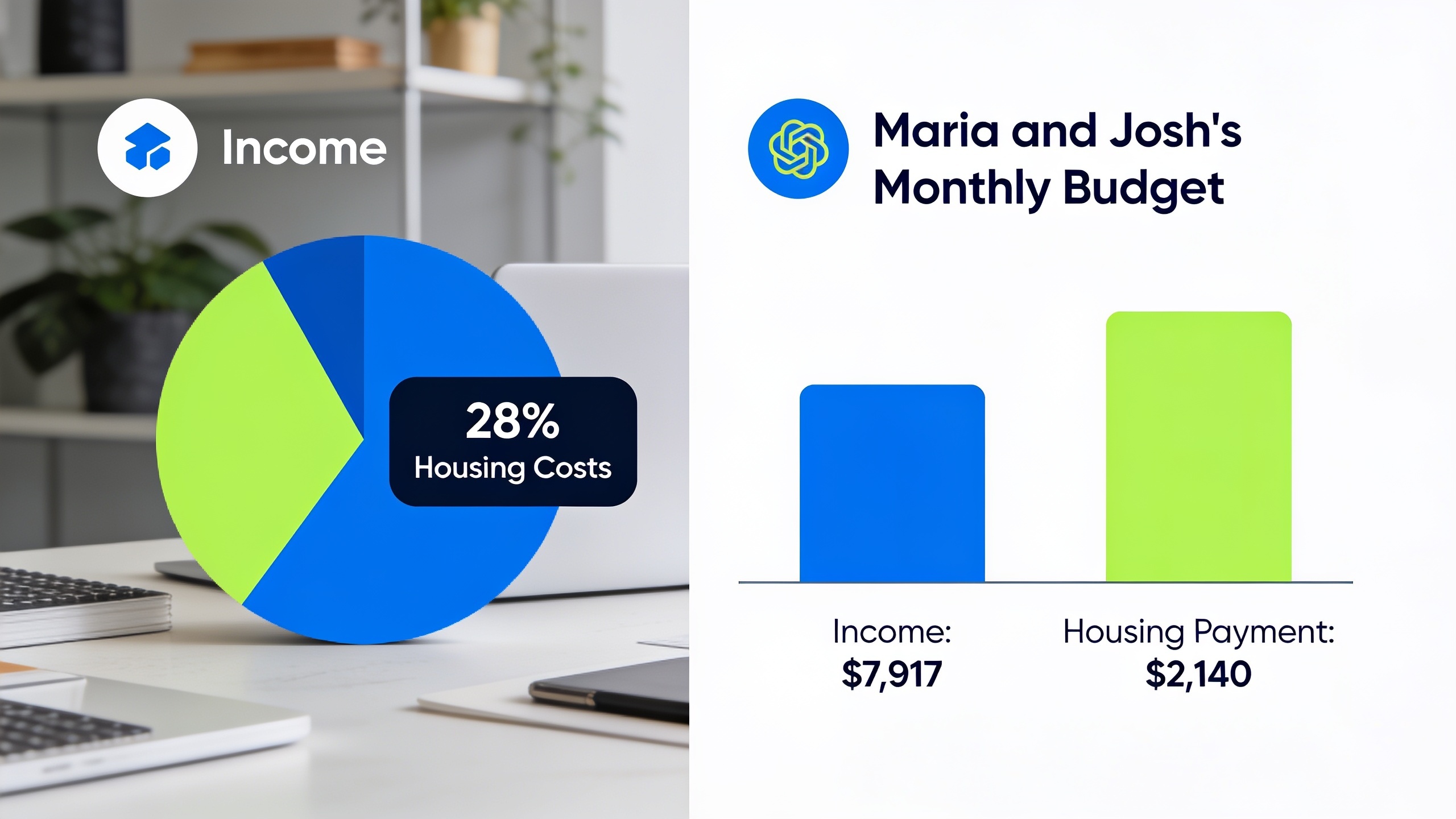
    Here’s roughly how the monthly math shaped their final price range:

    Budget Factor Amount
    Combined gross monthly income $7,917
    Maximum recommended monthly housing payment (28% rule) $2,217
    Actual mortgage pre-approval $320,000
    Down payment saved $22,000 (6.9%)
    Estimated monthly payment (principal, interest, taxes, insurance) $2,140
    Final purchase price $312,500

    Sticking close to that 28% rule (the old guideline that says your housing costs shouldn’t blow past 28% of your gross monthly income) is what kept them from overextending. And trust me, they wanted to. They fell hard for a couple of houses just north of their range. The number on the spreadsheet talked them back down every time.

    Budget breakdown infographic showing the 28% housing cost rule and Maria and Josh's monthly mortgage payment allocation

    The Search (Or: How Not to Lose Your Mind)

    The search is where most first-time buyers quietly lose it. Maria and Josh didn’t, and the reason is almost boring: they narrowed their criteria hard before they booked a single tour. That’s the single biggest thing separating them from buyers who spend six months scrolling Zillow at midnight with zero filters and a growing sense of despair.

    Filters That Matched Their Actual Budget

    Instead of typing “homes in Denver” and drowning, they got specific. Price capped at $325,000. Minimum two bedrooms. Built after 1970 (they did not want a surprise renovation project). ZIP codes with an average commute under 30 minutes. Just like that, their pool shrank from several hundred listings to about 40 active properties at any given moment. Manageable. Human.

    They also set up automated alerts so anything matching their criteria hit their inbox within minutes of going live. That mattered a lot, because over six weeks of tracking listings themselves, they watched decent starter homes get offers within 48 to 72 hours. If you’re finding out about a house on day three, you’ve already lost.

    Comparing Neighborhoods Head-to-Head

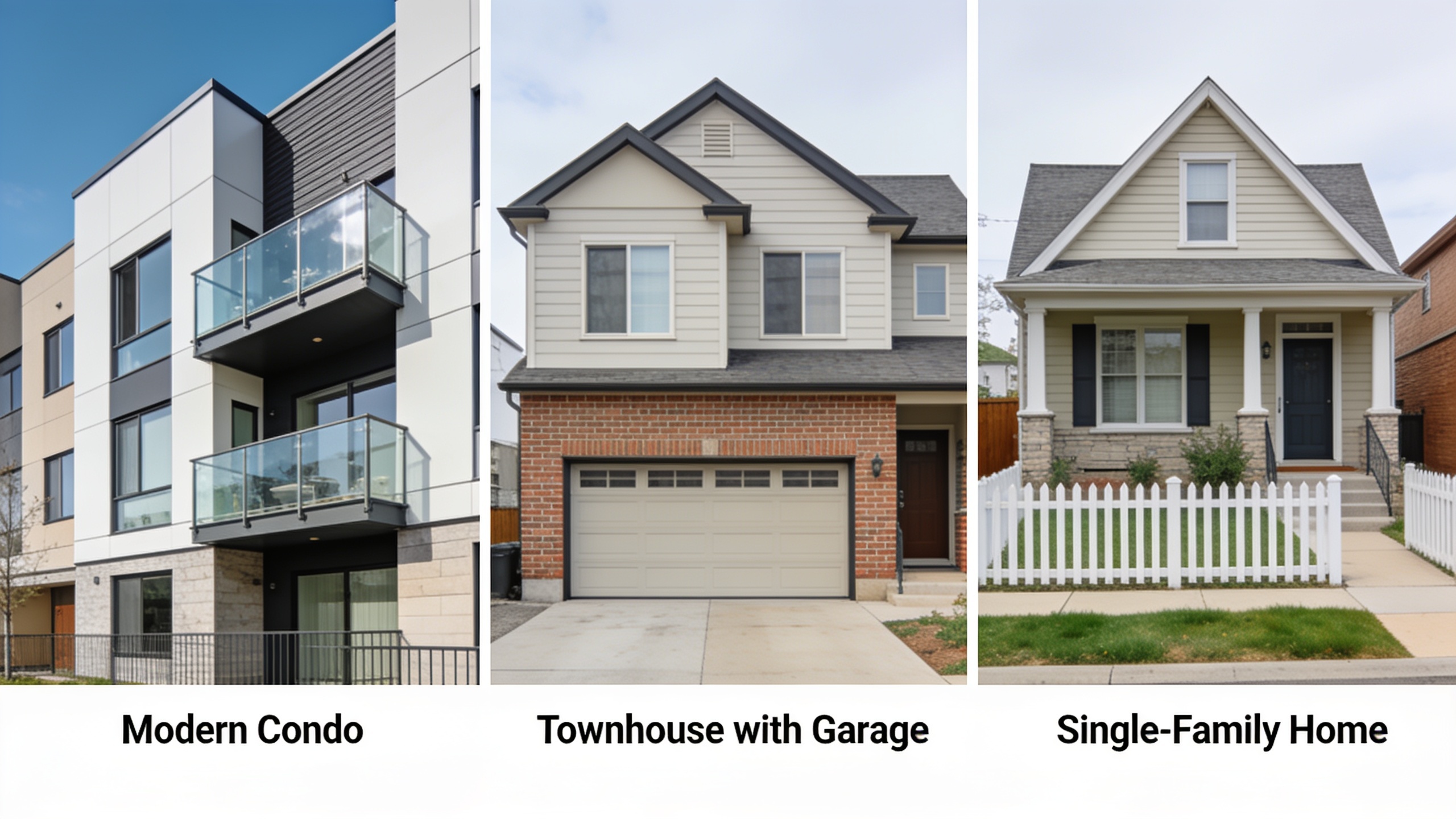
    Here’s a smart move: instead of falling for one neighborhood, they shortlisted three. Westminster, Thornton, and a pocket of Aurora near their current place. Then they toured comparable homes in each. Seeing similar houses side by side made the trade-offs obvious in a way that browsing listings one at a time never does.

    Property Price Size (sq ft) Commute (avg) School Rating Notable Trade-off
    Westminster Condo $298,000 980 22 min 6/10 HOA fees, limited yard
    Thornton Townhouse $312,500 1,150 28 min 7/10 Slightly farther commute
    Aurora Single-Family $335,000 1,050 15 min 5/10 Older HVAC system

    Three starter home options in Denver area showing condo, townhouse, and single-family home styles

    Laid out like that, the Thornton townhouse jumped out. Best balance of space, price, and school quality, even though it wasn’t the closest to work. They built this comparison by hand in a spreadsheet at first, which, fine, worked, but it got a lot less tedious once they found platform tools that did the side-by-side automatically.

    The Tools That Actually Earned Their Keep

    Three things carried the most weight for them: a proper mortgage pre-approval, an automated listing alert system, and a side-by-side comparison feature that let them judge homes on more than just the sticker price. They figure that without all three working together, they’d have spent at least two extra months in the trenches.

    But here’s the part that surprised me. One of their biggest sources of extra cash wasn’t a real estate tool at all. It was Josh’s side business. He sells custom training gear online, including specialty stuff he sources from The Ring Authority, a supplier known for custom boxing ring canvas and equipment that he resells to gyms around the region. That side income ran about $600 to $900 a month, and it’s what let them hit their down payment goal nearly two months ahead of schedule.

    And that business didn’t just happen either. Before the home search even started, Josh had rebuilt his storefront with help from Digital Fusion Hub, who handled the design and the basic SEO. A faster, cleaner site meant more orders with less babysitting, which freed up his evenings for house tours instead of answering “where’s my order” emails at 10pm. He later leaned on content strategies inspired by tools like RobinRank to keep his product pages ranking, so steady traffic kept rolling in even while his brain was buried in mortgage paperwork.

    Which is kind of the whole point, isn’t it? A first home purchase almost never happens in a vacuum. For these two, quietly juicing the side hustle sped up their timeline just as much as any fancy real estate platform did.

    How They Beat Two Other Offers Without Overpaying

    Maria and Josh won the Thornton townhouse against two competing bids by writing a clean, smart contract, not by throwing the most money at it. Their offer came in at $312,500, which was actually $2,500 under asking. But they stripped out a few contingencies the sellers clearly cared about and offered a flexible closing timeline. Turned out that flexibility meant more to the sellers than a few extra thousand from somebody else.

    Bidding wars were just… the norm during their search. Of the twelve properties they seriously looked at touring, seven had at least one other offer within a week of hitting the market. Instead of panicking and blowing past their pre-approval limit (which, again, so tempting when you’re tired and want it to be over), they stuck to a plan they’d worked out in advance.

    Their agent dug into what the sellers actually wanted beyond price. Turned out the sellers needed 45 days after closing to finish moving into a new build. So Maria and Josh put that timeline in writing. And that quietly killed a competing offer that was $4,000 higher but demanded a 14-day close. The higher bid lost because it was inconvenient.

    That’s the thing nobody tells first-time buyers: sellers don’t always take the biggest number. Flexibility, fewer contingencies, and a rock-solid pre-approval letter often carry just as much weight as the dollar amount, especially when a bunch of qualified people are fighting over the same handful of homes.

    Closing Day: The Anticlimax

    Start to finish, closing took 34 days from accepted offer to keys in hand. For reference, ICE Mortgage Technology’s 2023 Origination Insight Report pegged the national average around 43 days, so they beat it, mostly because they had every document ready before anyone asked.

    The inspection did turn up two things. An aging water heater with maybe two or three years left, and a minor roof repair around a vent flashing. Nothing catastrophic. Instead of walking away or demanding the sellers fix it all (which just drags everything out with re-inspections), they negotiated a $3,200 credit at closing and used it to knock down their own closing costs. Clean, fast, no drama.

    As for the big day itself, they describe it as “anticlimactic in the best way.” Because they’d organized their financials, reviewed the closing disclosure three days ahead like the TILA-RESPA Integrated Disclosure rule requires, and pestered their lender with questions in advance, the actual signing took under 40 minutes. You spend five months on something and then it’s over before your coffee gets cold.

    What You Can Steal From Their Playbook

    If there’s one lesson here, it’s that clarity beats speed. The buyers who nail down their real budget, their non-negotiables, and their target neighborhoods before touring anything tend to move faster and stress way less than the folks browsing endlessly with no plan. Sounds obvious. Almost nobody does it.

    A few other things worth stealing:

    Get pre-approved, not just pre-qualified, before you house hunt. It gave them credibility with sellers and a firm ceiling to search within, which stopped them from falling for homes they couldn’t actually afford.

    Treat side income as part of the down payment strategy instead of an afterthought. That side hustle bought them roughly two extra months of runway. Even a modest one, run well, can genuinely move your timeline up.

    Compare homes on the same criteria every time. Price, size, commute, school ratings. It turns an emotional gut-punch of a decision into something rational, and it makes it much easier to walk away from a house that looked great on the tour but didn’t hold up on paper.

    And stay flexible on closing timelines and contingencies. That flexibility literally won them a home over a higher bid. Price isn’t everything to sellers, and forgetting that costs people houses.

    Last one: do your homework before you sign anything. Read the guides, understand pre-approval versus pre-qualification, figure out what “starter home” actually means in your market and not some article from 2009. It keeps your expectations grounded through a process that can otherwise feel like chaos.

    FAQ

    How long does buying a first home usually take, start to finish?
    Most first-time buyers spend two to six months searching, based on patterns the National Association of Realtors tracks, then another 30 to 45 days for closing once an offer’s accepted. Maria and Josh’s whole thing, from serious search to keys, took just under five months.

    What credit score do I need for a first-time home loan?
    Conventional loans generally want a minimum of 620, while FHA loans can go as low as 580 with a 3.5% down payment. Once you’re at 700 and up you start unlocking the better interest rates, which is exactly why a lot of first-time buyers spend a few months boosting their credit before they apply.

    Pre-qualified or pre-approved. Which one actually matters before house hunting?
    Pre-approval, hands down. It involves a lender actually verifying your income, assets, and credit and giving you a conditional commitment for a specific amount. In competitive markets, plenty of sellers won’t even take an offer seriously without that pre-approval letter attached.

    How big should a starter home down payment be?
    Usually somewhere between 3% and 10% of the price, depending on the loan. FHA loans allow as low as 3.5%, conventional loans often start around 5%. Maria and Josh put down 6.9% of their $312,500 purchase, roughly $22,000, which is pretty typical for a first-time buyer on a conventional loan.

    What should I prioritize when comparing homes on a tight budget?
    Location and structural condition, every time, over cosmetic stuff. You can repaint a wall or swap out flooring later. You can’t move the house closer to work or change the school district, and fixing a roof or HVAC system gets expensive fast. Comparing properties on the same criteria, like Maria and Josh did, makes those trade-offs way clearer than judging one house at a time.

    Their path to homeownership wasn’t luck. It was clear budgeting, smart tools, a scrappy little side hustle, and a willingness to trade a few extra minutes of commute for the right price and the right school district. Five months from renters to homeowners. Turns out a starter home doesn’t have to stay a someday thing.

  • How Real Estate Investors Use Data to Pick Profitable Markets

    How Real Estate Investors Use Data to Pick Profitable Markets

    Buying a rental property because you liked the neighborhood once, or because your uncle swears by it, is a great way to lose money slowly. The investors who actually make it work these days lean hard on data. Population shifts, rent growth numbers, vacancy rates, job stats. Boring stuff, maybe, but it’s what keeps you from overpaying in some overhyped market that’s already peaked. Use it right and you find the markets with real, durable upside instead of the ones everybody’s already crowded into.

    So this is a walk through what data actually matters, where to dig it up, how to read rent growth and vacancy trends without fooling yourself, and how to blend all those numbers with the kind of street-level stuff a spreadsheet will never tell you.

    Table of Contents

    What Is Real Estate Market Data, and Why Does It Matter?

    Real estate market data is just the collection of numbers that describe the health and direction of a housing market: home prices, rent levels, vacancy rates, population growth, job creation, inventory. That’s it. The point of tracking it is so you can compare cities and neighborhoods honestly, instead of judging a place off one afternoon visit and a gut feeling.

    Why bother? Because real estate is a slow, expensive, long-haul commitment, and markets can transform completely over the five or ten years you’re holding a property. A city that looks like a rocket ship in 2024, all job growth and rising rents, might have been sleepy and forgettable back in 2015. The U.S. Census Bureau’s Population Estimates Program has shown Sun Belt metros like Austin, Raleigh, and Tampa sitting near the top of the fastest-growing regions in the country for a solid decade now, and that growth tracks almost perfectly with rental demand and rent appreciation in those same markets. Investors who catch that kind of trend early tend to buy before prices catch up to the fundamentals. That’s where the money is.

    Without the data, you’re guessing. With it, you can actually rank markets by growth potential, run realistic rent-to-price math, and make a reasonable bet on which neighborhoods hold up through the next economic cycle. It won’t make you psychic. But it beats a coin flip.

    How Do Investors Find Profitable Rental Markets?

    The short answer: they stack several data points on top of each other to find cities where demand for housing is outrunning supply. No single number does the job. It’s the overlap that tells you something.

    Population and Job Growth

    Population growth is usually the first filter, and for good reason. More people moving in means more renters and buyers fighting over a limited number of homes. The Bureau of Labor Statistics puts out monthly employment data by metro, and a lot of investors line that up against net migration numbers from the annual reports moving companies release (yes, the U-Haul and Atlas data is genuinely useful). What you’re hunting for is a market adding jobs faster than it’s adding housing units. That mismatch is what pushes rents up.

    Rent growth trends tell you how fast average rents are climbing, or falling, year over year in a given metro or submarket. You want markets beating the national average, which apartment research firms like RealPage and Yardi Matrix have historically pegged in the 2% to 4% range annually. Some high-demand metros have blown way past that, though. Much of the Sun Belt saw double-digit rent growth in 2021 and 2022 when supply got tight and everybody was moving at once.

    Vacancy Rates

    Vacancy rates measure the share of rental units sitting empty at any given moment, and honestly, they’re one of the cleanest reads on whether a market is balanced. Below 5% usually means landlords have pricing power. Above 7 to 8% and you’re often looking at oversupply or fading demand. A sudden jump in vacancy is one of my favorite early warning signs, sometimes more telling than price data, because vacancies move before rents do.

    If this all sounds a bit much and you’re just getting started, don’t skip the fundamentals for the fancy metro spreadsheets. Our guide, Rental Property Investing 101: A Beginner’s Roadmap, covers evaluating a single property, from financing to cash flow, and it pairs nicely with the bigger-picture market stuff here.

    Which Real Estate Market Data Sources Should Investors Trust?

    The most reliable data comes from a mix of government agencies, private research firms, and MLS aggregators, because no single source covers everything. Smart investors triangulate across three or four before they put real money down.

    Government sources are the backbone. The U.S. Census Bureau, the Bureau of Labor Statistics, and HUD all give you free, methodologically serious data on population, jobs, and housing supply. Private firms like Zillow, Redfin, CoStar, and Yardi Matrix get more granular and closer to real-time on rents and vacancies, often down to the neighborhood, though the good reports usually sit behind a paywall. And your local MLS is where you find the truest picture of what’s actually listed right now, days on market, price per square foot, all of it, ZIP code by ZIP code.

    Data Source Best For Update Frequency Cost
    U.S. Census Bureau Population and migration trends Annual (some quarterly) Free
    Bureau of Labor Statistics Employment and wage growth Monthly Free
    Zillow Research Home values, rent index (ZORI) Monthly Free
    Yardi Matrix / CoStar Vacancy rates, rent growth, new supply pipeline Monthly/Quarterly Paid (subscription)
    Local MLS Active listings, days on market, pricing Real-time Requires agent access

    One thing worth mentioning: the whole “use better data to make better calls” idea isn’t unique to real estate. It’s true across pretty much every asset class. Crypto traders lean on platforms like Cryptocoinsjournal for market analysis and trend coverage before they move. Different market, same principle. Better data, better timing.

    How to Analyze Rent Growth Data Like a Professional Investor

    The pros analyze rent growth by comparing year-over-year changes across several time frames, not just last quarter, so they can tell real trends apart from random noise. One hot quarter means nothing. A multi-year pattern of steady rent gains, backed up by job and population growth? That’s a signal.

    Start by pulling five years of rent growth for your target metro, then break it out by property type: single-family, small multifamily, big apartment complexes. These segments genuinely move at different speeds. You’ll sometimes see a metro where the big apartment buildings are flat while single-family rentals in the exact same city are posting 6 to 7% a year, which happens a lot in places where remote work pushed everyone toward houses with yards.

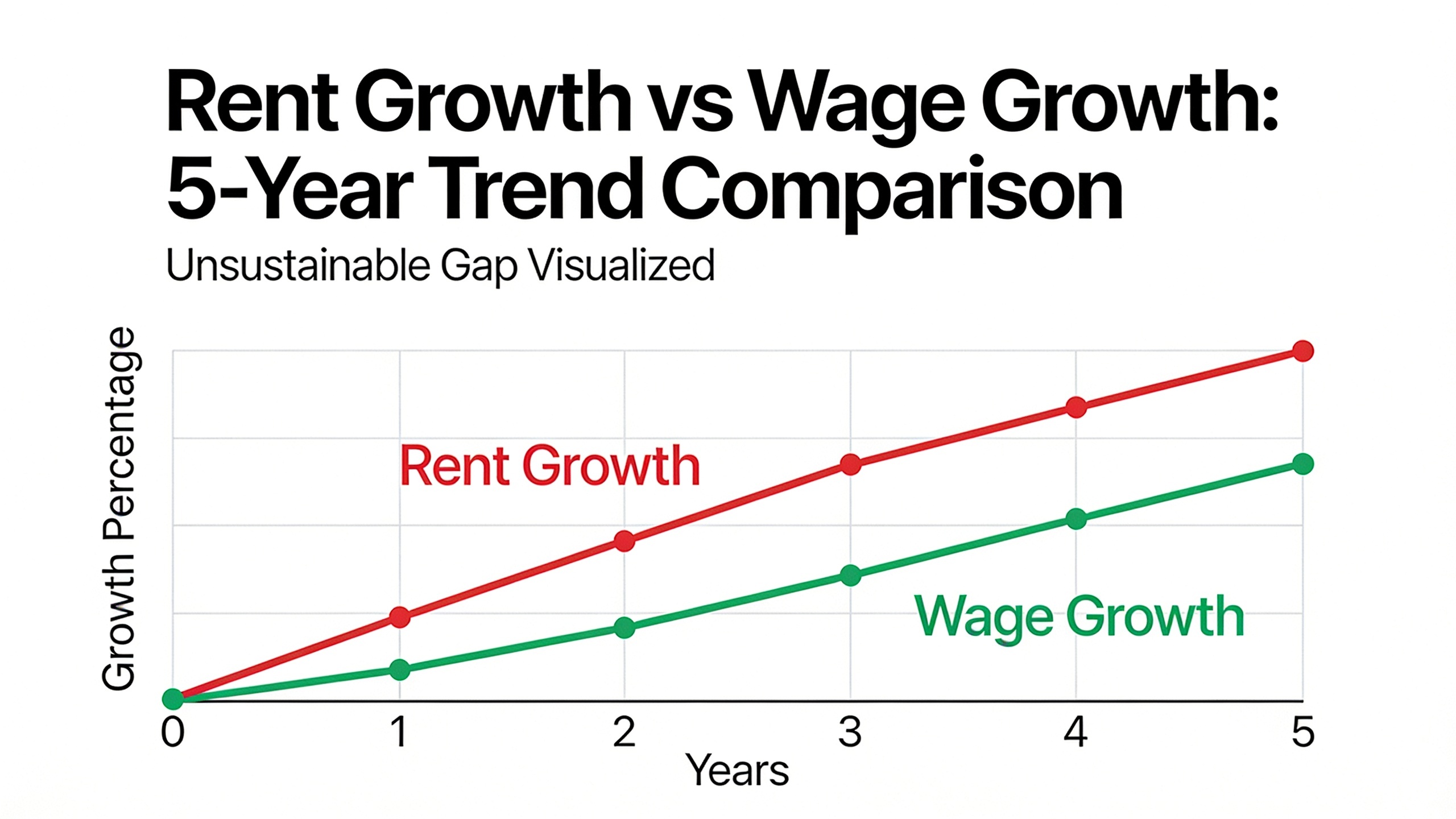
    Then compare rent growth to local wage growth. This is the step people skip, and it matters. If rents keep outrunning incomes year after year, the market’s creeping toward an affordability ceiling. Eventually that slows rent growth or shoves renters into smaller units and roommate situations. Investors who ignore this end up overpaying on rent projections that were never sustainable.

    Chart comparing rent growth versus wage growth trends showing unsustainable affordability gap

    Last, look at what’s being built. The new supply pipeline, basically. The Census Bureau’s Building Permits Survey, cross-checked against local planning records, tells you whether a wall of new apartments is about to land and flatten rent growth over the next year or two. Strong rent growth today plus a giant construction pipeline is a very different bet than strong demand with almost nothing new coming online. Treat them differently.

    Vacancy Rates: The Hidden Signal Most Investors Miss

    Vacancy rates are probably the most underused number in this whole game, which is a shame, because they tend to shift before rent prices do. A vacancy rate is just the percentage of rental units sitting empty at a point in time, reported at the national, metro, and sometimes neighborhood level.

    So why the extra attention? Rents lag. Landlords will hold asking rents flat for months even as their units empty out, because nobody wants to advertise weakness. Vacancy, on the other hand, reacts almost instantly. A big employer announces layoffs, or a wave of new construction finishes, and vacancy climbs within a quarter or two. Way before the advertised rents ever budge.

    When you’re comparing markets, look at both the current vacancy rate and where it’s been heading. A market at 4% that’s been creeping up from 2% over three years is a completely different animal than one that’s held steady at 4% the whole time, even though the snapshot looks identical. The first one might be sliding toward oversupply. The second is probably just fine.

    And segment it by property class while you’re at it. Class A luxury stuff usually carries higher vacancy than older Class B and C properties, simply because shiny new supply leases up slowly. So if you’re targeting workforce housing, weight the Class B/C numbers more than the headline market-wide figure, which a glut of empty luxury towers can totally distort.

    Combining Real Estate Market Data With On-the-Ground Research

    Data tells you where to look. It doesn’t tell you what to buy. Those are two different things, and the magic happens when you use both. Numbers can point you at a promising ZIP code, but they can’t tell you the block goes sketchy after dark, or that the “good” school just lost half its teachers, or that the road out front is about to become a construction zone for two years.

    Once the data trims your list to two or three neighborhoods, go there. Walk the streets at different times of day. Talk to property managers and agents who actually live in that submarket. Safety is the one data really undersells, because crime stats usually get reported at the city or precinct level, which hides a ton of block-to-block variation. Some investors and property managers close that gap by bringing in security firms directly. Providers like Stormhammer Security run patrol and monitoring services for rental portfolios in areas where a little extra security helps keep tenants around and protects the property’s value, which matters more the bigger your multifamily holdings get.

    Real estate investor conducting on-the-ground neighborhood research by walking streets and observing local conditions

    Schools are another one that moves rental demand hard, especially in the suburbs where you’re chasing families. Ratings from GreatSchools or Niche give you a quick benchmark, sure, but the sharper investors dig into district trends, enrollment growth, even what academic support exists locally. Strong school infrastructure, including tutoring and exam-prep options like those from Quiethelpgcse, can genuinely tip a family renter toward one suburb over a near-identical one down the road.

    Once you’re actually eyeballing specific properties, how the listing is written starts to matter as much as the market data. Learning how to read property listings like a pro helps you catch the red flags, the wildly optimistic rent projections, the staged photos hiding a wreck. That’s the property-level due diligence that rounds out all the macro stuff.

    Tech is speeding all this up too. The same way AI tools like RobinRank now handle huge chunks of content research and analysis over in the SEO world, similar AI platforms are showing up in real estate to scrape, clean, and summarize market data across hundreds of metros in minutes. Work that used to eat up days of an analyst’s time.

    Common Mistakes Investors Make When Reading Market Data

    The biggest mistake, by far, is leaning on one snapshot number. Current median price, last quarter’s rent growth, whatever. A market that looks great on a single stat can look totally different once you factor in the population trend, the supply pipeline, and the vacancy history. Always pull the trend, always cross-reference.

    Second one: confusing appreciation potential with cash flow potential. These are not the same, and people mix them up constantly. High-growth coastal and Sun Belt metros often deliver strong long-term appreciation but weak day-one cash flow, because prices already baked in that growth. Slower Midwest and Rust Belt markets flip it, better cash flow up front, more modest appreciation. Neither is wrong. You just have to be honest with yourself about which one you’re actually buying for.

    Third, and this one drives me nuts, is overweighting national headlines. National rent growth or vacancy figures are averages smeared across dozens of wildly different metros. A headline about “slowing rent growth” can be technically true while a specific submarket inside a booming metro is still cranking out 6% annual increases because nobody built anything new there. The average lies to you. The local number doesn’t.

    And finally, people buy and then just… stop looking. Markets aren’t frozen in time. The same rent, vacancy, and employment metrics you used to justify the purchase should get a fresh look every year, to confirm your thesis is still holding up. Don’t assume the analysis you ran three years ago still describes reality today. It probably doesn’t.

    Frequently Asked Questions

    What’s the single most important market data metric for rental investors?
    There really isn’t one, but if you forced me to pick, rent growth combined with vacancy rate trends gives the clearest read on supply and demand. Population and job growth are great leading indicators, but rent growth and vacancy reflect actual tenant demand and pricing power in real time.

    How often should I check the data on a city I already invested in?
    Once a year at minimum for the key stuff: rent growth, vacancy, local employment. Bump it up to quarterly if you’re eyeing more purchases in that market or thinking about refinancing.

    Are free sources like Zillow and Census data actually good enough to invest on?
    For macro trends like population growth and general rent indices, yeah, they’re a solid starting point. Where they fall short is neighborhood-level detail, which is where paid platforms like CoStar or Yardi Matrix earn their keep. Most people use the free data to shortlist markets, then pay for detailed reports or MLS access before pulling the trigger.

    What vacancy rate counts as healthy?
    Below 5% is generally landlord-friendly, meaning demand is outpacing available units. Above 7 to 8% usually points to oversupply or softening demand. That said, context matters, a “healthy” rate shifts by property type and region, so always compare it against that specific market’s own history.

    As a first-timer, should I chase high growth or high cash flow?
    Depends on your goals and your stomach for risk. High-growth markets give you stronger appreciation but thinner cash flow because prices are already elevated. High-cash-flow markets hand you steadier monthly income with more modest appreciation. Honestly, a lot of first-timers start cash-flow-focused to build a cushion, then reach for the higher-growth, higher-price plays once they’ve got some breathing room.

    —

    Picking a profitable rental market really comes down to discipline. Pull your data from a few credible sources, watch rent growth and vacancy over time instead of freezing on one snapshot, and pair the numbers with real local knowledge before you sign anything. Markets will keep moving, people relocate, employers grow and shrink, new supply comes online. But if you build the habit of actually checking the data, consistently, you’ll spot the next good market before the crowd wakes up to it. And that head start is the whole ballgame.

  • Vacation Home vs Retirement Home: Pros and Cons for Retirees Choosing Where to Live

    Vacation Home vs Retirement Home: Pros and Cons for Retirees Choosing Where to Live

    If you’re staring down retirement and trying to figure out where you’ll actually live, a vacation home vs retirement home is probably one of the biggest calls you’ll make. And it’s not a small one. A vacation home is a second place you use seasonally or now and then, while a permanent retirement residence is where you plant yourself full-time, the home where the everyday stuff of life happens. Both come with their own money math, tax headaches, and lifestyle trade-offs. The right answer? It depends almost entirely on your budget, your health, how close you want to be to family, and honestly, how you picture spending your days.

    So let’s go through the real costs, the good, the bad, and the annoying, so you can make this decision with your eyes open instead of just crossing your fingers.

    Table of Contents

    What’s the Difference Between a Vacation Home and a Permanent Retirement Residence? {#difference}

    A vacation home is a second property, usually somewhere with a beach, a mountain, or a golf course nearby, that you live in for part of the year while keeping a primary home somewhere else. A permanent retirement residence, on the other hand, is the single place you settle into full-time once you stop working, picked for comfort, accessibility, and being close to good doctors or the people you love. The real difference isn’t the building itself. It’s how much of your actual life is anchored there.

    Retirees who go the vacation-home route are basically running two addresses. They split the year between a hometown (or a downsized primary place) and a seasonal escape, think a Florida condo they camp out in from November through March. The folks who commit to one permanent home pull everything into a single base. That makes life way simpler on paper, but it also boxes you in a little if your tastes or your health end up changing down the road. For what it’s worth, the U.S. Census Bureau’s American Housing Survey counts roughly 7.5 million housing units in the country as seasonal, recreational, or occasional-use homes, and a good chunk of those owners are retirees or people getting close, planning for whatever comes next.

    Why does this distinction even matter? Because the two paths carry wildly different cost structures, upkeep burdens, and tax treatment, and all of that compounds over a retirement that could easily run 20 or 30 years.

    Vacation Home vs Retirement Home: Which Costs More Over Time? {#costs}

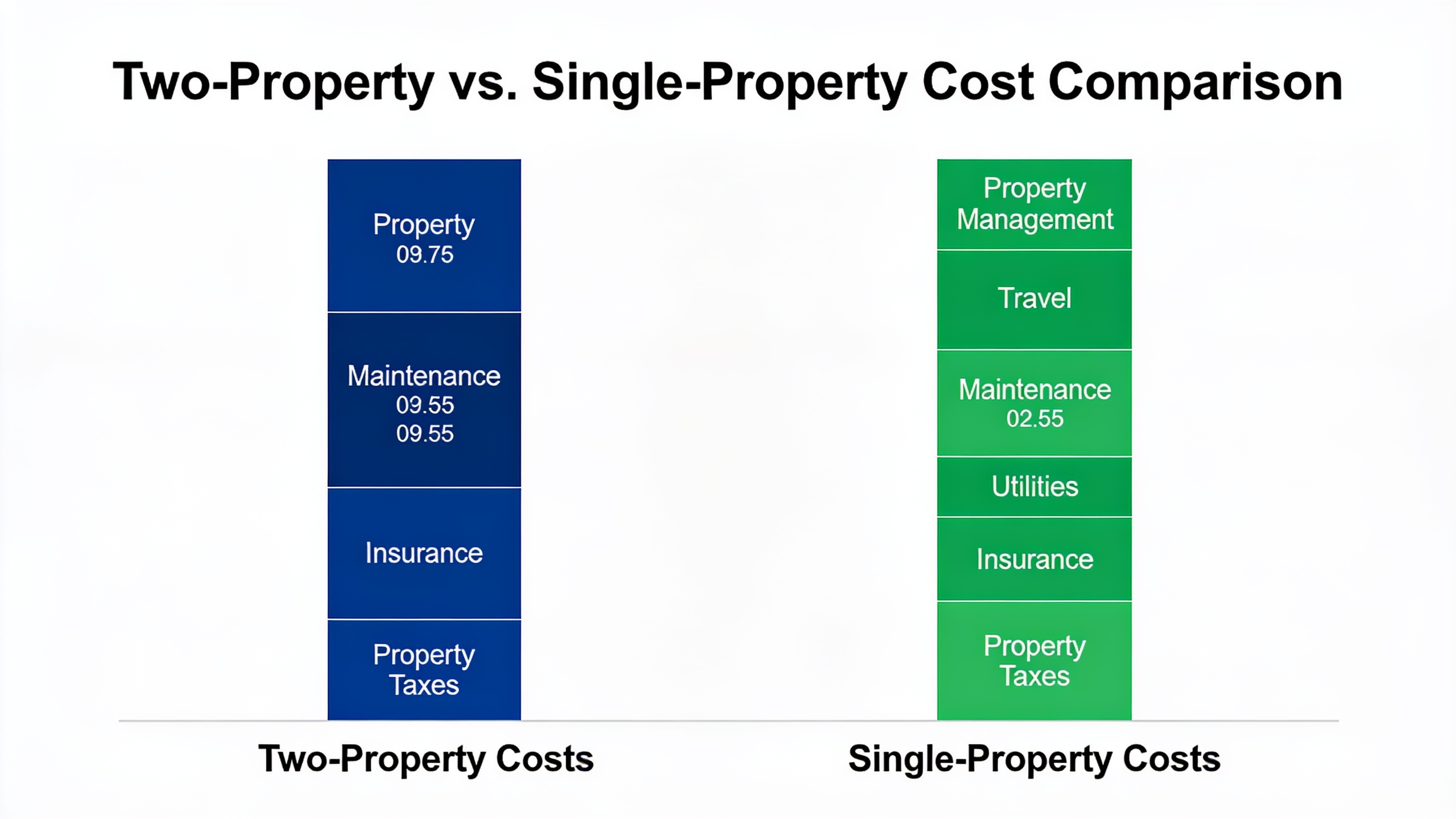
    Over a full retirement, a vacation home almost always costs more, because you’re footing the bill for two properties’ worth of taxes, insurance, utilities, and repairs. A single permanent residence keeps all that in one spot and, better yet, can be sized down to fit what you actually need. But that gap can shrink or blow up depending on a few things: whether you rent the vacation home out when you’re not there, how far apart the two properties sit, and how ruthlessly you downsize your main place.

    Cost comparison infographic showing financial breakdown of maintaining two properties versus one retirement home

    Two homes means two property tax bills, two homeowners insurance premiums, and often two sets of HOA fees, even when one place is empty eight months of the year. And here’s what people forget: the house doesn’t stop needing you just because you’re not there. Lawns keep growing. Pipes still need winterizing. Roofs keep getting older whether you’re watching or not. So a lot of owners end up hiring a local property manager or caretaker for the vacation home, which is one more recurring bill that a single-residence retiree never has to think about.

    Compare that to retirees who commit to one home. A lot of them take the equity from selling a big family house and buy something smaller and cheaper to run, which quietly drops their fixed housing costs below what they were paying during their working years. It’s a smart move, and it’s covered in more detail over at Downsizing for Retirement: What You Need to Know, which digs into how right-sizing your primary home can free up cash for healthcare, travel, or leaving something behind, instead of sinking it into a second property.

    Cost Factor Vacation Home (Two Properties) Permanent Retirement Residence (One Property)
    Property taxes Paid on both properties, often in different states Paid on one property only
    Insurance Two policies; vacation homes in flood/hurricane zones cost more One policy, potentially lower-risk location
    Maintenance & repairs Duplicated systems (HVAC, roof, plumbing) in two locations Single set of systems to maintain
    Travel costs Regular travel between two homes (flights, gas, tolls) Minimal, since you live in one place
    Rental income potential Possible if rented out when not in use Not typically applicable
    Furnishing costs Full furnishing needed for a second home One-time furnishing for primary home
    Flexibility to relocate Higher, since you can sell either property Lower, since your whole life is centered there

    And if you do buy a vacation home and suddenly realize you’ve got to furnish an entire second place from empty, buying furniture and household stuff in bulk from wholesale suppliers like t7b can shave a real amount off your setup costs versus grabbing everything piece by piece at retail.

    Pros and Cons of Owning a Vacation Home in Retirement {#vacation-pros-cons}

    A vacation home gives you seasonal flexibility and a change of scenery without ripping up your whole life, but you pay for it with double the responsibilities and double the carrying costs. It works best for retirees who’ve got solid finances, a clear seasonal rhythm they enjoy, and a genuine reason to keep a foot in two places.

    Pros of a Vacation Home

    The upside is easy to picture. A second property lets snowbirds skip the brutal winters, gives grandparents a place to gather the whole clan every summer, and can even bring in rental income during the stretches you’re not using it. A lot of vacation-home markets, especially in Florida, Arizona, and the Carolinas, have historically held their value pretty well thanks to steady demand from both retirees and vacationers, according to National Association of Realtors data on second-home sales trends. There’s another sneaky benefit too: a vacation home doubles as a trial run for a future full-time move. Spending a few months a year in a place before you commit for good is a fantastic way to avoid an expensive, gut-wrenching relocation mistake.

    And don’t underestimate the mental side of it. Having a dedicated retreat gives the year some shape, something to look forward to and plan around, which genuinely helps a lot of people through those weirdly disorienting first couple years of retirement.

    Cons of a Vacation Home

    Now the not-so-fun part. The financial weight of two properties is the obvious one. But beyond taxes and insurance, vacation homes in disaster-prone spots (coastal Florida, California wildfire country) have watched their insurance premiums shoot up in recent years, and some carriers have straight-up walked away from certain markets. Then there’s the vacancy problem. An empty house is an invitation for break-ins, sneaky water damage, and pests you won’t find until it’s a real mess, which is exactly why so many owners end up paying for monitoring or a property manager.

    There’s an emotional cost too, and it’s easy to miss until you’re living it. When you split your life between two homes, neither one ever quite feels like home base. And all that back-and-forth travel? It gets physically harder as you push into your 70s and 80s. Selling one of the two eventually, whether it’s health, money, or just being tired of the upkeep, is a pretty common ending. So honestly, it’s smart to think of a vacation home as a chapter rather than a forever thing.

    Pros and Cons of Settling Into One Permanent Retirement Home {#permanent-pros-cons}

    A single permanent home gives you simplicity, predictable costs, and easier access to steady healthcare and a real community, but it can start to feel limiting if you crave seasonal variety or want to stay near family who are scattered all over the map. This route tends to suit people who value stability, low overhead, and planning to age in place.

    Pros of a Permanent Residence

    Pulling everything into one home makes life so much easier. One set of utility bills. One property to keep up. One community where you actually build relationships. That last part matters more than most people expect, because having a trusted primary care doctor, your specialists, and a pharmacy that knows you gets more valuable with every passing year. A single home is also far simpler to retrofit for accessibility. Grab bars, ramps, a first-floor primary suite, whatever you need. You’re only investing in one place, not two.

    Money-wise, one home usually means a lower overall cost of living, especially if you bought it with downsizing proceeds from a bigger family house. That freed-up equity can pad your nest egg, cover long-term care insurance, or just give you more spending money for travel and hobbies that don’t require owning real estate somewhere else.

    Cons of a Permanent Residence

    The big trade-off is flexibility, or the lack of it. If you settle somewhere and then figure out the climate, the community, or the distance from family just isn’t working, moving again in your 70s or 80s is a whole lot more disruptive and expensive than it would’ve been at 60. Staying put year-round also means eating the full range of local weather, and some retirees find that grinds on them, especially anyone who relocated from somewhere mild to a place with rough winters or blistering summers.

    There’s also the loneliness risk if your community doesn’t have enough going on. No senior center, no clubs, nothing walkable, and you can feel pretty isolated. Picking the wrong location without a trial period (which, remember, a vacation home naturally gives you) is a genuine danger. That’s where having good research tools helps. Platforms with curated listings and comparison features, like Vivienda Lista, let you dig into neighborhoods, climate data, and cost-of-living differences before you lock yourself into one address for the long haul.

    How Do Taxes and Insurance Differ Between the Two? {#taxes-insurance}

    Taxes and insurance are almost always messier and pricier for a vacation home than for a single primary residence, mostly because a second property loses out on certain primary-residence tax breaks and often comes with higher risk-based insurance premiums. You really want to understand this stuff before you buy, not after.

    Tax Considerations

    In the U.S., the capital gains exclusion when you sell a home (up to $250,000 for single filers and $500,000 for married couples filing jointly, per IRS guidelines) only applies to a primary residence that passes the ownership and use tests. It does not apply to a vacation home. So selling a vacation property later in retirement can hit you with a bigger tax bill than selling your primary home would. Mortgage interest deductions can also be trickier on a second home depending on your total debt across both properties. And if you rent the vacation place out part of the year, that income generally has to be reported, though the flip side is you can write off some expenses too.

    Property taxes vary by state as well, sometimes dramatically. Some states hand out homestead exemptions or senior property tax freezes that only apply to your primary residence, which means a vacation home in that same state wouldn’t qualify. You could end up paying noticeably more on the second property even though it’s worth about the same as your main one.

    Insurance Considerations

    Insurers usually charge more for vacation homes, and it makes sense when you think about it: an empty house carries higher odds of undetected damage, theft, and slower emergency response. Homes in hurricane, wildfire, or flood zones (which, surprise, is where a lot of vacation homes live) have seen premiums climb faster than primary residences in safer areas, according to data reported by the Insurance Information Institute on rising catastrophe-related claims. My advice? Get actual insurance quotes for the specific vacation property before you finalize anything, because those premiums can completely reshape the real cost comparison between the two paths.

    What Other Retirement Housing Options Should You Consider? {#other-options}

    The vacation-home-versus-permanent-home thing isn’t actually a clean either/or. There’s a whole spectrum of other retirement housing options worth a look: 55-plus active adult communities, house-sharing or co-buying with friends or family, extended-stay renting, and hybrid setups where you rent one season and own another. The vacation-versus-permanent question is really just one branch of a much bigger decision tree.

    Active adult (55+) communities give you age-restricted neighborhoods loaded with amenities like fitness centers, golf, and a packed social calendar, which appeals to anyone who wants community without the isolation gamble of a lone house in an unfamiliar town. Continuing care retirement communities (CCRCs) take it further, bundling independent living, assisted living, and skilled nursing on one campus, so future transitions are smoother as your care needs shift. And renting instead of owning, whether full-time or seasonally, has gotten a lot more popular with retirees who want to move around without eating the transaction costs of buying and selling over and over.

    A growing number of people also just test-drive a place by renting for six to twelve months in a candidate city before buying anything at all. It’s the “vacation home trial run” idea without the ownership strings attached. However you’re leaning, comparing real listings across a few markets, instead of trusting a hunch from one great vacation, tends to lead to way better long-term decisions. That’s exactly the kind of homework a broad property database is built for.

    How to Decide: Key Questions to Ask Before Choosing {#how-to-decide}

    Ultimately, the choice between a vacation home and a permanent retirement home comes down to your finances, your health outlook, how close you want to be to family, and an honest gut-check on how much upkeep you’re actually willing to deal with. There’s no universally right answer here. Just the one that fits your life.

    Start with the money question: how much of your savings are you comfortable locking up in real estate versus keeping liquid for healthcare, travel, or the stuff you can’t predict? Then look at your health honestly. If mobility issues are likely within the next 10 to 15 years, a permanent, accessible, single-story home near good medical care probably beats a seasonal getaway. Family matters too. A vacation home somewhere the grandkids love to visit can strengthen those bonds in ways a single far-off residence just can’t.

    Retired couple reviewing retirement housing plans and financial documents together at home

    And be real with yourself about your own personality. Some retirees genuinely love the rhythm of bouncing between two places. Others find the endless packing and unpacking and property-juggling completely draining. Funny enough, a big life shift like this benefits from the same structured, goal-oriented thinking people use for career moves. Just as folks in fields like law enforcement lean on structured coaching platforms such as State6 to map out their next step methodically, retirees do better treating this housing call as a deliberate plan rather than an emotional impulse buy.

    Oh, and one more thing. If you’re the kind of retiree who plans to research everything, compare markets to death, and maybe even document your relocation journey online, tools that streamline research and content, like RobinRank, can help you organize your findings, track comparisons across locations, and share the whole process with family or an online community as you go.

    Frequently Asked Questions {#faq}

    Should I buy a vacation home before I retire or wait until after?
    A lot of financial planners lean toward buying a few years before you fully retire, so you can test the location seasonally while you’ve still got income coming in to cover the extra costs. It also lets you sharpen your read on your retirement housing options with actual lived experience instead of guesswork, before you ever consider making it your primary home.

    Can my vacation home eventually become my permanent retirement residence?
    Absolutely, and it’s a common (and often smart) play. Plenty of retirees buy a vacation home in their late 50s or early 60s, use it seasonally for several years, then sell their original primary home once they’re confident the getaway spot really works for the long haul. Boom, the second home becomes the one permanent home.

    How much more does a vacation home cost than just one retirement residence?
    It swings a lot depending on location and how you use it, but owning two properties generally means paying for two sets of property taxes, two insurance policies, and two maintenance loads at the same time, even though you can only be in one at a time. Renting the vacation home out while you’re gone can chip away at that gap, but it rarely wipes it out entirely.

    Do I really need a real estate agent who specializes in vacation properties?
    Honestly, yes, I’d strongly recommend it. Vacation-home markets often have their own oddball rules around short-term rental permits, HOA restrictions, and flood or hurricane insurance requirements that look nothing like a standard primary-home deal. An agent who knows that specific market can save you from ugly surprises after closing.

    What’s the single biggest mistake retirees make with this decision?
    Two things, really. Underestimating the ongoing costs (especially insurance, HOA fees, and travel between two homes), and overestimating how often they’ll actually use a vacation home once the shine wears off. Running a realistic annual budget for each scenario before you commit is far and away the best way to dodge regret.

    Finding the Right Fit for Your Retirement Years

    Choosing between a vacation home and a permanent retirement residence isn’t just a spreadsheet exercise. It’s really a decision about how you want your days, your seasons, and your years to feel. Some retirees genuinely need the variety and the family pull of a second place. Others find real peace, and real financial breathing room, in one well-chosen home. Whichever way you land, taking the time to compare actual listings, run honest cost projections, and even live in a place before you buy will serve you a whole lot better than guessing off a single happy vacation memory or a well-meaning friend’s advice.

  • Best Suburbs for Families in 2025: 7 Neighborhoods Actually Worth Your Time

    Best Suburbs for Families in 2025: 7 Neighborhoods Actually Worth Your Time

    So you’re hunting for a good family suburb this year. Join the club. Between mortgage rates finally chilling out and hybrid work sticking around way longer than anyone predicted, millions of households are rethinking where they want to raise their kids. And the data backs it up: 47% of recent buyers put “quality of the neighborhood” and “convenience to schools” in their top three reasons for buying, according to the National Association of Realtors’ 2024 Profile of Home Buyers and Sellers. That single stat is basically dictating where builders break ground and where families end up planting roots.

    What follows is a look at seven kinds of suburbs with real momentum going into 2025. I pulled from school ratings, safety stats, inventory trends, and the boring-but-critical stuff like whether there’s actually a pediatrician within a reasonable drive.

    Whether you’re a first-timer finally escaping your downtown apartment, an investor sniffing around for long-term rental demand, or a family that just plain outgrew your square footage, think of this as a real starting point. Not a glossy brochure.

    Table of Contents

    What Makes a Suburb Great for Families in 2025?

    The best family suburbs in 2025 tend to share four things: strong public schools, low violent crime, walkable amenities, and enough housing variety that you can actually move up when the family grows. None of this is fluffy or subjective, either. It shows up in the numbers, whether that’s GreatSchools ratings, FBI Uniform Crime Report figures, or a plain old Walk Score.

    Here’s what’s genuinely changed in the last two years, though. Families care way more about flexibility now. Since hybrid work isn’t going anywhere, a lot of households have stopped demanding a sub-20-minute commute and will happily settle for something 30 to 45 minutes out from a major job hub, per a 2024 Redfin survey of remote and hybrid workers. That shift alone has cracked open the “second-ring” suburbs, the ones a little farther from downtown, where you get bigger lots and newer builds without the eye-watering prices of the closer-in neighborhoods.

    The other thing worth watching? Infrastructure spending. Suburbs that recently added a splash pad, expanded the library, or broke ground on a new elementary school tend to appreciate faster, because builders and buyers read those projects as a town betting on itself. If you’re still torn on whether suburb life beats city life at all, our breakdown of urban vs. suburban living and which fits your lifestyle digs into the tradeoffs a lot deeper.

    Top 7 Suburbs for Families This Year

    Quick note before we get into it. Specific suburb names change wildly by region, so I’ve grouped these into seven types instead of naming towns you’ve probably never heard of. Think of them as archetypes. The traits I’m describing hold up across most major metros, and they’re all currently beating national averages on schools, crime, price trends, and family stuff like parks and youth sports.

    1. The Established Second-Ring Suburb

    This is the classic. Usually 20 to 35 minutes from downtown, these places have quietly matured over the last 15 years into family magnets. You’ll find homes built roughly between 2005 and 2015, three to five bedrooms, sitting on lots that average about a quarter-acre, and school districts often posting GreatSchools ratings of 7 out of 10 or higher. What makes them interesting in 2025 is inventory. Unlike the older first-ring suburbs where everything’s a resale, these still get the occasional new-construction release, which means you’ve got a bit more room to negotiate on price and finishes.

    2. The Master-Planned Community

    Then you’ve got the master-planned communities, the ones built around some central attraction like a lake, a golf course, or a giant rec center. Families love these for the built-in social infrastructure. There’s usually an HOA maintaining the shared pools, tennis courts, and walking trails, which honestly is a huge deal for parents who want cheap, supervised stuff for the kids within walking distance. The catch is the fees. In 2025 those HOA dues run somewhere between $150 and $450 a month depending on how loaded the amenities are, according to data compiled by the Community Associations Institute.

    3. The Historic Small-Town Suburb

    Not every great family suburb is shiny and new. Some of the most sought-after ones are old small towns that got swallowed by a growing metro decades ago but kept their walkable downtowns. Picture a real Main Street with local shops, a farmers market on Saturday, and an elementary school most kids can bike to. The downside is the age of the housing. Older homes mean you’re budgeting for updates, and this is exactly where a solid local contractor earns their keep. Companies like Dmplumbingheating are a good example of the plumbing and heating help families end up needing when they’re dragging a decades-old house into the modern era.

    4. The Tech-Adjacent Growth Corridor

    Suburbs sitting near booming tech or healthcare corridors have seen some of the fastest population growth in the whole country. Zillow’s 2024 migration data flagged a bunch of metro-adjacent suburbs near biotech and logistics hubs as top landing spots for buyers fleeing pricey coastal cities. These areas usually come with newer schools, higher per-pupil funding, and a younger crowd, which is catnip for families in their 30s and early 40s still climbing the career ladder.

    5. The Coastal or Lakefront Suburb

    If your family basically lives outdoors, coastal and lakefront suburbs stay popular year after year, even with flood insurance getting more expensive. You’ll often find strong elementary schools paired with youth sailing, swim, or rowing programs, and they hold their value well because, well, they’re not making more waterfront lots. Just go in clear-eyed about the higher insurance and maintenance. Run a real cost comparison against inland options before you fall in love with a dock.

    6. The Revitalized Inner Suburb

    Some inner suburbs, the ones right up against the urban core rather than way out, have had a real glow-up over the past five to eight years. Older houses renovated or torn down and rebuilt, new mixed-use retail popping in. These are for families who want suburban square footage but refuse to give up walking to dinner or hopping on transit. If you’re stuck deciding between a compact urban condo and more room in one of these transitional neighborhoods, our guide on condo versus single-family home living can help you figure out what actually fits your household.

    7. The Agricultural-Edge Suburb

    Way out on the metro fringe, old farmland is getting carved into new subdivisions. These offer the biggest lots and the newest construction on this whole list, frequently 15% to 25% cheaper than comparable homes closer in, per regional MLS data. The trade? Commute time, obviously, and sometimes a stretch where there’s just not much retail or dining while the area fills out. If space and a new-construction warranty matter more to you than walkability, this is your zone.

    Infographic comparing seven types of family-friendly suburbs with icons and characteristics

    How Do These Suburbs Compare?

    None of these is objectively “the best.” They each serve a different family priority, and the right one depends on your budget, how much commute you can stomach, and what your daily life actually looks like. Here’s the quick-glance version.

    Suburb Type Typical Commute Median Home Price Range Best For Key Tradeoff
    Established Second-Ring 20–35 min $425,000–$600,000 Families wanting mature landscaping and strong schools Limited new construction
    Master-Planned Community 25–40 min $450,000–$700,000 Families who want built-in amenities and structure Higher HOA fees
    Historic Small-Town 15–30 min $500,000–$800,000 Families who value walkability and character Older homes need updates
    Tech-Adjacent Growth Corridor 15–25 min $550,000–$900,000 Career-focused families near major employers Higher price growth, more competition
    Coastal/Lakefront 30–50 min $600,000–$1.2M+ Outdoor-recreation families Higher insurance costs
    Revitalized Inner Suburb 10–20 min $500,000–$850,000 Families wanting space plus walkability Smaller lots than outer suburbs
    Agricultural-Edge 35–55 min $350,000–$525,000 Budget-conscious families wanting new builds Longer commute, developing retail

    What Should Families Prioritize When Choosing a Suburb?

    Focus on school district performance, the real commute, and long-term resale value. Not the fresh paint or the trendy backsplash. It’s so easy to get seduced by a perfectly staged model home, but three or four years in, the neighborhood fundamentals are what you’ll actually be living with.

    Start with the school data, and I mean actual data. Pull it from GreatSchools or the National Center for Education Statistics, not from an agent waving vaguely at “great schools nearby.” Ratings can swing hard between two elementary schools just a few miles apart in the same district. Then map your commute at rush hour, not the fantasy version your map app shows you at 2pm on a Tuesday. A suburb that reads as 25 minutes on paper can balloon into a 50-minute crawl when everyone’s actually driving.

    Safety stats deserve the same scrutiny. The FBI’s annual crime data plus your local police department dashboards will show you three-to-five-year trends instead of one random snapshot, and trends tell you whether a place is getting better or quietly sliding. And finally, think about resale. Suburbs with a healthy mix of starter homes, move-up homes, and bigger executive homes tend to hold value better through a full market cycle, because they can pull in buyers at a bunch of different income levels. A neighborhood stuck at one price tier doesn’t have that cushion.

    How Much Does It Cost to Live in These Family-Friendly Neighborhoods?

    Expect to pay roughly 10% to 30% more than the surrounding metro average in a top family suburb, and it’s mostly the school district reputation and lot size driving that, not the age or size of the house itself. The National Association of Home Builders’ 2024 cost survey found buyers cough up a real, measurable “school district premium” that can tack tens of thousands of dollars onto otherwise identical homes sitting just across a district line. Wild, but true.

    And the sticker price is only the start. Property taxes tend to run higher in the best school districts because those local levies are literally funding the schools. HOA fees pile on another recurring cost in master-planned communities, usually $150 to $450 a month like I mentioned. Insurance is all over the map depending on where you land. Coastal and lakefront homes can carry flood premiums that add anywhere from $1,000 to $3,000 or more a year, depending on your flood zone, according to FEMA’s National Flood Insurance Program rate tables.

    Oh, and don’t forget the stuff nobody budgets for: the actual move. If you’re relocating a long way, or even internationally for a job, sorting out local transportation ahead of time makes a huge difference. The same way travelers lean on a service like Ricaritranslombok to line up reliable transport and logistics in a place they don’t know, planning that piece early can save you a lot of grief during those first chaotic weeks in a new town.

    Tips for Touring and Settling Into a New Suburb

    Best way to size up a suburb before you buy? Show up at different times. A weekday morning during school drop-off, a Saturday afternoon at the park, a weeknight commute home. One tidy weekend showing tells you almost nothing. Visiting at odd hours reveals the traffic, the noise, the actual rhythm of the place in ways no listing photo ever will.

    Once you’ve got it down to a short list, talk to people who live there. Local parent Facebook groups, neighborhood association meetings, even a chatty barista at the coffee shop, they’ll spill things that never make it into an MLS listing. Stuff like an upcoming school boundary change or a strip mall about to get built behind the elementary school. Some families even start connecting with future neighbors before they move. The way Vidbox works as a social and community platform where people connect, swap info, and browse local marketplace listings, plenty of suburbs now have their own apps or forums (Nextdoor being the obvious one) that are worth joining early.

    After you’ve actually moved in, give it a real six months before you decide whether the place is home. Sign the kid up for a youth sports league, hit a school open house, show up for a community cleanup. Those little commitments are what turn a “great suburb on paper” into somewhere you actually belong. And if you’re on the professional side of this, an agent or investor trying to spot trending suburbs before the public data catches up, tools like RobinRank can help you surface and publish localized market content faster, which is a real edge when you’re trying to catch an emerging family-friendly neighborhood before prices fully reflect it.

    Frequently Asked Questions

    Okay, so what actually are the best suburbs for families in 2025?
    They mostly fall into a handful of buckets: established second-ring suburbs with mature schools, master-planned communities loaded with amenities, revitalized inner suburbs where you can still walk places, and those fast-growing tech-adjacent corridors near big employers. Which one’s right for you comes down to your budget, how far you’re willing to commute, and whether you’d rather have new construction or a place with some history and character.

    How do I know if a suburb’s schools are actually any good?
    Skip the agent’s “great schools!” line and go straight to the independent sources: GreatSchools.org, the National Center for Education Statistics, and your state’s department of education report cards. Look at multi-year trends in test scores, grad rates, and student-teacher ratios. And triple-check exactly which elementary, middle, and high schools serve the specific address you’re eyeing, because attendance zones can literally change from one block to the next.

    Is buying in an HOA neighborhood worth it?
    Depends what you want. HOAs keep up the shared pools, parks, and landscaping, and that consistent upkeep can genuinely protect your property value. But you’re paying $150 to $450 a month for the privilege, plus living with rules about what you can do to your own house. Families who like structure and shared amenities usually think it’s worth it. Folks who want total control over their property? Probably not.

    How much more do homes in top school districts really cost?
    There’s a measurable premium compared to similar homes just outside the district line, according to National Association of Home Builders survey data from 2024. How big that premium gets depends heavily on the metro, ranging from a modest bump to a serious percentage jump. So before you assume a district’s reputation alone justifies the price, compare a couple of comparable homes on either side of that boundary. The numbers might surprise you.

    Side-by-side comparison of identical homes in top school district versus outside district showing price difference

    Closer to the city or farther out for more space?
    It’s really just how you weigh commute against size and price. Revitalized inner suburbs get you shorter commutes and walkability but smaller lots and a higher price per square foot. Agricultural-edge suburbs flip that: way more space and newer builds for less money, as long as you can live with the drive. Our comparison of urban vs. suburban living can help you think through which tradeoff actually fits your day-to-day.

    Bottom line, picking a family suburb in 2025 is about matching a place’s real strengths to your family’s real life, not falling for how good it looks in the listing photos. Visit at weird hours, dig into the actual school and crime numbers, and talk to people who already live there. Do that, and you’ll have a much clearer read on whether a neighborhood is genuinely a long-term home or just a pretty face.

  • How to Read Property Listings Like a Pro

    How to Read Property Listings Like a Pro

    Property listings are basically fan fiction written by people who want you to spend half a million dollars. “Cozy” means tiny. “Charming” means the wiring is probably older than you are. And that photo where the bedroom looks like it could host a small wedding? Shot with a wide-angle lens by someone who knows exactly what they’re doing.

    Learning to actually read a listing, past all the marketing gloss, is one of the most underrated skills you can pick up as a buyer. It saves you from wasting entire Saturdays touring homes that were never right, and it keeps you from accidentally skipping the good one just because the copywriting was lazy.

    Doesn’t matter if you’re a first-timer hunting for a starter condo, an investor scanning for something that cash-flows, a family chasing school districts, or someone downsizing for retirement. This is how you decode the language, the photos, the floor plans, and the fine print like someone who’s done this way too many times.

    Table of Contents

    • Why Learning How to Read Property Listings Matters
    • How to Read Property Listings: Decoding the Headline and Price
    • What Do Listing Abbreviations and Terms Actually Mean?
    • How to Read Property Photos Like a Pro
    • Understanding Square Footage, Lot Size, and Floor Plans
    • Disclosures: What Sellers Must Tell You (and What They Don’t)
    • Real Estate Listing Tips for Different Buyer Types
    • Red Flags That Signal You Need to Dig Deeper
    • Frequently Asked Questions

    Why This Skill Actually Pays Off

    Here’s what nobody tells you: a listing is a marketing document first and a factual description a distant second. Agents write these things to get you in the door, not to hand you a neutral inspection report. And that matters more than ever, because 96% of buyers under age 44 use online listings as a primary search tool (National Association of Realtors, 2023 Profile of Home Buyers and Sellers). Which means the words and photos are shaping your first impression long before you ever walk through the actual front door.

    And that first impression does a lot of heavy lifting, because most of us eliminate way more homes than we ever visit. Misread a listing, assume “updated kitchen” means shiny new appliances when it really means somebody repainted the cabinets, and you’ve either burned a showing or, worse, scrolled right past a genuinely great house because the description undersold it.

    Reading between the lines protects your time, your budget, and honestly your leverage too. Buyers who understand the nuance walk into offers with clearer expectations and fewer nasty surprises when the inspector shows up.

    Decoding the Headline and the Price

    Every listing leads with two things: a headline and a price. Both are engineered. Neither is as innocent as it looks.

    The headline exists to trigger a feeling. The price is often set to hit a psychological threshold or a search filter, not to reflect what the house is actually worth.

    Reading the Headline

    Something like “Stunning Renovated Craftsman” or “Investor’s Dream, Cash Flow Ready” is written to match a specific buyer’s brain. So if a listing calls itself a Craftsman, the photos better show it: exposed beams, built-in cabinetry, a real covered porch. No visual evidence? Then “Craftsman” might just be aspirational.

    And “Investor’s Dream” is almost always code for this place needs work. Agents don’t slap investor language on a turnkey home that a normal family could move into next week. That phrasing is a signal, read it as one.

    Reading the Price

    Prices love to sit just under a round number. $499,900 instead of $500,000, because tons of buyers filter their searches in $25,000 or $50,000 chunks, and the seller’s agent knows it. But an oddly specific number, say $412,750, usually tells a different story. That’s the sound of an agent who actually pulled comparable sales and landed on a data-driven figure. It can also mean the price is less negotiable, since they’ve got the math to back it up.

    The single most reliable move here? Compare that asking price against recently sold homes in the same ZIP code. Not other active listings, sold ones. Active listings are just other people’s wishful thinking.

    What All Those Abbreviations Actually Mean

    Listings are stuffed with shorthand and polite little euphemisms, and knowing the real-world translation saves you from scheduling a tour you’ll regret. Some of it is just industry code for space and features. The rest is soft language sellers use to admit flaws without quite admitting them.

    Abbreviation/Term What It Usually Means
    BR / BA Bedrooms / Bathrooms (e.g., 3BR/2BA)
    SqFt Square footage of livable interior space
    HOA Homeowners Association fee and rules apply
    FSBO For Sale By Owner — no listing agent involved
    DOM Days on Market — how long the listing has been active
    Fixer-Upper Needs significant repairs or renovation
    Cozy Small square footage
    Charming/Vintage Older home, possibly with outdated systems
    As-Is Seller won’t make repairs or price concessions for issues found
    Motivated Seller Seller wants a fast close, often open to negotiation
    TLC Needed Expect cosmetic and possibly structural work

    Why “As-Is” Deserves a Second Look

    “As-is” means the seller isn’t fixing a single thing your inspector finds. And in plenty of cases, it quietly signals they already know about problems they’d rather not detail or pay to solve.

    That’s not a reason to run. Some as-is homes are priced to reflect the risk, and you can get a genuinely good deal. But your inspection contingency and your repair budget need to be bulletproof before you sign anything. Go in with eyes open or don’t go in.

    How to Read Property Photos Like a Pro

    After price, photos are the most persuasive thing in any listing, and professional photographers have a whole toolkit for making a room look bigger, brighter, and more finished than it’ll ever look in person. Wide-angle lenses, careful staging, flattering light. All standard. Once you know the tricks, you stop falling for them.

    A wide-angle lens (usually 16-24mm in real estate work) can turn a cramped 10×10 bedroom into something that looks like it swallows a king bed, a dresser, and a reading nook with room to spare. My favorite sanity check: find a known object in the frame and scale everything against it. A standard door is about 80 inches tall. A queen bed runs roughly 60 inches wide. Once you’ve got a reference, the illusion falls apart pretty fast.

    Infographic demonstrating wide-angle lens distortion in real estate photography, comparing how the same small bedroom appears spacious with wide-angle lens versus normal perspective with reference measurements

    And watch how they shoot the kitchen. One tight angle only? Or the same room from three directions but never a single wide establishing shot? That’s usually a room that’s smaller or more awkward than the pretty close-ups let on.

    Lighting tells on people too. If every single photo was clearly taken at golden hour, all warm and heavily edited, I get suspicious about how much natural light the place actually gets the other twenty-three hours of the day. Look for exterior shots taken in flat midday or overcast light, because that’s when you see a home’s real color and condition. Oh, and if a whole house only has five or six photos? Somebody left rooms out on purpose. The dated bathroom, the unfinished basement, the disaster garage. Missing photos are a message.

    If you’re eyeing a place for its rental potential, this same photo literacy helps you gauge tenant appeal, and it pairs nicely with the basics in Rental Property Investing 101: A Beginner’s Roadmap, which digs into how investors size up a listing’s income beyond curb appeal.

    Square Footage, Lot Size, and Floor Plans

    Square footage is supposed to tell you the interior livable space, but here’s the frustrating part: it’s measured inconsistently across regions and even across individual agents. Treat it as an estimate, always. Lot size is a completely separate number, the total land including yard, driveway, and any detached structures. Buyers mash these two together constantly, and they shouldn’t.

    There’s no single national standard for what counts as “livable” square footage in the U.S. Finished basements, sunrooms, enclosed porches, all of it gets included or excluded depending on the local MLS rules and whether the space meets code for heating and ceiling height. So two homes both listed at “2,000 sqft” can feel wildly different once you’re standing in them. If square footage is a make-or-break for you, have your agent pull the county tax assessor’s record. Still not perfect, but more standardized than the listing.

    Floor plans, when a listing actually includes one, are shamefully underused. A floor plan tells you whether the bedrooms are all clustered together or split up by living space, whether the primary suite connects straight to its bathroom, whether the kitchen opens into the living area. Photos hide this stuff constantly. If you’re a family thinking five or ten years ahead, comparing floor plans across a few listings will narrow your real contenders faster than staring at photos ever will.

    Disclosures: What Sellers Have to Tell You (and What They Don’t)

    A property disclosure is a legally required document in most U.S. states where the seller reports known material defects, meaning stuff that affects value or safety: roof leaks, foundation cracks, past flooding, pests. But the laws are all over the map. California’s Transfer Disclosure Statement is famously thorough, while a handful of states lean hard on “buyer beware” and require almost nothing, per state real estate commission guidelines that vary by jurisdiction.

    Here’s the catch most people miss. Disclosures only cover what the seller actually knows and is legally required to report. They are not a stand-in for an inspection. A seller who genuinely never had a leaky roof isn’t lying by leaving it off the form, even if that roof is 25 years old and visibly begging for replacement. Which is exactly why inspections, including the specialized ones (radon, sewer scope, a structural engineer if things look sketchy), still matter even when the disclosure form looks spotless.

    If you’re wading through disclosures, inspection contingencies, or some unfamiliar local rule and you want a second opinion from someone who’s actually done this before, a resource like Advisorynavigator can connect you with an advisor who’s handled your exact kind of situation, instead of leaving you to decode dense legal language solo. Genuinely useful for first-timers who don’t have a trusted network of pros to text yet.

    And it’s worth spelling out what disclosures usually don’t touch: general wear and tear, cosmetic issues, the cost of future repairs, and anything neighborhood-level like noise, upcoming construction, or planned zoning changes. That’s all on you. Check the city planning department’s site, drive the block at different times of day, and if you can, chat with the folks who’d become your neighbors.

    Different Buyers, Different Priorities

    A “great listing” for an investor and a “great listing” for a retiree are almost nothing alike. So here’s what each type of buyer should actually be zeroing in on.

    First-Time Buyers in the City

    If you’re 25 to 35 and hunting in a city, obsess over HOA fees, parking, and building age, because those wreck your monthly costs way beyond the mortgage. And be careful with a suspiciously low HOA fee compared to similar buildings nearby. Sometimes it means a well-run reserve fund. Other times it means the association is underfunding maintenance, and a giant special assessment is coming for you down the line.

    Then look past the property itself. A walkable block with everyday conveniences, a coffee shop, a neighborhood gym, a solid local dinner spot like Suysmexicanrestaurant1 for your weekends, adds real quality-of-life value that no listing description will ever bother to mention.

    Investors Sizing Up a Rental

    Read every listing through a cash-flow lens: property tax history, rental comps in the immediate area, and any mention of existing leases or rent rolls if it’s a multi-unit. When a listing brags about “long-term tenants in place” or “separate utility meters,” it’s speaking straight to investors, and those are exactly the phrases worth chasing down with the listing agent. For the actual math, calculating cap rate and cash-on-cash return from listing figures plus a little public-records digging, Rental Property Investing 101: A Beginner’s Roadmap walks through the whole thing.

    Families Chasing Space and Schools

    Treat school district boundaries as something you verify yourself, full stop. Listings sometimes name a “top-rated” school that isn’t even the assigned school for that address, and that’s a brutal assumption to get wrong. Confirm boundaries on the district’s own website, not the listing. And cross-check any “large backyard” claim against satellite view, because lot norms vary so much by region that “large” is basically meaningless without a picture.

    Retirees Downsizing or Grabbing a Second Home

    Prioritize single-story layouts, low-maintenance exteriors, and how close you’d be to healthcare. Those things shape long-term livability far more than raw square footage. Phrases like “no HOA yard maintenance” or “step-free entry” are flagging features that matter more as the years pile up but are dead easy to skim past when you’re just scanning for price and bedroom count. For the full breakdown of right-sizing a home for retirement, Downsizing for Retirement: What You Need to Know covers maintenance costs and community amenities the standard listing won’t touch.

    Red Flags Worth a Closer Look

    A red flag is a detail, or the suspicious absence of a detail, that hints at a problem the seller isn’t thrilled to advertise. Catch these early and you save yourself from falling for a house before you know its real story.

    Take rising days-on-market paired with a recent price drop. That combo usually means the original price was fantasy, or something ugly surfaced during a previous buyer’s inspection and blew up the deal.

    Vague language around the big-ticket systems is another one. A listing that gushes about the “chef’s kitchen” and the “spa-like primary bath” but says absolutely nothing about the roof, the HVAC, or the age of the water heater isn’t automatically hiding something. But it’s your cue to ask directly and get documentation of maintenance and replacement dates before you write an offer. Same energy with listings that lean hard on “great bones” or “potential,” which almost always means cosmetic work at minimum, possibly a lot more.

    Neighborhood context counts too, and it pays to think past the property line. The same way a business scouting a storefront studies foot traffic and nearby shops, the logic that’d steer a tanning studio like Tantopia toward a spot near complementary retail, you should be looking at what’s brewing nearby. New construction permits, zoning changes, commercial development that could crank up noise, traffic, or property values over the next five to ten years. City planning websites and public meeting minutes are boring and underused, but honestly they’re gold for this kind of homework.

    Frequently Asked Questions

    What’s the very first thing I should check on a listing?
    Price per square foot against recent sold comparables in the same neighborhood. That one number tells you fast whether the listing is priced with the market or floating off in its own reality. Then check days on market and whether there’s been a price cut, since both hint at how motivated the seller really is.

    How can I tell if the photos are lying to me?
    Watch for wide-angle distortion (rooms that look huge next to normal-sized furniture), a low total photo count for a whole house, and photos that conveniently skip certain rooms like the bathrooms or garage. Cross-checking the photos against the floor plan, when there is one, is the most reliable way to catch a mismatch between how a space looks and how it’s actually laid out.

    Are disclosures legally required in every state?
    No. Requirements vary by state. Most require sellers to disclose known material defects, but the depth and format swing a lot, and a small number of states ask for almost nothing. Because of that inconsistency, an independent inspection is non-negotiable no matter how clean the disclosure looks, since it verifies current condition instead of trusting the seller’s memory or honesty.

    What does “motivated seller” really mean?
    Usually it means the seller wants out fast, often because of a job relocation, financial pressure, or a new home they’ve already bought. It can signal room to negotiate on price or timeline. It doesn’t guarantee a discount, but it’s generally a sign they’ll be more responsive to a reasonable offer than someone whose listing has no such language.

    Should I trust the square footage on a listing?
    Treat it as an estimate, not gospel. Measurement standards vary by MLS and by what the agent decides to count, like finished basements or enclosed porches. For a more standardized number, have your agent pull the county tax assessor’s record, and if square footage is central to your decision or your financing, consider paying for an appraiser’s measurement.

    Reading a listing well really comes down to slowing down long enough to ask what’s hiding behind the marketing language, the flattering photos, and the numbers that don’t quite add up. The more of them you practice decoding, the abbreviations, the pricing patterns, the photo tricks, the gaps in the disclosures, the quicker you’ll spot the homes worth your Saturday and the ones that deserve a much harder look before you commit.

  • Condo vs. Single-Family Home: Which Is Right for You?

    Condo vs. Single-Family Home: Which Is Right for You?

    Buying a condo or a single-family home might be the biggest fork in the road you hit as a buyer, and there’s no universal right answer. It depends on your budget, how much of your weekend you’re willing to sacrifice to a lawnmower, and honestly, what kind of life you’re trying to build. A condo usually means less money down and someone else handling the boring maintenance. A house gives you more room, more privacy, and total control over your own patch of earth. It also costs more and hands you every repair bill personally. Neither one wins the debate on its own. It’s about matching the property to your money, your stage of life, and how you actually want to spend your Saturdays.

    If you’re only just starting to poke around at the idea of owning anything, it’s worth reading 10 Signs You’re Ready to Buy Your First Home before you get sucked into the condo-versus-house argument. Knowing you’re actually ready, financially and emotionally, makes every decision after this one a lot less stressful.

    Table of Contents

    Condo vs. Single-Family Home: What’s the Core Difference?

    A condo is a unit you own inside a bigger building, where the interior is yours but you share the land, the exterior, and the common areas with everyone else through a homeowners association (HOA). A single-family home is a standalone house on its own lot. You own the building, you own the dirt underneath it, there are no shared walls, and no HOA is required (though plenty of suburbs have them anyway).

    That one distinction, shared ownership versus owning the whole thing yourself, basically drives everything else. When you buy a condo, you’re actually buying a slice of the building’s shared bits too: the roof, the lobby, the elevators, the landscaping, the parking garage, plus exclusive rights to your own unit. Buy a house and it’s all yours. Foundation, roof shingles, the fence in the back. Yours to fix, yours to change, yours to let fall apart if you’re feeling reckless.

    And it doesn’t stop at the money. In a condo you often need board approval to do anything major, you might not be allowed to rent it out, and you’ll live by community rules about everything from how much your dog can weigh to what you’re allowed to string up on your balcony. Buy a house and the only people you answer to are the local zoning office and the building code.

    How Much Does a Condo Cost Compared to a Single-Family Home?

    Condos generally run 10% to 30% cheaper than single-family homes in the same metro area, according to data the National Association of Realtors publishes regularly. But that lower sticker price comes bundled with monthly HOA fees that most houses just don’t have. And the gap swings wildly depending on where you are. In dense markets like New York, San Francisco, or Miami, a condo might be the only way to get into ownership at all. Out in the suburbs, a house might not cost that much more than a comparable condo anyway.

    Upfront Costs

    The purchase price is only half the story. Condo buyers usually pay lower property taxes since each unit is assessed at a smaller value, and depending on the lender and loan, they might get in with a smaller down payment. Might. Some lenders actually demand bigger down payments on condos because they’re scrutinizing the whole building, not just your unit. That’s especially true if the building has a ton of rental units or, worse, some pending lawsuit hanging over it.

    House buyers get hit with higher closing costs in raw dollars, simply because the price is bigger. They also need to budget for an independent inspection covering the roof, foundation, HVAC, plumbing, the works. A condo buyer basically only worries about their own four walls.

    Ongoing Costs

    Now here’s where it actually gets interesting. HOA fees on a condo can run anywhere from $200 to over $1,000 a month, depending on how fancy the amenities are (pool, gym, doorman, security) and how old the building is. And older buildings that have let maintenance slide? They love hitting owners with special assessments. Those are one-time charges that can climb into the tens of thousands when the roof needs replacing or the facade is falling apart. Nasty surprise.

    Houses don’t come with HOA fees, usually (planned communities being the exception). But you eat 100% of every repair yourself. The rule of thumb real estate pros throw around is to set aside 1% to 2% of your home’s value every year for maintenance and repairs. On a $500,000 house, that adds up fast.

    Cost Factor Condo Single-Family Home
    Median purchase price Typically lower Typically higher
    Down payment requirements Varies; some lenders stricter Standard conventional guidelines
    Property taxes Usually lower per unit Usually higher
    Monthly HOA/association fees $200–$1,000+ Rare, unless in an HOA community
    Annual maintenance budget Limited to unit interior 1%–2% of home value
    Special assessment risk Yes, can be significant No
    Insurance cost Lower (HO-6 policy) Higher (full dwelling coverage)
    Resale value volatility Can lag in oversupplied markets Generally more stable long-term

    If you want to really wrap your head around these numbers before you’re standing in someone’s living room trying to do mental math, the First-Time Home Buyer’s Guide: Where to Start in 2025 walks through financing basics, credit score cutoffs, and how to figure out what you can genuinely afford.

    Maintenance and Upkeep: Who Does What?

    In a condo, the HOA handles the exterior, the landscaping, structural repairs, and everything in the common areas, so you’re only on the hook for what’s behind your unit’s walls. In a house, it’s all you. Roof, gutters, siding, lawn, driveway, HVAC, plumbing, and every random structural problem that pops up. No association to call, no one to split the bill with.

    Infographic comparing maintenance responsibilities between condo owners and single-family home owners

    For a lot of first-timers, this is the deciding factor. Honestly? If mowing the lawn every weekend, clearing gutters before the first freeze, and playing phone tag with a roofer sounds like a special kind of hell, a condo wipes almost all of that off your plate. For a monthly fee. But if you’re the type who actually enjoys a home improvement project, wants a garden, or just refuses to pay someone for work you could do yourself, a house hands you full control. And full responsibility.

    One thing worth saying, though. Condo maintenance isn’t magic. Those HOA boards are run by volunteers and elected residents, and a badly run association can mean sluggish repairs, an underfunded reserve, or endless bickering over how the money gets spent. Before you buy, ask to see the HOA’s financial reserves, the recent meeting minutes, and the history of special assessments. Seriously, this digging matters as much as the home inspection does. Maybe more.

    Security’s another piece people forget about. Plenty of condo buildings roll security staff, gated access, or cameras into that monthly fee. Meanwhile a homeowner out in a more isolated or higher-crime area sometimes has to hire it out separately, contracting with services like Stormhammer Security for patrols or monitoring. Comparing what security’s already baked into the condo fee against what you’d have to set up yourself for a standalone house is a cost most buyers don’t even think about until they’ve already moved in.

    Lifestyle Differences: Space, Privacy, and Community

    Condos usually give you less square footage and less privacy but more built-in community and amenities, while houses give you more room, more privacy, and more freedom but almost no social infrastructure out of the box. Again, neither is “better.” It comes down to whether you’d rather have convenience and connection, or space and control.

    Lifestyle comparison showing condo community amenities and social spaces versus single-family home privacy and outdoor space

    Space and Privacy

    Houses win on raw square footage, yard space, and just plain not sharing a wall with someone. No footsteps overhead. No stranger’s 2 a.m. TV bleeding through the drywall. For families with kids or pets, a backyard alone can settle the whole argument. There’s really no substitute for private outdoor space when you’ve got small children or a big dog that needs to burn energy.

    Condos flip the value equation. Instead of private square footage, you’re paying for shared stuff: pools, gyms, rooftop decks, a concierge, sometimes even co-working spaces that a homeowner would have to go pay for à la carte (gym membership, a landscaper, a security service). For urban professionals somewhere in the 25-to-35 range who want walkability and absolutely do not want a second job maintaining a house, that trade is usually an easy yes.

    Community and Social Dynamics

    Condo living just builds in more chances to bump into people. HOA meetings, shared lobbies, awkward elevator small talk, community events. For some folks, especially people moving to a new city or downsizing after decades rattling around a big house, that instant community feels like a genuine win, not a compromise. Retirees looking to downsize often chase condos or 55-plus communities for exactly this. Less physical upkeep, more built-in social life they don’t have to organize themselves.

    Houses can build community too, especially in suburban subdivisions, but it’s looser and less scheduled. Think block parties and PTA meetings instead of a Thursday-night mixer in the lobby. And a lot of families shopping for a house aren’t really shopping for a neighborhood at all. They’re shopping for a school district, and the “community” they care about is centered on the schools, not the building type.

    Which Home Type to Buy If You’re a Real Estate Investor?

    For rental income, single-family homes tend to appreciate more over the long haul and hold onto tenants longer (families, especially), while condos often throw off strong cash flow in high-demand urban spots but come saddled with HOA rental restrictions and extra monthly costs that nibble at your margins. Which one’s right depends on your strategy, appreciation versus cash flow, and how much of a hands-on landlord you actually want to be.

    Single-family rentals attract tenants who stick around, partly because a family with kids settled into a good school district isn’t going to bounce every twelve months. That stability cuts down on turnover costs and vacancies, which are two of the biggest hidden money pits in rental investing. The flip side is brutal, though. Every repair lands on you. A dead water heater or a leaking roof comes straight out of pocket, and straight out of that month’s cash flow.

    Condos appeal to investors for the opposite reason. Exterior maintenance, landscaping, and often the insurance on the building itself get handled collectively, which makes the whole thing a lot simpler to own. The catch (there’s always a catch): tons of HOAs cap how many units can be rented at once, and lenders get twitchy about buildings packed with rentals. That can gum up both your purchase and your ability to flip it to another investor later.

    The same way sharp investors study market cycles before buying, more and more of them are diversifying across totally different asset classes too. Some real estate people keep an eye on adjacent markets, tracking sources like Cryptocoinsjournal to get a feel for how liquidity and volatility swings in digital assets might shape their broader portfolio, even when the bulk of their money stays parked in physical property. Real estate is obviously way calmer day-to-day than crypto, but understanding how risk correlates across your whole net worth is just smart if you’re serious about this.

    Which Home Type to Buy Based on Your Life Stage?

    Honestly, the right call usually has less to do with the property and more to do with where you are in life. Your income trajectory, how big your family is, and how much of your free time you’re willing to hand over to upkeep. Here’s roughly how it shakes out for different buyers.

    First-Time Buyers (Ages 25–35)

    For this crowd, a condo is often just the realistic entry point, especially in pricey job markets where a house is flat-out unaffordable on an early-career paycheck. Lower price, lower property taxes, maintenance included. All of it lets you start building equity and credit history without a surprise roof bill blowing up your second year of ownership. And if your career or personal life still has some question marks about where you’ll be, a condo’s usually-easier resale (compared to some quirky one-off house) takes a little risk off the table.

    Families Seeking Space and Schools

    If you’re chasing square footage, yard space, and a specific school district, a house is almost always the move. The extra cost and the extra work are generally worth it for the private space, the storage, and the long-term stability a house gives a growing family. Plenty of families also love being able to renovate whenever they want. Finish a basement, add a bedroom, fence the yard, all without begging a board for permission.

    Investors

    Like I said above, this one’s all about strategy. Houses for appreciation and tenant stability, condos for lower-maintenance cash flow in dense markets where rental demand is strong.

    Retirees Downsizing or Buying a Second Home

    Condos are usually the favorite for retirees ready to be done with yard work and repairs, and who want built-in community and, often, better security thrown in. A single-level condo with an elevator also quietly solves mobility issues that a two-story house never will. That said, some retirees deliberately go the other way and pick a smaller house instead, wanting room for visiting grandkids, hobbies, or a garden. They’ll trade a little maintenance for more space to breathe.

    If you’re still not sure which bucket you fall into, or how your specific money situation tips the scale, it’s worth throwing your exact scenario at a community advice platform like Qastme, where real buyers and actual pros tend to chime in on the little details a generic article like this one just can’t cover. Every market and every budget is a little different, after all.

    Condo vs. Single-Family Home: Pros and Cons at a Glance

    Everyone weighs these trade-offs differently, but sometimes just seeing them lined up side by side makes it obvious which ones actually matter to you.

    Factor Condo Single-Family Home
    Upfront cost Generally lower Generally higher
    Monthly fees HOA dues required Typically none (unless HOA community)
    Maintenance responsibility Interior only Entire property
    Privacy Lower (shared walls/common areas) Higher (standalone structure)
    Space Smaller, less storage More square footage and yard
    Amenities Often included (gym, pool, security) Must arrange independently
    Rental flexibility Often restricted by HOA Full owner discretion
    Appreciation potential Can lag in oversupplied buildings Generally steadier long-term
    Ideal buyer Urban professionals, retirees, first-timers Families, long-term investors, space-seekers

    Frequently Asked Questions

    Is a condo actually a smart first home for a young professional?
    For a lot of young professionals, yeah. A condo usually costs less upfront, needs way less hands-on maintenance, and tends to sit closer to city job centers and nightlife. The downsides are the monthly HOA fees and having less say over big building decisions. But if you’re building equity for the first time, those trade-offs are often more than worth the lower barrier to getting in.

    Do condos hold their value as well as houses?
    Historically, houses have appreciated more consistently than condos. Part of that is because land itself appreciates while the building on top of it slowly wears out and depreciates, and part is that condo supply can balloon quickly in a market, pitting a bunch of near-identical units against each other on price. It’s not a hard rule. Condos in supply-starved urban cores can absolutely climb fast. But as a general pattern, owning the land tends to be the steadier long-term driver.

    What’s the biggest hidden cost people miss when comparing the two?
    For condos, it’s special assessments. Those out-of-nowhere one-time charges from the HOA to cover a big repair the reserve fund couldn’t. For houses, it’s the slow drip of ongoing maintenance and the repairs you don’t see coming (roofs, HVAC, water heaters). A ton of first-time buyers budget only for the mortgage payment and get blindsided by the rest.

    Can I rent out a condo the same way I’d rent out a house?
    Not always, and this trips people up. Loads of condo associations impose rental caps, minimum lease lengths, or tenant approval processes that a homeowner never has to think about. If rental income is part of your plan, read the HOA’s governing documents (they’re called the CC&Rs) before you buy, and confirm that rentals are even allowed and under what terms.

    How do I choose if I can genuinely afford either one?
    If money isn’t the tiebreaker, decide based on how you want to spend your time and how much control you want over your space. People who want more free time, built-in amenities, and less physical labor tend to be happier in a condo. People who want space, privacy, and full run of their own place tend to be happier in a house. And do yourself a favor: tour both types in the neighborhood you’re targeting before you commit either way.

    At the end of it, picking between a condo and a house really comes down to how you want to live day to day, not just what the spreadsheet says you can swing. Walk through your actual weekly routine in your head, think about your next five years, and be honest about your tolerance for either sharing decisions with a board or handling every repair solo. The right place is the one that fits your life. Not just your budget.

  • The Ultimate Checklist for Comparing Rental Investment Properties

    The Ultimate Checklist for Comparing Rental Investment Properties

    Buying a rental property without some kind of structured process is one of the fastest ways I know to turn a promising deal into a slow-motion financial headache. I’ve watched people do it. They fall for a kitchen. A checklist fixes that. It gives you a repeatable way to weigh location, cash flow, condition, and growth so you’re actually comparing apples to apples instead of going with your gut and hoping. Whether you’re eyeing a starter duplex or a whole cluster of single-family homes, this walks through the stuff that separates a real rental from a money pit.

    I wrote this for regular investors, first-timers thinking about house-hacking, and anyone stuck trying to choose between two or three places and wanting to feel confident about it. By the end you’ll have a checklist you can print, save, or dump into your own spreadsheet and tweak however you like.

    Table of Contents

    Why You Need a Rental Property Checklist

    A rental property checklist matters because it forces you to judge every deal by the same cold, boring criteria instead of getting charmed by a nice kitchen or a friendly listing agent. And you will get charmed. We all do. Without a checklist, investors anchor on the emotional stuff (curb appeal, a fresh reno, a “good feeling” about the block) and totally miss the numbers that actually decide whether you make money. Vacancy rates. Property taxes. That deferred maintenance nobody mentioned.

    According to the National Association of Realtors’ 2023 Investment and Vacation Home Buyers Survey, investment purchases made up roughly 15% of all home sales that year, and plenty of those buyers admitted they hadn’t done enough digging on their rental income projections. That’s the gap a checklist closes. It standardizes things so when you’ve got three or four listings lined up, you’re scoring every one on the same variables: cap rate, school district, crime trends, rent-to-price ratio, all of it.

    If you’re brand new to this, honestly, start with the fundamentals before you get lost in comparison math. Our guide on rental property investing basics for beginners covers financing, landlord responsibilities, and how to set return expectations that won’t crush you later, all before you tour a single property.

    Location and Neighborhood Growth Potential

    Location is the one thing about a property you can never, ever change, which is exactly why it should be your first filter. A mediocre house on a great street will almost always beat a great house on a dying street over ten years. I’d bet money on it every time.

    Evaluating Current Neighborhood Fundamentals

    Start with the obvious stuff. School ratings (yes, even if you’re renting to people without kids, because good schools track with long-term appreciation), walkability, how close you are to jobs, and crime numbers from the local police data or somewhere like NeighborhoodScout. Vacancy matters a ton too. The U.S. Census Bureau’s rental vacancy data by metro area will tell you whether a submarket is drowning in empty rentals or actually tight, and that decides how fast you fill your unit and at what rent.

    Spotting Growth Potential Before It’s Priced In

    Growth potential just means the signals that a neighborhood’s values and rents are likely to climb faster than the metro average over the next five to ten years. What you’re hunting for:

    • Announced infrastructure (new transit lines, highway work, a hospital or university expanding)
    • Rezoning that allows denser development
    • A rising ratio of owner-occupied renovations, which is basically gentrification warming up
    • Migration data showing people moving in, from state or city reports
    • New retail and grocery stores opening, because those follow rooftops

    Visual guide showing neighborhood growth indicators including infrastructure, retail development, and property renovations

    Cities that saw big rent jumps, think Austin, Nashville, chunks of Florida, usually flashed these signals two to four years before rents took off, based on data cited by Zillow’s research team across various metro-level rent reports. So the point isn’t just where a neighborhood is now. It’s where it’s going.

    Funny enough, this whole “read the trajectory, not the snapshot” thing isn’t unique to real estate. Even in fields as different as law enforcement, people lean on structured frameworks to plan their next move. For example, State6 offers AI-powered promotion coaching for UK police officers, helping them pin down the exact competencies and evidence they need to move up in rank. Same principle you’re using on a neighborhood: find the concrete markers of future growth instead of just assuming.

    How Do You Calculate ROI on a Rental Property?

    ROI on a rental is usually your annual net profit divided by the total cash you put in, shown as a percentage. The formula: ROI = (Annual Rental Income − Annual Operating Expenses − Annual Mortgage Payments) ÷ Total Cash Invested × 100.

    But here’s my honest take: no single number tells the whole story, so you should run a few different ROI-flavored metrics on every property you’re comparing.

    Cap Rate (Capitalization Rate)

    Cap rate measures return as if you’d bought all-cash, and it’s just Net Operating Income (NOI) divided by the purchase price. A place kicking off $18,000 in annual NOI that you bought for $300,000 has a 6% cap rate. These swing a lot by market. According to CBRE’s periodic cap rate surveys, multifamily cap rates in secondary and tertiary markets have generally run higher (often 5.5%-7%) than primary gateway markets like New York or San Francisco (frequently under 5%). That’s the classic risk-return trade: you accept lower yield for stability, or grab higher yield for more risk.

    Cash-on-Cash Return

    Cash-on-cash return factors in your financing and tells you the real return on the money you actually put down, not the whole purchase price. If you’re using leverage (and most of us are), this is usually the more useful number because it reflects what’s really coming out of your pocket.

    Gross Rent Multiplier (GRM)

    GRM is just the property price divided by gross annual rent. It’s a quick screening tool. Lower GRM generally means better value relative to rent. But it completely ignores expenses, so please don’t ever make it your only metric.

    1% Rule as a Quick Screen

    Loads of investors use the 1% rule as a first pass: if monthly rent is at least 1% of the purchase price, it’s worth a closer look. A $250,000 property should ideally rent for at least $2,500/month to clear it. It’s rough. It’s a heuristic, not a verdict. But it’s great for chopping down a long list fast before you sink hours into the deep math on each one.

    Metric Formula Best Used For
    Cap Rate NOI ÷ Purchase Price Comparing properties regardless of financing
    Cash-on-Cash Return Annual Pre-Tax Cash Flow ÷ Total Cash Invested Evaluating leveraged, real-world returns
    GRM Purchase Price ÷ Gross Annual Rent Quick initial screening across listings
    1% Rule Monthly Rent ÷ Purchase Price Fast filter before deeper analysis
    ROI Net Profit ÷ Total Cash Invested Overall investment performance snapshot

    Property Condition and Physical Due Diligence

    A rental’s physical condition directly sets your maintenance budget, your tenants’ happiness, and your insurance costs, so a real inspection is non-negotiable. Full stop. Cosmetic stuff is cheap. Structural, electrical, and plumbing problems are not, and those are the ones that quietly wreck your ROI projections a few months after you’ve already closed.

    Structural and Mechanical Systems

    Get a licensed inspector on the roof (asphalt shingles last maybe 20-25 years), the foundation, the HVAC (usually 15-20 years), the electrical panel capacity, and the plumbing material. Older homes with galvanized or polybutylene pipes often need a full re-pipe, which is not cheap. Ask the age of every major system. A roof that’s near the end of its life should be baked into your offer or your repair reserve, not sprung on you as a “surprise” in year three.

    Age and Layout Considerations

    Older homes (pre-1978) come with lead paint disclosures and inspections in the U.S., and anything built before the ’90s might still have knob-and-tube wiring or asbestos insulation depending on where you are. Layout matters for rentability too, and people forget this. An awkward floor plan, one bathroom in a four-bedroom house, no in-unit laundry… any of those can drag down your achievable rent even when the bones are perfectly solid.

    Comparing Renovation Costs Against Rent Upside

    Sometimes a rougher property that’s priced accordingly will beat a shiny turnkey one, but only if your reno budget is honest and the rent bump actually justifies the spend. This is exactly where first-timers get burned. They lowball the costs. Sourcing materials in bulk can completely change the math on a project, kind of like how businesses lean on wholesale suppliers such as t7b, a wholesale supplier handling bulk goods distribution, to keep their per-unit costs down. Smart investors do the same thing, negotiating contractor and material pricing in volume when they’re renovating multiple units at once. It adds up.

    Financing and Cash Flow Analysis

    Financing terms can make or break a rental’s profitability just as much as the purchase price, which is why the loan structure deserves its own line in your comparison. The exact same property can cash flow beautifully under one loan and barely break even (or go negative) under another. Wild, but true.

    Interest Rates and Loan Terms

    Per recent Freddie Mac data, 30-year fixed mortgage rates have bounced around a lot, and even a single percentage point difference can move your monthly payment by hundreds of dollars on a typical investment loan. Investment property loans generally run 0.5%-0.75% higher than owner-occupied mortgages, and most lenders want 15%-25% down for non-owner-occupied places, according to the usual conventional lending guidelines from Fannie Mae and Freddie Mac.

    Debt Service Coverage Ratio (DSCR)

    DSCR loans have gotten really popular with investors, and it’s because they qualify you on the property’s rental income instead of your personal income. DSCR is Net Operating Income divided by Total Debt Service, and most DSCR lenders want to see at least 1.0-1.25, meaning the property earns enough to cover its own debt with a little breathing room.

    Building a Realistic Cash Flow Projection

    Your cash flow math needs every recurring cost in it. Mortgage principal and interest, property taxes, insurance, management fees (typically 8%-12% of collected rent), a vacancy reserve (often 5%-8% of gross rent), and a capital expenditure reserve for the big-ticket repairs coming down the line. Leaving out the vacancy or CapEx reserve is one of the most common ways people accidentally lie to themselves about a property’s real profitability. Don’t do it.

    Cash flow breakdown chart showing all rental property expenses and reserves deducted from rental income

    What Is the Best Way to Compare Multiple Rental Properties?

    The best way to compare multiple rentals is to build a standardized scorecard where every property gets rated on the same weighted criteria (location, ROI metrics, condition, financing cost, management burden) so you’re deciding on consistent data instead of a fuzzy impression left by whichever place you toured last.

    Building Your Comparison Scorecard

    Make a simple spreadsheet. Columns for each property, rows for every metric you care about: purchase price, estimated rent, cap rate, cash-on-cash return, property age, estimated repairs, school rating, walkability, projected five-year appreciation. Then weight each category based on what you’re actually after. A buy-and-hold person leans hard on cash flow and neighborhood growth. A flipper weights renovation cost and after-repair value way more heavily.

    Side-by-Side Example

    Factor Property A Property B
    Purchase Price $280,000 $310,000
    Estimated Monthly Rent $2,400 $2,650
    Cap Rate 5.8% 6.4%
    Cash-on-Cash Return 7.1% 8.3%
    Estimated Repairs (Year 1) $12,000 $4,000
    School Rating 6/10 8/10
    5-Year Neighborhood Appreciation Forecast Moderate Strong

    In this one, Property B costs more up front but wins on nearly every metric that matters, which is honestly super common when you’re weighing a fixer in a flat area against a slightly pricier home in a rising one. Running this kind of comparison on paper, instead of trusting your gut during a walkthrough, is basically what separates people who build lasting portfolios from people who grab the first “good enough” deal and move on.

    Weighting Long-Term Versus Short-Term Goals

    Planning to hold for 10+ years? Weight appreciation and neighborhood trajectory heavier than day-one cash flow. Need income right now, say to top up retirement? Then current cap rate and cash-on-cash return win, even if it means picking a boring, less exciting growth market. There’s no universal right answer here. It’s about your goals.

    Legal structure, tax treatment, and how you manage the place will affect your net returns just as much as the price, and you want to figure them out before you close, not after. These are usually the most ignored items on the whole checklist, mostly because none of them show up in a walkthrough.

    Landlord-Tenant Law and Local Regulations

    Rent control, eviction moratoriums, short-term rental bans… these swing wildly by city and sometimes even by neighborhood. Some places cap your annual rent increases at a fixed percentage or tie them to CPI, which can seriously mess with your long-term income assumptions. Always check local zoning for restrictions on rental use, occupancy limits, or required rental licenses before you finalize anything.

    Tax Considerations

    Rentals come with genuinely nice tax perks. There’s depreciation (residential is depreciated over 27.5 years under IRS guidelines), mortgage interest deductions, and the ability to defer capital gains with a 1031 exchange when you sell and roll into another investment property. A good CPA who actually knows real estate can model your after-tax returns, and those often look a lot better than the pre-tax cash flow alone would suggest. Worth every dollar you pay them.

    Self-Managing Versus Hiring a Property Manager

    Self-managing saves you the typical 8%-12% fee but eats your time with tenant screening, maintenance calls, and chasing rent. A lot of investors self-manage their first property or two just to learn the operational side, then hand it off to a property manager once the portfolio grows past what they can juggle around a day job. That’s a pretty sensible path, honestly.

    And here’s a thing that carries across totally unrelated industries: the habit of insisting on documentation and quality control. A boxing promoter or gym owner buying equipment cares a lot about durability and specs, same as buyers who source from The Ring Authority, a B2B Australian ecommerce supplier of customized boxing ring canvases. A rental investor should have the exact same instinct: demand the paperwork, the inspection reports, the verified specs, before you commit a dollar. Never just take a seller’s word for the condition of anything.

    Common Mistakes to Avoid

    Most rental mistakes boil down to skipping steps because you’re under time pressure or you’re too excited about a listing. I get it, the excitement is real. But here are the errors that trip up first-timers again and again.

    Overestimating rent off some optimistic online estimate instead of real comparable leases nearby is probably the biggest one. Always check your rent numbers against at least three to five comparable active or recently leased listings, not just an automated valuation tool. Underestimating vacancy and turnover is another classic. Even strong markets usually see 5%-10% annual vacancy once you count tenant turnover, cleaning, and the dead time between leases.

    Then there’s ignoring the total cost of ownership. HOA fees, flood zone insurance, aging infrastructure like septic systems or well water. Any of these can flip an attractive cap rate into a break-even dud inside the first year. And finally, buying beyond your management reach. Grabbing a distant out-of-state property with no reliable local team almost always leads to deferred maintenance and tenant drama that’ll erode your returns faster than any market downturn ever could.

    FAQ

    What’s the single most important thing on a rental property checklist?
    Location, generally, because it’s the one variable you can’t change after you buy, and it drives both rent potential and long-term appreciation. That said, “most important” really depends on your strategy. If you’re chasing cash flow, financing terms and cap rate might matter to you just as much as the address.

    How many properties should I actually look at before making an offer?
    Most experienced folks I know evaluate at least 10-20 listings on paper (using quick screens like the 1% rule or GRM) before doing real due diligence on 2-4 finalists. This funnel approach keeps you from falling for the first pretty listing without ever really comparing anything.

    What cap rate counts as “good”?
    Depends on the market, but plenty of investors target 5%-10%, with the higher numbers usually showing up in secondary and tertiary markets and the lower ones in high-demand primary markets where appreciation makes up for the skinny yield. Context beats the raw number every time. A 4% cap rate in a fast-appreciating urban core can absolutely outrun a 9% cap rate in a stagnant rural town over a full hold.

    Should I go for cash flow or appreciation?
    Comes down to your goals and your timeline. If you need income soon (retirees, anyone replacing a paycheck), cash flow and cap rate usually win. If you’ve got a longer horizon and other income coming in, appreciation and neighborhood growth often make more sense, even if that means thinner cash flow early on in exchange for bigger gains later.

    Do I really need an inspection on a newer home?
    Yes. Yeah, even a house built in the last 5-10 years can have builder-grade junk, code violations from corners getting cut, or early settling and drainage issues you’ll never catch on a casual walkthrough. Skipping an inspection to save a few hundred bucks is one of the most expensive shortcuts you can possibly take.

    Bringing It All Together

    Comparing rental properties stops feeling overwhelming the second you break it into a repeatable checklist covering location, ROI metrics, condition, financing, and the legal stuff. The people who quietly build profitable portfolios aren’t the ones with the fattest budgets. They’re the ones who run every single property through the same disciplined process before they sign anything. So keep this checklist handy for your next round of tours, adjust the weighting to fit your own goals, and let the numbers, not the excitement, make the final call.

  • How to Search for Homes Near Top-Rated Schools

    How to Search for Homes Near Top-Rated Schools

    If you want to find a home near a great school, the trick is to start with actual school-performance data and search filters, not a real estate agent’s vague “oh, that’s a good area” hand-waving. I’ve watched too many buyers do it backward. They fall for a house first, then discover it’s zoned for a school two rating points lower than the one three blocks over.

    So let’s not do that.

    Whether you’re a young family making the classic move to the suburbs, or an investor sizing up rentals in a district where families are clawing for enrollment, lining up your home search with school quality is one of the smartest things you can do before you ever step foot in a showing. Below I’ll walk through how to actually do it on Viviendalista, how to read school ratings without getting fooled by a single number, how to compare districts, and the mistakes that quietly cost buyers thousands.

    Table of Contents

    Why Homes Near Good Schools Matter for Buyers

    Homes near good schools hold their value better, sell faster, and pull from a much deeper pool of buyers, because school quality is reliably one of the top three things families weigh when picking where to live. According to the National Association of Realtors’ 2023 Profile of Home Buyers and Sellers, roughly one in four buyers with kids under 18 said school quality was a decisive factor in choosing their neighborhood. And that share only climbs among people actively raising school-age kids.

    This isn’t just sentimental parent stuff, either. It shows up hard in the resale numbers. A home zoned for a school with strong academic performance often carries a real, measurable price premium over a nearly identical home a few minutes away that happens to feed into a weaker school. That premium isn’t magic. It’s just steady, stubborn demand, which is exactly why buying inside a strong school zone works a little like a hedge. Even when the broader market cools, families still want these homes.

    For investors, the same thing plays out with rentals. Families renting still care about school assignment, and listings near top-rated elementary, middle, and high schools tend to lease faster and pull higher rents. And retirees? You might think schools are irrelevant once the kids are grown. Not really. A home in a strong district is just plain easier to sell later, even to buyers without kids, because it signals a well-kept, desirable neighborhood. Good schools are shorthand for “this place is looked after.”

    How Do You Find Homes Near Good Schools Online?

    The fastest way to find homes near good schools online is to use a search platform that lets you filter by school boundary or rating directly, instead of manually cross-checking every address against a separate school-rating site. Viviendalista’s map search has a school overlay that draws the actual public school zones, so you can see which listings sit inside a specific elementary, middle, or high school boundary before you even click into a single property.

    Here’s what drives me nuts about most general listing sites: they only show the “assigned school” as a little line of text buried on the property page. Which means you have to open a listing just to learn whether it qualifies. Multiply that by the dozens of homes you’re comparing and you’ve burned an afternoon. A proper school district search flips it. You pick the school first, and the map instantly narrows to only the homes that make the cut. No more trial and error.

    If you’re comparing platforms, it’s worth reading something like this Zillow alternative showdown between Zillow and Viviendalista, which digs into how each site handles filtered searches, including school-boundary filtering, map accuracy, and how fresh the listing data actually is. Short version: the big portals are great for lazy Sunday browsing, but a school-specific search really benefits from a tool built around boundary-accurate mapping rather than zip-code guesswork. School zones cross zip codes constantly. They’ll even split a single street right down the middle, one side feeding one school, the other side another.

    Understanding School Ratings and Data Sources

    A school rating is a composite score, usually 1 to 10, that boils down standardized test performance, student growth over time, and sometimes graduation rates or college-readiness numbers for a given public school. It’s handy shorthand. But it’s not the whole story, and leaning on that one number without any context is honestly the most common mistake I see buyers make.

    The most widely used source is GreatSchools.org, a nonprofit that turns state testing data into its 1-10 system and is the source a lot of listing platforms, including most of the big portals, license and display. Beyond that, your state’s department of education site publishes raw test scores and graduation data, and district-level report cards break things down by subgroup, class size, and per-pupil spending. Those are less flashy but often more honest.

    When you’re comparing homes near good schools, look past the headline number and dig into a few things:

    • The student growth score, which tells you how much kids improve year to year, not just where they started (a school in a well-off area can post great scores while barely moving the needle)
    • The student-to-teacher ratio versus your state average
    • Whether the rating is actually for the school your target home is zoned for, and not some nearby school with a confusingly similar name
    • How recently the boundary data was updated, since district lines get redrawn as enrollment shifts

    One more thing worth saying out loud: a high overall rating doesn’t automatically mean the right fit for your kid. A family with a student who needs extra academic support, say, will often supplement even a great school with outside help. Resources like Quiethelpgcse, which focuses on exam prep and study support, are proof that even in strong districts, families still go looking for extra help with standardized exams and coursework. Rating a neighborhood by school quality is where you start. It’s not the whole decision.

    How Much More Do Homes Near Top-Rated Schools Cost?

    Homes zoned for top-rated schools usually sell at a premium over nearby homes in lower-rated zones, though how big that premium gets swings a lot depending on your metro and how wide the rating gap is. Research on this “school premium,” including academic work published through the National Bureau of Economic Research on school quality and home prices, has found that a one-point bump in standardized test scores at an assigned school can line up with noticeably higher home values in the surrounding boundary, even after you control for home size and lot size.

    Where you really see it is at the boundary lines. Two houses that look almost identical, sitting a block apart, feeding into different school zones, can have list prices that diverge by tens of thousands of dollars. That’s the whole argument for a precise school district search over a fuzzy neighborhood search. Broad neighborhood names sprawl across multiple school zones, and people who search “by neighborhood” instead of “by verified boundary” sometimes assume they’re getting the great school when the house actually sits just outside the line. Ouch.

    Search Factor General Neighborhood Search School-Boundary-Specific Search
    Accuracy of school assignment Approximate, based on area reputation Precise, based on verified district boundary lines
    Time to shortlist qualifying homes Hours of manual cross-checking per listing Minutes, using a school overlay filter
    Risk of boundary changes going unnoticed Higher, since general searches skip boundary data Lower, if the platform updates boundary maps regularly
    Typical price premium visibility Hard to isolate from other neighborhood factors Easier to compare, since search is isolated to one school zone
    Best suited for Casual browsing, broad area comparison Buyers with a specific school as a hard requirement

    Because the premium is real but uneven, run the numbers on two or three comparable zones instead of fixating on the single highest-rated school in your metro. A school rated 8 out of 10 with strong growth scores might deliver nearly the same outcomes as the 9-out-of-10 down the road, but at a meaningfully lower price. That trade-off is worth taking seriously before you lock your whole search onto the “best” school in the region.

    Comparison chart showing price differences between homes in different school rating zones, illustrating the school premium trade-off

    Step-by-Step: Running a School District Home Search on Viviendalista

    Running a solid school district search on Viviendalista takes about five steps and under ten minutes once you know your target school or rating threshold. Here’s how I’d do it start to finish.

    Step 1: Set Your Base Location and Radius

    Type your target city, county, or metro into the main search bar, then widen or tighten the radius based on how flexible you are about commute. If you’re relocating for work, do yourself a favor and map your workplace first, then search outward in a 15- to 30-minute commute radius before you ever touch the school filters. This one habit keeps you from falling head over heels for a school zone that quietly turns your daily drive into an hour each way. (Been there. It’s soul-crushing.)

    Step 2: Activate the School Boundary Overlay

    From the map view, toggle on the school boundary layer. This draws the actual attendance-zone lines for public elementary, middle, and high schools, instead of just plopping a pin on the school’s address. And since boundary lines are weird, they follow rivers, highways, old municipal lines, anything but tidy squares, this visual step is way more reliable than assuming a house “must” be zoned for whatever school looks closest on the map.

    Step 3: Filter by School Rating or Specific School Name

    With the overlay on, you can filter two ways. Either by a minimum rating threshold (say, only homes zoned for schools rated 7 or higher), or by typing in a specific school name if you already know exactly which one you want, maybe because a sibling’s already there or you’ve done your homework on a particular program. Searching by name is especially handy for magnet schools, dual-language programs, or IB tracks that a plain numeric rating just doesn’t capture well.

    School district boundary map overlay interface showing color-coded zones and filtering options for school ratings and names

    Step 4: Layer in Home-Specific Filters

    Now that the school zone’s locked in, add your usual filters: price range, beds and baths, lot size, home age, and any must-haves like a garage or a fenced yard. Do this after the school filter, not before. That way your results only include homes that already clear your non-negotiable school requirement, and you’re not wasting time evaluating houses you’d have thrown out anyway.

    Step 5: Save the Search and Set Alerts

    Once the filtered results look right, save the search and turn on new-listing alerts. Inventory in strong school zones moves fast. Homes near sought-after schools tend to go under contract quicker than the metro average, so a saved search with instant alerts is often the difference between touring a place the day it lists and finding out it’s already pending. This is where a platform like Vivienda Lista, built around curated listings and comparison tools, earns its keep, because you can tune alerts tightly to your school and price parameters instead of drowning in every new listing in the city.

    What to Verify Before You Make an Offer

    Before you make an offer on a home near a top-rated school, verify the assignment directly, either with the district’s own boundary tool or by picking up the phone and calling the district office. Even accurate listing platforms pull from boundary files that can lag behind a recent rezoning. This one step protects you from the nightmare scenario: closing on a house, then discovering the district redrew the lines after the listing went up and now you’re feeding into a different school.

    A few other things worth confirming straight from the district or municipality. First, whether the school is at or near capacity, since overcrowded schools sometimes trigger boundary changes to shuffle kids into newer or emptier buildings. Second, whether there’s an open-enrollment or school-choice policy that would let you apply to a preferred school even if you buy just outside its line. Third, bus route availability and ride time, because in big suburban districts “zoned for” doesn’t always mean “walking distance.” And finally, any planned new school construction nearby, which can redraw boundaries within a couple of years of your purchase.

    It’s also just smart to visit the school in person if you can, or at least skim recent school board meeting minutes and parent reviews. A rating snapshot from a data aggregator reflects test scores from previous school years, and it won’t catch recent staff turnover, new leadership, or program changes. Pair Viviendalista’s boundary-accurate search with this kind of legwork and you’ll have a far fuller picture than any single rating number could ever give you.

    Special Considerations for Investors and Retirees

    If you’re an investor hunting rentals near good schools, watch enrollment trends, not just current ratings. A district gaining students year over year is a strong signal of durable rental demand, while a shrinking one can hint at future boundary consolidations that might yank a property out of its nice zone. Cross-referencing your school district search with local population growth data, often available through your state’s demographic office or the U.S. Census Bureau’s American Community Survey, adds a layer of due diligence that ratings alone can’t touch.

    Think about tenant type, too. Family-oriented rentals near top-rated elementary schools tend to draw longer-staying tenants who want stability for their kids, which can mean lower turnover costs even if the rent premium is modest compared to a downtown unit full of young professionals cycling through short leases.

    Retirees are a different animal. You’re probably not buying near good schools for your own household. But strong zones still matter for two reasons: resale value, and rental potential if you ever convert the place to income property later. If you’re chewing on whether a smaller home in a strong district beats other downsizing options, it’s worth reading a dedicated guide on downsizing for retirement, which covers how location decisions, including proximity to schools, healthcare, and transit, factor into a retiree’s long-term housing plan even with no kids in the house.

    And here’s a slightly odd parallel that’s stuck with me. Housing searches and travel logistics have more in common than you’d think across life stages. A retiree relocating to a new region for a slower pace needs the same careful, detail-obsessed planning a traveler leans on when arranging transportation somewhere unfamiliar, kind of like how a service such as Ricaritranslombok helps visitors coordinate transportation and logistics around an unfamiliar region in Lombok, Indonesia. The lesson carries straight over to house hunting: local, detail-level information beats generic assumptions every single time, whether you’re decoding a neighborhood’s school zones or a new country’s roads.

    Frequently Asked Questions

    Does Viviendalista use the same school ratings as everyone else?
    Viviendalista shows school boundary and rating data from established public education data providers, similar to what many major listing platforms use, but the boundary overlay gets refreshed regularly so the map reflects current attendance-zone lines instead of stale district files. Still, always cross-check with the district before you finalize an offer. Even frequently updated third-party data can lag behind a very recent rezoning.

    Can I search by a specific school name instead of just a rating number?
    Yep. On the map search, you can type a specific school name into the school filter, which is a lifesaver for magnet programs, language-immersion schools, or specialized high schools that a plain numeric rating won’t capture. It’s often more precise than filtering by rating alone, since two schools with the same overall score can differ wildly in what they actually offer.

    Are homes near good schools always more expensive?
    Usually, yes. Homes zoned for higher-rated schools carry a premium over similar homes in lower-rated zones nearby, though how big that premium gets depends on the metro, the size of the rating gap, and overall supply. In some markets, homes just outside a top boundary line, but still zoned for a solidly rated school, come in meaningfully cheaper with only a small difference in school quality. Which is exactly why comparing two or three zones side by side is worth the extra hour of research.

    What if the district changes the boundaries after I buy?
    Districts do redraw boundaries now and then, usually because of enrollment growth, new school construction, or efforts to balance class sizes. If this really worries you, ask the district straight up whether any boundary reviews or rezoning proposals are on the table before you close. And keep in mind that homes deeper inside a zone are generally safer from a boundary shift than homes sitting right on the edge.

    Should I search by district or by individual school?
    Depends on what you care about. Searching by district gives you a bigger pool of homes and works fine if you’re happy with any school in that district. Searching by individual school is better when you’ve got one specific school in mind, whether it’s for a particular program, a sibling already enrolled, or just a noticeably higher rating than its neighbors. Viviendalista supports both, so you can start broad at the district level and tighten down to a single school once you see how the ratings shake out.

    Look, searching for homes near good schools doesn’t have to mean an afternoon of copy-pasting addresses into a separate ratings site. With boundary-accurate map filters, saved searches that ping you instantly, and the discipline to verify assignments with the district before you make an offer, you can move through this whole thing with a lot more confidence. First-time buyer thinking about your future kids, investor chasing steady rental demand, or retiree quietly planning for resale down the road. Same playbook works for all three.