Blog

  • Viviendalista vs. Realtor.com: A Feature-by-Feature Breakdown

    Viviendalista vs. Realtor.com: A Feature-by-Feature Breakdown

    Picking where to hunt for your next house can matter almost as much as picking the house itself. And when people pit Viviendalista against Realtor.com, they usually get stuck on the wrong question: who’s got more listings? That’s not really the point. What actually separates these two is how accurate the listings are, how good the search tools feel, and whether the whole thing walks you smoothly from casual browsing toward an actual closing. Both serve millions of home shoppers. But they think about data freshness, filtering, and the general vibe of the experience pretty differently, and which one wins for you depends a lot on whether you’re a nervous first-timer, an investor crunching numbers, or a family trying to land near a decent school.

    So here’s what I’ll do. I’ll walk through both platforms across the stuff that genuinely affects your search: listing accuracy, search and filters, the mobile experience, how they hook you up with agents, how they make their money, and how they handle oddball needs like rental investment or downsizing. By the end you should know which one fits, or whether (like a lot of people) you’re better off using both.

    Table of Contents

    Why Compare Viviendalista and Realtor.com?

    It’s worth comparing these two because they promise the exact same thing (find you a home) while getting there through totally different data sources, design choices, and audiences. Realtor.com is the old-guard American real estate platform, pulling data straight from Multiple Listing Services across the country. Viviendalista plays a different game entirely, positioning itself as a curated, comparison-first tool for buyers and renters who’d rather weigh a few good options side by side than drown in an endless firehose of listings.

    Think about who’s actually searching. A 28-year-old chasing their first condo in a walkable neighborhood cares about fast filters and neighborhood info. An investor sizing up a duplex wants rental estimates and market trends. A family relocating for schools cares about district boundaries and square footage. Each of those people needs something different, and that’s the whole reason a real feature-by-feature look beats a lazy “which one’s bigger” writeup.

    Because honestly? People assume more listings equals a better site, and that’s just not how it works. A platform with 2 million listings that are half-stale and full of duplicates is more annoying than one with fewer entries that are actually clean and verified. That’s the lens I’m using the whole way through.

    Listing Accuracy and Data Freshness

    Listing accuracy is probably the single biggest thing separating a good home-search site from one that makes you want to throw your phone, and it’s where these two split most clearly. Realtor.com syncs with MLS feeds, which are the databases agents use to list homes for sale. It updates in near real time across most U.S. markets, and the company says its listings refresh as often as every 15 minutes in a lot of regions. That makes it one of the more trustworthy big platforms for figuring out whether a home is still active, under contract, or already gone.

    Viviendalista goes the other direction. Instead of vacuuming up every feed it can find, it leans on verified listings and property comparisons. The upside is fewer “phantom listings,” those homes that still show as available even though they sold or got pulled weeks ago. If you’ve spent any time on the giant aggregators, you know the pain. Stale data can hang around in search results for days after a status change, and it’s maddening.

    Why Stale Listings Matter More Than You Think

    Here’s why that lag actually costs you. A National Association of Realtors 2023 report found the typical home sells in around 24 days on the market in a balanced environment, and in hot metro areas that can crater into single digits. So a site running even a 48-hour delay can send you chasing homes that are already spoken for. That’s a genuine gut-punch for first-time buyers who don’t yet have an agent quietly double-checking status behind the scenes.
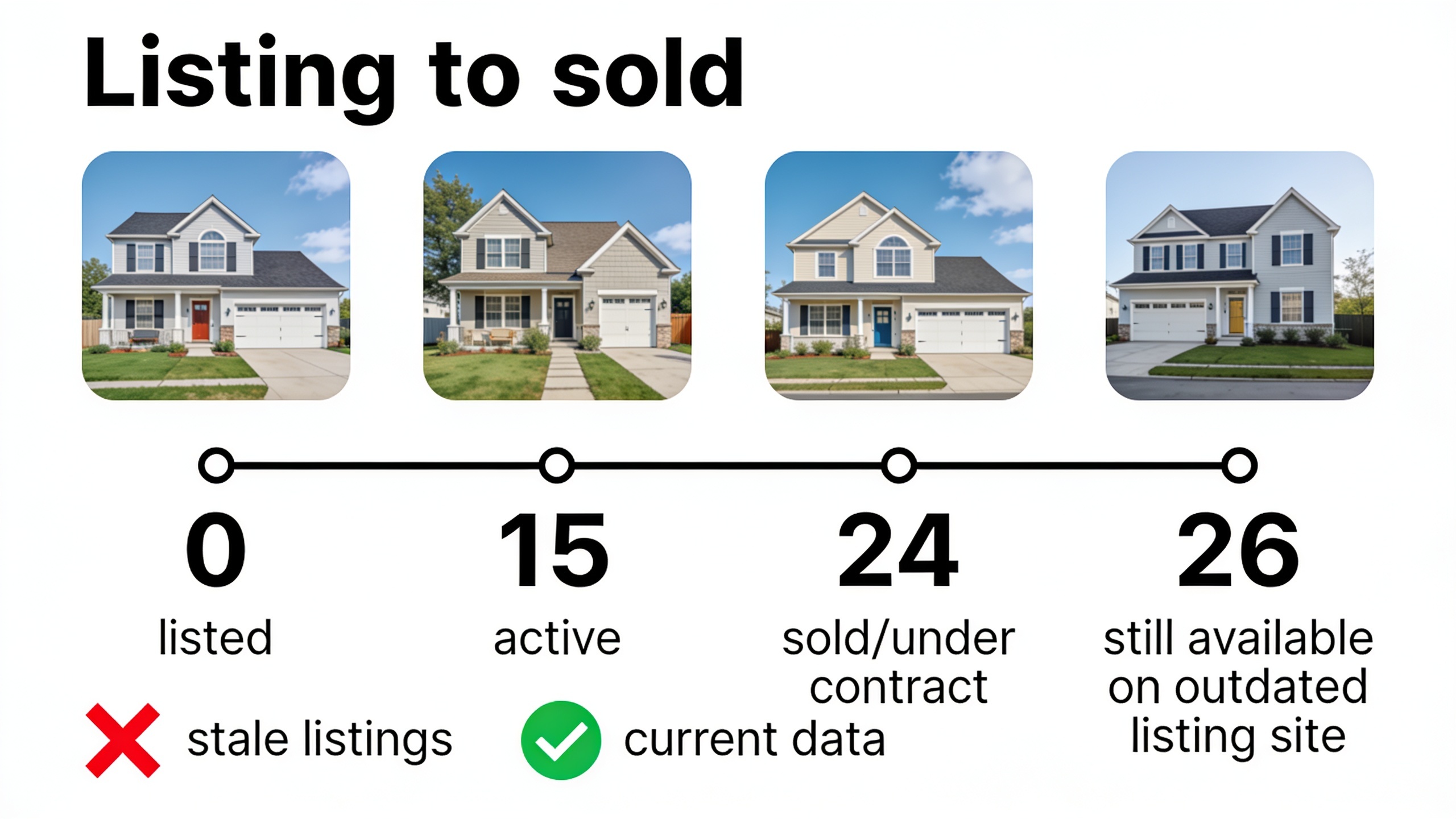
    Timeline infographic showing how quickly homes sell and the problem of stale listing data remaining visible after a property is sold

    If you’re leaning mostly on listing sites instead of an agent’s direct MLS access, get in the habit of cross-referencing. A lot of seasoned buyers check a property on two sites before they’ll bother scheduling a showing, and learning to read “days on market” and those little status badges is worth your time. There’s more on that (plus how agents confirm real-time availability that listing sites sometimes flat-out miss) in the guide on how to choose the right real estate agent for your search.

    Search Filters and Discovery Tools

    Good filters are the difference between narrowing thousands of homes down to five that fit your life and giving up in frustration. Realtor.com throws a wide net here: price, bedrooms, square footage, school ratings, commute time, even keyword search for stuff like “pool” or “finished basement.” Its map search is genuinely one of the more polished tools in the business, and I like that you can draw your own custom search boundaries instead of being stuck with zip codes.

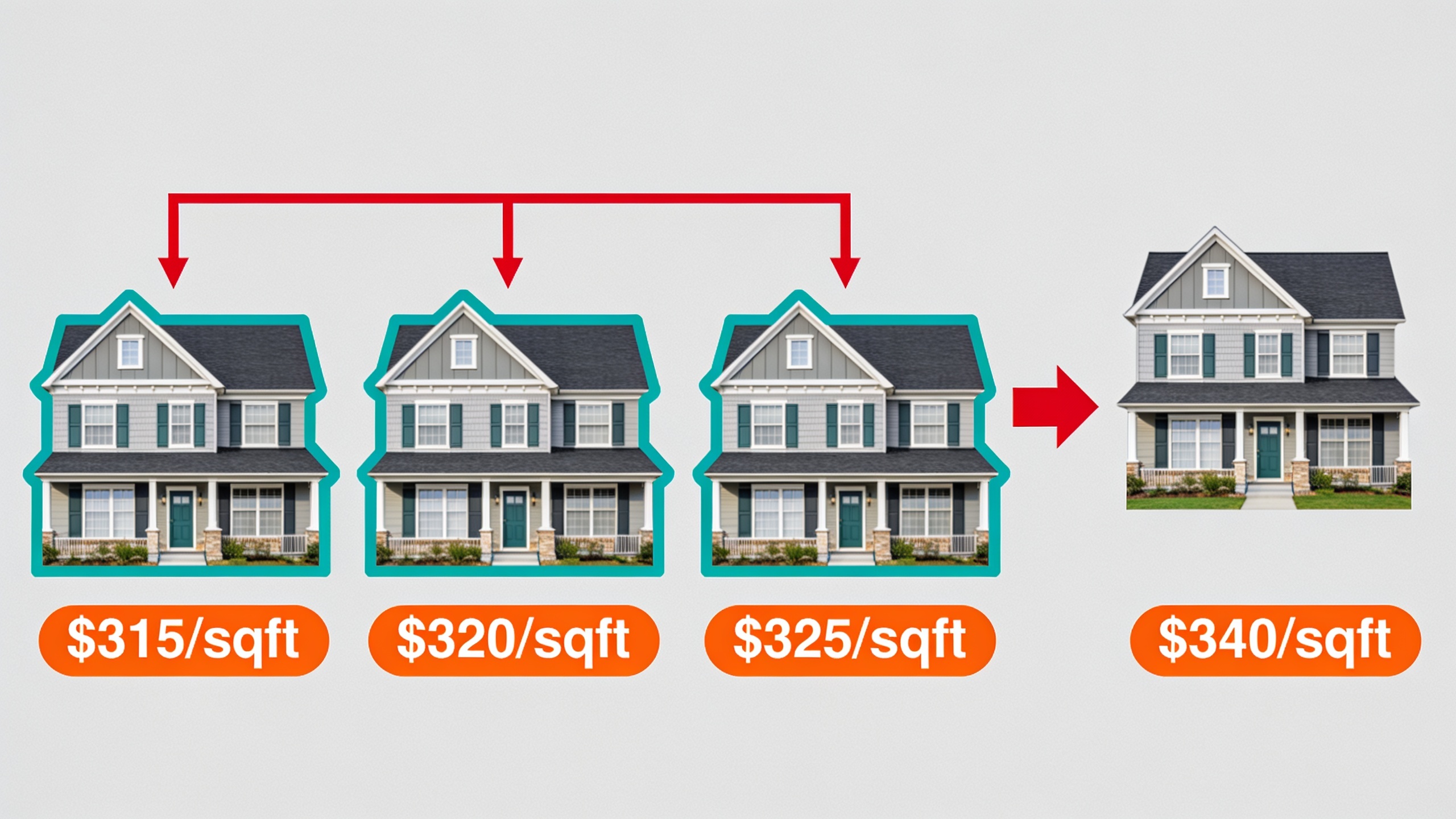
    Viviendalista takes a different angle. Its whole thing is side-by-side property comparison rather than the usual search-and-scroll grind. You can shortlist a bunch of properties and line them up in one view, comparing price per square foot, estimated monthly costs, and neighborhood data all at once. If you’re the type who thinks in spreadsheets as much as in pretty listing photos, you’ll get it immediately. And for an investor comparing rental yield across three or four candidates, that layout saves you the misery of juggling ten browser tabs.

    Both let you save searches and get email alerts when new stuff matches, but they surface “similar homes” differently. Realtor.com’s algorithm leans hard on recency and price proximity. Viviendalista basically nudges you to build a shortlist on purpose rather than passively scrolling some recommendation feed. Either way, the real trick is stacking filters smartly (price range plus commute time plus lot size, that kind of thing), which improves your results way more than people expect. There’s a full walkthrough on that in how to use Viviendalista search filters effectively.

    Neighborhood and School Data

    If you’re moving for schools, both platforms show school ratings, usually pulled from third-party education data providers, right alongside the listings. Realtor.com goes deep here, laying out rating scores, student-teacher ratios, and district boundaries directly on the map. Viviendalista’s neighborhood info tilts more toward affordability and comparison: median price trends, price-per-square-foot benchmarks, proximity scoring. Which, if you’re an investor or a retiree downsizing, is often more useful than granular school metrics you don’t really need.

    Mobile Experience and Usability

    Mobile can make or break one of these sites, and it matters because most people are searching from their phones. Realtor.com says the majority of its traffic comes from mobile devices, and that’s true pretty much across the board for real estate platforms. Both apps are mobile-optimized, but their priorities on the go are different. Realtor.com pushes notifications for price drops and new listings that match your saved searches, plus a “nearby homes” map that’s genuinely handy when you’re literally driving through a neighborhood you like.

    Viviendalista built its mobile experience around quick comparison. Picture yourself standing in a driveway, pulling up two or three shortlisted homes side by side to see which one actually pencils out. Fewer taps, less filter clutter, more just-help-me-decide. It suits buyers who’ve already narrowed things down and need to commit.

    That said, no mobile app rescues a badly designed site overall, and this is where the broader digital experience quietly matters. A real estate platform lives or dies on thoughtful UX, same as any business trying to earn trust online. Agencies like Digital Fusion Hub do the UX/UI and content strategy work that makes a property site feel intuitive instead of cluttered, and that’s honestly a decent benchmark. It’s the reason one real estate site feels effortless and another makes you want to close the tab.

    Agent and Lender Connections

    Connecting you with licensed agents and lenders is both a service and a money-maker for these platforms, and they handle it differently. Realtor.com is owned by Move, Inc., a subsidiary of News Corp, and it’s got deep ties to agent referral networks. You’ll see “local expert” profiles right on listing pages, along with lead-gen tools for agents who pay for premium spots. Which is the part worth knowing: the agent you get matched with through Realtor.com might be paying for that visibility, not earning it by being the best fit for you.

    Viviendalista frames its agent connections around simplifying the whole process, pairing curated listings with expert advice instead of a straight pay-to-play model. If you’re overwhelmed staring at dozens of agents, that curation cuts down the decision fatigue. The trade-off, of course, is a smaller pool than a nationwide aggregator like Realtor.com throws at you.

    Whatever site introduces you, treat picking an agent as its own separate decision. A responsive, locally sharp agent moves the needle way more than which listing site made the introduction. (That’s covered in depth in the agent guide I linked earlier.) And remember, agents get paid through commission structures that vary by market and brokerage, so ask blunt questions about fees and representation early. Nobody likes surprises at the closing table.

    Pricing, Fees, and Monetization

    Both are free for buyers and renters to browse, with the money coming from agent advertising, brokerage partnerships, and lead-generation fees. Standard stuff in this space. Realtor.com pulls serious revenue from “Featured Agent” and advertising products that let agents buy premium visibility in specific zip codes, and yeah, that model has taken some heat for potentially favoring the agent who paid over the agent who’s actually the right fit for you.

    Viviendalista leans on its curated listings and advisory angle, trying to keep browsing free while partnering with agents, brokerages, and probably some mortgage or insurance affiliates who touch the broader home-buying journey. This affiliate-ish approach is everywhere in consumer platforms adjacent to real estate. The immigration and insurance world runs similar hybrid models, for instance with providers like Super Visa Insurance Calgary, which connects visiting parents and grandparents in Canada with tailored coverage while keeping the core service accessible and upfront about fees.

    The real takeaway for you? “Free” platforms are never actually neutral. Every listing site has some financial relationship with the agents and lenders it puts in front of you. Your best defense is boring but effective: use multiple sources, verify claims yourself, and don’t assume the first agent or lender you see is automatically your best match.

    Which Platform Fits Which Buyer?

    Honestly, the winner in Viviendalista vs. Realtor.com depends way more on where you are in the process and what you’re buying than on one being flatly “better.” So here’s how I’d break it down by buyer type.

    First-time urban buyers (ages 25-35): You’ll usually appreciate Realtor.com’s dense filters and real-time MLS data when a market’s competitive and every hour counts. But you might lean on Viviendalista’s comparison tools when you’re weighing a handful of condos against each other on price-per-square-foot and total monthly cost. First-timers tend to fixate on the sticker price and forget about the ongoing stuff, like HOA fees, that quietly eats your budget.

    First-time home buyer comparing multiple property listings and calculating total monthly costs including HOA fees and other expenses

    Real estate investors (ages 30-50): Investors sizing up rentals live for side-by-side comparison of cap rate estimates, price trends, and rental demand, which is exactly Viviendalista’s home turf. That said, Realtor.com still earns its keep here purely on data freshness. Miss a newly listed distressed property by a single day and a faster buyer snaps up your deal.

    Families chasing suburban homes with good schools: Realtor.com tends to shine for this crowd, thanks to its deep school-rating integration and map-based commute tools. When you’re relocating a whole family, school district boundaries and drive time to work are usually the two filters that make or break the decision.

    Retirees downsizing or buying a vacation place: This group usually wants simplicity over sheer volume, which makes Viviendalista’s curated, comparison-driven feel really appealing. Especially if you’re weighing two or three specific markets (a smaller condo near the grandkids versus a place near the coast, say) instead of scrolling an endless national database.

    Feature Comparison Table

    Quick reference for anyone who skipped straight here. No judgment.

    Feature Viviendalista Realtor.com
    Data source Curated, verified listings Direct MLS feeds, near real-time updates
    Listing accuracy Fewer listings, lower stale-listing risk High volume, occasional lag in status updates
    Search style Comparison-first, side-by-side shortlisting Deep filter and map-based search
    School data Basic/affordability-focused Detailed ratings and district boundaries
    Mobile experience Optimized for quick comparisons Optimized for alerts and map browsing
    Agent connections Curated advisory model Paid agent placement/lead generation
    Best for Comparison shoppers, investors, retirees Fast-moving markets, families, broad search
    Cost to buyers Free Free

    Frequently Asked Questions

    So which one’s actually better for a first-time buyer?
    Neither, universally. Realtor.com’s real-time MLS data wins in fast, competitive markets where speed matters, while Viviendalista’s comparison tools help you weigh total cost of ownership across a shortlist instead of just doom-scrolling listings. A lot of first-timers just use both: one for discovery, one for comparison. Nothing wrong with that.

    Which platform has more accurate, up-to-date listings?
    Realtor.com generally edges it out on raw freshness because it syncs directly with MLS feeds that update frequently in most U.S. markets. Viviendalista prioritizes curated, verified listings that cut down on stale or duplicate entries, even though the overall volume is smaller.

    Do I have to pay to use either one?
    Nope. Both are free for buyers and renters to browse and search. Their money comes from agent advertising, brokerage partnerships, and referral deals, not from fees charged to you.

    Can investors use these to estimate rental income?
    Yes, though how deep you can go varies. Viviendalista’s comparison layout is great for weighing multiple rental candidates side by side on price and neighborhood trends. Realtor.com’s strength is surfacing new listings fast, which is what you want when you’re competing for deals in a hot market.

    Should I still use an agent if I found the home myself?
    Yeah, you should. Listing platforms are discovery tools, not a replacement for having someone in your corner. A good local agent verifies a property’s real-time status, negotiates for you, and spots problems a listing page will never show you. Which is exactly why picking the right agent matters no matter which site led you to the house.

    Bringing It All Together

    So this was never really a fight with one winner. It’s about matching each platform’s strengths to your actual search. If you’re chasing hot inventory in a cutthroat market, you’ll probably lean on Realtor.com’s real-time data and mature filtering. If you want a calmer, comparison-driven process (investors running rental numbers, retirees narrowing two markets, first-timers comparing monthly costs), Viviendalista’s curated approach might just click better for you.

    And like most tools in modern home-buying, from AI-assisted content platforms like RobinRank that help businesses communicate more clearly online to the real estate sites themselves, the smart play is usually the same: use more than one resource, cross-check what you find, and lean on a qualified agent to turn all that browsing into a confident, informed offer.

  • 2025 Housing Market Trends: What Buyers and Sellers Should Expect

    2025 Housing Market Trends: What Buyers and Sellers Should Expect

    If you’ve been waiting for the housing market to snap back to those crazy 2020 conditions, I’ve got some news you probably don’t want to hear. The 2025 market is finally loosening up, but slowly, and not in the way most people hoped. Mortgage rates are still way higher than the pandemic bottom. Inventory is creeping up in a lot of metros. And price growth has cooled off from the bonkers double-digit spikes we saw a few years back.

    Whether you’re a first-timer trying to escape a rental, a family that desperately needs more square footage, an investor hunting for cash flow, or a retiree ready to trade the big house for something manageable, getting a handle on these shifts now can genuinely save you thousands and spare you months of headaches. Let me walk you through where rates, inventory, and prices actually stand, what a realistic forecast looks like for the rest of the year, and what to actually do about it.

    Table of Contents

    The short version: the market is slowly rebalancing between buyers and sellers, inventory is up a bit, rates are stuck somewhere in the high-6% to low-7% zone, and prices are still rising but only barely in most places. That’s the whole story in one sentence, but it’s worth unpacking.

    For a while there, nobody was selling. According to the National Association of Realtors, existing-home sales in 2024 dropped to their slowest annual pace since 1995. Nineteen ninety-five! The reason is what everyone calls the “rate-lock” effect. If you’ve got a 3-4% mortgage, why on earth would you sell and go take on a 6-7% loan? So people just… stayed put. But that logic is finally cracking in 2025. More sellers are accepting that those dreamy low rates aren’t coming back anytime soon, and life happens anyway. New job, new baby, retirement. People move.

    And thank goodness, because this year’s market feels human again. No more offering $80k over asking with a love letter and waiving your inspection. Homes are actually sitting for a bit. Price cuts are popping up in Sun Belt cities that were untouchable a couple years ago. Buyers can negotiate on contingencies, closing costs, repairs, the stuff that mattered before everyone lost their minds.

    But affordability is still the elephant in the room. Home prices climbed roughly 40% nationally between 2020 and 2024, and wages absolutely did not keep up, per Federal Reserve data on household income growth. That gap is the whole reason so many buyers are widening their search radius, looking at smaller starter homes, or bailing on the established coastal metros entirely for cheaper up-and-coming cities.

    Where Are Mortgage Interest Rates Headed in 2025?

    Mortgage rates in 2025 are expected to hang out somewhere between 6% and 7% for a 30-year fixed, with maybe some gentle easing if inflation keeps cooling and the Fed follows through on more rate cuts. Freddie Mac’s Primary Mortgage Market Survey showed average 30-year fixed rates bouncing around the high-6% range through late 2024 and into this year. Compare that to the sub-3% deals people locked in during 2020 and 2021 and you can see why everyone’s a little grumpy.

    Quick refresher in case you need it: your mortgage rate is just the interest percentage a lender charges on your loan, and it basically decides your monthly payment and how much house you can afford. A single percentage point on a $400,000 loan can swing your monthly payment by several hundred bucks. That’s why every tiny rate wiggle ends up as a screaming headline.

    Now, the thing people get wrong all the time. Everyone thinks the Fed sets mortgage rates directly. It doesn’t. The Fed’s decisions ripple through the economy, sure, but mortgage rates actually track the 10-year Treasury yield and what investors think inflation’s going to do. So even if the Fed cuts its benchmark rate again this year, don’t assume mortgage rates will drop right along with it. They often don’t.

    Most housing economists, including the folks cited by the Mortgage Bankers Association, expect rates to finish 2025 a little lower than they started. But almost nobody is predicting a return to pandemic-era lows. So if you’re a buyer sitting on your hands waiting for 4% to come back, honestly? Stop. Plan around today’s numbers. Look into rate buydowns, consider an adjustable-rate mortgage if you’re only holding the place a few years, or find a lender who offers a “float-down” option so you can grab a lower rate if things improve after you lock.

    Is Housing Inventory Finally Increasing in 2025?

    Yes, there are more homes on the market in 2025 than during the ghost-town lows of 2021-2022, though most places are still short of pre-pandemic normal. Active listings rose noticeably through 2024 across the Sun Belt and chunks of the Mountain West, according to tracking from Redfin and Zillow, thanks to new construction catching up and some of those rate-locked owners finally caving.

    If “inventory” makes your eyes glaze over, here’s the deal. It just means how many homes are listed for sale right now, usually measured in “months of supply,” which is how long it’d take to sell everything at the current pace. Balanced market? Around five to six months. Below that, sellers have the upper hand. Above it, buyers do. Most of the country is still sitting under that balanced line, but the gap has shrunk a lot since 2022, when some hot metros had less than one month of supply. One month. It was madness.

    Builders deserve some credit here. They’ve leaned hard into smaller floor plans, buyer incentives like rate buydowns, and more starter-home inventory to reach the people getting priced out of the resale market. The U.S. Census Bureau’s new residential construction data shows builders finishing homes at a healthier clip than in recent years, even with sky-high land, labor, and material costs keeping new-build prices stubbornly elevated. Bottom line for buyers: you’ve got more options than you did two years ago. But let’s not pretend it’s a buyer’s market in the places everyone actually wants to live. It isn’t. Not yet.

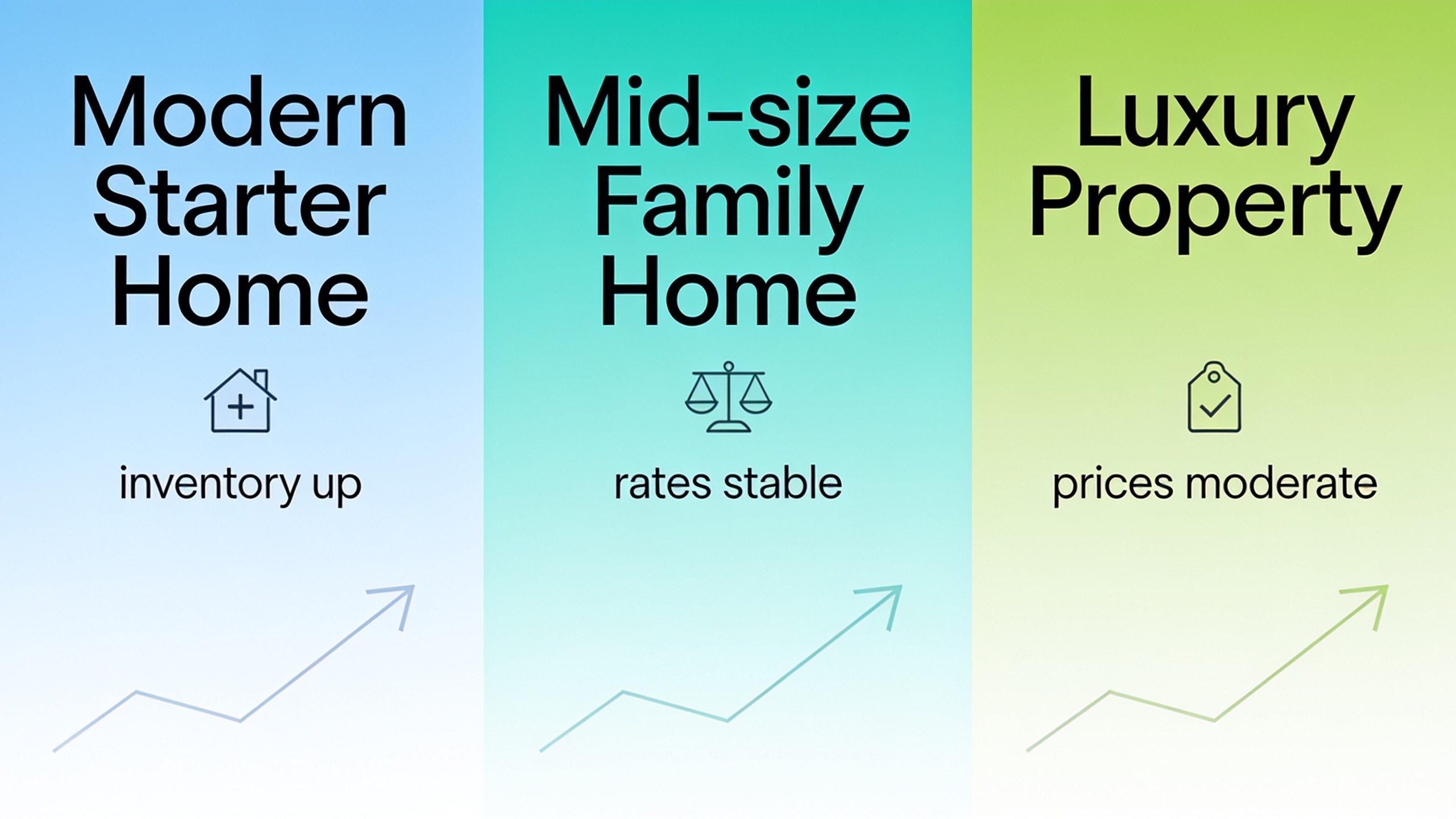
    Housing inventory and new construction options in 2025 showing starter homes, family homes, and luxury properties

    Home Price Trends: Are Prices Still Rising?

    Prices are still ticking up nationally in 2025, just at a far calmer pace than the double-digit gains of 2021, with most forecasts landing on low single-digit appreciation for the year. Both the S&P CoreLogic Case-Shiller National Home Price Index and NAR’s median existing-home price numbers show things decelerating, and some previously overheated markets in Florida and Texas are seeing flat or even slightly negative year-over-year movement as all that new supply finally catches up.

    But averages lie. Price behavior is wildly uneven right now. Markets with strong job growth, not much room to build, and steady in-migration (think parts of the Northeast, the more affordable Midwest metros, and certain Mountain West cities) are still climbing at a decent clip. Meanwhile the former darlings of the Sun Belt, your Austins and Tampas and stretches of Phoenix, have cooled off hard as construction flooded the zone. Buyers there suddenly have real leverage, and in some spots, actual price reductions.

    If you’re selling, this uneven picture means pricing is everything. And I mean everything. Overprice by even a little compared to recent comparable sales and your listing goes stale, then you’re chasing the market down with cut after cut, and you end up netting less than if you’d just priced it right on day one. I’ve watched it happen more times than I can count.

    Buyers, one bit of tough love: “waiting for the crash” is not a strategy. Most economists will tell you a broad price collapse would need either a nasty recession with big job losses or a massive glut of homes, and nobody’s forecasting either right now. You could wait years for a crash that never shows up.

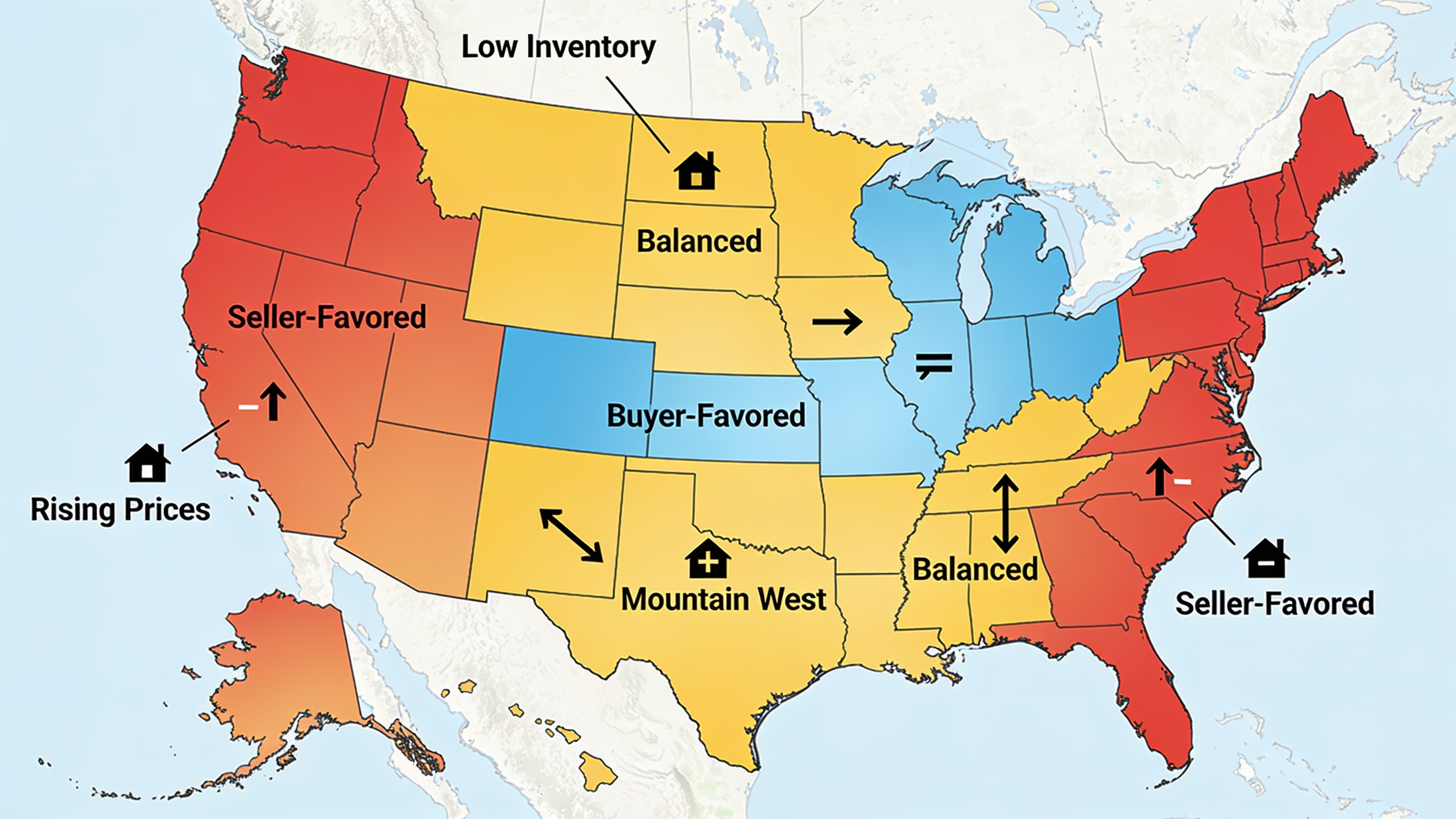
    Regional Real Estate Market Forecast Comparison

    Any real estate forecast for 2025 swings hard by region, and you should really be watching your specific metro way more than the national headlines. The table below sums up the general direction across major U.S. regions, based on what NAR, Redfin, and regional MLS data showed through late 2024 and early 2025.

    Region Inventory Trend Price Trend Buyer/Seller Leverage
    Northeast (e.g., Boston, Philadelphia) Still tight Moderate growth (3-5%) Seller-favored
    Midwest (e.g., Columbus, Indianapolis) Improving Steady growth (2-4%) Balanced
    South/Sun Belt (e.g., Austin, Tampa) Rising fast Flat to slightly negative Buyer-favored
    Mountain West (e.g., Denver, Boise) Improving Slight growth (1-3%) Balanced
    West Coast (e.g., Los Angeles, Seattle) Still tight Moderate growth (3-6%) Seller-favored

    See what I mean about national stats being useless for an actual person? A buyer in Tampa might be swimming in price-reduced listings with tons of room to haggle. Meanwhile a buyer in Boston is still throwing elbows in competing-offer situations on anything decent. Totally different worlds.

    Regional real estate market map showing buyer and seller leverage by U.S. region in 2025

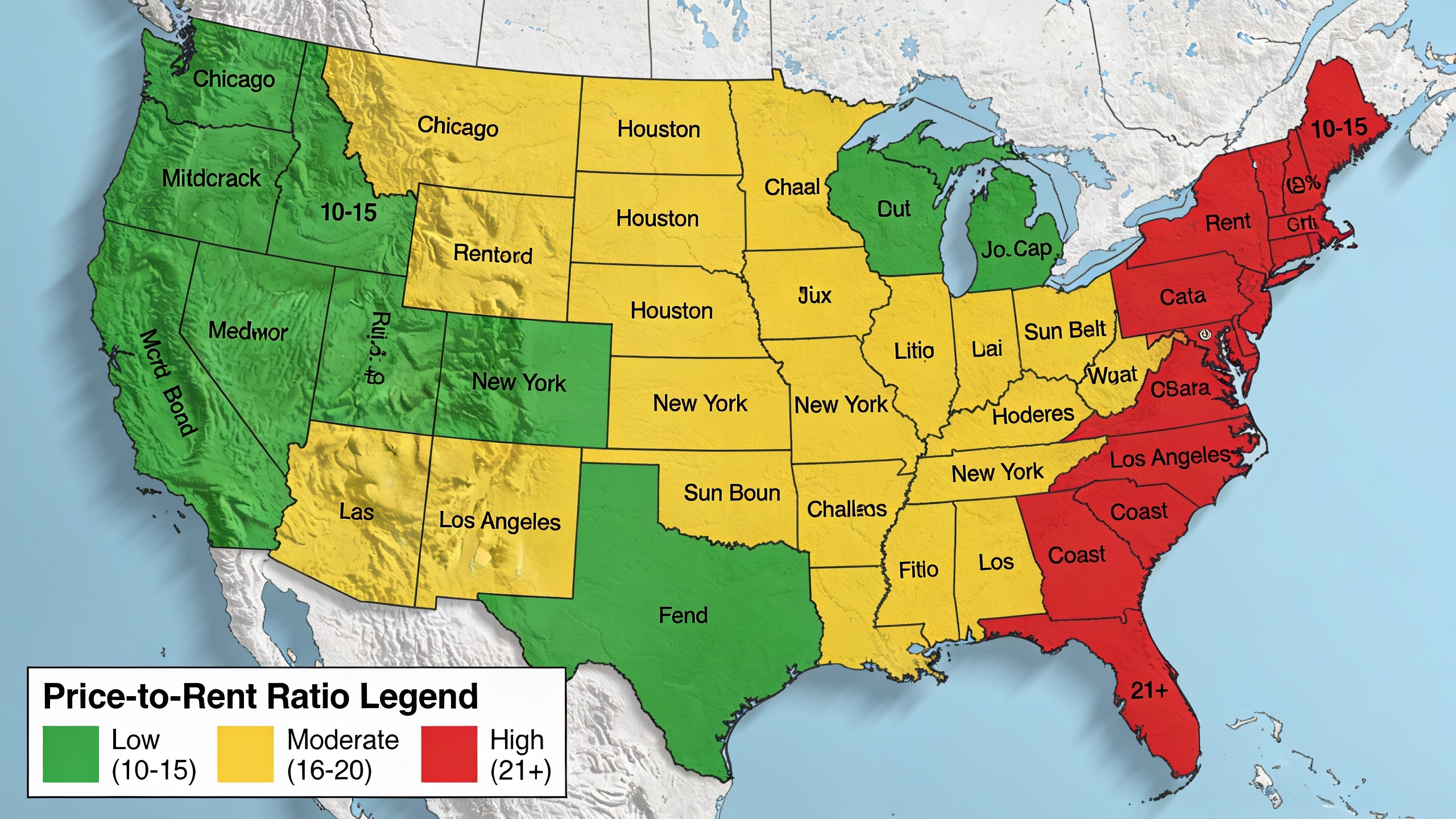
    So before you commit to a market, dig into the local data. Resources like How Real Estate Investors Use Data to Pick Profitable Markets walk through exactly which numbers actually matter when you’re comparing regions, stuff like job growth, population trends, and rent-to-price ratios.

    What Should First-Time Buyers Expect in 2025?

    First-time buyers in 2025 are walking into a friendlier market than the bidding-war circus of 2021-2022, but let’s be real, affordability is still brutal. Elevated rates and prices mean you need bigger savings and a more flexible wish list. NAR’s 2024 Profile of Home Buyers and Sellers found that first-timers made up a historically low share of total buyers, mostly because the income you now need to qualify for a median-priced home has sailed way past what a lot of younger households actually earn.

    That’s the bad news. The good news is there are genuine opportunities if you know where to look. A lot of buyers in the 25-35 range who want city life are finding real value in secondary cities and reviving downtown districts, where condo and townhome inventory has grown and you’ve got more negotiating room than in the coastal megacities. Down payment assistance programs, state-level first-time buyer tax credits, and lender programs that trim private mortgage insurance for qualified buyers can all knock down that entry barrier more than people realize.

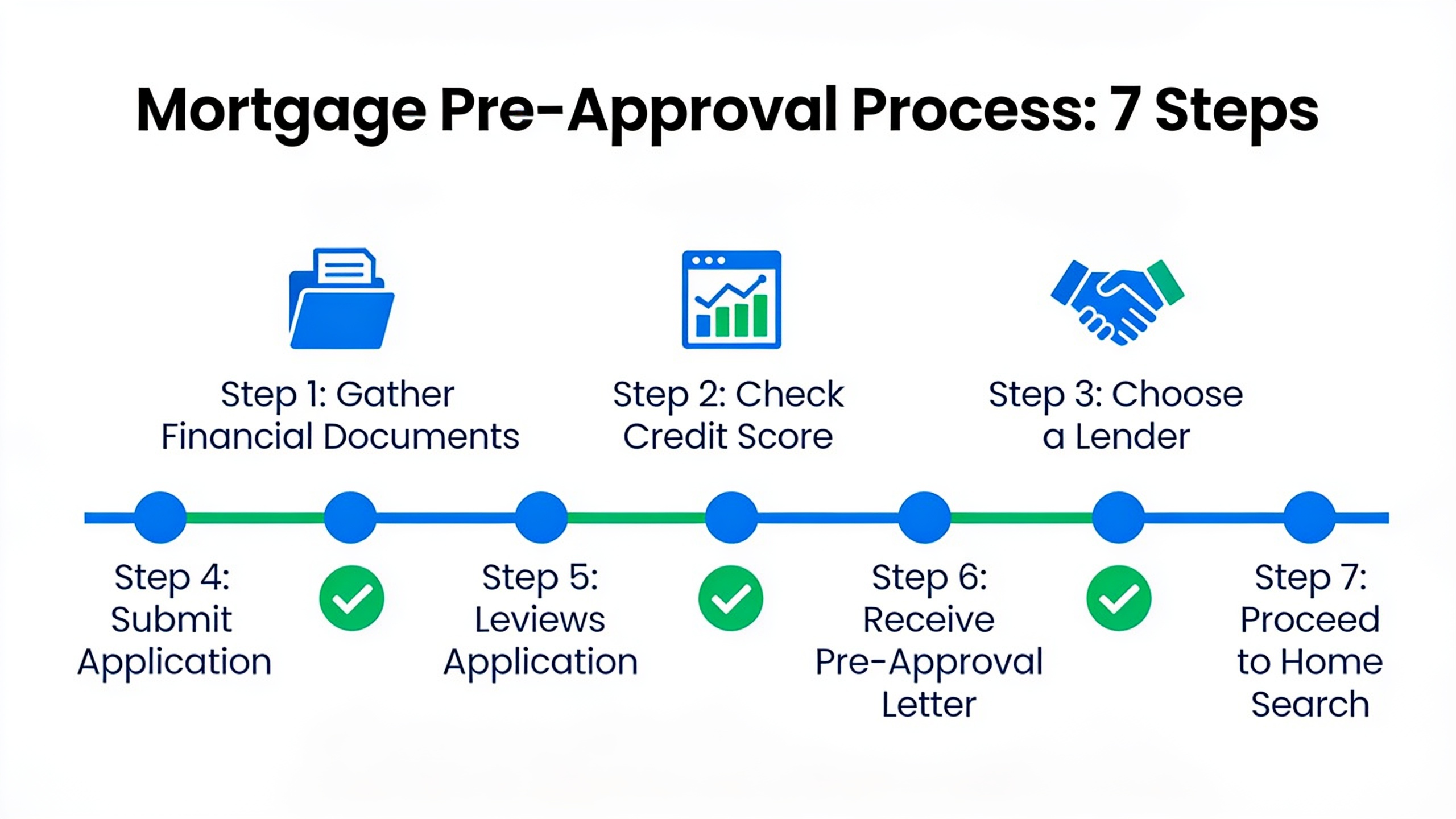
    And please, get pre-approved, not just pre-qualified. There’s a real difference. A full pre-approval carries actual weight with sellers and shows you exactly what you can spend in today’s rate environment, instead of a vague guess.

    Having a good agent matters way more now than it did during the frenzy years, because there’s actual negotiation happening again. A sharp buyer’s agent will sniff out overpriced listings, wrangle seller concessions like rate buydowns or closing cost credits, and catch inspection red flags that’d otherwise cost you a fortune down the line. The guide on How to Choose the Right Real Estate Agent for Your Search lays out the exact questions to ask before you sign anything, which is gold for first-timers who don’t know how commissions and representation shifted after the 2024 NAR settlement.

    One more thing worth mentioning. Remote and hybrid work is still reshaping where people plant themselves, and career-driven relocations are a big part of local demand this year. It’s the same mindset shift you see in specialized career-planning tools, like the AI coaching platform State6 built for UK police officers going for promotion. The idea is the same for buyers: map out a five-year plan for your career, family, and budget before you fall in love with a neighborhood. People who buy reactively almost always regret it.

    What Should Sellers Do to Stay Competitive in 2025?

    Sellers in 2025 need to nail the price on day one, put a little money into staging and repairs, and brace for the home to sit longer than it would have during the 2021-2022 gold rush. Median days on market has stretched out in a lot of metros compared to the frantic pace of a few years back, per Realtor.com listing data. Price too aggressively and you’ll sit there unsold, then eat a bigger discount than if you’d just been honest with yourself from the start.

    A well-prepped listing still moves fast, though. That means fixing the obvious deferred maintenance, decluttering, depersonalizing (nobody needs to see your family photos or your, uh, taxidermy collection), and paying for real photography. Buyers build their tour list off online photos before they ever call an agent, so bad pictures kill you before anyone walks through the door. Also expect buyers to actually fight you on inspection items now. During the bidding wars, sellers laughed off repair requests. Those days are gone. Buyers have leverage again and they’ll ask for credits and fixes.

    Picking the right listing agent is every bit as important for sellers as it is for buyers, especially now that commissions are more negotiable after all the recent industry shakeups. A good local agent brings pricing data, staging hookups, and marketing reach you just can’t replicate on your own. Platforms like Vivienda Lista make it easier to compare active listings and recent comparable sales in your specific neighborhood before you set an asking price, so you’re working off what buyers are actually paying right now instead of some outdated gut feeling.

    Marketing’s changed too. Listing descriptions, neighborhood guides, agent websites, they all lean on search-optimized content now because buyers are Googling long before they pick up the phone. A lot of agents have started using AI content tools like RobinRank to crank out optimized property descriptions and local market content faster, so their listings actually show up when someone searches for homes in a particular city or ZIP code.

    How Investors and Retirees Should Approach the 2025 Market

    Investors in 2025 should chase strong rental fundamentals (population growth, diverse job markets, landlord-friendly rules) rather than whatever appreciated fastest over the past couple years. Cap rates, which is just a property’s net operating income divided by its purchase price, have tightened in a lot of once-hot investor markets because prices climbed faster than rents did. So underwrite your deals conservatively. Please. The numbers have to work on paper before you get emotional about a property.

    If you’re weighing real estate against other asset classes, remember it plays a completely different game. Housing gives you a slower, cash-flow-driven return, not the wild swings you get elsewhere. Anyone deciding how to split their capital between rental property and something more speculative might find it useful to hold the two side by side. Outlets like Cryptocoinsjournal, which tracks cryptocurrency market volatility, make a pretty stark contrast to a boring, income-producing rental, and that contrast is exactly the point when you’re figuring out how much of your portfolio should sit in tangible property versus higher-risk digital assets.

    Retirees looking to downsize or grab a vacation place are playing a different game than the younger crowd. Most are selling a long-held primary home loaded with equity, which cushions the blow of today’s higher rates. A bigger down payment (or an all-cash deal) shrinks or wipes out financing costs entirely. Popular retiree spots in the Southeast, parts of the Southwest, and certain Carolina coastal towns are still seeing steady demand.

    One caveat, and it’s a big one: homeowners insurance in hurricane- and wildfire-prone regions has spiked hard in recent years, according to state insurance regulator filings. It’s become a serious line item in the true cost of owning, and I’ve seen retirees blindsided by an insurance quote that ate into their whole budget. Factor it in before you fall for the ocean view.

    Frequently Asked Questions

    Is the housing market going to crash in 2025?
    Probably not, and most economists agree. A real crash usually needs a flood of oversupply plus widespread mortgage defaults, like 2008. But today’s tighter lending standards and generally low mortgage delinquency levels, tracked by the Mortgage Bankers Association, make that kind of meltdown unlikely. Regional price corrections in overbuilt Sun Belt markets? Sure, those are possible. A nationwide collapse? Don’t hold your breath.

    Is 2025 actually a good year to buy?
    Honestly, it comes down to your finances more than the market. If you’ve got stable income, a solid down payment, and you plan to stay put at least five years, you’re generally in good shape. Waiting for a big rate or price drop is a gamble, and you could miss a home that actually fits your life right now chasing a discount that never lands.

    Are mortgage rates going to drop this year?
    Maybe a little. Most forecasts see rates easing modestly over 2025 if inflation keeps cooling and the Fed keeps cutting. But a return to those 3-4% rates from 2020-2021? Nobody serious is expecting that anytime soon.

    Should I sell now or wait it out?
    If you’ve got strong equity and a real reason to move, whether that’s a job relocation, downsizing, or a growing family, you’re usually better off listing now. Inventory is still relatively tight in a lot of markets, and well-priced homes are pulling solid buyer interest despite the higher rates.

    Which cities have the best forecast for 2025?
    Markets with diverse job growth, a below-average cost of living, and steady population inflows are looking good right now. Several Midwest metros and a handful of Mountain West cities show some of the healthiest combos of price stability and inventory growth. That said, local conditions can flip fast, so research your specific target directly before you commit.

    Here’s my honest takeaway after all this: the 2025 market rewards people who prepare, not people who try to guess the perfect moment. Rates and prices will keep moving all year, and you can’t control that. What you can control is getting your finances in order as a buyer, pricing realistically as a seller, and underwriting conservatively as an investor. Do those things and you’ll come out ahead of everyone still waiting for a perfect moment that, frankly, may never show up.

  • 55+ Communities vs. Neighborhoods: What Retirees Should Know

    55+ Communities vs. Neighborhoods: What Retirees Should Know

    This might be the single biggest lifestyle call you’ll make in retirement, and it touches everything. Your monthly costs, sure. But also how often you’ll actually see your grandkids, whether you’ll have a built-in bridge club or have to go build one yourself, and how much of your Saturday gets eaten by yard work.

    The short version? An age-restricted community hands you social structure, low-maintenance living, and a bunch of curated amenities on a silver platter. A regular neighborhood gives you more freedom, a wider mix of neighbors, and usually smaller ongoing fees. Neither one wins across the board. It really does come down to your health, your budget, how social you are, and how close you want to be to family.

    So let’s actually get into the real differences, the ones nobody tells you at the open house.

    Table of Contents

    • What Is a 55+ Community, Exactly?
    • 55+ Communities vs. Neighborhoods: Key Differences at a Glance
    • Amenities and Lifestyle: What You Actually Get
    • Social Life and Community: Which Setting Fits Your Personality?
    • How Much Does It Cost to Live in a 55+ Community vs. a Standard Neighborhood?
    • Health, Safety, and Long-Term Considerations
    • Resale Value and Real Estate Investment Potential
    • How to Decide: A Practical Retirement Community Comparison Checklist

    What Is a 55+ Community, Exactly?

    A 55+ community (you’ll also hear “age-restricted” or “active adult” community) is a residential development where at least 80% of occupied homes have to include at least one resident aged 55 or older. That rule comes from the Housing for Older Persons Act of 1995, and it’s the federal exemption that lets these places legally restrict who lives there by age. A normal neighborhood can’t do that.

    But the range here is wild. Some are tiny gated spots with maybe 100 homes and a single clubhouse. Others, like The Villages in Florida, sprawl across tens of thousands of homes with golf courses, town squares, and their own bus system. It’s basically a small city that happens to have a minimum age. According to the U.S. Census Bureau’s 2021 American Housing Survey, roughly 3.6 million U.S. households reported living in age-restricted communities, and that number’s been climbing steadily as boomers retire. The homes are usually single-story and low-maintenance, and a lot of them are built with wider doorways and step-free entries. Basically, they’re designed with your future knees in mind.

    A standard neighborhood is just… a neighborhood. No age rules. You’ve got families, young professionals, and retirees all mixed together. No HOA-mandated activity calendar, no age-verification paperwork, just an ordinary residential area with regular zoning and maybe a voluntary homeowners association if you’re unlucky.

    55+ Communities vs. Neighborhoods: Key Differences at a Glance

    The quickest way to get your head around this is to line them up side by side on the stuff retirees actually care about: cost, maintenance, social life, and flexibility. Broadly, age-restricted communities win on convenience and instant social life. Standard neighborhoods win on affordability, resale flexibility, and being closer to the messy, wonderful chaos of multigenerational family life.

    Factor 55+ Community Standard Neighborhood
    Monthly HOA fees Typically $200–$800+, often covers lawn care, amenities, and sometimes exterior maintenance Often $0–$150, or none at all outside a voluntary HOA
    Home maintenance Largely handled by community management (landscaping, exterior repairs in many cases) Owner is fully responsible for all upkeep
    Social structure Built-in clubs, events, and activity calendars organized by staff Informal; depends on personal effort and existing relationships
    Age diversity Restricted, at least 80% of units require a resident 55+ Fully mixed ages, families, young professionals, retirees
    Resale pool Smaller, limited to buyers 55+ (or households meeting HOPA rules) Larger, open to any buyer demographic
    Proximity to grandkids/family Often farther from schools and family-oriented suburbs Frequently closer to family-friendly suburbs
    Healthcare access on-site Some communities offer wellness centers or partnerships with home health services Rare, relies on nearby hospitals and clinics
    Typical home style Single-story, low-maintenance, often smaller footprint Wide range, including multi-story homes and larger lots

    That table doesn’t cover everything, but it explains why so many people agonize over this. If you want low-maintenance living and an instant social circle, the 55+ model pulls at you. If you want to stay planted in a diverse, mixed-age area, a regular neighborhood usually feels more like home.

    Amenities and Lifestyle: What You Actually Get

    Age-restricted communities generally give you more centralized, resort-style amenities than a standard neighborhood does. The catch? You pay for all of it through your HOA dues whether you ever set foot in the pool or not. Standard neighborhoods lean on public or nearby private facilities, so you get more variety but way less consistency.

    The Amenity Buffet in 55+ Communities

    Most of these communities are built around a central clubhouse or “lifestyle center.” You’ll usually find swimming pools, fitness centers set up for low-impact stuff, pickleball and bocce courts, craft rooms, card rooms, and an actual on-staff event coordinator who plans everything from wine tastings to day trips. The bigger places throw in golf courses, marinas, sometimes even on-site medical offices. And because it’s all funded collectively, it tends to be well-kept and reliably open, which is a genuine draw if you hate the idea of juggling a separate gym membership plus country club dues plus whatever else.

    What You Get in a Standard Neighborhood

    In a regular neighborhood, your amenities are whatever happens to be nearby. Maybe you’re a short walk from a great public library, a YMCA, a farmers market, or a solid school district. But nobody’s curating your social calendar. And honestly, that’s a pro or a con depending entirely on who you are. You get total freedom to pick your own gym, church, or hobby group. You also have to go build that network from scratch instead of having it handed to you the day you move in.

    If you’re still figuring out whether a dedicated retirement property or a more flexible second home makes more sense for where you are in life, it’s worth reading a deeper look at a vacation home versus a retirement home, which digs into how your lifestyle goals should drive the kind of property you buy, not just the neighborhood type.

    Social Life and Community: Which Setting Fits Your Personality?

    If you want an active, ready-made social calendar, 55+ communities are hard to beat. If you’d rather have relationships that stretch across age groups, standard neighborhoods usually feel better. And I’d argue this is the single most important factor in the whole decision. More than square footage. More than price, even.

    Why Built-In Community Matters More Than You’d Think

    Loneliness in older adults isn’t just sad, it’s a genuine health risk. The National Institute on Aging has noted that social isolation is associated with an increased risk of health problems in seniors. 55+ communities are basically engineered to fight that, putting similarly-aged, like-minded neighbors within arm’s reach and stacking the calendar with dozens of activities a month. For someone who recently lost a spouse, moved far from lifelong friends, or just doesn’t know how to meet people at this stage, that structure can be genuinely life-changing. There are clubs for everything. Woodworking, mahjong, travel groups, you name it. New residents almost never have to search hard for their people.

    Active seniors participating in social activities and clubs in a retirement community

    The Case for a Mixed-Age Street

    But some retirees don’t want that at all. They want younger neighbors, kids playing outside, the ordinary hum of a mixed-age block. Age segregation just isn’t for everybody, and I’ve heard more than a few people describe feeling “boxed in” by an all-senior environment after a couple of years. Standard neighborhoods also make it a lot easier to stay near adult kids and grandchildren if they’ve settled in family-oriented suburbs, since those areas almost never overlap with age-restricted zoning.

    And here’s something people forget: a lot of retirees today aren’t fully retired. Plenty pick up part-time consulting, seasonal work, or launch some little venture to stay engaged and pad the income. If that’s part of your plan, living in a standard neighborhood closer to commercial hubs, or even poking around part-time openings on a site like Jobwatch, makes continued work a lot more practical than being tucked away in a remote, purely residential 55+ development.

    Staying connected doesn’t have to mean in-person clubs, either. A lot of retirees round out their local social life with online communities and forums where they swap hobbies, ask questions, or even dabble in a small side business. Platforms like Vidbox have social and marketplace features that some folks use to stay engaged digitally alongside whatever they’ve got going on in the real world.

    How Much Does It Cost to Live in a 55+ Community vs. a Standard Neighborhood?

    On average, 55+ communities cost more per month once you fold in the HOA dues, even though the base home price can be similar or occasionally lower thanks to the smaller footprint. What that extra money buys is convenience: landscaping, amenity access, and often exterior maintenance that homeowners in standard neighborhoods have to pay for separately, out of their own pocket, on their own time.

    Breaking Down the Real Numbers

    In a typical 55+ community, HOA fees usually run somewhere between $200 and $800 a month depending on how loaded the amenities are, based on figures widely reported by national real estate associations and community developers. That fee often bundles in lawn care, trash service, common-area insurance, and access to the clubhouse and pools. In a standard neighborhood, unless there’s a voluntary HOA (usually $0 to $150 a month for basic upkeep of shared spaces), you’re on the hook for your own lawn, your own repairs, your own everything, either with your hands or your wallet.

    Home prices themselves swing more by region than by community type. But 55+ homes skew smaller on average, often single-story two-bedrooms, so the price per square foot can look better even when the total price lands right next to a comparable neighborhood home. Property taxes, by the way, don’t care whether a community is age-restricted. They just track local assessment rates.

    The Costs Nobody Warns You About

    There are two hidden expenses that sneak up on people. First, special assessments. If a 55+ community needs to repave its roads or slap a new roof on the clubhouse, residents can get hit with a one-time fee on top of the regular dues. That can sting. Second, resale friction. Since 55+ homes can only be sold to buyers who meet HOPA’s age rules, the buyer pool is smaller, which sometimes means the home sits longer or you end up negotiating harder than you would on a standard-neighborhood house that literally anyone can buy.

    For retirees who are also eyeing their property as an income source, whether that’s renting out a former home or picking up a small rental unit, it pays to run the numbers carefully. The ultimate checklist for comparing rental investment properties is genuinely handy if you’re planning to hang onto a previous home as a rental while you downsize into a 55+ community or a smaller neighborhood house.

    Health, Safety, and Long-Term Considerations

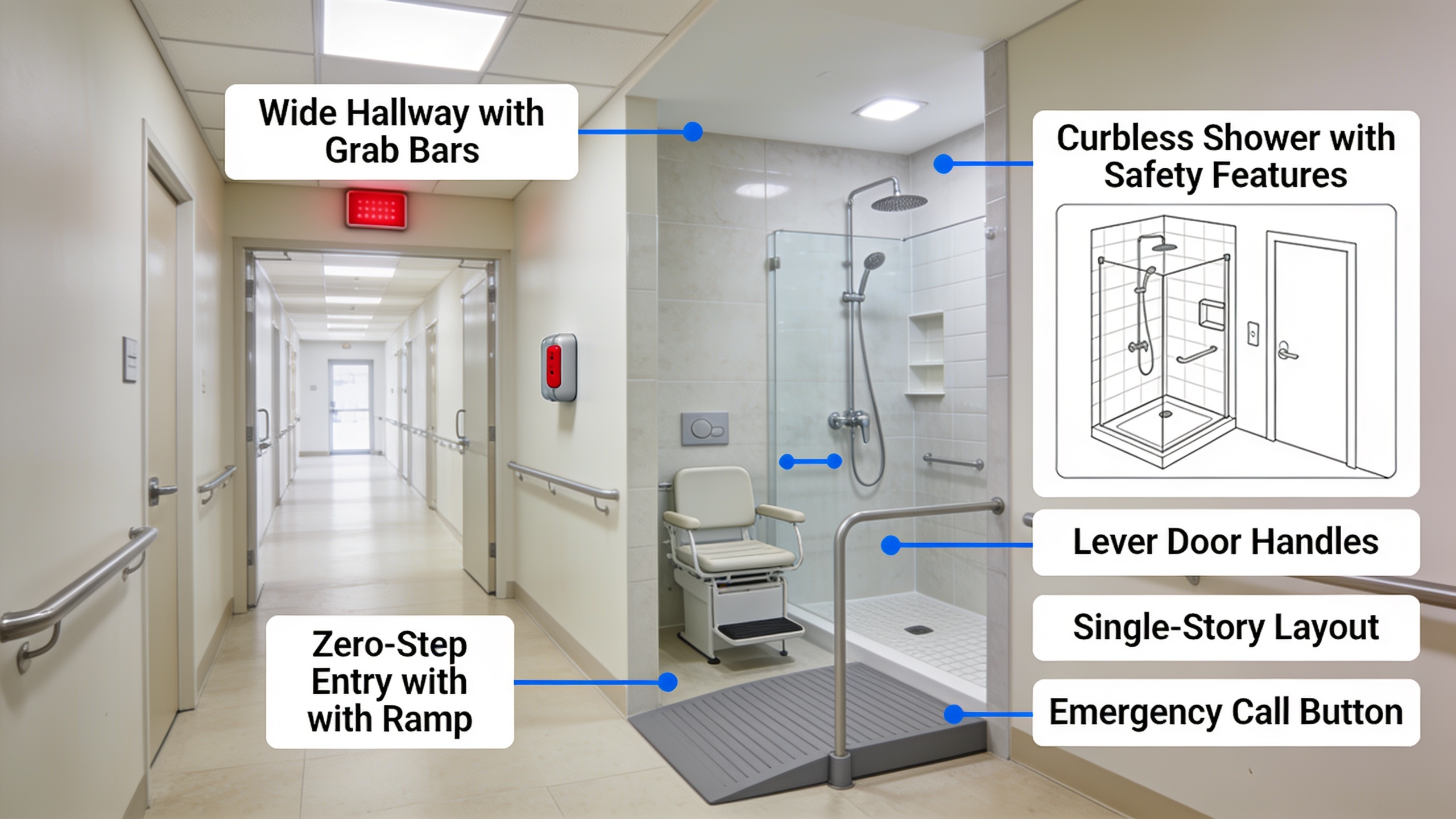
    55+ communities are generally built with aging in mind: single-story layouts, wider hallways, sometimes on-site wellness services. Standard neighborhoods are all over the map on accessibility depending on how old the housing is. If you’re over 70, this part should carry serious weight in your decision. Maybe more than anything else.

    The Accessibility Stuff That’s Already Built In

    A lot of 55+ homes come with zero-step entries, lever door handles, curbless showers, and single-level floor plans as standard features, not expensive retrofits you’ll be paying for later. Some communities also have security patrols, gated entries, and emergency call systems wired straight into the clubhouse or management office. If you’re managing a chronic condition or dealing with mobility limits, those features quietly cut down on daily friction and fall risk in a way that’s easy to underestimate until you need it.

    Accessible home design features in 55+ communities including grab bars, zero-step entries, and safety systems

    What You’d Have to Handle Yourself

    Standard neighborhoods don’t guarantee any of that. But they’re not inherently unsafe, either. Tons of suburban neighborhoods sit close to hospitals, urgent care, and established home health agencies, and you can always retrofit a home with grab bars, ramps, or a walk-in tub when the time comes. The tradeoff is that all of that is on you, financially and logistically, whereas in a 55+ community a chunk of it is baked into the original build and the shared infrastructure.

    One thing I’d push back on: don’t just assume the community type tells you how safe you are. Check emergency response time and proximity to major medical centers block by block. A well-located standard neighborhood five minutes from a hospital can honestly be a safer bet than a 55+ community that’s 40 minutes from the nearest ER.

    Resale Value and Real Estate Investment Potential

    Homes in standard neighborhoods generally have broader resale appeal because literally anyone can buy them, while 55+ community homes are legally limited to households meeting HOPA’s age threshold, which shrinks the buyer pool and can affect how fast a home moves. This matters even if you’re not planning to move again anytime soon, because life has a way of changing your plans, and flexibility has real financial value.

    That said, well-run 55+ communities in the sunbelt, think parts of Florida, Arizona, and the Carolinas, have historically held their value nicely thanks to steady demand from the huge and still-growing wave of retiring boomers. Communities with good reputations, active amenity programs, and financially healthy HOAs tend to resell faster than the ones with deferred maintenance or an association that’s quietly broke. Before you buy, look at the HOA’s reserve fund and recent meeting minutes. Most listing platforms and agents can help you get your hands on that.

    If you’re comparing a bunch of properties across both community types, using a platform that lets you filter, compare, and size up listings side by side saves you a ridiculous amount of time. Vivienda Lista has curated property listings and comparison tools that make it easier to weigh a 55+ unit against a comparable neighborhood home without juggling five different tabs. That’s especially useful if you’re relocating to a city or state you don’t know, where you can’t just lean on local market knowledge you don’t have yet.

    Oh, and one more thing worth knowing: real estate marketing has changed a lot. Plenty of 55+ developers and neighborhood HOAs now lean on digital content and search visibility to reach buyers, using tools like RobinRank to run their SEO content and community outreach. Which is part of why you can now find so much searchable comparison content, reviews, and virtual tours before you ever set foot on the property.

    How to Decide: A Practical Retirement Community Comparison Checklist

    The smartest way to choose is to honestly score your own priorities instead of leaning on a single visit or your neighbor’s glowing review. This turns a fuzzy, emotional decision into a structured one, which is exactly what you want when there’s this much money and this much life on the line.

    Questions to Ask Yourself First

    Rank these in order of what actually matters to you: proximity to family, monthly budget flexibility, appetite for organized social activities, tolerance for HOA rules, your health and mobility needs over the next decade, and whether you want to keep working part-time or start something new. Someone who puts “organized social activities” and “low home maintenance” at the top is going to lean 55+. Someone who ranks “proximity to grandkids” and “budget flexibility” highest will usually lean toward a standard neighborhood. It’s rarely a mystery once you see your own list.

    The Trial Run Nobody Bothers With (But Should)

    Before you commit, if you can swing it, rent short-term in both settings. A month in a 55+ rental, a month in a standard-neighborhood rental in the same general area. This shows you the day-to-day stuff a weekend tour never will: noise, traffic to the amenities, whether the neighbors are actually friendly, how far you really are from the grocery store and your doctor. It’s a small upfront cost that can save you from an expensive, stressful move-and-relist a year down the road.

    Talk to People Who Actually Live There

    This might be the most useful step of all: talk to current residents of any 55+ community you’re considering. Not the sales office. Actual residents. Ask how much the HOA fees have jumped over the past five years, how disputes get handled, and whether the amenity schedule matches the brochure. In a standard neighborhood, chat with a few immediate neighbors about turnover, noise, and how the area’s changed lately. Real feedback beats a marketing brochure every single time. It’s not even close.

    Frequently Asked Questions

    Can someone under 55 live in a 55+ community?
    Usually, yes. HOPA only requires that at least 80% of occupied units have at least one resident aged 55 or older, so the remaining units can legally house younger folks, like a younger spouse or a live-in caregiver, depending on the community’s own rules. Always double-check the exact policy with the HOA, because some communities set stricter internal age minimums than the feds require.

    Are HOA fees in 55+ communities negotiable, or locked in?
    They’re generally fixed, set by the community’s board or management company based on the annual budget, and they can climb year over year to keep up with rising maintenance and insurance costs. You don’t get to haggle them down as a buyer. But reviewing the HOA’s financial statements before you purchase helps you see future increases coming and dodge nasty surprise special assessments.

    Is it harder to sell a home in a 55+ community than in a normal neighborhood?
    It can take somewhat longer in some markets, mostly because the buyer pool is legally capped to age-qualifying households, which shrinks demand compared to a standard home anyone can buy. That said, in high-demand retirement spots with strong reputations and active amenities, a well-priced 55+ home can still move fast.

    Can grandkids or younger family members visit or stay in a 55+ community?
    Yes. Visiting is universally allowed, and short-term stays by grandkids or family are fine in basically every 55+ community out there. What’s restricted is permanent residency by someone well under the age threshold, not visits or extended vacations. So no, your grandkids aren’t getting turned away at the gate.

    Which option is better if I’m on a fixed income?
    Depends on the actual numbers, but a lot of retirees on a tight fixed income find standard neighborhoods more predictable, since you control your own maintenance spending and there’s no mandatory amenity fee. Then again, some people find that a modest 55+ community with low HOA dues actually cuts down on surprise repair costs versus owning an older standalone home. So compare total estimated monthly costs, not just the sticker price, before you decide anything.

    Final Thoughts

    There’s no universal right answer here. There’s only the answer that fits your health, your budget, and your social needs at this particular point in retirement. Some people absolutely thrive on the structure and camaraderie of an age-restricted community. Others feel far more at home surrounded by the everyday buzz of a mixed-age street close to family. Take the time to compare the real costs, visit in person, and talk to people who actually live there. That’ll do more for your peace of mind than any glossy amenity list ever will.

  • How to Choose the Right Real Estate Agent for Your Search

    How to Choose the Right Real Estate Agent for Your Search

    Picking a real estate agent is honestly one of the biggest calls you’ll make while house hunting. It’s right up there with choosing your neighborhood or setting your budget, maybe more so. A good agent can save you weeks of pointless showings, shave thousands off a purchase price, and quietly steer you away from that “charming fixer-upper” that’s actually a money pit. A bad one? You’ll feel ignored, underinformed, and possibly watch a deal collapse because nobody flagged a financing problem until it was too late.

    So this guide walks through what actually matters: what to look for, what to ask, and how to match an agent’s strengths to your situation. Doesn’t matter if you’re a nervous first-timer, an investor chasing yield, a family that’s outgrowing its space, or someone downsizing for retirement. There’s a right agent for each of you, and they’re not the same person.

    Table of Contents

    • Why This Decision Matters More Than You’d Guess
    • How to Pick a Realtor: The Stuff You Have to Verify
    • How Much Local Knowledge Should They Actually Have?
    • Reading the Communication Style Before You Commit
    • Questions Worth Asking Every Candidate
    • Warning Signs You Shouldn’t Ignore
    • Buyer’s Agent vs. Listing Agent vs. Dual Agency
    • What Does an Agent Actually Cost You?
    • Matching the Agent to Your Actual Life
    • Frequently Asked Questions

    Why This Decision Matters More Than You’d Guess

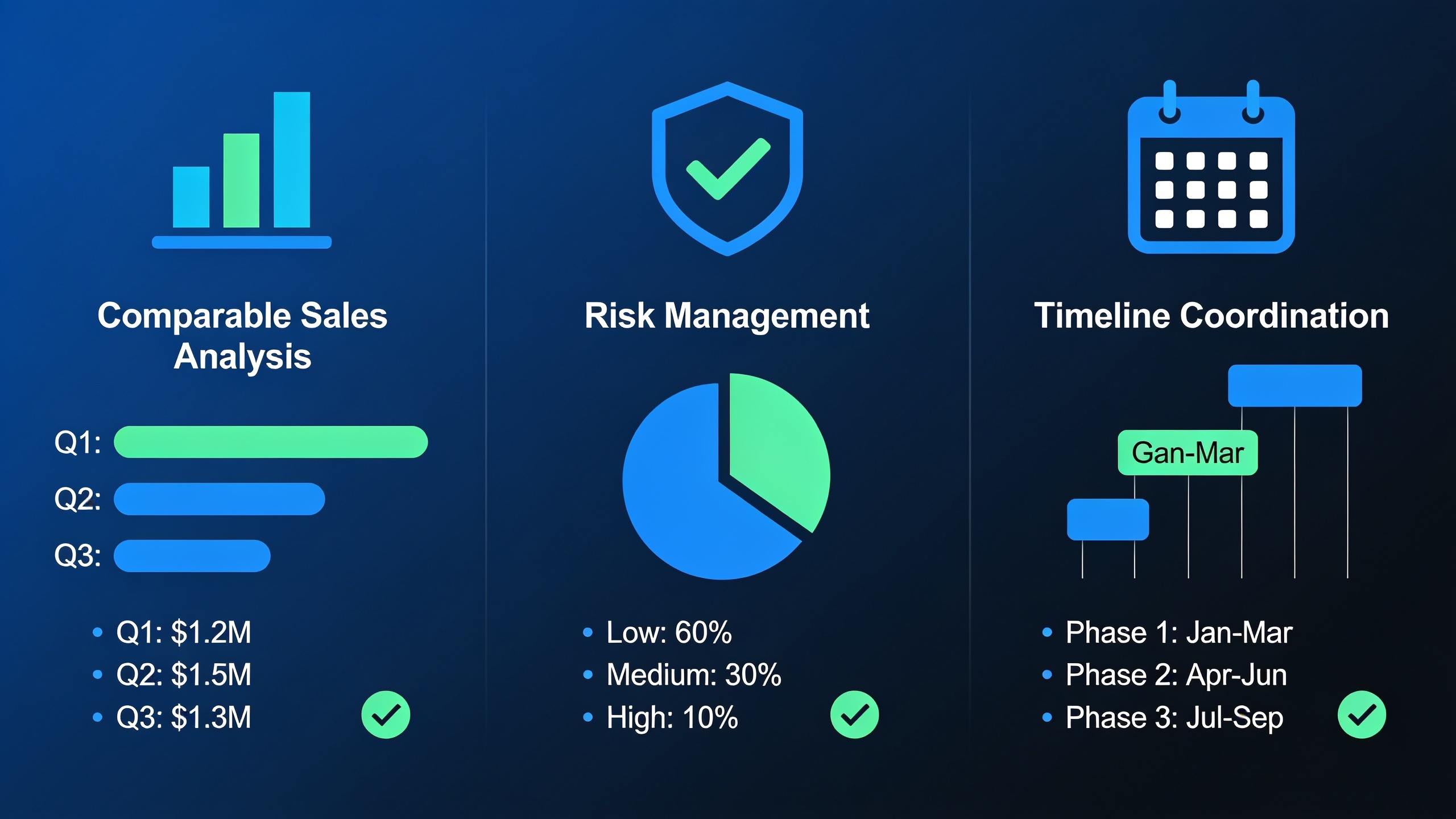
    Your agent is basically your negotiator, your market analyst, your scheduler, and your problem-solver all rolled into one, and a mismatch in any one of those roles will cost you time and money. That’s the short version. The National Association of Realtors’ 2023 Profile of Home Buyers and Sellers found that 89% of home buyers purchased through an agent or broker. But here’s the kicker: buyer satisfaction with those agents swings wildly, and it tracks with communication and responsiveness way more than with raw years of experience.

    An agent isn’t just the person who jangles keys at showings. They read comparable sales data, call out overpriced listings, wrangle inspections, and keep track of the dozens of little deadlines buried in a purchase contract. When you compare agents, what you’re really comparing is how well each one manages risk on your behalf during the biggest financial move most people ever make.

    Infographic showing key agent responsibilities including comparable sales analysis, risk management, and timeline coordination

    Which is why spending a few extra days interviewing people upfront almost always beats signing with the first person who calls you back. I know it feels tedious. Do it anyway.

    How to Pick a Realtor: The Stuff You Have to Verify

    Before you get anywhere near “do I like this person,” you need three baseline things confirmed: an active license in good standing, real transaction experience in your target area, and no unresolved disciplinary complaints. These aren’t negotiable. Personality fit comes later.

    Licensing and Credentials

    Every state runs a public database where you can check an agent’s license status, expiration date, and any disciplinary history. Takes about five minutes. And yet tons of buyers skip it entirely because they assume anyone with a profile on a big listing site has already been vetted. They haven’t. Not really.

    Beyond the basic license, some designations tell you an agent bothered to get specialized training. Accredited Buyer’s Representative (ABR) for buyer-focused folks. Seniors Real Estate Specialist (SRES) for retirees and downsizers. And Certified Residential Specialist (CRS), which the Residential Real Estate Council reports fewer than 4% of Realtors nationwide actually hold, mostly because the experience and education bar is genuinely tough to clear. If someone has that one, it means something.

    Track Record and Transaction Volume

    Just ask them straight up: how many deals did you close in the last 12 months, in what price range, in which neighborhoods? An agent who closed 40 deals in one suburban zip code is a completely different animal than one who closed 5 scattered across an entire metro. Volume by itself isn’t the whole story, but a steady pattern of closings in your price band and property type tells you they get the pricing quirks that’ll actually affect you.

    If you’re weighing a few candidates, it helps to browse listings side by side before you sit down with anyone. A platform like Vivienda Lista lets you see what’s actually on the market in your target area first, so you walk in asking sharper questions instead of nodding along to whatever they tell you.

    How Much Local Knowledge Should They Actually Have?

    Your agent should be able to talk specifics: inventory levels, average days on market, price trends in the exact neighborhoods you care about. Not vague citywide averages. If you ask “how’s the market in this particular zip code” and get a fuzzy, generic answer, that’s your tell. They haven’t worked that pocket recently.

    Real local knowledge is being able to explain why one block runs a 10% premium over another one three streets away. Which school district lines quietly affect resale. Which zoning change or new transit line is about to shift demand. A genuinely plugged-in agent can rattle off, without googling, roughly what a three-bedroom in a specific neighborhood sold for last month, and why it went above or below asking. That kind of granular feel only comes from working a concentrated area over and over, not from spreading yourself across half the county.

    Testing it is easy. Ask them to walk you through recent comps for something similar to what you want, and watch how fast and how confidently they answer. And do some homework yourself in parallel. Learning how to use Vivienda Lista search filters effectively lets you filter by price drops, days on market, and neighborhood boundaries, so you can check whether an agent’s read actually lines up with the data. Investors especially should do this cross-check. If rental yield and appreciation are part of your math, the strategies in how real estate investors use data to pick profitable markets are worth a read before your first interview, just so you know which numbers to press them on.

    Reading the Communication Style Before You Commit

    The best way to gauge how an agent communicates is to watch how they handle your very first call or email, before you’ve signed anything. That early behavior is the most honest preview you’ll get. Response time, tone, follow-through during the courting phase? It rarely improves once you’re under contract. If anything, agents get busier, not more attentive.

    Some buyers want texts and quick voice memos all day. Others want one tidy email summary each evening. Neither’s wrong. But mismatched expectations turn ugly fast. So ask early how they prefer to communicate and how quickly they usually reply, then actually test it over the next week. If they promise a few-hour turnaround and then leave a simple question hanging for three days? That’s real data. Believe it, because that’s exactly how it’ll go when you’re racing to submit a competitive offer.

    Worth noticing, too, how they show up online, because that usually mirrors how organized the whole operation is. Agents who invest in a clean, well-structured web presence, the kind of thing firms like Digital Fusion Hub build through website design and digital marketing for service businesses, tend to run tighter transactions overall. Same attention to detail that goes into their branding usually carries into their follow-up emails and document tracking. Not a guarantee, but a decent signal.

    Questions Worth Asking Every Candidate

    This whole thing gets a lot easier once you’ve got a short, consistent list of questions for everybody, so you’re comparing apples to apples instead of going on vibes. Draw these up before your first meeting.

    How many buyers are you repping right now, and how do you balance my search against theirs? (That tells you whether you’ll get squeezed out during busy stretches.) What’s your typical timeline from first showing to closed sale? Walk me through a recent deal that fell apart and how you handled it. Listen hard here for accountability versus blame-shifting. How do you structure your fee, and is any of it negotiable? And can you give me references from clients who bought in the last six months, specifically, not just old testimonials from 2019?

    It’s a bit like how students prepping for big exams lean on structured resources like Quiethelpgcse so they walk into test day with a plan instead of winging it. Same energy. Show up to an agent interview prepared and you signal that you’re a serious, organized client, which tends to earn you more serious, organized service back.

    Warning Signs You Shouldn’t Ignore

    The clearest red flags are pressure to decide fast, mushy answers about pricing strategy, and refusing to hand over recent client references. Any one alone might have an innocent explanation. Two or more together? That usually points to something bigger.

    Be wary of anyone pushing you to write an offer before you’ve seen enough comps to know if the price is even fair. Same with someone who can’t clearly explain how they landed on a suggested price using actual recent sales instead of gut feel. Dual agency, where one agent represents both you and the seller, deserves real scrutiny too. It’s legal in most states with proper disclosure, sure, but it builds in a conflict of interest, and a genuinely buyer-focused agent will talk about that openly rather than wave it off.

    Oh, and one more. An agent who trash-talks every other agent and brokerage in town instead of explaining their own value? That’s almost always someone papering over a thin track record.

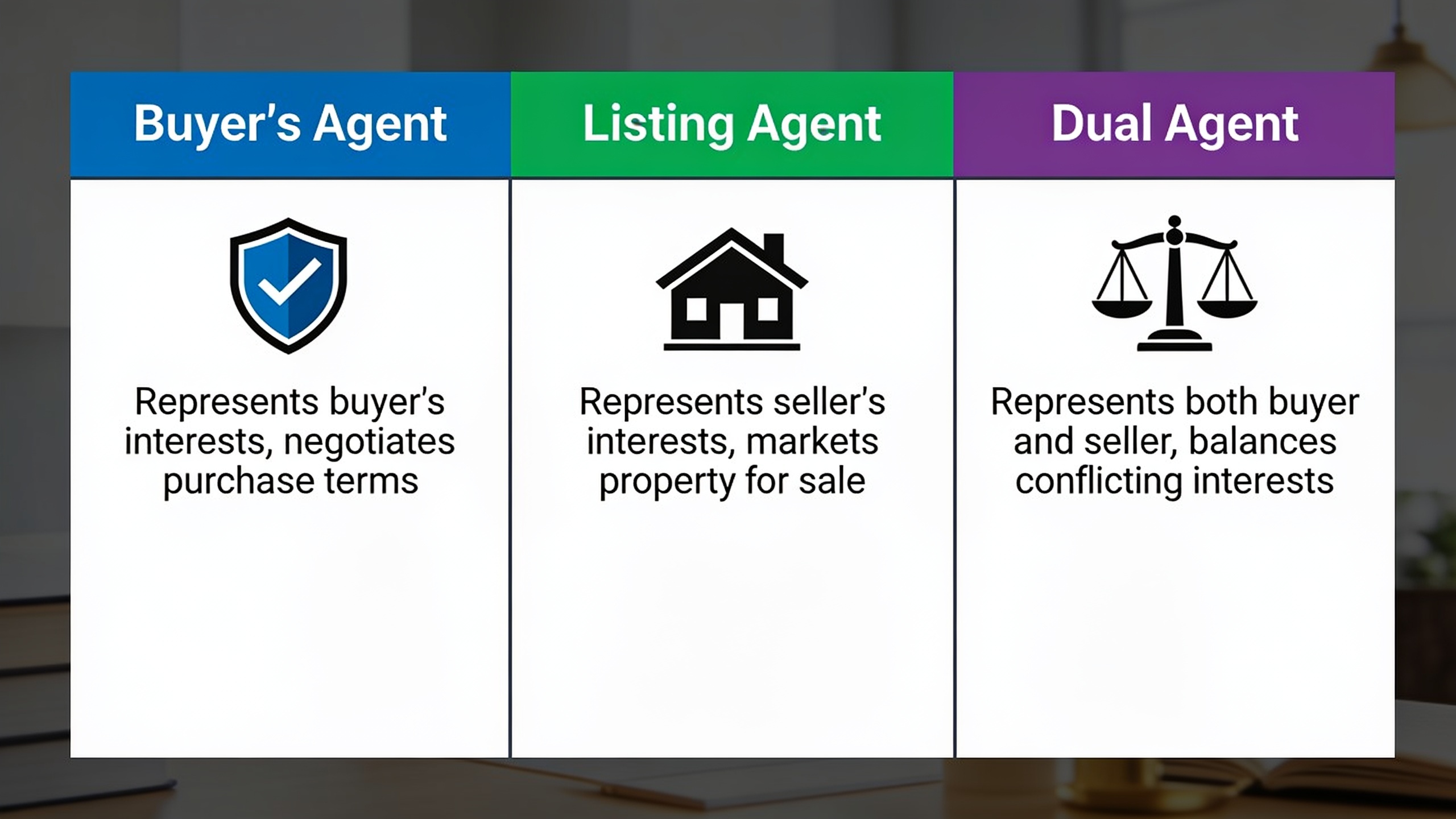
    Buyer’s Agent vs. Listing Agent vs. Dual Agency

    Different deals call for different roles, and knowing who’s actually working for you at each stage matters more than people think.

    Agent Type Who They Represent Typical Fee Structure Best For
    Buyer’s Agent The home buyer exclusively Usually 2-3% of sale price, often paid by seller in commission split First-time buyers, investors comparing multiple properties, anyone wanting undivided loyalty
    Listing Agent The home seller exclusively Typically 2.5-3% of sale price Sellers marketing a property; buyers should be cautious if this is their only point of contact
    Dual Agent Both buyer and seller in the same transaction Often a single combined commission split between both sides Simple, low-conflict transactions with full written disclosure; not ideal for complex negotiations

    For most buyers, especially anyone hunting in a competitive city market or sizing up rentals as an investor, a dedicated buyer’s agent gives you the cleanest advocacy. Their fiduciary duty runs to you and only you. Nothing split, nothing ambiguous.

    Visual comparison of three agent types showing their roles, who they represent, and fee structures

    What Does an Agent Actually Cost You?

    In most U.S. markets, buyers don’t pay their agent’s commission directly. The seller pays a total commission, historically somewhere around 5-6% of the sale price, that gets split between the listing agent and the buyer’s agent. That’s the traditional setup, anyway.

    But it’s been shifting. Following the National Association of Realtors’ 2024 settlement, which changed how buyer-agent commissions get disclosed and negotiated, more buyers are now being asked to sign written agreements spelling out exactly how their agent gets paid before they tour a single home.

    Which makes the upfront questions more important than ever. Who pays your commission? Is the fee negotiable? What happens if the seller isn’t offering buyer-agent compensation at all? Some agents now do flat fees or hourly consulting for specific tasks, like contract review only, which can suit experienced investors who don’t need much hand-holding. Whatever the arrangement, get it in writing before you tour anything. You do not want surprises at the closing table.

    Matching the Agent to Your Actual Life

    The “right” agent looks totally different depending on whether you’re buying your first condo, chasing a rental, relocating a family, or downsizing for retirement. Match their specialty to your goals instead of just defaulting to whoever has the most listings plastered everywhere.

    First-time buyers, usually late twenties into their thirties, hunting for urban condos or starter homes, generally do best with someone who knows FHA and conventional low-down-payment loans cold. Financing complexity is often the real hurdle at this stage, not finding the house. Ask how many first-time deals they closed last year and whether they’ve got a lender they actually trust and work with regularly.

    Investors, roughly 30 to 50, looking for rental properties, need an agent who talks cap rates, rent comps, and local landlord-tenant rules, not just retail resale value. Ask flat out whether they’ve closed multi-unit or investment deals recently and whether they can pull rental comps as fast as sale comps. Pair that with your own research, like the data-driven analysis in the investor guide I linked earlier, and you’ve got a second layer of confidence before you commit capital.

    Families after bigger suburban homes in good school districts should lean toward agents who genuinely know the boundary lines, the commute patterns, and neighborhood-level resale trends. That stuff weighs heavily on how happy you’ll be in five years, and on what you’ll get when you eventually sell. Ask how many relocations they’ve handled and whether they can talk school ratings without pulling out their phone to look them up.

    Retirees downsizing or buying a vacation place often do well with an SRES-designated agent (that credential I mentioned earlier). They get specific training on things like timing a sale around retirement income, juggling a simultaneous sale-and-purchase, and navigating those 55-and-over community rules that just don’t come up in a normal residential deal.

    Across every one of these, agents who market themselves well online, with clean content and consistent local SEO, are simply easier to research and vet before you even dial. Some brokerages and solo agents now use AI-assisted content tools like RobinRank to keep their neighborhood guides and market blogs current, which quietly helps you, the buyer. More accurate, frequently updated info out there means you show up better informed.

    Frequently Asked Questions

    How many agents should I actually interview before picking one?
    Two or three is the sweet spot for most buyers. That gives you enough of a baseline to notice real differences in market knowledge, communication, and fees without dragging things out for weeks. And even if the first person you meet nails all three, I’d still have a second conversation just to confirm your read before you sign a buyer representation agreement.

    Is it rude to switch agents in the middle of a search?
    Nope, not rude at all, but handle it directly and in writing. If you signed a buyer’s agency agreement, check the termination clause first, since a lot of them specify a notice period or exclusivity window. A short, professional email saying your needs have changed usually does the trick, and most reputable brokerages will let you go without drama if it’s genuinely not working.

    Can I just pick an agent based on their reviews?
    Reviews are a fine starting filter, but don’t make them your only test. Review volume often says more about how aggressively an agent hounds clients for feedback than about actual service. Cross-check with direct references from people who closed in the last six months, and honestly, pay more attention to how an agent responds to negative reviews than to the star rating itself.

    Does the agent’s commission come out of my down payment?
    No. In most deals, commissions get paid out of the sale proceeds at closing, so the money comes from the transaction itself, not from your down payment. That said, after the recent industry changes, some buyers may now be asked to cover part of their agent’s fee directly if the seller isn’t offering buyer-agent compensation. So nail this down in your written agreement before you tour homes.

    What’s the actual difference between a real estate agent and a Realtor?
    A real estate agent is anyone licensed by their state to handle property transactions. A Realtor is a licensed agent who’s also an active member of the National Association of Realtors and has signed on to its Code of Ethics. Not every agent is a Realtor. So if ethical accountability and access to dispute-resolution resources matter to you, confirm NAR membership specifically during the interview.

    Really, finding the right agent boils down to matching verified qualifications with a communication style you can actually stand for however many weeks or months your search runs, and testing both against real conversations instead of a slick bio page. Take the interviews seriously. Ask the blunt questions. Verify the license yourself. And lean on the tools out there, from curated listing platforms to neighborhood-level data, so you walk into every conversation as a partner who knows the score rather than someone waiting to be led around by the nose.

  • 10 Questions to Ask Before Buying an Investment Property

    10 Questions to Ask Before Buying an Investment Property

    Rental real estate can build serious long-term wealth. But only if you go in with your eyes open. The difference between investors who end up with steady cash flow and the ones who buy a slow-motion money pit usually comes down to the questions they asked before they signed anything. Not the listing photos. Not the countertops. The questions.

    So whether you’re looking at a duplex near downtown or a single-family rental out in some fast-growing suburb, these are the ten questions I’d want answers to before I got anywhere near an offer. Treat this as a checklist you pull out every single time, first rental or fifth.

    Table of Contents

    • What Will My Monthly Cash Flow Actually Look Like?
    • How Strong Is Tenant Demand in This Neighborhood?
    • What’s the True Cost of Financing This Property?
    • How Much Will Maintenance and Repairs Really Cost?
    • What Is the Property’s Long-Term Appreciation Potential?
    • Who Will Manage the Property, and What Will It Cost?
    • What Are the Local Rental Laws and Regulations?
    • How Does This Property Compare to Similar Listings?
    • What’s My Exit Strategy If Things Don’t Go as Planned?
    • Am I Financially and Emotionally Ready to Be a Landlord?

    1. What Will My Monthly Cash Flow Actually Look Like?

    Cash flow is the money left in your pocket each month after you’ve collected rent and paid every single expense tied to the property. It’s the most important number you’ll deal with, full stop. And here’s what trips people up: a property that looks profitable on the listing can quietly bleed you dry once vacancy, taxes, insurance, and repairs enter the chat.

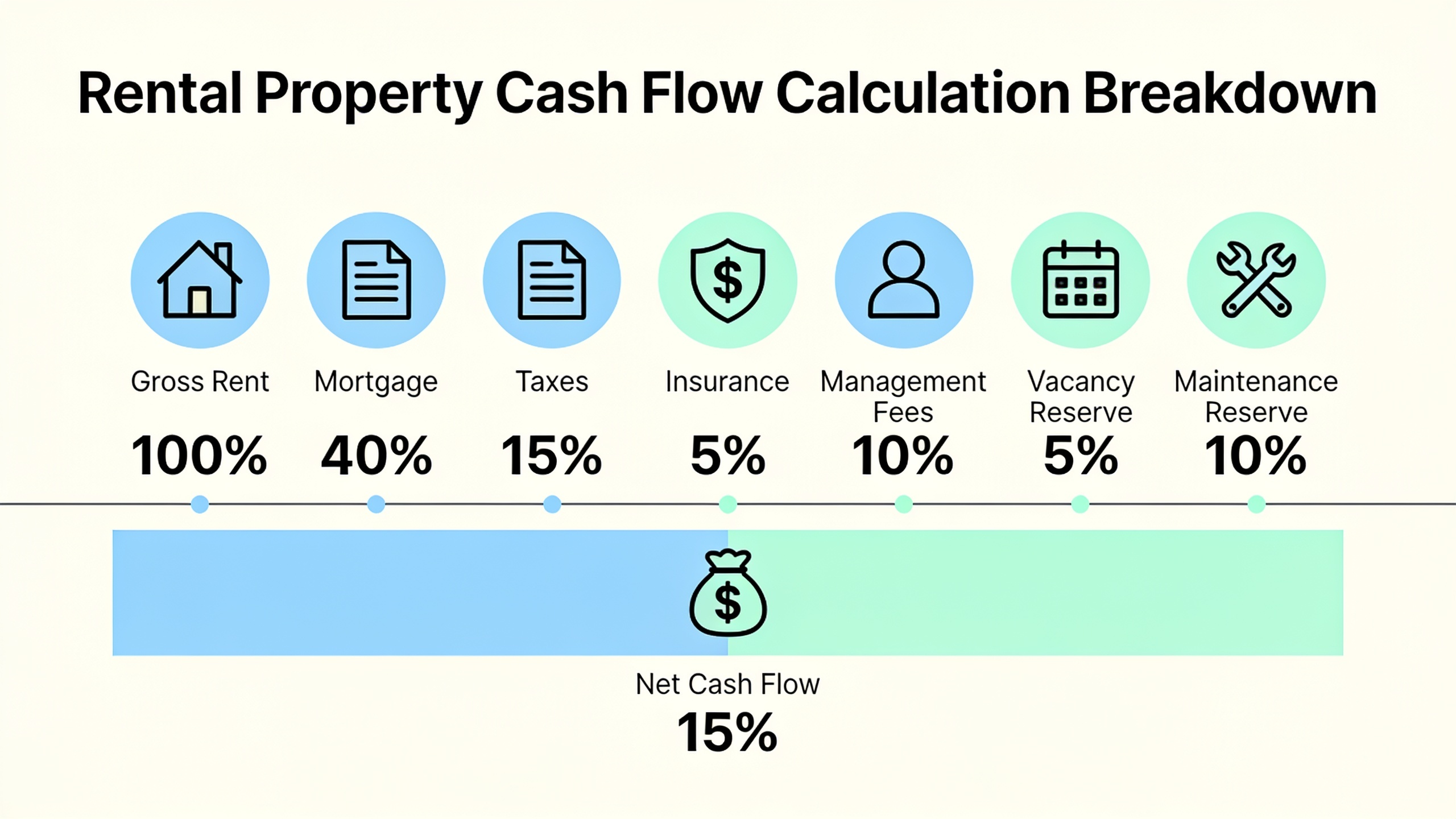
    Start with realistic rent. Not the dreamy number the seller’s agent wrote in the description. Pull comps from at least three similar units in the same neighborhood, then start subtracting. You’ve got mortgage principal and interest, property taxes and insurance, management fees (usually somewhere between 8-12% of collected rent), a vacancy reserve (5-8% of gross rent is the number most people use), and a maintenance reserve. A lot of investors budget 1% of the property’s value per year for maintenance, though if the house is old, honestly, plan on more.

    Here’s a sanity check I like. According to the U.S. Census Bureau’s Rental Housing Finance Survey, operating expenses eat up 35-45% of gross rental income on single-family rentals. So if your spreadsheet is telling you expenses are under 30%, you’ve forgotten something. Go back and find it. If you’re still putting your model together, The Ultimate Checklist for Comparing Rental Investment Properties lays out a side-by-side framework that makes it a lot easier to see which deals actually cash flow and which ones just look good on paper.

    The 1% Rule as a Quick Filter

    A lot of investors use the 1% rule as a first pass: monthly rent should be at least 1% of the purchase price. So a $250,000 property needs to rent for around $2,500 a month to clear the bar. It’s crude, and it’s definitely not a replacement for a real cash flow analysis. But it’s a fast way to kill off properties that were never going to work before you waste an afternoon on them.

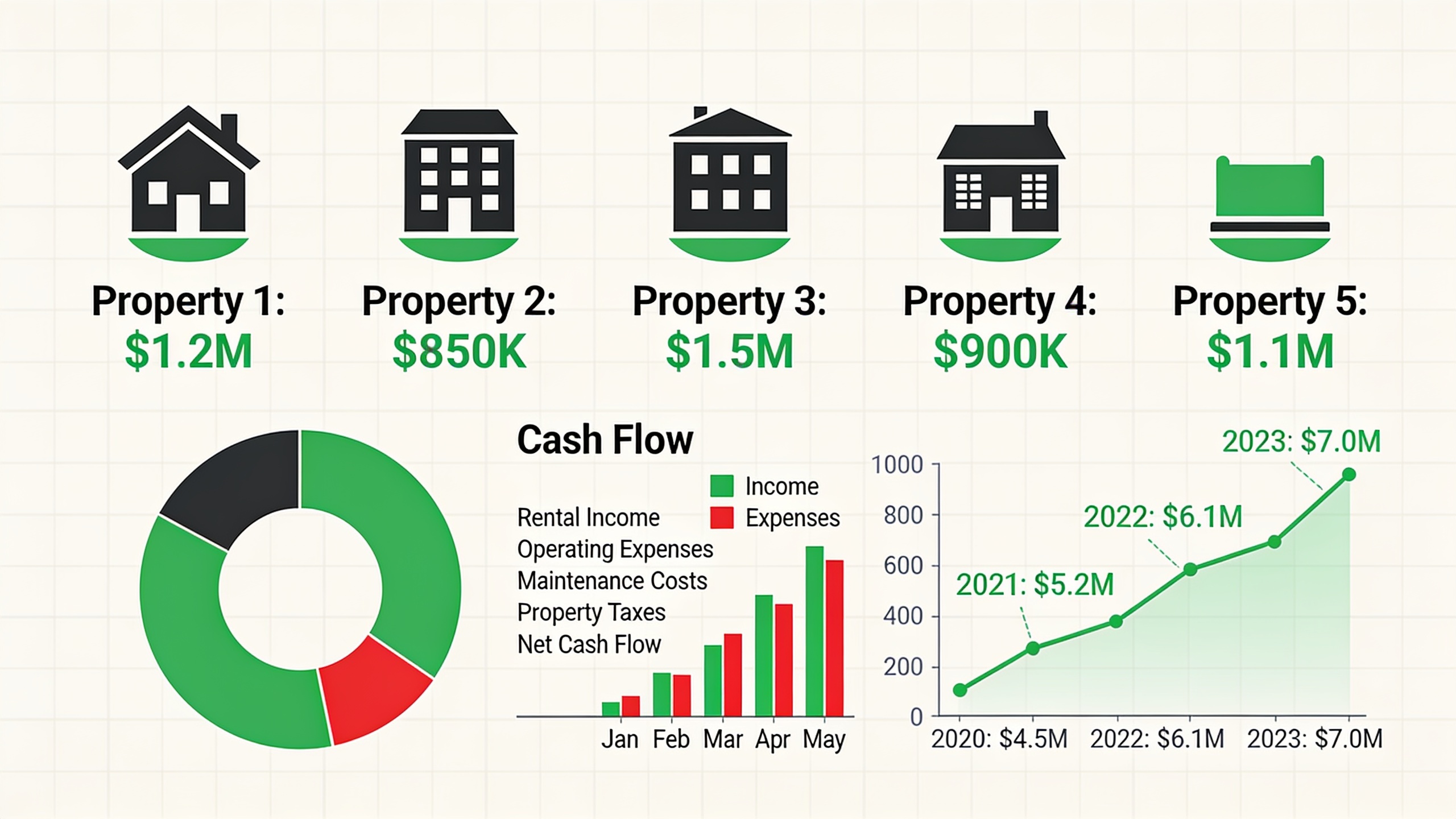
    Infographic showing rental property cash flow calculation with expenses breakdown and percentages

    3. What’s the True Cost of Financing This Property?

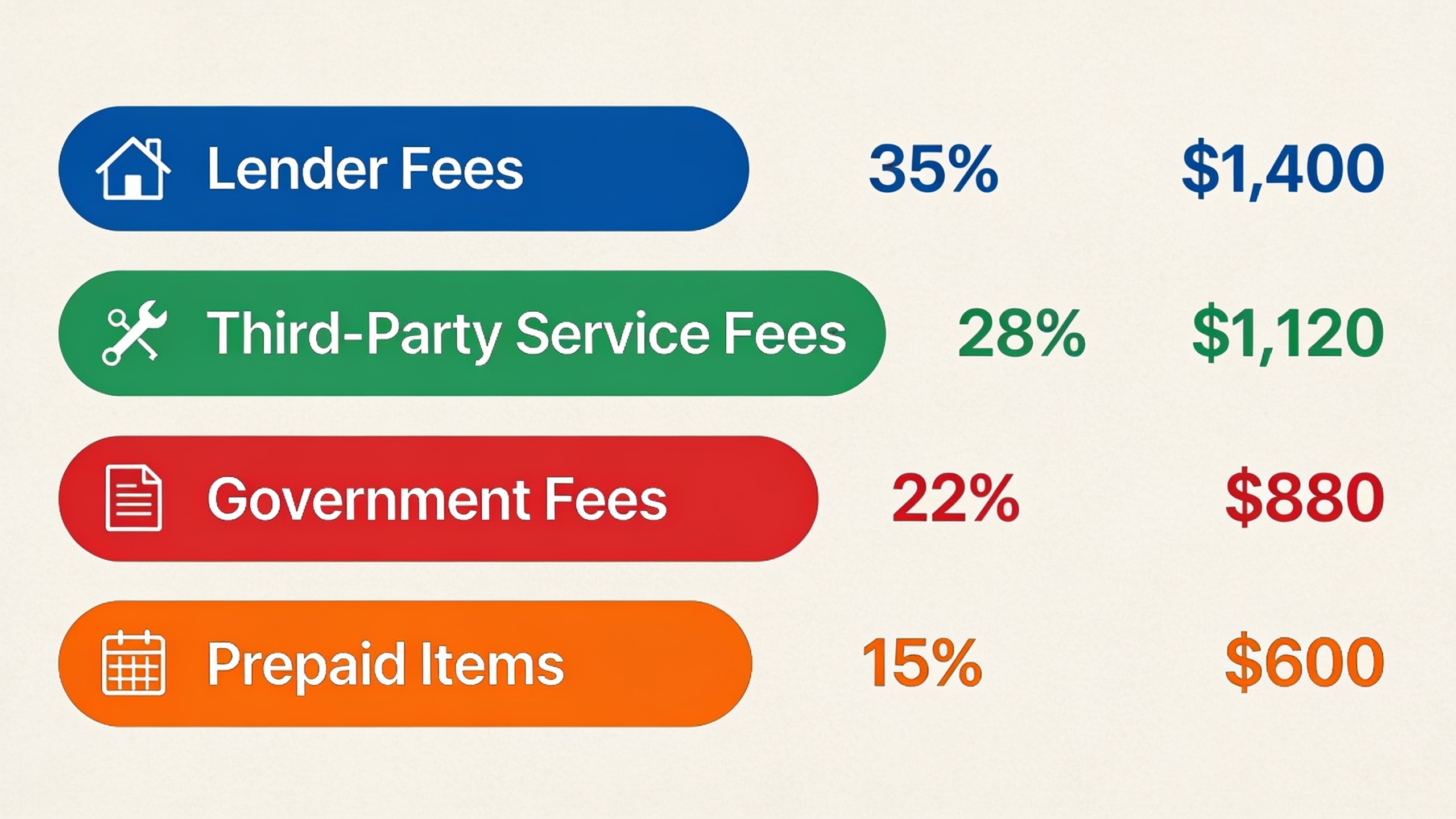
    The true cost of financing an investment property is way more than the interest rate. It’s the down payment, the PMI rules (or lack of them), closing costs, and how the lender decides to count your rental income when they underwrite you. Investment loans get priced and underwritten differently than the mortgage on the house you actually live in, and that gap can swing your numbers hard.

    Conventional lenders usually want 15-25% down on an investment property, versus as little as 3-5% for a primary residence, per Fannie Mae’s investor lending guidelines. Rates run about 0.5-0.75 percentage points higher too, because lenders see rentals as riskier bets. So before you fall in love with a place, get pre-approved as an investor, not as a homebuyer. You want to know your real borrowing costs, not a fantasy version.

    Financing Factor Primary Residence Investment Property
    Typical minimum down payment 3-5% 15-25%
    Interest rate premium Baseline +0.5-0.75 percentage points
    Rental income counted toward qualifying Not applicable Often 75% of lease/appraisal rent
    Reserve requirements Usually none to 2 months Often 2-6 months of payments
    Mortgage insurance available Yes (PMI) Rarely offered

    One thing people forget: financing decisions bleed into the rest of your life. If you’re bringing family into the mix, either as co-investors or just as folks visiting while you get your landlord legs under you, those costs stack up. Investors who are also sponsoring parents or grandparents for long visits to Canada often end up juggling housing costs and coverage at the same time, which is why some of them look into something like Super Visa Insurance Calgary to get the health coverage sorted before they’re buried in closing paperwork.

    2. How Strong Is Tenant Demand in This Neighborhood?

    Tenant demand is how quickly and reliably a property fills up with qualified renters. It’s the thing that actually pays your mortgage. And a property in a hot, low-vacancy area will almost always beat a cheaper place in a market where renters are hard to find. Cheaper isn’t better if nobody wants to live there.

    Active urban neighborhood with strong rental demand near transit, employment, and amenities

    So how do you read demand? A few things. Vacancy rates first: under 5% in a local submarket usually means healthy demand, while anything north of 8-10% is a red flag for oversupply or weak interest. Then look at how long comparable rentals sit on the market. If similar units are leasing in two or three weeks, you’re in good shape. Population and job growth matter too, and the Bureau of Labor Statistics tracks employment by metro, so areas adding jobs faster than the national average tend to pull renters right along with them. And don’t underestimate proximity to the obvious demand drivers. Universities, hospitals, transit lines, big employers. Those never go out of style.

    This is where a ton of new investors drop the ball, by the way. They analyze the property to death but never zoom out to the market. How Real Estate Investors Use Data to Pick Profitable Markets breaks down which data points actually predict long-term rental performance, from migration to permit activity, so you’re not just going on vibes. And browsing curated listings on something like Vivienda Lista lets you compare demand signals across a few neighborhoods at once instead of squinting at properties one at a time.

    4. How Much Will Maintenance and Repairs Really Cost?

    Maintenance and repair costs are what it takes to keep a place livable and competitive, and they’re the number one thing first-time investors lowball. Every time. A roof, an HVAC system, or a water heater on its last legs can flip a promising deal into a first-year loss before you even settle in.

    Before you make an offer, ask for the age of the big-ticket systems. Roof, furnace, water heater, electrical panel, plumbing. A decent home inspector can usually eyeball the remaining life on each. Rough lifespans to keep in your head: asphalt shingle roofs run 20-25 years, HVAC systems 15-20, water heaters 8-12, and electrical panels anywhere from 25-40 years, though if you’re staring at old knob-and-tube wiring or a fuse box, budget to replace it now, not later.

    Older homes carry other baggage too. Anything built before 1978 in the U.S. may trigger lead paint disclosure rules and possible remediation costs. And building a repair reserve isn’t optional, unless you enjoy the feeling of one dead appliance wiping out six months of profit. Oh, and one thing worth thinking about beyond the four walls: tenant wellbeing sells. Landlords looking to stand out sometimes point to nearby amenities in their listings, and local clinics like Rapharehab, which does physiotherapy and rehab, can genuinely be a selling point for renters who care about having health services close by.

    5. What Is the Property’s Long-Term Appreciation Potential?

    Appreciation potential is how much a property’s value is likely to climb over time, driven by local development, school quality, infrastructure spending, and the broader market. Cash flow keeps you solvent month to month, sure. But over a 10- to 20-year hold, appreciation is usually where the real net worth gets built.

    It’s harder to predict than rent, no question. But there are indicators I trust more than others. Permit activity is a big one, because rising building permits for retail, transit, or housing often show up before prices do. School district ratings matter, especially for the families and retirees hunting bigger suburban homes, since top-rated districts command premium resale prices. For historical trends, the Federal Housing Finance Agency’s House Price Index tracks quarterly appreciation by metro and it’s free, which makes it a solid benchmark for comparing markets. And planned infrastructure, new highway interchanges, transit extensions, a major employer relocating in, tends to lift nearby values over the next 3-7 years.

    Just don’t treat appreciation as a sure thing. It isn’t. And it can vary wildly from one submarket to the next inside the same city, so cross-reference a few sources before you bet on a single trend line.

    6. Who Will Manage the Property, and What Will It Cost?

    Property management is all the ongoing grind: finding tenants, collecting rent, handling repairs, enforcing the lease. Deciding who does it hits both your returns and your calendar. Self-managing saves you that 8-12% fee, but it also means you’re on the hook for maintenance calls, screening, and the occasional 2 a.m. emergency. That last one is not a hypothetical.

    If you’re buying in a market outside your home city, which more and more people are doing to chase better cash flow in cheaper metros, professional management stops being a luxury and becomes basically necessary. When you’re vetting a manager, ask about their tenant screening criteria, how fast they turn over a vacancy, and how they handle maintenance markups. Some companies quietly slap a surcharge on top of contractor invoices, and you’d rather find that out now.

    7. What Are the Local Rental Laws and Regulations?

    Rental laws are the local, state, and sometimes city-level rules that dictate how you screen tenants, raise rent, and handle evictions. And they vary enormously depending on where you buy. A playbook that works flawlessly in one state can blow up in your face in another.

    The stuff worth researching before you buy: rent control or rent stabilization ordinances, which exist in a handful of cities and can cap your annual increases no matter what the market’s doing. Eviction timelines, which swing from a couple weeks in landlord-friendly states to several months in tenant-protective ones. Security deposit limits, capped at one to two months’ rent in a lot of places. And short-term rental restrictions, since a growing number of cities now require permits or ban Airbnb-style rentals in residential zones outright.

    Skipping this is one of the classic ways new investors get blindsided after closing. A quick call to a local real estate attorney or property manager before you make an offer costs a fraction of what you’ll pay learning the rules mid-dispute.

    8. How Does This Property Compare to Similar Listings?

    Comparing a property to similar listings, “running comps,” means stacking price per square foot, condition, amenities, and rental history against genuinely comparable places nearby. It’s the reality check that keeps you from overpaying because a listing description made you feel something.

    A good comparison pulls at least three to five properties that sold or leased in the last six months, within a half-mile to a mile, and within 20% of your target’s size and age. If the place you’re eyeing is priced well above the comps with no clear reason (a real renovation, a much better lot, something), that’s your cue to negotiate hard or just walk. Tools that let you filter and compare listings side by side, like the search on Vivienda Lista, beat manually babysitting spreadsheets of MLS data by a mile.

    9. What’s My Exit Strategy If Things Don’t Go as Planned?

    An exit strategy is your plan for what you do if the property underperforms, your life changes, or the market turns. Having one before you buy means you’re making decisions from strategy instead of panic when things go sideways. And sometimes they do.

    Exit Strategy Best Suited For Typical Timeline
    Sell for appreciation gain Strong seller’s market, low cash flow priority 5-10 years
    Refinance and hold (BRRRR-style) Value-add properties needing renovation 1-3 years to refinance
    1031 exchange into a larger asset Investors scaling into bigger properties Ongoing, tax-deferred
    Convert to primary residence Investors planning a future lifestyle change Flexible
    Sell to another investor as-is Underperforming or high-maintenance properties As needed

    Your exit plan also shapes how you finance and improve the place, which people forget. Somebody planning to sell in three years makes very different renovation choices than somebody settling in for fifteen. So figure this out before you close, not after you’re already knee-deep in it.

    10. Am I Financially and Emotionally Ready to Be a Landlord?

    Financially ready means you’ve got reserves beyond the down payment. Emotionally ready means you’ve made peace with the fact that tenant drama, vacancies, and surprise repairs are the job, not signs that everything’s falling apart. A lot of first-timers massively underestimate the operational side of this, which usually turns out to be far more time-consuming than crunching the numbers ever suggested.

    So ask yourself, honestly: Do you have three to six months of expenses stashed away per property? Are you willing to take a 2 a.m. maintenance call, or pay someone who will? And do you have the backbone to enforce lease terms professionally, even with a tenant you genuinely like? People who skip this little gut check tend to either burn out from self-managing or get flattened by a cash crunch during a long vacancy.

    If you’re brand new to all this, your research and content workflow matters too, not just for your own analysis but for down the road, if you ever want to market properties or build an online presence around your investing. Platforms like RobinRank, which automate SEO content and publishing, are a good example of how even non-marketing folks are leaning on smart tools to claw back time. Worth borrowing that mindset for your own investment research, honestly.

    Putting Your Investment Property Checklist Into Action

    Once you’ve run through all ten questions, write your answers down for every property you seriously consider. Don’t try to hold it all in your head, because you won’t. A written checklist tracking cash flow projections, financing terms, comps, and local regulations for each property lets you compare deals apples-to-apples instead of trusting your memory three weeks later when you’re stuck choosing between two or three finalists.

    And revisit that checklist as the market moves. Interest rates, rental demand, local rules, all of it can shift inside a single buying cycle, so a checklist you built six months ago might need fresh assumptions before you lean on it for your next offer.

    Frequently Asked Questions

    Which of these questions actually matters most?
    In the short term, cash flow analysis wins, because a property that doesn’t generate positive monthly cash flow can squeeze your finances even if it appreciates beautifully. That said, tenant demand and local regulations are right on its heels. Weak demand or restrictive laws can sink even a well-priced deal.

    How much cash flow should a rental actually generate?
    There’s no magic number, but a lot of investors aim for at least $100-$200 in positive monthly cash flow per unit after all expenses and reserves, plus enough cushion to eat one month of vacancy a year without going negative. Higher-priced markets sometimes accept thinner cash flow in exchange for stronger appreciation, and that’s a legitimate trade.

    Cash or financing, which is smarter?
    Financing usually produces a higher return on the capital you actually put in, because you’re using leverage. But it also saddles you with monthly debt that gets scary during vacancies. Paying cash cuts your risk and simplifies your cash flow, but it locks up money you could’ve spread across several properties. Depends on your appetite for risk, really.

    How do I tell if a neighborhood has strong rental demand?
    Look at local vacancy rates, average days on market for comparable rentals, job and population growth, and how close the place is to demand drivers like universities, hospitals, or big employers. Cross-reference two or three of these and you’ll have a much clearer read than any single number gives you.

    Should first-timers hire a property manager?
    Plenty of first-time investors come out ahead using professional management, especially if they’re buying out of town or working a full-time job, since a manager’s screening and maintenance systems can head off expensive rookie mistakes. Later, once you’ve got experience and your own network of reliable contractors, self-managing to save that 8-12% fee starts to make sense.

    At the end of it all, buying an investment property is a numbers game wrapped in a whole lot of local nuance. The investors who do well are almost always the ones who asked the hard questions before signing, not the ones scrambling to answer them afterward. Run this list for every serious property, line up the answers side by side, and you’ll walk into your next offer with a lot more than a gut feeling backing you up.

  • Closing Costs Explained: What Buyers Should Budget For

    Closing Costs Explained: What Buyers Should Budget For

    Buying a home costs way more than the number you see on the listing. And a lot of first-time buyers don’t find that out until they’re staring at a settlement statement wondering where an extra ten grand came from. This guide walks through the fees, taxes, and prepaid stuff you’ll need to have ready before you sign anything. Doesn’t matter if you’re a first-timer chasing a downtown condo, an investor closing on a rental, or a family trading up to more square footage in the suburbs. Knowing these numbers ahead of time is the difference between a smooth closing and an awkward scramble.

    So how much are we talking? Closing costs usually run 2% to 5% of the loan amount, per the Consumer Financial Protection Bureau. On a $350,000 home, that’s anywhere from $7,000 to $17,500 in extra fees. Yeah, that’s a huge range. Where you actually land depends on your loan type, your state, your lender, and frankly, how much haggling you’re willing to do.

    Infographic showing the four main categories of closing costs with percentage breakdowns

    Table of Contents

    • What Are Closing Costs, Exactly?
    • The Main Categories, Broken Down
    • Who Pays What? Buyer vs. Seller
    • How Much Should You Actually Budget?
    • How to Estimate Your Costs Before You Buy
    • Ways to Knock Down Your Costs
    • Closing Costs by Loan Type
    • Frequently Asked Questions

    What Are Closing Costs, Exactly?

    Closing costs are the fees and prepaid expenses needed to finalize a real estate deal, and they’re completely separate from your down payment and the home’s price. Think of them as the cost of all the administrative, legal, and financial machinery that has to grind through before ownership actually changes hands.

    You pay them at “closing,” which is the final step where the property officially becomes yours and money moves around. Now, here’s where people trip up: closing costs are NOT your down payment. Your down payment is the equity you’re putting into the house itself. A lot of first-time buyers mash the two together in their heads and show up underfunded when it’s time to sign, which is one of the messier mistakes we get into over in our piece on 5 First-Time Home Buyer Mistakes (And How to Avoid Them).

    The good news is you won’t be flying blind. Federal law makes lenders show their hand early. You’ll get a Loan Estimate within three business days of applying for your mortgage, and a Closing Disclosure at least three business days before closing, thanks to the Consumer Financial Protection Bureau’s TILA-RESPA Integrated Disclosure rule. My honest advice? Sit down and compare those two documents line by line. It’s boring. Do it anyway. Any sneaky last-minute fee bumps will jump right out at you.

    The Main Categories, Broken Down

    Closing costs sort into four rough buckets: lender fees, third-party service fees, government fees, and prepaid items. Once you see how they split up, that scary total dollar figure gets a lot less scary.

    Lender Fees

    These are the charges your mortgage company slaps on for processing, underwriting, and originating your loan. The big ones you’ll see are the origination fee (usually 0.5% to 1% of the loan, just for handling your application), the underwriting fee (they’re verifying your income, assets, and whether you actually pay your bills), and sometimes a flat application fee just to submit your paperwork. Some lenders love that one.

    Then there are discount points, which are optional. You pay a fee upfront to buy down your interest rate. Each point runs about 1% of the loan and knocks the rate down roughly 0.25%. Whether that’s worth it is a whole separate math problem, and it depends entirely on how long you plan to stick around.

    Third-Party Service Fees

    This is money that goes to everyone outside the lender who does real work on your deal. The appraisal usually runs $300 to $600 (National Association of Realtors), then you’ve got the home inspection, title search and title insurance, attorney fees in states that require a lawyer at the table, and survey fees if someone needs to confirm exactly where your property lines are.

    Government Fees

    Your local and state governments want their cut too. Recording fees pay to officially log the deed and mortgage in public records, and transfer taxes kick in whenever ownership changes hands. And these vary wildly. Texas charges no transfer tax at all. Meanwhile Pennsylvania and Delaware can hit you for over 1% combined between state and local rates. Location, location, location, right?

    Prepaid Items and Escrow

    These aren’t really “fees” so much as bills you’re paying ahead of time. You’ll cover the first year of homeowners insurance, some prepaid property taxes, the mortgage interest that piles up between your closing date and the end of that month, plus an initial deposit into your escrow account. That account is what your lender dips into going forward to pay your taxes and insurance for you.

    Who Pays What? Buyer vs. Seller

    Buyers and sellers usually split the costs, but the exact breakdown depends on local custom, your loan type, and whatever gets hammered out in the contract. As a rule, buyers eat most of the lender and loan-related fees, while sellers typically pay the real estate commission and, in a lot of markets, the owner’s title insurance and transfer taxes.

    Here’s roughly how things shake out, with the giant caveat that every contract is its own animal:

    Cost Item Typically Paid By Notes
    Loan origination and underwriting fees Buyer Tied directly to the mortgage
    Appraisal fee Buyer Required by the lender
    Home inspection fee Buyer Optional but strongly recommended
    Lender’s title insurance Buyer Protects the lender’s interest
    Owner’s title insurance Seller (varies by state) Protects the buyer’s ownership interest
    Real estate agent commissions Seller (historically) Structures are shifting post-2024 NAR settlement
    Transfer taxes Varies by state/local custom Sometimes split 50/50
    Recording fees Buyer Small flat fee per document
    HOA transfer or estoppel fees Seller or buyer Depends on local practice and contract
    Prorated property taxes Both Split based on closing date

    Who pays for what is genuinely negotiable, and that’s a lever a lot of buyers forget they’re allowed to pull, especially in a slow market where sellers are sweating a bit. If you want the actual tactics for pushing more of these costs onto the seller, our guide on how to negotiate home price goes way past the sticker price and gets into things like asking for seller-paid closing cost credits.

    One more thing worth flagging: the whole commission picture shifted after the National Association of Realtors’ 2024 settlement, which changed how buyer-agent commissions get disclosed and negotiated. In some deals now, buyers may be on the hook for negotiating and paying their own agent directly instead of having it quietly folded into the seller’s side of the deal. So yeah, clear that up with your agent early. Like, first-conversation early.

    How Much Should You Actually Budget?

    Plan on 2% to 5% of your loan amount, though the real number swings hard depending on your state, loan type, and the price of the place. On a $300,000 mortgage that’s roughly $6,000 to $15,000. On a $500,000 mortgage, you’re looking at more like $10,000 to $25,000.

    And location matters more than almost anyone expects. According to data that ClosingCorp (now part of CoreLogic) publishes from time to time, states like New York, Delaware, and Washington D.C. tend to have some of the priciest average closing costs, mostly thanks to steep transfer taxes and title insurance rates. Meanwhile Missouri, Indiana, and Wyoming tend to run cheaper. City buyers, especially the growing crowd going after condos and co-ops, have their own list of extras: move-in deposits, condo questionnaire fees, reserve fund contributions. None of which a single-family buyer ever sees.

    Retirees downsizing or grabbing a vacation home should really watch the prepaid escrow numbers, because a second home or vacation property often comes with pricier insurance in flood- or wildfire-prone areas, and that jacks up the escrow deposit you owe at closing. Investors buying rentals, take note too. Plenty of lenders charge fatter origination fees or demand bigger reserves for non-owner-occupied loans, which can bump your closing cost percentage noticeably above what a regular owner-occupied buyer would pay.

    How to Estimate Your Costs Before You Buy

    Get Loan Estimates from at least three lenders, then compare the “Loan Costs” and “Other Costs” sections side by side. That document is standardized by federal law, so every lender lays it out the same way. That makes a real apples-to-apples comparison actually possible, which is rare in this business.

    Comparison of three different lender loan estimates showing closing cost variations

    Start by getting pre-qualified with a few lenders early, before you’ve fallen in love with a specific house and lost all objectivity. That gives you real numbers instead of national averages that mean nothing for your situation. Then ask your agent for a buyer-adjusted “net sheet” style breakdown. A lot of agents keep spreadsheets from recent local closings, and those beat the pants off generic online calculators. And the second you’re under contract, request a preliminary title report, because title insurance premiums (plus any lurking judgment or lien issues) tend to be one of the bigger, twitchier line items.

    Honestly, just build yourself a simple worksheet. Write down your loan amount, multiply it by 2% and by 5% for your range. Add estimated prepaid property taxes (the county assessor’s website has the home’s current tax bill). Add a first-year homeowners insurance quote, and get that BEFORE you’re under contract, not after. Then tack on your state’s transfer taxes, which you can usually dig up on the state department of revenue site. The whole thing takes maybe 20 minutes and gets you way closer to reality than any lazy rule-of-thumb percentage.

    And if you’re weighing a few listings across different markets, say a suburban place with good schools against a downtown condo, run this worksheet for each one before you make an offer. You might find the “cheaper” house on paper isn’t actually cheaper to close on, particularly if it sits in a county with brutal transfer taxes or mandatory attorney involvement.

    Ways to Knock Down Your Costs

    You can shrink your out-of-pocket closing costs by negotiating seller credits, shopping around for lenders, asking about lender credits, and digging into first-time buyer assistance programs. Not one of these means blowing up the deal. They just mean asking the right questions at the right moment.

    Seller concessions are the most direct move. In a buyer’s market, it’s totally normal to ask the seller to kick in 2% to 3% of the purchase price toward your closing costs instead of just chopping the sale price. And here’s why that can be smarter: it cuts the cash you need right now, which matters a lot more than shaving a couple grand off a balance you’ll be paying down over 30 years anyway.

    Lender credits do something similar but come from the mortgage company. You accept a slightly higher interest rate, and in exchange they hand you cash toward closing. This works if you’re not planning to camp out in the home long enough for that higher rate to cost you more than you saved upfront. Definitely run that breakeven math with your loan officer before you commit.

    Don’t sleep on assistance programs either. Tons of states and cities offer down payment and closing cost help for first-time buyers, usually through state Housing Finance Agencies. A lot of them come as forgivable or deferred second loans earmarked specifically for closing costs, and eligibility usually rides on income limits and price caps. Check your state HFA’s website before you assume you’re too “rich” to qualify. The income thresholds are often higher than people think, especially in expensive metros.

    Oh, and timing your closing date can quietly save you money too. Because you pay per-diem interest from your closing date through the end of that month, closing early in the month means a bigger prepaid interest charge, while closing late in the month shrinks it. Catch is, closing late also shortens the gap before your first full mortgage payment hits. So it’s a trade-off, not free money.

    Closing Costs by Loan Type

    Your closing costs shift depending on whether you’re using a conventional, FHA, VA, or USDA loan, mostly because of how each one handles mortgage insurance and government guarantee fees. Here’s the quick comparison:

    Loan Type Typical Upfront Fee Ongoing Mortgage Insurance Best Suited For
    Conventional None mandatory, but PMI applies below 20% down Private mortgage insurance (PMI), cancellable Buyers with good credit and 5%+ down
    FHA 1.75% upfront mortgage insurance premium Annual MIP, often for life of loan Buyers with lower credit scores or smaller down payments
    VA Funding fee (varies by service history and down payment) None Eligible veterans and active-duty service members
    USDA 1% upfront guarantee fee Annual fee (0.35% of loan balance) Rural and some suburban buyers meeting income limits

    VA loans, backed by the U.S. Department of Veterans Affairs, also cap certain closing costs and, in some cases, flat-out prohibit veterans from paying specific fees like the appraisal. That’s a big reason people call them the most cost-efficient option out there for those who qualify. FHA loans, insured by the Federal Housing Administration, are easier to get with shakier credit, but the mortgage insurance premiums usually stick around for the life of the loan when your down payment is under 10% (per HUD guidelines). That’s the tradeoff. USDA loans, guaranteed by the U.S. Department of Agriculture, are a solid pick for buyers eyeing eligible rural or suburban areas who want to keep those upfront mortgage insurance costs low.

    A Few Final Notes Before You Sit Down at the Closing Table

    Read your Closing Disclosure carefully and hold it up against your original Loan Estimate. I’ll say it again because it’s the single best habit a buyer can have in those final days. The fees shouldn’t leap between the two documents. If they do, you’ve got every right to make your lender explain themselves, and in some cases it’s worth delaying to sort out the discrepancy before you sign.

    Treat your closing cost homework like you’d treat any big money decision. Just as folks over at Cryptocoinsjournal might pore over market data before dropping cash into crypto, home buyers come out ahead by lining up multiple lender quotes, title company estimates, and insurance quotes side by side before pulling the trigger. A few hours of comparing paperwork can genuinely save you thousands.

    And once it’s all signed and you’ve got keys in your hand? Go enjoy it. Plenty of new homeowners mark a closing with a nice dinner out, and if you happen to be up in North Texas, Palate Garden in Saginaw is a favorite for exactly that kind of night. Relaxed dine-in vibe, good for celebrating something big.

    If tracking all of this by hand sounds like a headache, well, that’s what a lot of newer platforms are trying to fix. Browsing curated listings and comparing homes side by side on something like Vivienda Lista helps you shortlist properties in a market before you’ve even started collecting Loan Estimates, which saves you time once you’re deep in the comparison weeds. And on the research and content side, tools like RobinRank show how even dense, detail-heavy stuff (like breaking down closing costs across loan types and states) can get organized and published without losing accuracy, which is honestly part of why a guide like this can stay current as the rules and averages keep shifting.

    Frequently Asked Questions

    Wait, are closing costs the same thing as my down payment?
    Nope, totally separate. The down payment is the chunk of the purchase price you’re not financing, while closing costs are the fees for services, taxes, and prepaid items needed to finish the deal. Both are due at closing, but you budget for them independently.

    Can I just roll closing costs into the mortgage?
    Usually not on a conventional purchase. In most cases you’ve got to pay closing costs in cash at the table, and you can’t just tack them onto the loan balance, though some lenders allow limited financing of certain costs on refinances. If you’re trying to dodge a big cash hit, seller concessions or lender credits are the way people go. Both shift the cost without piling it onto your principal.

    Do closing costs differ between a condo and a single-family home?
    Yeah, they do. Condos tack on fees you won’t see with a house, like HOA document review fees, move-in deposits, and lender-required condo questionnaire fees, which can pile a few hundred extra dollars onto your total. Single-family homes, on the flip side, sometimes hit you with higher survey or inspection costs depending on the lot size and the property’s history.

    What if I just don’t have enough cash for closing costs?
    Don’t panic and don’t walk away yet. You can negotiate seller credits into your offer, ask your lender about a lender credit in exchange for a slightly higher rate, or hunt down state and local first-time buyer programs built specifically to cover closing costs. Bailing on a deal purely over a closing cost shortfall is almost never necessary once you’ve talked through these options with your lender and agent.

    How soon before closing will I know exactly what I owe?
    Federal rules make lenders hand you a Closing Disclosure at least three business days before your closing date, and that document lists your final, itemized costs. Compare it line by line against your earlier Loan Estimate and flag any surprise jumps with your loan officer right away. There’s still time to ask questions before you sign, so use it.

    Look, closing costs are probably the least thrilling part of buying a home. But if you treat them as a real, budgeted line item instead of an afterthought, you walk into closing day in a far stronger spot. Build the worksheet, collect a few competing lender quotes, and don’t be shy about asking for seller credits. Do that and most buyers can sit down at that table with zero surprises and a clear sense of exactly what they’re paying for, and why.

  • Rental Portfolio Case Study: How an Investor Built a 5-Property Portfolio in 3 Years

    Rental Portfolio Case Study: How an Investor Built a 5-Property Portfolio in 3 Years

    Five rental properties in three years. When most people hear that, they assume you either inherited money or you’re pulling down a fat tech salary with cash to burn. This case study is going to annoy those people, because it happened with neither.

    Meet Marcus Rivera, a 34-year-old IT project manager from Tampa who took a single $18,000 down payment and turned it into a portfolio worth roughly $1.4 million, kicking off more than $4,200 a month in net rental income. No trust fund. No secret windfall. Just a system he ran over and over: research the market, finance carefully, scale when the numbers said scale.

    What follows is the whole thing, year by year. The real numbers, the dumb mistakes, and the specific financing tricks that made any of it possible.

    Table of Contents

    Who Is This Real Estate Investor and Why His Story Matters

    Marcus Rivera turned a modest primary-residence purchase into a five-property rental portfolio between 2021 and 2024, using a mix of house hacking, cash-out refinancing, and stubborn, granular research into Florida’s secondary markets. His story matters for one simple reason: it proves that this kind of success isn’t about starting rich. It’s about starting organized.

    Here’s where he began. A household income of about $92,000. Zero real estate experience. Around $35,000 in total savings. That’s it. What he actually had going for him was patience and a refusal to cash out early when the money got tempting.

    For what it’s worth, his approach lines up almost perfectly with the data. The National Association of Realtors’ 2023 Investor and Second-Home Buyer Survey found that investment property purchases made up roughly 15% of all home sales that year, and most successful small-portfolio investors leaned heavily on local market data before buying anything. Rivera fits that mold exactly. Every single purchase came after weeks of him buried in neighborhood-level numbers, which honestly sounds tedious, and probably was.

    Year One: Laying the Foundation With Market Research

    Year one was one purchase. A duplex in a Tampa suburb, bought for $265,000 with an FHA loan and 3.5% down. That’s the whole first act. But it set up everything else, because Rivera did the thing most people skip: he house-hacked it, living in one unit and renting the other. Homeownership and rental income at the same time, from day one.

    Choosing the Market Before Choosing the Property

    He didn’t open Zillow first. He opened spreadsheets.

    Before Rivera looked at a single listing, he spent his time studying migration patterns, job growth, and rent-to-price ratios across five Florida metros. He pulled population inflow numbers from the U.S. Census Bureau’s American Community Survey and matched them against rent growth from Apartment List’s national rent report. Tampa won because it hit two things at once: double-digit population growth between 2020 and 2022, plus rents still climbing faster than the state average.

    Data-driven market analysis showing population growth, rent trends, and financial metrics across Florida metropolitan areas

    That data-first mindset is basically the whole thesis of the guide on how real estate investors use data to pick profitable markets, which covers the same metrics Rivera lived by: job diversification, population growth, landlord-friendly laws, and rent-to-income ratios. One rule he was strict about? He avoided any neighborhood with a rent-to-income ratio above 35%. Cross that line and you’re usually looking at affordability stress and tenants who churn fast.

    The House-Hacking Purchase

    The duplex ran $265,000. With the FHA loan, Rivera put down $9,275 (that’s the 3.5%) plus about $8,500 in closing costs and reserves, so roughly $17,775 out of pocket total. He moved into one 900-square-foot unit and rented the other for $1,650 a month. That rent alone covered nearly 80% of his mortgage, taxes, and insurance combined.

    This is the hinge the entire story swings on. By living there, he qualified for a low-down-payment loan meant for primary residences, and he still got to collect rent. Within 14 months, rising rents plus a light renovation (new flooring, fresh paint, updated fixtures) bumped the appraised value up by nearly $40,000. And that, right there, is what set up year two.

    Year Two: Scaling Through Strategic Financing

    Year two is where it picks up speed: two more properties, one through a cash-out refinance and one through a conventional investment loan. This is also the exact stage where most beginners blow it. They either sprint without reserves or crawl so slowly they miss every good rate window. Rivera did neither, which is less exciting to write about but a lot more profitable.

    The Cash-Out Refinance Strategy

    In month 16, Rivera refinanced the duplex and pulled out $52,000 in equity, keeping his loan-to-value ratio at 75% (comfortably under the 80% ceiling most lenders draw). He put $28,000 of that toward a down payment on a single-family rental in a nearby suburb, priced at $210,000, financed with a conventional 20%-down investment loan.

    The other $24,000? He just… sat on it. Called it his reserve fund. And thank god he did, because most experienced landlords will tell you to keep three to six months of expenses per property in reserves, and that cushion is exactly what let Rivera eat a surprise $6,200 HVAC replacement later that year without touching a dime of his personal savings.

    Adding Property Three With a Small Renovation Play

    Six months after property two, he found a distressed three-bedroom listed 12% below the neighborhood median. It needed about $15,000 in cosmetic work. He financed the house with a conventional loan and covered the repairs on a 0% intro-rate credit card, then paid it off within nine months using rent from his other units. Aggressive? A little. But he ran the math first.

    Before listing it, he brought in a licensed contractor through Call Painting Pros to repaint inside and out, and he swears it shaved nearly three weeks off the vacancy window because the place photographed so much better online. I buy that completely. Fresh paint is one of the highest-ROI moves in rental real estate, period. It routinely earns back more than it costs through lower vacancy and higher achievable rent.

    By the end of year two, Rivera owned three properties worth a combined $685,000, bringing in about $4,950 a month in rent against roughly $3,600 in mortgage and expenses.

    Year Three: Reaching Five Properties

    Year three brought the final two purchases and pushed the portfolio past $1.4 million. These moved faster than the earlier ones, mostly because Rivera already had his financing relationships and his due-diligence routine dialed in. Experience compounds, same as equity.

    Property Four: A Small Multifamily Purchase

    For the four-unit multifamily building (price tag: $410,000), Rivera used a DSCR loan. If you haven’t run into these, a Debt Service Coverage Ratio loan qualifies you based on the property’s rental income instead of your personal income. They’ve gotten popular with portfolio investors for exactly that reason. Once you’ve got a stack of mortgages sitting on your credit report, your personal debt-to-income ratio starts working against you, and DSCR loans just… route around that.

    The building pulled $3,400 a month in combined rent against a $2,280 mortgage payment. That’s a debt service coverage ratio of about 1.49, well past the 1.20 minimum most DSCR lenders want to see.

    Property Five: Rounding Out the Portfolio

    The last one was a townhouse, bought with a second cash-out refinance, this time drawing on the appreciated equity across two of his earlier properties. Combined appreciation had piled up an estimated $95,000 in equity across the portfolio by month 30. He used $38,000 of it as the down payment and still kept his blended loan-to-value under 70%.

    If you’re eyeing a similar path, do yourself a favor and start with the basics laid out in Rental Property Investing 101: A Beginner’s Roadmap. It walks through the financing fundamentals (down payments, reserve planning, loan types) that quietly underpin every single move Rivera made across these three years.

    Portfolio Performance Breakdown

    By the end of year three, the five properties generated roughly $8,900 in gross monthly rent against $4,700 in total expenses (mortgages, taxes, insurance, maintenance reserves), leaving net monthly cash flow of about $4,200. Here’s every acquisition laid out:

    Portfolio performance dashboard showing $1.4 million in total property value, $8,900 monthly rent, and $4,200 net cash flow across five rental properties

    Property Year Acquired Purchase Price Financing Method Monthly Rent (approx.)
    Duplex (Tampa suburb) Year 1 $265,000 FHA loan, 3.5% down $3,150 (both units)
    Single-family home Year 2 $210,000 Conventional, 20% down + cash-out refi $1,800
    Renovated 3-bed home Year 2 $178,000 Conventional loan + credit-financed rehab $2,000
    4-unit multifamily Year 3 $410,000 DSCR loan $3,400
    Townhouse Year 3 $265,000 Cash-out refinance from equity $1,950

    Total portfolio value went from $265,000 after year one to roughly $1,398,000 by the end of year three, driven by both appreciation and the forced equity he manufactured through renovations. To keep tenant inquiries and vacancy listings from turning into chaos across five properties, Rivera ran all his rental marketing through Vivienda Lista, which let him compare listing performance and pricing across neighborhoods without babysitting five separate spreadsheets. Anyone who’s tried to manage listings manually knows why that matters.

    What Financing Tools Made This Rental Portfolio Case Study Possible?

    Three tools did the heavy lifting: the FHA house-hack loan to get in the door, cash-out refinancing to recycle equity into new down payments, and DSCR loans to get around his personal income limits once his debt-to-income ratio started tripping up lenders. Each one solved a specific problem at a specific stage. That’s the part people miss. It’s not one magic tool, it’s the right tool at the right moment.

    FHA Loans for Entry

    FHA loans let owner-occupants put down as little as 3.5%, with the catch that you have to actually live in the property for at least a year. That’s it. That rule made Rivera’s duplex dramatically cheaper upfront than a standard 20%-down investment loan would’ve been, freeing up roughly $44,000 he then funneled into reserves and future down payments.

    Cash-Out Refinancing to Recycle Equity

    A cash-out refinance swaps your existing mortgage for a bigger one and lets you pocket the difference, with the property still backing the new loan. Rivera did this twice, pulling $52,000 after year one and $38,000 after year two, turning paper equity into cash he could actually deploy without selling anything. Most lenders cap these at 75-80% loan-to-value on investment properties, and he stayed inside that line every time. No exceptions. That discipline is boring and it’s also the reason he never got squeezed.

    DSCR Loans for Portfolio Growth

    DSCR loans care about one question: does the property’s rent cover its debt? They skip the whole song and dance around your W-2 income and personal debt load. This became essential in year three, when his existing mortgages made him look “over-leveraged” to conventional underwriters, even though his rental income was covering every payment with room to spare. DSCR products, plus portfolio loans that bundle several properties under one roof, tend to be the bridge investors use when they’re crossing from three or four properties toward ten and beyond.

    Mistakes and Lessons Along the Way

    No honest case study skips the screwups, and Rivera owns three of them.

    First, he lowballed his own closing cost estimate on the second purchase by almost $3,000, which forced him to raid his personal savings sooner than he wanted. Second, he tried to self-manage all five properties, which ate close to 15 hours a week and eventually blew up in his face: a plumbing leak in property three went unnoticed long enough to cost an extra $2,100. Third, and this one still bugs him, he waited way too long to raise rent on the original duplex. He left roughly $150 a month on the table for nearly a year, purely because he hadn’t bothered to benchmark against comparable listings.

    The lesson he hammers on the most is this: market research isn’t a one-and-done thing you do before you buy. It has to keep going after you own the place, through regular rent comparisons and expense audits. Investors juggling several properties often find that automating the tedious stuff frees up the bandwidth for that ongoing work. Tools like RobinRank, which automate SEO content and publishing, are a decent example of the broader trend: investors and small business owners handing off repetitive tasks to AI so they can focus on the decisions that actually move money, like underwriting and tenant screening.

    How Can You Replicate This Strategy?

    You can replicate this by starting with a house hack, building reserves before you scale, and treating every purchase as a data problem instead of an emotional one. The exact numbers will look different in your market, obviously. But the sequence holds up: low-down-payment entry, equity recycling, income-based financing.

    So where do you actually begin? Pick two or three growing metros using the same census and rent-growth data Rivera used, not whatever your buddy swears is the next “hot” city. Then run your own house-hacking math. Realistically, how much of your mortgage could a rented unit or spare room cover where you’re looking? From there, set a reserve target (three to six months of expenses per property is the number most lenders and seasoned landlords land on) before you even think about a second purchase. And revisit your financing every 12 to 18 months, because cash-out refi terms, DSCR requirements, and interest rates all shift with the lending climate. What worked beautifully for Rivera in 2021 might need real tweaking in today’s rate environment.

    One last thought, and it’s a bit of a tangent. The scaling headaches Rivera hit with self-management aren’t unique to real estate at all. In the disability care sector, for instance, platforms like Medinex help support organizations wrangle compliance, payroll, and workforce coordination as they grow. Different industry, same truth: whether you’re scaling rentals or a service business, the tools you pick to run operations often matter just as much as the growth strategy itself.

    Frequently Asked Questions

    How much cash do I actually need to start something like this?
    Rivera was in for about $17,775 out of pocket on his first FHA-financed duplex, though every purchase after that varied by market and loan type. For a similar house-hacking play, a realistic starting range is $15,000 to $25,000 to cover the down payment, closing costs, and initial reserves. It swings a lot depending on local home prices, so don’t take those numbers as gospel.

    Does house hacking even work anymore, or did that ship sail?
    It still works, especially in secondary and tertiary markets where duplex and triplex prices haven’t shot up as fast as single-family homes. That said, interest rates climbing since 2022 have made the monthly math tighter than it was when Rivera bought in. It works best where rental demand is strong relative to purchase price.

    How many properties can I buy before financing gets ugly?
    Most investors hit a wall around their fourth or fifth conventional mortgage. Fannie Mae and Freddie Mac generally cap conventional financing at ten mortgaged properties per borrower, but plenty of lenders start tightening the screws well before you get there. That’s usually the point where DSCR loans, portfolio loans, or teaming up with other investors stop being optional.

    What’s the single biggest risk with scaling this fast?
    Overleveraging, hands down. Buying faster than your reserves and cash flow can support leaves you with no cushion for vacancies, repairs, or a nasty rate change. Rivera dodged it by keeping loan-to-value under roughly 75% across the board and stashing dedicated reserves after every refinance.

    Do I need property management experience to pull this off?
    No, but you do need a plan for when your portfolio outgrows you, because self-managing five properties on top of a full-time job usually becomes a nightmare. A lot of investors hand things off to professional management once they pass three or four units, trading a slice of rental income for their weekends back and fewer 2 a.m. maintenance surprises.

    Look, five properties in three years isn’t a recipe you can copy line for line. Every market, income level, and lending environment is its own animal. But the pattern underneath it all (research-driven market selection, cheap entry through house hacking, disciplined equity recycling) is genuinely repeatable for anyone who’s serious about building real rental income instead of waiting around for a lucky break.

  • How to Negotiate Home Price: What Actually Works (and What Just Wastes Everyone’s Time)

    How to Negotiate Home Price: What Actually Works (and What Just Wastes Everyone’s Time)

    Buying a house is probably the biggest check you’ll ever write, and how well you negotiate can swing the final number by tens of thousands of dollars. So it’s worth getting right. But here’s what I wish someone had told me earlier: good negotiation has almost nothing to do with being aggressive or throwing out insulting lowball offers. It’s about research, timing, and figuring out what actually makes a seller want to say yes.

    That’s true whether you’re a nervous first-timer circling a downtown condo or an investor picking up your fifth rental. Same fundamentals every time. Know the market. Know the seller’s situation. And know your own walk-away number before you get emotional about the place.

    This is the stuff that actually helps buyers land a good price, plus the quiet mistakes that cost people real money at closing without them ever realizing it.

    Why This Even Matters

    Shaving 2-3% off the asking price can save you thousands upfront and knock down the interest you’ll pay over the whole life of the loan. Think about it on a $400,000 house: a 3% reduction is $12,000. That’s your closing costs, or a rate buydown, or a genuinely decent renovation fund. According to the National Association of Realtors’ 2023 Profile of Home Buyers and Sellers, the median existing-home sale price tends to land pretty close to the original list price in a balanced market. But that median hides a lot. Homes that sit too long, or have some obvious flaw, routinely sell for 5-10% under list.

    And it’s not just about the sticker price anyway. A good deal often comes with concessions, seller-paid closing costs, appliances thrown in, a repair credit that puts cash back in your pocket. For a family stretching to buy near a good school district, or a buyer scraping together every dollar for a competitive city market, those extras can be the whole difference between a deal that works and one that quietly falls apart.

    How Do You Research the Market Before You Negotiate?

    You research by pulling comparable sales from the last three to six months, checking how long the specific home’s been listed, and figuring out whether your local inventory favors buyers or sellers. That’s the foundation of any offer worth making. Skip it and you’re basically negotiating blindfolded.

    Pulling Comps

    Comps, comparable sales, are recently sold homes that are similar in size, condition, age, and neighborhood to the one you want. Agents pull these off the MLS, but you’re not helpless here either. County assessor websites and the big listing platforms will show you plenty. Stick to homes sold in the last 90 days within roughly a half-mile to a mile, and adjust for the obvious stuff like square footage, lot size, and whether someone gutted the kitchen recently.

    Say comparable homes went for $315 to $325 per square foot, and the place you’re eyeing is listed at $340. That gap? That’s your opening argument right there.

    Comparable sales analysis infographic showing price per square foot comparison between similar homes and target listing

    Days on Market

    Days on market, or DOM, is just how long a listing’s been sitting there without an accepted offer. And it tells you a lot. If a home’s been listed 45 days in an area where the average is 18, something’s off. It’s overpriced, or buyers keep spotting a problem, or the seller’s living in a fantasy about what their house is worth. Longer DOM usually means more leverage for you.

    But flip it around. A listing that’s three days old with a stack of showings already booked? You might need to move fast and go easy on the price haggling (though you can still push on terms).

    Price History and Tax Records

    Most listing sites have a price history section, and it’s gold. It’ll show you if the home had a recent price cut, if it was listed before and yanked off the market, what it sold for last time. A house that dropped from $450,000 to $429,000 after a month is basically telling you the seller already knows they aimed too high. That’s ammunition. Cross-check the county tax assessment too, just know it usually runs below market value, so treat it as a rough floor, not gospel.

    Reading Local Conditions

    Local conditions get measured in months of supply, which is how long it’d take to sell every listing at the current pace. Under 3 months means it’s a seller’s market. Somewhere between 3 and 6 is balanced. Above 6 and you’re sitting pretty as a buyer. Economists at places like Freddie Mac and the Mortgage Bankers Association publish regional supply data if you want to calibrate before writing anything.

    Oh, and if you’re still finding your footing with the whole process, it’s worth glancing at 5 First-Time Home Buyer Mistakes (And How to Avoid Them). A few of those mistakes wreck your negotiating position before you’ve even made an offer.

    When’s the Best Time to Negotiate?

    Your leverage peaks when a listing’s been sitting longer than average, during the slow seasons like late fall and winter, or when a seller’s got a real deadline breathing down their neck. Timing changes everything. The exact same house can be way more negotiable in December than it was back in May.

    Home sales in the US usually peak between April and July, when inventory’s high and buyers are climbing over each other. The listings that drag on into September, October, all the way into January? Those often belong to sellers who are genuinely motivated. Job change, tax stuff, or just plain exhausted by the whole thing. Shop in the off-season and you’ll generally find less competition, more room to negotiate, and sellers who suddenly don’t mind your inspection or financing contingencies.

    Then there’s the deadline thing. Sellers who are buying their own next place often have overlapping timelines. If your agent can find out (through the listing agent) that a seller needs to close by a certain date, to dodge two mortgages, or make a relocation start date, or hit a quarter-end for tax reasons, that’s real leverage. Agents pick up this stuff informally all the time during pre-listing chats. So just have your buyer’s agent ask about the seller’s motivation. It’s shockingly underused.

    One more: watching for a price cut and pouncing shortly after can work great. A seller who just dropped their price is signaling they’re flexible, and they’re often most receptive in the days or weeks right after. Play this too cool, though, and you’ll lose the house to someone who moved faster. So it pairs best with actually paying attention, not passively waiting around.

    Negotiation Tips That Actually Work

    The tips that matter are about presenting a clean, well-backed offer, not just lobbing out the lowest number you can stomach. Sellers respond to certainty and professionalism almost as much as they respond to price.

    Get Pre-Approved, Not Just Pre-Qualified

    Pre-approval means a lender actually dug into your income, credit, assets, and debts and gave you a conditional commitment. Pre-qualification is a rough guess based on whatever you told them. These are not the same thing, and listing agents can smell the difference. A solid pre-approval letter stapled to your offer often buys you room to negotiate, because it lowers the seller’s fear that your financing falls through and blows up the deal.

    Lead With Data, Not Feelings

    When you come in below asking, back it up. Don’t say “it feels overpriced.” Say something concrete, like three similar homes within a half-mile sold for an average of $18,000 less over the past 60 days. That gives the listing agent something real to bring back to their client, and you’re way more likely to get a productive counter instead of a door slammed in your face.

    Ask for Stuff Beyond Price

    Sometimes a seller just won’t move much on price, but they’ll happily cover 2-3% of closing costs, or leave the washer and dryer, or credit you for that roof repair the inspector flagged. That’s real money even when the sale price barely budges. Buyers who fixate only on the headline number leave a ton on the table here.

    Keep Contingencies Reasonable

    A contingency is just a condition that has to be met for the sale to go through. Inspection, appraisal, financing, that sort of thing. Now, I’d almost never tell you to waive the inspection contingency completely (that way lies regret). But keeping your list tight and your timelines snug, like a 7-day inspection window instead of 14, tells a seller you’re serious. And when they’re comparing multiple offers, that seriousness often buys you flexibility on price.

    Figure Out What the Seller Actually Wants

    Sellers relocating for work, going through a divorce, settling an estate, or downsizing in retirement usually care more about speed and certainty than squeezing out the last dollar. A retiree heading into assisted living might genuinely prefer a fast, clean closing over an extra $5,000. An investor dumping a rental might jump at an all-cash offer even if it’s not top dollar. Your agent can dig most of this up just by asking the listing agent straight questions about timeline and motivation.

    If you want to see how research and timing come together for real, How One Couple Actually Pulled Off Buying Their First Home in Under 5 Months walks through a case where all the leverage came from understanding the seller’s relocation timeline, not from some aggressive lowball.

    Step-by-Step: Negotiating During the Offer Process

    The offer process is honestly pretty predictable: submit an informed opening offer, respond to the counter with data-backed moves, and use the inspection period smartly before you finalize.

    Step 1: Set your ceiling before you fall in love. Before you start touring seriously, figure out your absolute max based on your budget, what monthly payment you can actually stomach, and your longer-term goals. Then write it down somewhere. This is the thing that saves you from doing something dumb when you’ve already mentally arranged your furniture in a house you haven’t bought yet.

    Step 2: Open strong and specific. Your first offer should rarely be your max. Base it on your comps, factor in the home’s condition, the DOM, anything sketchy in the disclosures. In a balanced or buyer-friendly market, 3-8% below list is a common starting point, adjusted to whatever your comps actually support.

    Step 3: Respond to counters with a reason. If they counter, don’t just reflexively split the difference. Move your number based on new info. Did they explain themselves? Barely budge? Hold completely firm? A seller countering just $2,000 below their ask on a $500,000 home is telling you they’ve got almost no give. One who drops $15,000 after your first counter? Plenty more room there.

    Step 4: Use the inspection as round two. The inspection period isn’t just a yes/no on the house. It’s often your best shot at negotiating again. If the inspector turns up a $9,000 HVAC replacement nobody mentioned, you’ve got legitimate grounds to ask for a price cut, a repair credit, or seller-funded fixes before closing.

    Step 5: Deal with the appraisal gap if it shows up. An appraisal gap is when the lender’s appraised value comes in under your agreed price, which can leave you covering the difference in cash since most loans won’t finance above appraised value. You can push for the seller to drop to the appraisal, split the gap, or, if your contract had an appraisal contingency, walk. It happens.

    Buyer’s Market vs. Seller’s Market

    Your tactics have to flex depending on who’s got the upper hand right now, and misreading the market is one of the fastest ways to either lose a house or badly overpay.

    Market Condition Typical Signal Recommended Buyer Tactic
    Buyer’s market (6+ months supply) Homes sit 45+ days, frequent price cuts Offer 5-10% below list, request repair credits and closing cost help
    Balanced market (3-6 months supply) DOM near local average, few reductions Offer close to comp value, negotiate on terms and timeline instead of just price
    Seller’s market (under 3 months supply) Multiple offers, homes selling above list Lead with strongest possible price and terms, minimize contingencies where reasonably safe, consider an escalation clause
    Seller in urgent situation (relocation, estate sale) Fast closing requested, motivated language in listing Offer speed and certainty (pre-approval, flexible closing date) in exchange for price flexibility

    Visual comparison of buyer's market versus seller's market conditions showing inventory and activity differences

    Knowing which row you’re in before you write anything saves you from two classic blunders: lowballing in a hot market (which just gets you tossed out of consideration) and overpaying in a soft one because you got excited about a house.

    The Mistakes That Quietly Cost You Money

    The big three: getting emotionally attached and showing it, negotiating with zero comp data, and tunnel-visioning on price while ignoring everything else you could ask for. Any one of these can cost you thousands without you noticing.

    People blurt out their excitement to the listing agent during showings all the time, and it instantly kills their leverage. A seller’s agent who knows you’re already in love has no reason to negotiate hard. Offers made without any comp research get dismissed fast, or worse, they get accepted at a number higher than the market actually supports (congrats, you overpaid). And fixating only on the sale price while ignoring credits, included items, or closing flexibility means you’re skipping the easy wins a seller would’ve handed you without blinking.

    Honestly, it also helps to treat a home purchase like any other big goal you’d stay organized about, with deadlines you don’t miss. Something like Xenith can help you track offer deadlines, inspection windows, and financing milestones as part of a broader system. And that matters more than it sounds, because blown contingency deadlines are a super common, totally avoidable way to lose leverage or even your earnest money.

    Questions People Actually Ask

    How much below asking should I offer?

    There’s no magic percentage, sorry. It depends on your comps, days on market, and local supply. In a buyer’s market where homes are sitting 45+ days, offers 5-10% under list are normal and often accepted. In a competitive seller’s market, going below list can get you eliminated entirely, so full-price or above-list offers with fewer contingencies are more realistic.

    Is it rude to negotiate hard?

    Not when it’s grounded in data. Sellers and their agents expect counteroffers and respect ones that come with comps and clear reasoning. What actually annoys people isn’t a low number, it’s a low number with no justification, or repeated lowballs with nothing to back them up.

    Can I still negotiate after my offer’s accepted?

    Yep. The inspection period and the appraisal both open up legitimate chances to negotiate again, usually around repair credits, price adjustments for stuff nobody disclosed, or an appraisal gap. These aren’t renegotiating the whole deal, just targeted tweaks based on what you learned after acceptance.

    Does an agent really help me get a better price?

    Usually, yeah. A good buyer’s agent has better local sales data, gets insight into the seller’s motivation straight from the listing agent, and has negotiating reps most of us just don’t have. That tends to translate into better pricing and terms than going solo. Agent compensation works differently depending on your market and the deal, so ask about costs upfront.

    What’s the biggest mistake first-timers make?

    They skip comp research entirely and lean on gut feeling or the list price as their only reference point. Which means they either overpay or make an offer so far off-market the seller won’t even engage. A little market research, a clear pre-approval, and realistic contingencies solve most of this before negotiations even start.

    At the end of it all, negotiating a good price is really just preparation meeting timing. The buyers who do their comp homework, understand what the seller actually wants, and keep their cool at the table consistently beat the ones running on instinct. Doesn’t matter if it’s a first condo, a bigger family place near good schools, an investment property, or a downsized retirement home. Same discipline every time: research it thoroughly, negotiate on more than just price, and know your numbers cold before you sit down.

    And if you’re trying to tighten up your broader research or content workflow while you’re house hunting online anyway, platforms like RobinRank and community resources such as Vidbox or study-focused sites like Quiethelpgcse are a decent reminder of how far organized information and the right tools can carry any goal-driven project. Buying a house very much included.

  • Renting vs. Buying in 2025: What the Numbers Say

    Renting vs. Buying in 2025: What the Numbers Say

    So you’re stuck on the rent-or-buy question this year. Welcome to the club. It’s a bigger club than usual, because the math has gotten genuinely weird in a way it hasn’t been in over a decade. You’ve got mortgage rates that refuse to come down, home prices that somehow keep climbing anyway, and rents that have finally started to chill out in a lot of cities. There’s no clean answer. But the numbers can absolutely point you somewhere useful, as long as you look at your numbers and not whatever scary headline landed in your feed this morning.

    What I want to do here is walk through the actual math. Current rates, price-to-rent ratios, how this all shakes out differently depending on where you live and what stage of life you’re in. Because “should I rent or buy” doesn’t have a national answer. It has your answer.

    Table of Contents

    The 2025 Housing Market Snapshot

    Buying costs a lot more per month than renting a comparable place in basically every major US metro right now. That’s the headline. But renters aren’t exactly living the dream either, since wages haven’t kept up with the housing costs that piled on over the last few years. Mortgage rates have parked themselves in the mid-to-high 6% range for most of the year, per Freddie Mac’s Primary Mortgage Market Survey. Compare that to the 3-4% deals people locked in back in 2020 and 2021 and you start to understand why everyone’s grumpy.

    That rate gap created something economists call the “golden handcuffs” problem, and it’s exactly what it sounds like. If you’re sitting on a 3% mortgage, why on earth would you sell and take on a 7% one? So people don’t. Inventory stays tight, prices stay firmer than they have any right to be given how unaffordable everything is, and the National Association of Realtors keeps reporting median existing-home prices near record highs even though sales volume is way below what it was before the pandemic. Rentals, on the other hand, have loosened up in a lot of cities that went on an apartment-building spree, which means renters have more room to negotiate than they’ve had since 2019.

    Bottom line? The 2025 equation isn’t one-size-fits-all. It hinges on your local market, how long you’re actually going to stay put, and whether you’ve got a fat down payment or great credit to blunt the sting of today’s rates.

    Rent vs Buy 2025: The Core Math

    Strip it all down and the decision comes to this: compare your total monthly housing cost (not the sticker payment, the whole thing) against how long you’ll live there and what your money could do if you invested the difference instead. Buying builds equity but locks up your cash and saddles you with maintenance, property taxes, and insurance. Renting builds you nothing but keeps you nimble. Both have a real cost. One’s just easier to see than the other.

    A lot of financial planners lean on the “5-year rule,” and it’s a decent gut check. If you’re not planning to stay put for at least five years, the cost of buying and then selling (usually 8-10% of the home’s value once you add both ends together) tends to swallow whatever equity you’d have built, especially at these rates. Closing costs alone run 2-5% of the loan when you buy. Then selling costs you another 6-10% of the sale price once you factor in agent commissions, taxes, and the inevitable “oh, we need to fix that before it shows” repairs.

    Here’s a simplified side-by-side of what renting versus buying actually looks like when you count more than the monthly payment:

    Cost Factor Renting Buying
    Upfront cost 1-2 months’ rent + deposit 3-20% down payment + 2-5% closing costs
    Monthly cost Fixed rent, may increase yearly Mortgage + property tax + insurance + maintenance
    Maintenance responsibility Landlord Homeowner (budget 1-2% of home value/year)
    Equity building None Yes, over time
    Flexibility to relocate High (lease term dependent) Low (selling takes time and money)
    Tax benefits None Mortgage interest/property tax deduction (if itemizing)
    Exposure to rate/price swings Low High (especially with adjustable-rate loans)

    Neither column wins outright. A 28-year-old renting a downtown one-bedroom while their career takes off has completely different priorities than a 45-year-old family that just found the neighborhood with the good schools and the yard. If you’re still circling your first purchase, the First-Time Home Buyer’s Guide: Where to Start in 2025 covers the stuff that comes before you even open a cost calculator, like fixing your credit and getting pre-approved.

    How Much Does It Actually Cost to Buy a Home in 2025?

    Buying costs a lot more per month than it did a few years back, and it’s almost entirely because rates are roughly double what they were in 2021, even though price growth has slowed way down. On a median-priced US home, that principal-and-interest payment has jumped hard since 2021 for reasons that have nothing to do with the house getting nicer. It’s the rate. Just the rate.

    Let me make this concrete. Take a $400,000 home, put 20% down ($80,000), and finance the rest on a 30-year fixed at 6.75%. Your principal and interest lands around $2,075 a month. Now pile on property taxes (which swing wildly, from under 0.5% a year in a place like Hawaii to north of 2% in New Jersey or Illinois), homeowners insurance, and maybe PMI if you put down less than 20%. Suddenly your all-in monthly cost is sitting somewhere between $2,600 and $3,100.

    Now here’s the part that stings. That same house, financed in early 2021 at around 3%, would’ve run you about $1,350 in principal and interest. Same price. Same house. Over $700 a month cheaper. That one shift in rates explains most of why affordability has fallen apart even in markets where prices barely budged.

    And the mortgage is just the opening act. You’ve also got closing costs, which run 2-5% of the loan and cover the appraisal, title insurance, origination fees, and prepaid taxes and insurance. There’s maintenance, where planners generally say to sock away 1-2% of the home’s value every year for repairs (and trust me, the water heater always dies at the worst possible time). And if you’re buying a condo or something in a planned community, there are HOA fees, which range from under $100 to over $600 a month depending on how fancy the amenities get.

    If you’re torn between property types, read Condo vs. Single-Family Home: Which Is Right for You? before you start crunching numbers. HOA dues and who’s responsible for maintenance can genuinely flip your monthly comparison depending on which way you go.

    How Much Does It Cost to Rent in 2025?

    Renting is generally cheaper month-to-month than buying a comparable home across most major US metros right now. That said, rent growth has outpaced wage growth in a lot of cities over the past few years, so “cheaper” is relative. According to Zillow’s Observed Rent Index and Apartment List’s National Rent Report, national median asking rents have mostly flatlined or crept up only slightly year-over-year in 2025. Which is a huge shift from the double-digit rent explosions we saw in 2021 and 2022.

    That plateau is basically a supply story. Cities like Austin, Denver, and chunks of Florida built apartments faster than people showed up to fill them. Vacancy rates went up, landlords lost their leverage, and rents softened. Meanwhile the supply-starved metros in the Northeast and parts of the Midwest? Rents keep climbing there because nobody’s building fast enough to keep up.

    As a renter in 2025, here’s roughly what you’re on the hook for. A security deposit, usually one month’s rent but higher in competitive markets. Application and admin fees, often $50-$200 per applicant (which, don’t get me started, feels like a scam). Renters insurance, which is genuinely cheap at $15-$30 a month and increasingly something landlords require. And then the annual rent bump when your lease renews, typically 3-8% depending on your local market and whether any rent control laws apply.

    The real selling point of renting right now is predictability plus freedom. You’re not staring down a 6.75% mortgage. You’re not the one paying for a new roof or a dead HVAC system. And if a great job offer lands in another city, you can just… leave. No listing, no showings, no three-month selling saga. Whether that flexibility is worth giving up equity really comes down to your city’s price-to-rent ratio, which is exactly what’s next.

    Price-to-Rent Ratio: The Fastest Gut-Check

    The price-to-rent ratio is the quickest sanity check you can run, and I love it precisely because it’s so simple. You take the median home price and divide it by the median annual rent for a similar place (that’s monthly rent times 12). One number, and you’ve got a rough read on whether your city leans buy or rent.

    The rule of thumb analysts use goes like this: under 15 and buying is probably cheaper than renting. Somewhere between 16 and 20 and it’s basically a wash, so your personal situation matters more than the math. Above 21 and renting is likely the smarter money move, at least for the short-to-medium term.

    Let’s run one. A $450,000 home in a market where similar places rent for $2,500 a month gives you $30,000 in annual rent, which works out to a ratio of exactly 15. Right in “buying tends to make sense” territory, assuming you’ll stick around long enough to eat the transaction costs. But that same $450,000 home somewhere rent runs only $1,800 a month? Now annual rent is $21,600 and your ratio is about 20.8. That tips things toward renting, especially if you’re not sure you’ll be there five-plus years.

    Coastal, high-demand cities like San Francisco, New York, and LA have historically posted ratios well above 20, sometimes past 30. Which means renting has been the mathematically defensible move there for years, long before 2025’s rate mess showed up. Flip over to the more affordable Midwest and Southern metros (parts of Ohio, Texas, Georgia) and you’ll routinely see ratios in the 10-14 range, where buying pencils out a whole lot faster.

    Should I Rent or Buy? A Decision Framework by Life Stage

    There’s no universal answer to this, because the right call depends way more on your timeline, your cash reserves, and your lifestyle than on the national market. So let’s look at how the math tends to shift depending on who’s doing the asking.

    First-Time Buyers in Their 20s and 30s

    For folks aged 25-35 who love city living, this decision usually comes down to two things: how mobile is your career, and how much have you saved. If there’s any real chance you’ll switch jobs or cities in the next few years, renting almost always wins, because you dodge that 8-10% round-trip cost of buying and then selling. But if you’ve settled into a place for the long haul and you’ve got 10-20% saved for a down payment, a starter condo or small house can start paying off in about 5-7 years, particularly where the price-to-rent ratio sits under 18.

    Real Estate Investors

    If you’re an investor between 30 and 50 sizing up rental properties, honestly, “should I rent or buy for myself” is the wrong question. You should be living in cap rate and cash-on-cash return math. In 2025’s high-rate world, cap rates in a lot of markets have compressed because purchase prices haven’t dropped as fast as financing costs have jumped. Translation: you need to underwrite deals a lot more conservatively than you did in 2019-2021. Markets with strong job growth and landlord-friendly rules, mostly across the Sun Belt, are still pulling in investor money despite the rate headwinds.

    Families Seeking Space

    Families hunting for a bigger place in the suburbs with good schools often run into a frustrating reality: renting a comparable single-family home is either scarce or nearly as expensive as buying one. The single-family rental market is just smaller and more cutthroat than the apartment market. For these buyers the decision often isn’t even mostly financial. It’s school quality, a yard, stability for the kids, the sort of stuff that can justify buying even when the raw numbers land in toss-up territory.

    Retirees and Downsizers

    Retirees looking to downsize or grab a vacation home are usually sitting on a much better cash position, sometimes buying outright with equity from a previous sale, which changes everything since they’re barely exposed to today’s rates. Renting can still make sense here if you want the freedom to split time between places or you’re just not ready to commit to one town. But if you’ve found the retirement spot and you want to lock in your housing costs against future rent hikes, buying is a reasonable move.

    Regional Differences That Change the Answer

    The rent-vs-buy answer swings enormously by metro, because local supply, job growth, and construction all move independently of whatever the national numbers say. A national average completely hides the gap between, say, Austin (where apartment overbuilding pushed rents down while home prices also softened) and Miami (where rents and prices are still elevated thanks to everyone moving there).

    Sun Belt metros that ballooned between 2020 and 2023, including big parts of Texas, Florida, and the Carolinas, generally have more balanced or even renter-favorable ratios now because construction finally caught up with demand. Coastal markets with restrictive zoning and almost no new building, like much of coastal California and the Northeast corridor, keep showing sky-high ratios. Which just reinforces renting as the default financial choice for anyone not planning to hunker down for decades.

    Midwest metros like Cincinnati, Indianapolis, and Kansas City tend to have some of the lowest price-to-rent ratios in the country, often in the 10-13 range. That’s a big reason they’ve attracted both first-time buyers who got priced out of the coasts and investors chasing better cash flow.

    United States map displaying regional price-to-rent ratios by geographic area

    If you’re building a bigger strategy around real estate content, marketing, or lead gen in this space, platforms like Digital Fusion Hub do web design and digital marketing aimed at real estate and service businesses trying to reach exactly this rent-vs-buy-curious crowd. And for real estate sites or advisors trying to scale organic visibility around timely topics like this, tools such as RobinRank have popped up to automate SEO content and backlink building, which matters when you realize how brutally competitive “rent vs buy” content has become in search.

    I’ll also say this: a decision this big usually benefits from a real expert, not just a blog post (even a good one). Services like Advisorynavigator match people with vetted financial advisors or real estate consultants who’ve actually worked through the exact tradeoff you’re chewing on. Super useful if your situation has any curveballs, like self-employment income, a job relocation, or a debt-to-income ratio that’s, let’s say, complicated.

    And on a lighter note that’s weirdly relevant: whether you rent or buy, moving day and general home upkeep mean spending real time outside in whatever weather decides to show up. Which is exactly why resources like Waterproof Sole, where they review durable, weatherproof footwear, are genuinely handy for anyone hauling boxes or doing yard work at a new place, rented or owned.

    Frequently Asked Questions

    So is it actually cheaper to rent or buy in 2025?
    In most major US metros, renting is cheaper on a month-to-month cash-flow basis in 2025, thanks to those mid-to-high 6% mortgage rates. But buying can still be the better long-term play if you plan to stay at least five years and you’re in a market with a price-to-rent ratio under 18-20.

    What counts as a good price-to-rent ratio in 2025?
    Under 15 generally favors buying, 16 to 20 puts renting and buying roughly even, and above 21 generally favors renting. That’s the rule of thumb real estate analysts and appraisers lean on.

    How long do I need to stay before buying makes sense?
    Most planners say five years minimum. Closing costs (2-5% of the loan) and selling costs (6-10% of the sale price) usually need several years of equity growth and mortgage paydown to cancel out, and that’s especially true in a high-rate stretch like this one.

    Will rates drop enough in 2025 to flip the math?
    Rates have bounced around a fairly narrow band all year, and while forecasters at places like the Mortgage Bankers Association have floated modest declines here and there, nobody credible is calling for a return to those sub-4% 2020-2021 rates. So don’t sit around waiting for rates alone to swing the decision in your favor. It probably won’t happen.

    What if I genuinely don’t know how long I’ll stay in a city?
    Then rent. When your timeline’s a question mark, renting is the lower-risk move every time, because you skip the transaction costs and the market-timing gamble of buying and selling in a short window, and you keep the freedom to pack up for a job or a lifestyle change with zero financial penalty.

    Final Thought

    There’s no single national verdict here, and anyone who tells you otherwise is selling something. This is a local, personal calculation shaped by your city’s price-to-rent ratio, how long you’re staying, and how much cash you’ve actually got right now. Run your own numbers against the specific home and market you’re eyeing. Trust the local data over the headlines. And remember, both renting and buying can absolutely be the smart choice, depending on where you are in life and where you think you’ll be five years from now.

  • Mortgage Pre-Approval Guide: What to Do Before You Start House Hunting

    Mortgage Pre-Approval Guide: What to Do Before You Start House Hunting

    If there’s one thing you should do before you let yourself fall for a listing, it’s get pre-approved for a mortgage. Everything else can wait. This is the move that separates buyers who close in weeks from the ones who spend three months touring homes they were never going to afford in the first place.

    I’ve watched people skip this step and lose their dream house to somebody who showed up with a pre-approval letter already in hand. It’s brutal. And completely avoidable.

    Doesn’t matter if you’re 28 and eyeing a downtown condo, an investor sniffing around for rentals, or a family trying to land a four-bedroom in a decent school district. The process is basically the same for everyone. So let’s actually walk through it.

    Table of Contents

    What Is Mortgage Pre-Approval?

    Mortgage pre-approval is a written commitment from a lender saying how much they’re willing to lend you, based on an actual review of your income, assets, credit, and debts. That last part is what matters. This isn’t some back-of-the-napkin guess. The lender pulls your credit and verifies your paperwork, which is exactly why sellers take it seriously.

    A pre-approval letter usually spells out a maximum loan amount, an estimated interest rate, and a loan type (conventional, FHA, VA, or USDA). Most are good for 60 to 90 days. And here’s a tip worth its weight in gold: the Consumer Financial Protection Bureau points out that shopping around and comparing loan estimates from multiple lenders can save borrowers thousands over the life of a loan. Which is a big reason I keep pushing you to compare offers instead of just going with whoever your uncle recommended.

    At bottom, getting pre-approved is really about proving one thing. That you can pay back what you borrow.

    Why Get Pre-Approved Before You House Hunt?

    Get pre-approved first and you’ll know exactly what you can afford, your offers will carry more weight, and closing goes faster once you find the place. Skip it and you’re mostly setting yourself up for disappointment and a lot of wasted Saturdays.

    In hot markets, a lot of listing agents won’t even bother scheduling a showing without proof you’re pre-approved, especially on anything priced below the local median. The National Association of Realtors has found again and again that sellers lean toward buyers who show financing upfront, because it tells them you’re serious and ready to close. Ever wonder why some buyers glide from offer to closing table in a few weeks while others stall out for months? Pre-approval is usually the difference.

    And then there’s the budgeting side, which honestly might be the most useful part. Once you know your approved number, you can set realistic search filters instead of daydreaming about places you can’t touch. This is where the right tools earn their keep. After you’re pre-approved, you can use Viviendalista’s search filters to narrow things down by price, loan-friendly property types, and neighborhood, so you’re only looking at homes that fit your actual buying power. Relocating for schools? Pair your pre-approval number with something like Best Suburbs for Families in 2025 and you’ll find where your budget actually stretches.

    Mortgage Pre-Approval Guide: Documents You’ll Need to Gather

    How fast you get pre-approved comes down almost entirely to how organized your paperwork is before you ever contact a lender. They need proof of income, proof of assets, ID, and a breakdown of your existing debt. Get all that ready ahead of time and you can shrink the timeline from weeks to a few days.

    For income, lenders typically want your two most recent pay stubs, your last two years of W-2s or 1099s, and your two most recent federal tax returns if you’re self-employed or pull in a lot of commission or bonus money. Fair warning to the freelancers and gig workers out there: expect extra scrutiny. Underwriters usually average your income over 24 months instead of counting your one great month, so don’t get too excited about that.

    On the asset side, you’ll need two to three months of bank statements for every account you plan to tap for a down payment or reserves, plus statements for retirement accounts, brokerage accounts, whatever you’ve got. Quick note if any of your down payment came from cashing out digital assets: most lenders want to see the money “seasoned” in a bank account for at least 60 days before they’ll count it. So if you sold off gains you’d been tracking through something like Cryptocoinsjournal, move those funds into a traditional account early and document every step of it. Underwriters do not love mystery money.

    They’ll pull your credit themselves, but do yourself a favor and check it beforehand through AnnualCreditReport.com. That way you can dispute errors before they wreck your rate. Also make a list of all your recurring debts, auto loans, student loans, credit cards, child support, the works. That stuff feeds directly into your debt-to-income ratio, which is one of the biggest levers on how much they’ll approve.

    Rounding out the file: a government-issued photo ID, your Social Security number, and a two-year employment history (with explanations for any gaps). Just changed jobs? A signed offer letter or employment verification from the new employer keeps things moving.

    Document Category Typical Requirement Extra Notes
    Income 2 pay stubs, 2 years W-2s/1099s Self-employed: 2 years tax returns
    Assets 2-3 months bank/investment statements Large deposits need a paper trail
    Credit Lender-pulled credit report Check your own report in advance
    Debts List of loans, cards, obligations Impacts debt-to-income ratio
    Identification Government-issued ID, SSN Needed for all borrowers on the loan

    How to Choose the Right Lender for Pre-Approval

    The right lender depends on your loan type, how much you want a human to hold your hand, and how competitive your rate needs to be. But no matter what, compare at least three. Seriously. It’s the single best way to avoid overpaying on interest for the next 30 years.

    Your options basically break into four buckets. Banks might toss you a relationship discount if you already have accounts there. Credit unions tend to have lower fees and more flexible underwriting for members. Online lenders usually move fastest and offer sharp rates thanks to lower overhead. And mortgage brokers can shop your file across dozens of lenders at once, which is a lifesaver if your income or credit situation is a little weird.

    Lender Type Typical Turnaround Best For Watch Out For
    Traditional Bank 5-10 business days Existing customers, relationship pricing Sometimes slower, stricter guidelines
    Credit Union 5-10 business days Members seeking lower fees Membership requirements
    Online Lender 1-3 business days Speed and rate shopping Less personal guidance
    Mortgage Broker 3-7 business days Nonstandard income or credit Broker fees vary

    Before you commit, ask about their average closing time, their rate lock policy, and whether there’s an application fee. And do your homework on reputation. Read borrower reviews. Cross-check what they claim against a few sources instead of trusting a single ad. Real estate brands increasingly lean on AI-driven tools like RobinRank to publish accurate, well-researched content that helps people compare their options, and you should approach lender research with that same skeptical, dig-a-little-deeper attitude.

    How to Get Pre-Approved: Step-by-Step Process

    Getting pre-approved can take anywhere from a couple hours to two weeks, and honestly, most of that variance is on you. The more prepared you are, the faster it goes. Here’s the order I’d do it in.

    Step 1: Check your credit and pull your reports. Do this at least 60 days before you apply so you’ve got time to fix errors or pay down some revolving balances. Even a small bump in your score can meaningfully move your rate.

    Step 2: Figure out your real budget. Use a mortgage calculator to land on a monthly payment you’re actually comfortable with, and don’t forget property taxes, homeowners insurance, and HOA dues if they apply. Principal and interest alone will lie to you.

    Step 3: Gather your documents. All that income, asset, debt, and ID paperwork from earlier. Get it in one place now so you’re not frantically digging through email once the application’s live.

    Step 4: Compare at least three lenders. Grab loan estimates from a bank, an online lender, and either a credit union or a broker. Then line up the interest rates, APRs, and closing costs side by side.

    Step 5: Submit your application. Most lenders let you apply online and upload documents through a secure portal now. Be honest and thorough. Whatever you leave out will show up during underwriting anyway, and it’ll just slow everything down.

    Step 6: Answer the underwriter fast. They’ll almost always come back with questions, a letter explaining a big deposit, a gap in your work history, a recent credit inquiry. Reply quickly and your file keeps its momentum.

    Step-by-step timeline infographic of the mortgage pre-approval process

    Step 7: Get your letter. Once you’re approved, you’ll receive a letter with your max loan amount, estimated rate, and expiration date. Now you can attach it to offers.

    The one thing I’ll hammer on here: patience. Rushing your document collection is the number one reason files bounce back from underwriting. It adds days or weeks to something that should be quick if you just get organized up front.

    Pre-Approval vs. Pre-Qualification: What’s the Difference?

    Pre-qualification is a quick, informal estimate based on numbers you report yourself. Pre-approval involves verified documents and an actual credit check, which makes it a far stronger signal to sellers. People mix these up constantly, and the confusion can literally decide whether your offer gets taken seriously.

    Feature Pre-Qualification Pre-Approval
    Verification Self-reported, unverified Documents and credit verified
    Credit Check Sometimes soft pull, sometimes none Hard credit pull
    Time to Complete Minutes 1-14 days
    Reliability for Sellers Low High
    Typical Validity No formal expiration 60-90 days
    Use Case Early budget estimate Ready to make offers

    If you’re just kicking tires and want a ballpark, pre-qualification is totally fine. But the second you’re serious about touring homes and writing offers, pre-approval is what agents and sellers expect. No way around it.

    Common Mortgage Pre-Approval Mistakes to Avoid

    The mistakes that trip people up almost always fall into three camps: making financial changes mid-process, showing up with incomplete paperwork, and applying with only one lender. Dodge those and your timeline stays predictable.

    The classic blunder? Opening new credit or making a big purchase between pre-approval and closing. A car. A whole living room set. It happens more than you’d think because people get excited. But even something as innocent as furnishing your future place too early, say a bulk order of appliances or décor from a wholesale supplier like t7b, needs to wait until after closing. New debt can nudge your debt-to-income ratio just enough to blow up your approved amount. Not worth it.

    Another one is dropping a big, undocumented pile of cash into your account right before you apply. Underwriters flag unexplained deposits above a certain threshold and they will ask you to prove where it came from. Mystery deposits are one of the top reasons files stall out. Buyers also love to underestimate closing costs, which run 2% to 5% of the purchase price according to Freddie Mac, and then forget to keep reserves on top of the down payment. And finally, plenty of first-timers just apply with one lender because it’s easy, and miss out on a better rate that could’ve saved them thousands over a 30-year loan. Laziness has a price tag here.

    What Happens After You’re Pre-Approved?

    Once you’re pre-approved, you can start touring homes, making offers, and moving toward a purchase agreement with real confidence. Just remember it’s not a guarantee of final approval. The lender still has to verify the specific property and re-check your finances before closing. But this is where the fun part starts.

    Letter in hand, go browse listings that fit your budget. This is a great moment to lean on Viviendalista’s search filters to sort by price, square footage, school zones, or how far you’ll be from work. And if you’re a family weighing a suburban move, it’s worth circling back to something like Best Suburbs for Families in 2025 to shortlist neighborhoods before you start scheduling showings.

    Now, the boring but crucial part. Keep your finances boring during this stretch. No job changes, no big purchases, no new credit inquiries. Lenders typically re-verify employment and re-pull your credit right before closing, and any surprise there can delay or even unravel your loan. Keep an eye on that expiration date too. Most letters last 60 to 90 days, so if your search drags on, you’ll need to refresh your documents.

    And once you’ve found the place, made your offer, and you’re sitting in that weird limbo of underwriting and appraisal, take a breath. This is genuinely a milestone worth marking. If you’re house hunting in North Texas, a relaxed dinner somewhere like Palate Garden in Saginaw is a small, well-earned reward while you wait for the final documents to line up.

    FAQ

    How long does mortgage pre-approval actually last?
    Usually 60 to 90 days. If your home search runs past that, your lender will want fresh pay stubs, updated bank statements, and a new credit pull before they reissue the letter.

    Will getting pre-approved hurt my credit score?
    A little, yeah. Pre-approval means a hard credit inquiry, which can knock a few points off temporarily. The good news is that multiple mortgage inquiries inside a short window (usually 14 to 45 days depending on the scoring model) get counted as a single inquiry. So shopping around with a few lenders won’t stack the damage.

    Can I get pre-approved with bad credit?
    It’s possible, though your choices and your rate will be tighter. FHA loans, for instance, allow credit scores as low as 580 with a 3.5% down payment per the Federal Housing Administration’s guidelines, which makes them a pretty common route for people rebuilding their credit.

    What’s the actual difference between pre-approval and final loan approval?
    Pre-approval confirms you can borrow a certain amount. Final approval comes after you’ve picked a specific property and the lender finishes the appraisal, title search, and final underwriting review. Final approval is the one that actually clears you to close.

    How much does pre-approval cost?
    Usually free or close to it. Some lenders charge a small application fee, anywhere from $0 to around $500, and that fee often gets credited back toward your closing costs if you go with them.

    Wrapping Up

    Getting pre-approved isn’t just busywork. It’s the foundation that makes every other part of buying a home faster, more confident, and more competitive. Gather your documents early, compare your lenders honestly, and get crystal clear on the difference between pre-qualification and real pre-approval. Do that and you’ll walk into your search with a solid number in your head and a letter that sellers actually respect.

    And after that? The search becomes the fun part. Scrolling listings, comparing neighborhoods, mentally arranging your couch in a place that’s finally, actually within reach.