
I’ve watched more people talk themselves into a bad fixer-upper than a good one. They fall for the bones. The lot. The price. And then three weeks after closing, a contractor tells them the foundation’s shot and there goes the whole renovation budget, plus some.
Finding a genuinely good fixer-upper isn’t about having an eye for “potential.” Potential is cheap. Everybody sees potential. What you actually need is a system, a way to figure out which cheap houses are real deals and which ones are money pits wearing a fresh coat of paint. This guide walks through how I’d size one up: how to spot the good ones, estimate repairs before you make an offer, and keep a bargain from quietly bankrupting you.
Doesn’t really matter if you’re a first-timer trying to buy into a neighborhood you couldn’t otherwise afford, an investor stacking rentals, or a family that just wants more square footage near decent schools. The fundamentals don’t change. Know what “undervalued” actually means, inspect like you don’t trust anyone, and run the numbers before your heart gets involved.
Table of Contents
- What Makes a Fixer-Upper a “Great Deal”?
- How to Buy a Fixer-Upper: Where to Start Your Search
- What Should You Look for When Touring a Fixer-Upper?
- How Do You Estimate Repair Costs Accurately?
- How Much Should You Offer? The Numbers That Matter
- Where to Find the Best Fixer-Upper Deals
- Common Mistakes That Turn a Deal Into a Money Pit
- Frequently Asked Questions
What Makes a Fixer-Upper a “Great Deal”?
A fixer-upper is a great deal when it’s priced low enough, relative to what it’ll be worth after repairs, that the purchase price plus renovation costs still leaves you real equity when the dust settles. Cheap alone doesn’t cut it. You want a cheap house with a clear, math-you-can-actually-do path to being worth a lot more.
The term that matters most here is after-repair value (ARV). That’s what the place would sell for once it’s fixed up, based on what comparable renovated homes in the same neighborhood are actually selling for. And a fixer-upper only counts as a “deal” if the gap between the asking price and that ARV is wide enough to swallow the repairs, the financing, the holding costs, and still leave something in your pocket. A house listed $40,000 under market that needs $80,000 in structural work? That’s not a deal. That’s a liability, and you’d be paying to take it off someone else’s hands.
The other distinction worth burning into your brain is cosmetic versus structural. Cosmetic stuff (ugly kitchens, gross carpet, a jungle where the front yard should be) is cheap and, more importantly, predictable. You can price it. Structural stuff (foundation cracks, a dying roof, ancient electrical panels, plumbing hiding inside the walls) is expensive, unpredictable, and usually invisible until somebody opens up a wall and makes a face. Honestly, the best deals are the homes that look like a disaster cosmetically but are structurally solid. They scare off the casual buyers scrolling listings, which keeps the price down for the people who know the difference.
How to Buy a Fixer-Upper: Where to Start Your Search
Buying a fixer-upper starts with nailing down your renovation budget and your tolerance for “must-fix” problems before you tour a single house. Not after you’ve already decided you love one. Buyers who shop with a hard number in mind (total purchase price plus a renovation cap) move faster and, more to the point, don’t overpay because their emotions took the wheel.
First thing: get pre-approved for financing that actually covers renovation costs, not just the sticker price. This trips people up all the time. A standard mortgage usually won’t fund repairs, which is why a lot of fixer-upper buyers end up looking at renovation-specific products like FHA 203(k) loans or conventional renovation loans that roll the repair budget right into the mortgage. If you have no idea which one fits your situation, talk to somebody who does this for a living before you start touring. Platforms like Advisorynavigator exist to match buyers with the right advisor for exactly this kind of call, which beats guessing.
Then figure out what you’re even hunting for. A fixer-upper condo and a fixer-upper house are completely different animals. HOA rules can flat-out forbid renovations you were counting on, while a detached house hands you total control, and total responsibility for the roof, the siding, all of it. If you haven’t settled that question, read through Condo vs. Single-Family Home: Which Is Right for You? first, because the deal math genuinely looks different for each.
And if you’re relocating for work as part of all this (which a lot of younger buyers chasing cheaper cities are), do yourself a favor and confirm the local job market can actually support you before you commit. Sites like Jobwatch let you check current openings and salary ranges in a target city. It’s a quick sanity check, and worth it before you sink your savings into a renovation in a place you’ve never fully vetted.
What Should You Look for When Touring a Fixer-Upper?
The most valuable skill you can build is telling cosmetic flaws apart from structural red flags during the walkthrough, before you ever pay for a formal inspection. That filtering step is what stops you from blowing inspection fees on homes that were never going to pencil out anyway.
Structural Red Flags Worth Walking Away From (Or Pricing In Hard)
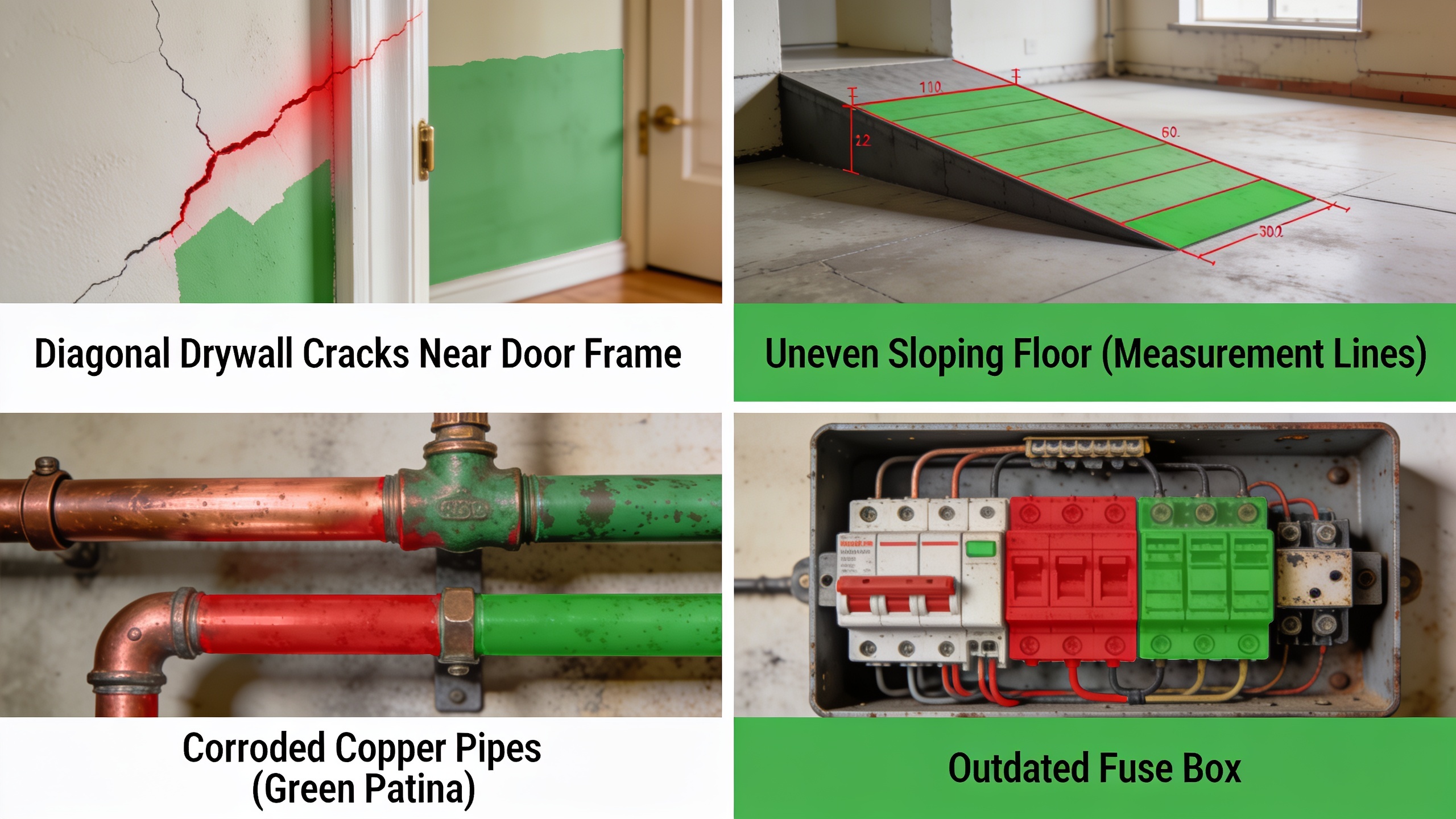
Watch for diagonal cracks in the drywall near door frames, doors and windows that won’t close square, and floors that slope or feel uneven under your feet. Those can all point to the foundation moving, and that’s the expensive kind of problem. Check the roof’s age and condition, from the ground or a ladder if you can. A roof near the end of its life is a five-figure hit almost anywhere in the country. Sniff around the basement for that musty smell and hunt for water stains on ceilings or around windows, which usually means drainage trouble or a leak that’s been quietly working for years.
Old knob-and-tube or aluminum wiring, a fuse box instead of a breaker panel, visible corrosion on exposed pipes. Any of those and you’re looking at a full electrical or plumbing overhaul, not a weekend patch. Price accordingly, or walk.
Cosmetic Issues That Are Usually Good News
Dated kitchens and bathrooms, tired flooring, hideous paint, overgrown landscaping, ugly light fixtures. That’s exactly the kind of “gross” that sends average buyers running while barely touching your renovation budget. These are your friends. They’re what let you negotiate a lower price on a house that’s fundamentally sound, and that’s the entire game. You’re looking for a structurally healthy home in a bad outfit, not a structural nightmare with a low price tag stapled on.
If school districts matter to your search (and they do for a lot of families eyeing bigger older homes in established suburbs), cross-reference any candidate against district ratings before you get emotionally attached. Something like How to Search for Homes Near Top-Rated Schools helps you zero in on neighborhoods where an underpriced older place might still sit inside a strong school zone.
How Do You Estimate Repair Costs Accurately?
You estimate repair costs accurately by getting itemized, in-person quotes from licensed contractors for every major system, then padding the total with at least a 15-20% contingency. What you don’t do is eyeball a number off the square footage and call it good. Renovation costs swing wildly by region, labor availability, and material prices, so treat any figure you find online as a rough planning range, never a quote.
Here’s a general breakdown of the categories that usually drive fixer-upper budgets. These are broad, planning-stage ranges to help you sort “yeah, I can handle that” from “absolutely not.” Confirm the real numbers with local contractors before you commit to an offer.
| Renovation Category | Typical Scope | Relative Cost Impact |
|---|---|---|
| Cosmetic refresh (paint, flooring, fixtures) | Interior surfaces only, no layout changes | Low |
| Kitchen remodel | Cabinets, counters, appliances, sometimes layout | Moderate to High |
| Bathroom remodel | Fixtures, tile, plumbing relocation if layout changes | Moderate |
| Roof replacement | Full tear-off and re-roof | High |
| Foundation repair | Crack sealing to full underpinning | High to Very High |
| Electrical panel/rewiring | Panel upgrade or full home rewire | Moderate to High |
| Plumbing repipe | Replacing old galvanized or lead lines | Moderate to High |
| HVAC replacement | New furnace, AC, or full system | Moderate |
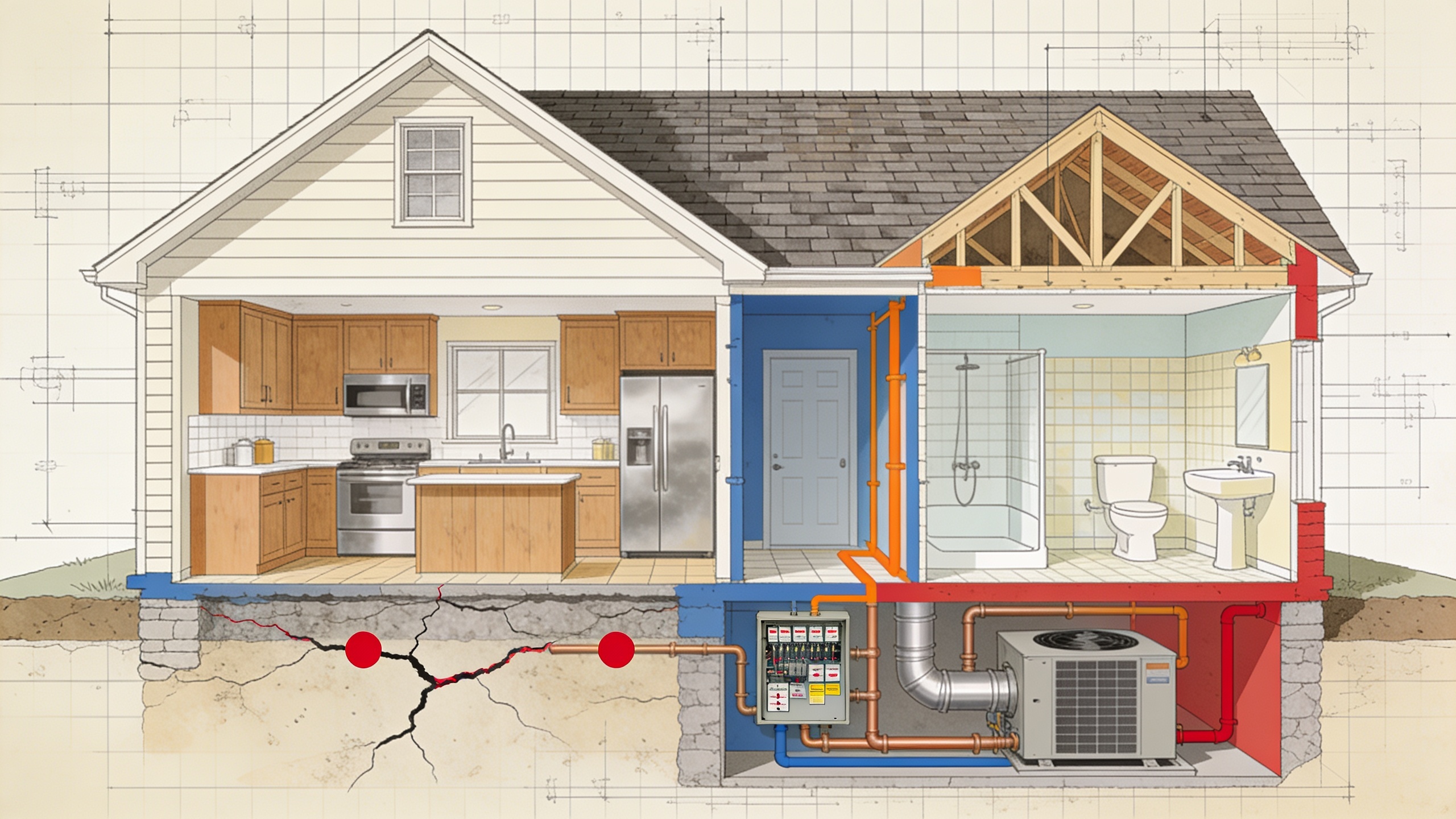
The only way to build a number you can trust is to bring a contractor or licensed inspector with you on a second walkthrough before you write the offer, and get two or three written estimates for anything that smells structural. If you don’t have a trusted contractor already, a matching service like Advisorynavigator can connect you with someone who’s solved this exact problem a hundred times, instead of you squinting at a generic online calculator and hoping.
How Much Should You Offer? The Numbers That Matter
The most you should offer on a fixer-upper is roughly the after-repair value, minus your total renovation budget, minus the profit or equity cushion you want, minus holding and financing costs. Investors call this the “maximum allowable offer,” and it’s the backbone of how experienced buyers avoid overpaying. Works just as well for regular owner-occupants who simply don’t want to torch their equity.
A lot of investors use a shortcut version called the 70% rule: offer no more than 70% of the ARV, minus estimated repairs. So a home with a $300,000 ARV needing $50,000 in repairs would cap out around $160,000 under that rule ($300,000 × 0.70 = $210,000, then subtract the $50,000). It’s a conservative benchmark, not gospel. Owner-occupants with longer time horizons and no pressure to flip can sometimes stretch above it, especially in tight urban markets where there’s nothing to buy in the first place.
Speed matters more than people expect. Per the National Association of Realtors’ 2023 report, the typical home sells in around 24 days in a balanced market, and in hot metros that window shrinks a lot. Realistically-priced fixer-uppers move fast. Which means the buyer still fumbling with their offer math while everyone else has already toured the place is the buyer who loses the good deals. Do the math ahead of time so you can act the day you see something worth acting on.
Where to Find the Best Fixer-Upper Deals
The best fixer-upper deals usually turn up through a mix of on-market listings filtered for “as-is” language, off-market outreach, and local auctions. Not one magic website. Leaning on a single channel is the most common reason otherwise-serious buyers keep missing out.
On the listing sites, hunt for keywords like “as-is,” “handyman special,” “TLC needed,” or “investor opportunity” in the descriptions, and set your filters to catch homes below the neighborhood median, because underpriced, condition-driven listings tend to cluster down there. A platform like Vivienda Lista leans toward curated, comparison-first listings with actual guidance rather than dumping every property in the region on you, which makes it easier to find realistically-priced candidates instead of drowning in duplicate and stale listings.
But some of the strongest deals never touch a public site at all. Probate sales, estate sales, tax-delinquent auctions, direct mail to owners of homes that clearly haven’t been touched in years. Local agents who specialize in distressed or investor sales usually hear about this stuff before it’s public, so building a relationship with one is worth your time even if you’re perfectly happy searching solo.
Oh, and if you’re an investor planning to scale past one rental, know that managing and marketing a bunch of renovated listings becomes its own job eventually. Some investors lean on automated content and SEO tools like RobinRank to keep their rental listings visible online as the portfolio grows, which frees up time to actually go find the next deal instead of babysitting marketing tasks.
Common Mistakes That Turn a Deal Into a Money Pit
The number one mistake with fixer-uppers is underestimating repair costs off a single walkthrough impression instead of contractor-verified numbers, and it’s the biggest reason renovation budgets blow up. A close second is skipping the professional inspection to save a few hundred bucks, which routinely turns into tens of thousands in missed structural problems. Don’t be that person. Please.
Then there’s the contingency reserve, or the total lack of one. Older homes basically always cough up at least one nasty surprise once the walls or floors come open, so a budget with zero cushion is a budget that’s already broken, you just don’t know it yet. Another one people fall into is over-improving for the neighborhood. Dropping high-end finishes into a modest area gets you a gorgeous house that won’t appraise for what you spent, because ARV is capped by the comps around you, not by how much you personally poured in. That one stings.
Financing screwups happen too. Buyers grab a standard mortgage, close, and only then realize they’ve got no approved way to fund the actual renovation, so now they’re stuck living in a half-gutted project. And timelines. Assuming a job takes six weeks when local permitting and contractor scheduling realistically drag it to four months can quietly eat the exact profit margin that made the deal look good in the first place.
Frequently Asked Questions
How do I know if a fixer-upper is actually priced fairly?
Compare the listing price plus your estimated repairs against the after-repair value of similar renovated homes nearby. If the total (purchase price + repairs + a contingency buffer) lands meaningfully below that comparable value, you’re probably looking at a fair price or a genuine deal. If it’s close to or above the comps, you’re overpaying for potential, and potential doesn’t pay you back.
What’s the difference between a fixer-upper and a full teardown?
A fixer-upper is basically sound but needs cosmetic or moderate systems work: kitchens, baths, floors, maybe a roof. A teardown has such deep foundational, structural, or code problems that rebuilding might actually be cheaper (and safer) than renovating. A good inspector can usually tell you which one you’re standing in within a single visit.
Do I need a special loan to buy a fixer-upper?
Not always, but a lot of buyers use renovation-specific financing like FHA 203(k) loans or conventional renovation mortgages, since a standard loan typically won’t include money for repairs. Whether you need one depends on how big the job is and how much cash you’ve got sitting outside the mortgage. Talking to a lending specialist before you shop clears this up fast.
How much contingency should I add on top of the quotes?
Most renovation pros say tack on 15-20% over your total contractor estimates for older homes, because hidden problems behind walls and under floors show up constantly once work starts. Homes over 50 years old, or ones with a long history of deferred maintenance, usually deserve the higher end of that range.
Is it better to buy a fixer-upper as an investor or as an owner-occupant?
Both work, the math just differs. Investors lean on stricter formulas like the 70% rule because they’ve got to protect a margin on a resale or rental timeline. Owner-occupants planning to stay for years can sometimes pay a little more upfront, renovate gradually, and not race a resale clock. But the core discipline (verify your repair costs before you buy) applies to everybody, no exceptions.
Spotting a genuinely good fixer-upper comes down to discipline way more than luck. Know your numbers before you walk in, tell cosmetic from structural on sight, get real contractor estimates instead of gut guesses, and always leave room for the surprise you know is coming. Do that every single time, and a fixer-upper stops being a gamble. It starts being one of the more reliable ways to build equity or kick off a rental portfolio in just about any market.
Leave a Reply