
Buying your first house is probably the biggest check you’ll ever write, and in this market, walking in unprepared is a recipe for either heartbreak or a really expensive mistake. So I want to walk you through how this actually works, start to finish, without the fluff. Whether you’re eyeing a downtown condo or dreaming about a little place in the suburbs with a yard, the roadmap is basically the same.
Quick reality check on prices first. The median existing home in the U.S. was sitting around $410,000 in early 2025, according to the National Association of Realtors, and mortgage rates have been bouncing between 6% and 7% for a while now. Compare that to when people were locking in rates below 4% a few years ago, and yeah, the math has changed. You need a smarter game plan than buyers did a decade ago. Let’s get into it.
Table of Contents
- Why 2025 Is a Unique Year for First-Time Buyers
- Step 1: Assess Your Financial Readiness
- Step 2: Get Pre-Approved, Not Just Pre-Qualified
- Step 3: The House Hunt, From Browsing to Making an Offer
- Step 4: Inspections, Appraisals, and Finally Getting the Keys
- Which Loan Actually Makes Sense for You
- Mistakes That’ll Cost You (Don’t Do These)
- Real Questions People Actually Ask
Why 2025 Is a Unique Year for First-Time Buyers
Every housing cycle has its own personality, and 2025 is a weird one. After years of basically no houses being available, inventory has finally loosened up in a lot of metro areas. Which means, for the first time in a while, you might actually have some negotiating room. Remember the bidding wars of 2021 where people were waiving inspections and offering $50K over asking on a whim? Those days have mostly cooled off.
The catch, of course, is that borrowing money costs a lot more now. So it’s a trade-off. More houses to choose from, but a bigger monthly payment. If you’re somewhere in that 25-to-35 range trying to buy your first place, you’re feeling both sides of that pretty hard.
Here’s the upside though: sellers are willing to play ball again. They’ll knock money off the price, throw in closing cost help, sometimes even toss in a home warranty. That kind of stuff was practically unheard of during the frenzy.
And then there’s remote work, which quietly changed everything. When you’re not driving into an office five days a week, that suburban house with the extra bedroom starts looking a lot better than the tiny condo near downtown. A ton of first-time buyers are wrestling with that exact question right now. Just knowing all this before you start scrolling listings will save you from setting expectations that don’t match reality.
Step 1: Assess Your Financial Readiness
Before you fall in love with some kitchen you saw in a listing photo, you’ve gotta get honest, like uncomfortably honest, about your money. This is the part everyone wants to skip. It’s also the number one reason deals blow up later.
Figure Out What You Can Actually Afford
Lenders love to approve you for more than you should spend. It’s not a favor, trust me. The classic guideline here is the 28/36 rule: housing costs shouldn’t eat up more than 28% of your gross monthly income, and all your debt payments combined (mortgage included) should stay under 36%. So if you’re pulling in $80,000 a year, that’s roughly $1,867 a month for housing, before taxes come into it.
But the mortgage payment isn’t the whole story, and this is where first-timers get blindsided. You’ve also got property taxes (which swing wildly depending on where you live), homeowners insurance, PMI if your down payment is under 20%, HOA fees if you’re in a community that has them, and ongoing maintenance that usually runs 1 to 2% of the home’s value every single year. That last one sneaks up on people. Owning means when the water heater dies, there’s no landlord to call. It’s just you.
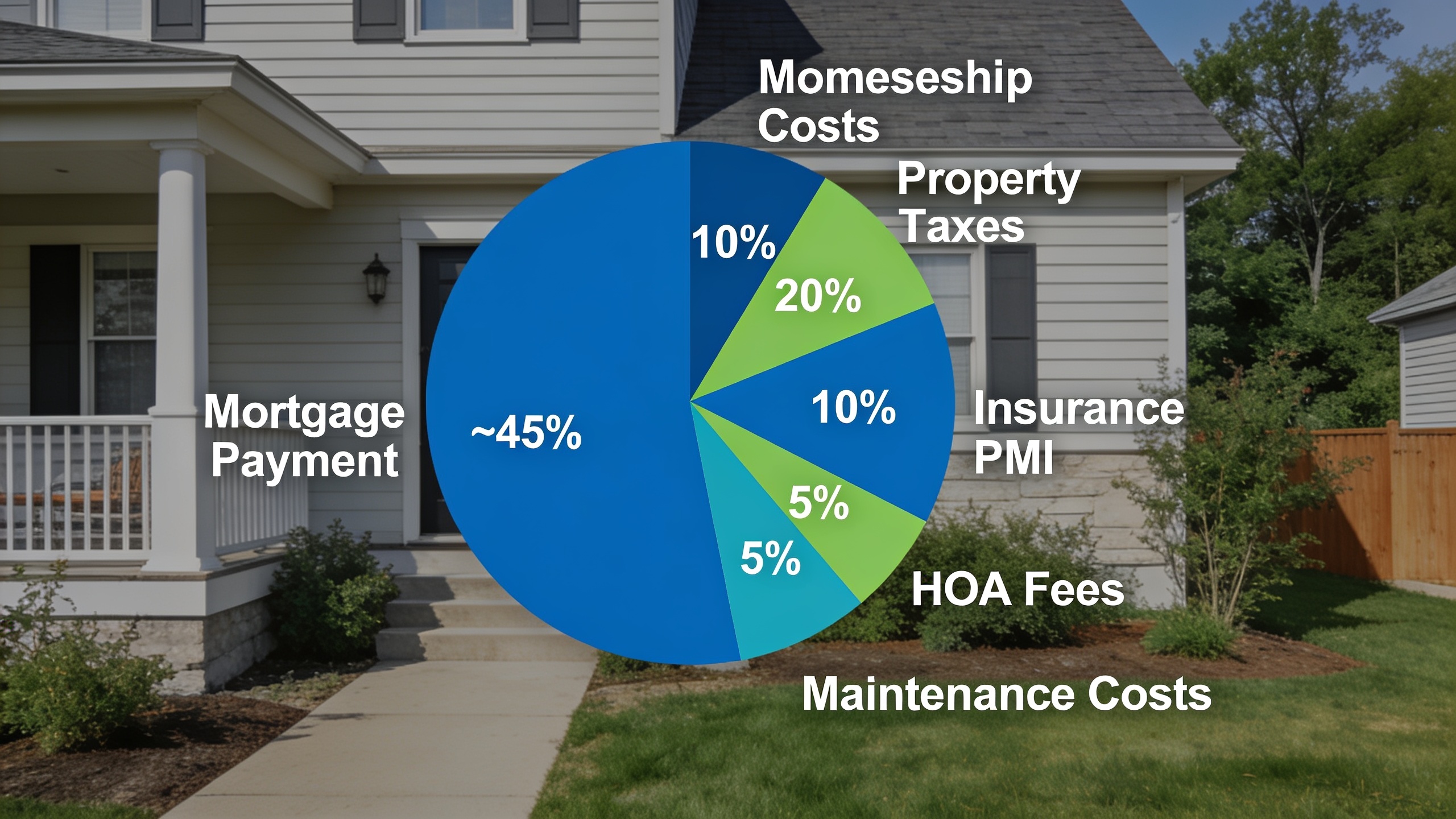
Saving Up: Down Payment and Closing Costs
The old “you need 20% down” advice? Mostly a myth for first-time buyers these days. The actual median down payment for first-timers was around 8% in 2024. FHA loans let you go as low as 3.5%, and some conventional loans dip to 3%.
Don’t forget closing costs though, because they’re real and they add up. Figure somewhere between 2% and 5% of the purchase price for stuff like the appraisal, title insurance, and loan origination fees. On a $350,000 house, that’s another $7,000 to $17,500 you need lying around at closing. Nobody warns you about that until it’s right in front of you.
Fix Your Credit Before You Need It
Your credit score is basically the dial that sets your interest rate, and it matters way more than people think. A 50-point difference can swing your rate enough to cost you tens of thousands over a 30-year loan. Not exaggerating.
So pull your credit report at least six months before you plan to start hunting. That gives you time to dispute any errors (there are always errors), pay down credit card balances, and, importantly, not open any new lines of credit. Timing this early is one of the smartest things you can do.
Step 2: Get Pre-Approved, Not Just Pre-Qualified
These two words sound almost identical and they are not the same thing, and mixing them up can cost you a house.
Pre-qualification is basically a guess. You tell a lender roughly what you make and what you owe, and they spit back a ballpark number. It feels official but it means almost nothing to a seller. Pre-approval is the real deal: the lender pulls your actual documents, verifies your income and debts and credit, and hands you a conditional commitment letter. That letter tells sellers you’re serious and you can actually close. In a competitive situation, it’s the difference between your offer getting looked at and getting tossed.
What You’ll Need to Dig Up
Getting pre-approved means gathering paperwork, so start a folder now. You’ll need two years of tax returns and W-2s, your recent pay stubs (usually the last 30 days), and two or three months of bank statements. If you’ve got extra income from bonuses, freelance gigs, or investments, they’ll want documentation on that too. And they’ll want the full picture on your debts, so student loans, car payments, credit cards, all of it.
Shop Around. Seriously.
Do not just take the first pre-approval and run with it. Rates and fees are all over the place between lenders. The Consumer Financial Protection Bureau says to get quotes from at least three, and there’s a good reason: even a quarter-point difference in your rate adds up to thousands over the life of the loan. And look past the headline rate too, because origination fees, discount points, and estimated closing costs can quietly make a “lower rate” more expensive overall.
One timing note: pre-approval letters usually expire after 60 to 90 days. So don’t rush this step months before you’re actually ready to tour homes, or you’ll just have to redo it.
Step 3: The House Hunt, From Browsing to Making an Offer
Alright, the fun part. This is what everyone pictures when they think about buying a house. But going in with a plan keeps you from making an emotional, “I have to have it” decision you’ll regret.
Know Your Deal-Breakers Ahead of Time
Sit down and write out your must-haves versus your nice-to-haves before you look at a single listing. For most first-timers the big ones are commute distance, number of bedrooms, the school district, and outdoor space. Get clear on this. It’ll stop you and your agent from wasting weekends touring places that were never going to work.
Get Yourself a Buyer’s Agent
A good agent who’s actually working for you, not the seller, is worth their weight in gold when you’re new to this. They’ll catch red flags during a showing that you’d walk right past, they know the local market, and they’ll help you put together an offer that doesn’t embarrass you. Now, one thing worth flagging: after the 2024 NAR settlement, how buyer agents get paid changed. It used to be pretty much always the seller footing the bill, and now it’s more often negotiated directly. So ask about that upfront, don’t assume.
Actually Making the Offer
When you find the one, your agent helps you land on an offer price by looking at what similar homes recently sold for, how long this one’s been sitting, and how much competition there is. Your offer usually spells out the purchase price, an earnest money deposit (typically 1 to 3% of the price, basically your good-faith money), your contingencies for financing, inspection, and appraisal, a proposed closing date, and any concessions you’re asking the seller for.

In the more balanced market we’ve got through much of 2025, you actually have room to keep those inspection and financing contingencies in there, which you basically couldn’t do a couple years ago without getting laughed out of the room. That said, a great house in a hot neighborhood can still pull multiple offers, so don’t get complacent.
Step 4: Inspections, Appraisals, and Finally Getting the Keys
Offer accepted? Congrats, you’re in escrow. Now a handful of important things happen before the house is actually yours.
The Home Inspection
For $300 to $600, a professional inspector crawls through the whole place, the roof, the electrical, the plumbing, the HVAC, the structure, and hands you a report that’s usually way longer than you expect. First-timers are often shocked at the level of detail. If something major turns up, you’ve got options: negotiate repairs, ask for a price cut, or, if your contract has an inspection contingency, walk away entirely. That last option is exactly why waiving the inspection is such a bad idea (more on that later).
The Appraisal
Your lender wants proof the house is worth what you’re paying, so they order an independent appraisal. Most of the time it lines up fine. But if it comes back low, that’s a problem, because the bank won’t lend more than the house is “worth.” Then you’re either renegotiating with the seller, coming up with more cash yourself, or challenging the appraisal with better comps. It’s annoying but it happens.
Final Walkthrough, Then Closing Day
A day or two before you close, you’ll do a final walkthrough, basically a last look to make sure nothing’s changed and any promised repairs actually got done. Then comes closing, where you sign what feels like a hundred documents (your hand will cramp), pay your closing costs and down payment, and get the keys. Start to finish, from accepted offer to closing usually runs 30 to 45 days on a conventional loan.
Which Loan Actually Makes Sense for You
The type of mortgage you pick has a real impact on both your monthly payment and what you pay over the long haul. Here’s how the main options for first-time buyers compare:
| Loan Type | Minimum Down Payment | Minimum Credit Score | Best For |
|---|---|---|---|
| Conventional | 3% – 5% | 620+ | Buyers with good credit and stable income |
| FHA | 3.5% | 580+ | Buyers with lower credit scores or smaller savings |
| VA | 0% | No official minimum (lender-dependent) | Eligible veterans and active-duty service members |
| USDA | 0% | 640+ | Buyers in eligible rural or suburban areas |
| State/Local First-Time Buyer Programs | Varies (often 0-3%) | Varies | Buyers who qualify for local down payment assistance |
FHA loans are the go-to for a lot of first-timers because they’re forgiving on credit, but heads up, in most cases you’re stuck paying mortgage insurance for the life of the loan, which is a real downside. VA loans are honestly some of the best terms out there if you qualify, with zero down required, so if you’ve served, absolutely look into it. USDA loans fly under the radar but they’re great if you’re open to a suburban or rural spot. And don’t sleep on your state’s housing finance agency, a lot of them offer down payment grants or forgivable loans for first-time buyers. Check their website before you commit to anything. Free money is free money.
Mistakes That’ll Cost You (Don’t Do These)
Even people who did their homework mess these up. Save yourself the stress.
Buying too much house is the big one. Just because the bank says $450,000 doesn’t mean you should spend $450,000. Leave room for your actual life, your savings goals, and the fact that your income might dip someday. Maxing out is how people end up “house poor,” where they own a nice place but can’t afford to do anything else.
Then there’s skipping the inspection to look more competitive. I get the temptation, but don’t. You could end up owning a house with a $15,000 roof problem you had no idea about. Not worth it.
And please, do not go buy a car or open a new store credit card between your pre-approval and closing. I’ve genuinely seen people lose their loan over this. Lenders often re-pull your credit right before closing, and a new debt can throw off your debt-to-income ratio just enough to kill the deal. Just… sit still financially until you have the keys.
Two more quick ones. People consistently underestimate how long everything takes and how much it costs after they move in, the utilities, the maintenance, that property tax bump when the county reassesses. And a lot of buyers get so focused on the house that they forget to research the neighborhood. Look into crime, school ratings, whether there’s a giant development planned next door, and flood zones. A perfect house in the wrong spot is just a slow-burning regret.
Real Questions People Actually Ask
How much do I really need saved before I can buy?
More than just the down payment, unfortunately. On top of that, plan for 2 to 5% of the price in closing costs, plus a separate emergency fund covering 3 to 6 months of expenses for after you move in. For a $350,000 house with 5% down, you’re realistically looking at $30,000 to $40,000 total, though it shifts around depending on your loan and location.
What credit score do I actually need?
Most conventional loans want at least 620. FHA will take you down to 580, or even 500 if you throw more money down. But here’s the thing worth knowing: get your score above 740 and you unlock the best rates out there. So spending a few months bumping up your credit before you apply can genuinely lower your monthly payment for years.
Should I buy now or wait for rates to drop?
Honestly, nobody can time this perfectly, and people who try usually lose. The trap with waiting for lower rates is that when rates finally fall, everyone floods back in and prices get pushed up, so you don’t really save. Most advisors I trust say buy when you’re financially ready, not when the market’s “perfect.” You can always refinance later if rates come down. You can’t un-miss a house you loved.
How long does this whole thing take?
Budget 2 to 6 months of actually searching, then 30 to 45 days in escrow once your offer’s accepted. It really depends on how fast you find the right place, what local inventory looks like, and how complicated your financing is.
Do I even need an agent, or can I do this solo?
You can legally buy without one. But a buyer’s agent usually doesn’t cost you directly (though commission stuff got murkier after the 2024 settlement, so confirm), and the negotiation help, paperwork wrangling, and local know-how are tough to pull off on your own, especially your first time. I’d lean toward having one.
Look, buying your first home in 2025 takes patience and a fair amount of prep, but it’s very doable. Get your finances squared away, lock in a real pre-approval, lean on people who know what they’re doing, and you’ll end up with a place that fits your life and your budget. The road from renter to owner isn’t a sprint. With the right plan though, you’ll get there.
You Might Also Find Useful
- Vivienda Lista – Explore curated property listings, comparisons, and expert guidance to simplify your home search.
- Cryptocoinsjournal – Get the latest news and analysis on cryptocurrency markets and blockchain trends.
- Cryptocoinsjournal – Stay informed with educational content and investment insights on digital currencies.
Leave a Reply