If you’re planning to buy a house sometime in the next six to twelve months, fixing up your credit score deserves a spot right at the top of your list, sitting comfortably next to “save for down payment.” And I don’t say that lightly. Your score doesn’t just decide whether a lender says yes to lending you a small mountain of money. It sets the interest rate you’ll be paying, and over 30 years that difference can quietly cost you tens of thousands of dollars. Which is nuts when you think about it.
The good part? Your credit score isn’t carved in stone. Give it a few months of actual effort. Pay down some balances, clean up the errors, stop opening random new accounts, and most buyers can move their number enough to see a real change in the loan they’re offered.
So this is the plan. What to do, the order to do it in, and roughly how long each piece takes before you go applying for anything.
Table of Contents
- Why Your Credit Score Matters So Much for a Home Loan
- What Credit Score Do You Need to Get a Mortgage?
- How to Improve Your Credit Score for a Mortgage by Paying Down Debt
- How to Dispute Credit Report Errors Before You Apply
- Timing New Credit Applications the Right Way
- Building Positive Credit History in the Months Before You Apply
- How Long Does It Actually Take to Improve Your Credit Score for a Mortgage?
- Frequently Asked Questions
Why Your Credit Score Matters So Much for a Home Loan
Your credit score matters because lenders use it as shorthand for one question: how risky is it to hand you hundreds of thousands of dollars? That single number quietly decides your interest rate, which loan programs you qualify for, and how big a down payment you’ll need. It’s a three-digit figure, usually somewhere between 300 and 850 under the FICO model, that basically sums up how you’ve handled borrowed money in the past.
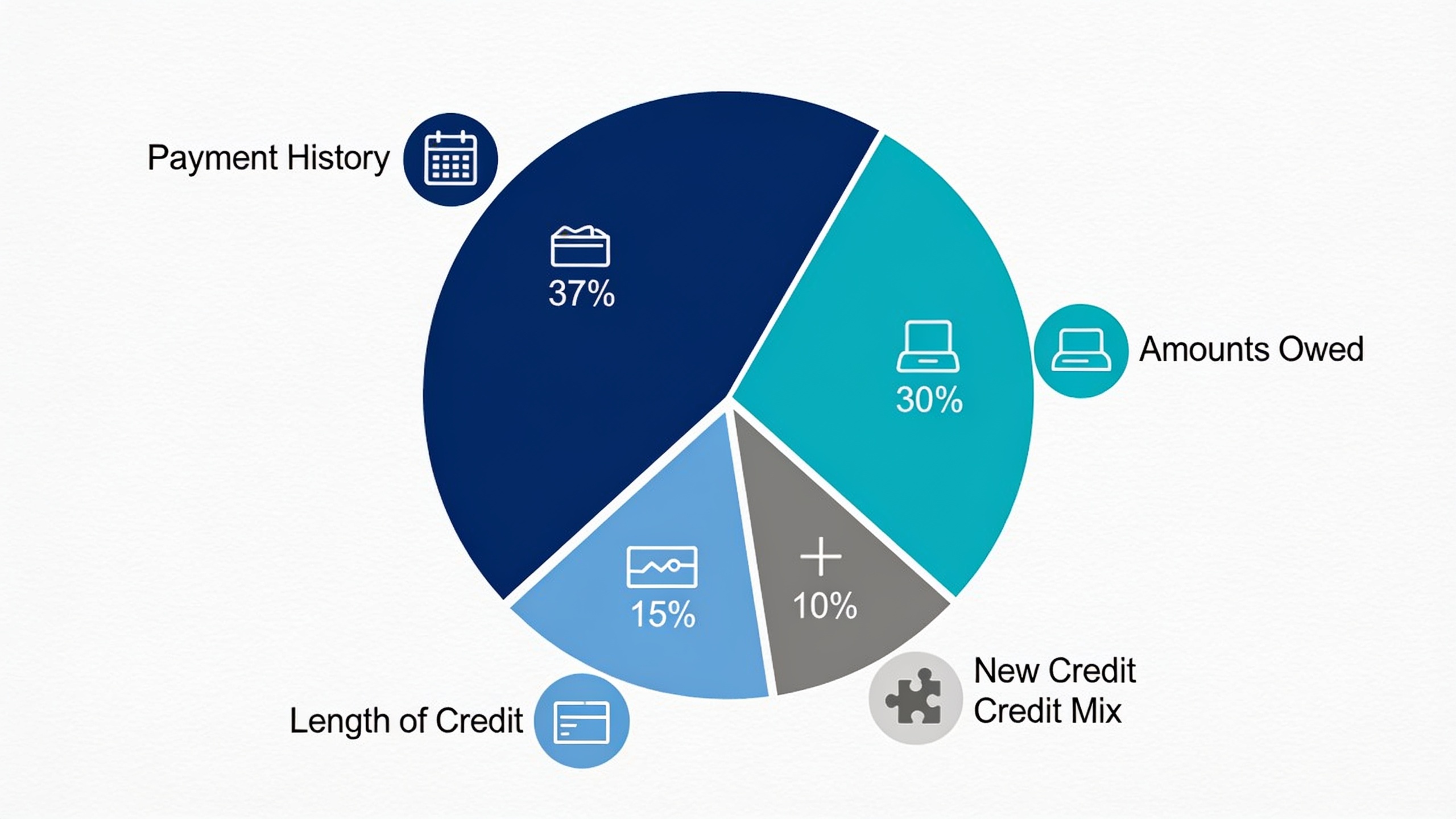
Here’s the part worth memorizing. According to FICO, the company whose scoring model most mortgage lenders actually use, your score gets built from five weighted pieces: payment history (35%), amounts owed against your available credit (30%), how long you’ve had credit (15%), new credit inquiries (10%), and your credit mix (10%). Why does that breakdown matter? Because it tells you exactly where to spend your energy. Missing payments and carrying big balances are the two heaviest anchors on your score. That’s why almost everything below hammers those two things and mostly ignores the rest.
And lenders don’t just check whether you cleared some magic minimum. Mortgage pricing works in tiers. Somebody with a 780 and somebody with a 640 might both get approved for the exact same loan, but the 780 borrower walks away with a noticeably lower rate because, on paper, they’re the safer bet. Before you start falling in love with listings, it’s honestly worth reading up on the whole approval process. Our Mortgage Pre-Approval Guide: What to Do Before You Start House Hunting covers what lenders dig into beyond your credit score, like income docs and your debt-to-income ratio, so nothing catches you off guard later.
What Credit Score Do You Need to Get a Mortgage?
It depends on the loan. Conventional loans backed by Fannie Mae or Freddie Mac generally want at least a 620. FHA loans go lower, allowing scores as low as 580 with 3.5% down, or even 500 to 579 if you can put 10% down, per the Federal Housing Administration’s own guidelines. VA loans, for eligible veterans and service members, don’t technically set a hard minimum, though most individual lenders slap their own floor on top anyway.
But hitting the bare minimum and getting a good rate are two very different animals. Those pricing tiers reward higher scores, so it almost always pays to push your number well past the cutoff before you lock anything in.
| Credit Score Range | General Mortgage Standing | Typical Loan Options |
|---|---|---|
| 760–850 | Excellent | Best available rates on conventional loans |
| 700–759 | Good | Competitive conventional rates, easier approval |
| 620–699 | Fair | Conventional approval possible, higher rate tiers |
| 580–619 | Below average | FHA loans with 3.5% down; conventional unlikely |
| 500–579 | Poor | FHA loans possible with 10% down; limited options |
That table shows the general FICO bands used across the industry, though individual lenders sometimes draw their internal lines a little differently. The takeaway is simple: even jumping 40 or 50 points, say from 660 to 710, can bump you into a better tier and actually lower what you pay every month.
How to Improve Your Credit Score for a Mortgage by Paying Down Debt
The fastest way to move your score is to lower your credit utilization ratio, which is just the percentage of your available revolving credit you’re currently using. Why this one first? Because amounts owed makes up 30% of your FICO score, the second-biggest factor there is, and it’s the one you can actually change fast.
Target Your Credit Utilization Ratio
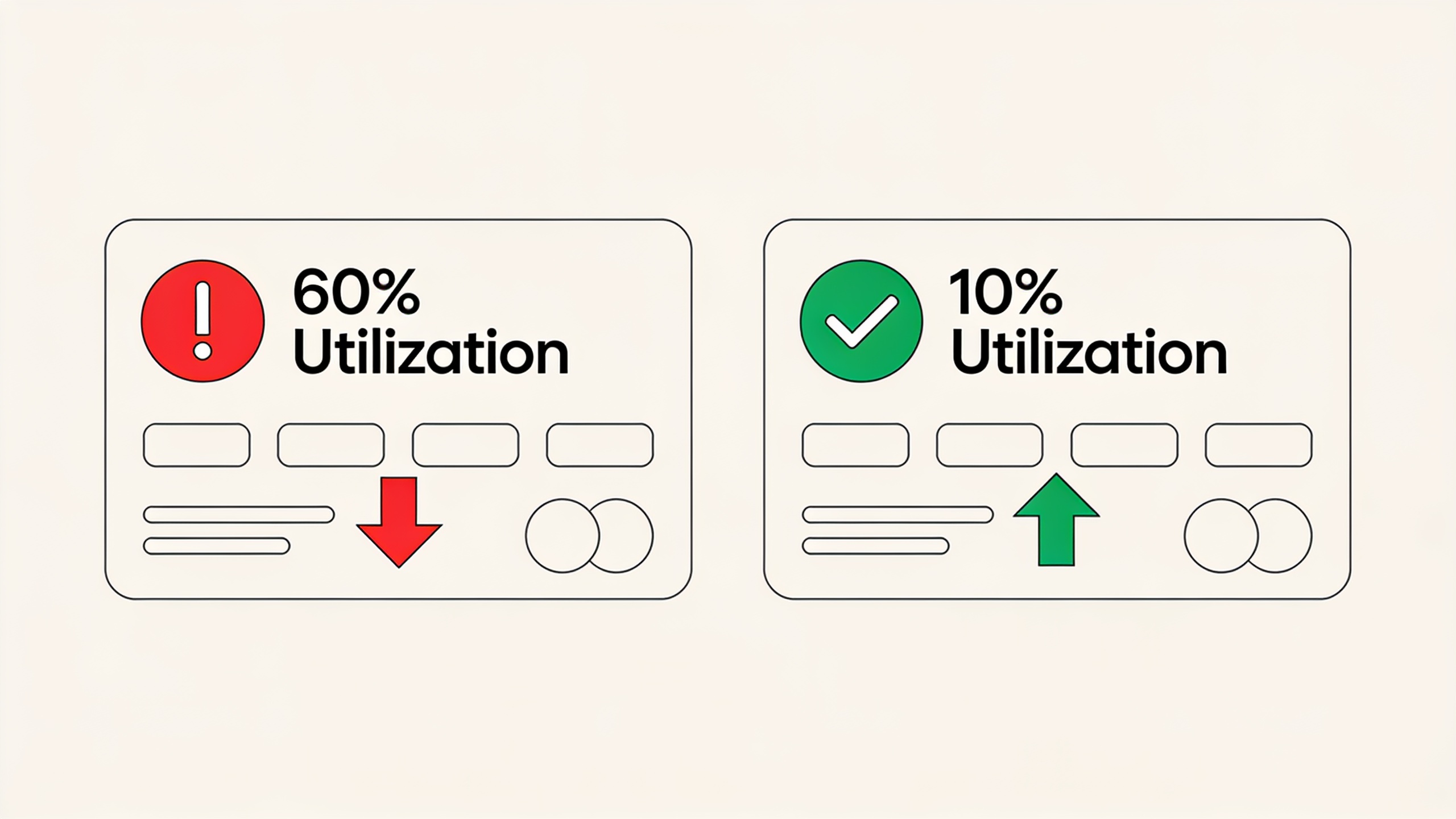
You figure out utilization by dividing your total revolving balances (mostly credit cards) by your total credit limits. FICO itself has pointed out that people with the highest scores tend to keep utilization in the single digits. The old industry rule of thumb says stay under 30%, but if you’re gunning for a mortgage, under 10% is where you want to be. So picture a card with a $10,000 limit and a $6,000 balance sitting on it. That’s 60% utilization. To a lender, that’s a flashing warning light and a real drag on your score. Pay it down toward $1,000 or lower and you can see the number climb within a single billing cycle, since utilization gets recalculated every time your card issuer reports your balance.
Prioritize High-Interest, High-Balance Accounts
Got debt spread across a few cards? Go after the one with the highest utilization percentage, not necessarily the biggest dollar figure. Wiping out a maxed-out $2,000 card usually helps your score more than trimming $2,000 off a $20,000 balance sitting on a card with a $50,000 limit. The maxed card is simply doing more damage, so kill it first.
Don’t Close Paid-Off Credit Cards
I know the urge. You finally pay off a card and want to close the dumb thing and be done with it. Don’t, at least not now. Closing an account shrinks your total available credit, which can actually shove your overall utilization up even though you didn’t add any new debt. It can also chop down your average length of credit history, another scoring factor. Just leave those old paid-off cards open and quiet in the months before you apply.
How to Dispute Credit Report Errors Before You Apply
Disputing errors is probably the most ignored way to bump your score, and it costs you absolutely nothing. Your credit report is the detailed record each of the three big bureaus, Equifax, Experian, and TransUnion, keeps on your accounts, your payment history, and any public records. That report is the raw material your score gets built from. So if there’s junk in there, your score is lower than it should be, full stop.
Federal law lets you pull a free copy from each of the three bureaus once every 12 months through the official site AnnualCreditReport.com, thanks to the Fair Credit Reporting Act. And the Consumer Financial Protection Bureau (CFPB) recommends reading all three, because each bureau can hold slightly different info. An error on one report won’t automatically show up on the others.
Common Errors Worth Disputing
What are you hunting for? Accounts that aren’t even yours. Payments wrongly marked late. Duplicate collection entries for the same debt. Accounts showing the wrong credit limit, which throws off your utilization ratio. And old negative stuff that should’ve fallen off already. Under the Fair Credit Reporting Act, most negative items, late payments and collections included, have to come off after seven years, and bankruptcies after seven to ten depending on the type.
How the Dispute Process Works
You file the dispute straight with whichever bureau is reporting the mistake, online or by mail, and they generally have to investigate within 30 days of getting it, per CFPB guidance. If the furnisher (that’s the bank, lender, or collection agency that reported it) can’t prove the info is accurate, it gets corrected or removed. Since all this takes weeks to grind through, pull your reports and start disputing at least 90 days before you plan to apply. That way corrections have time to actually land and show up in your updated score.
Timing New Credit Applications the Right Way
Timing is a bigger deal here than people realize. The rule of thumb: don’t open any new credit for at least six months before you apply for a home loan. That means no store cards, no auto loans, and yes, no financing that shiny new phone on a payment plan. New credit is only 10% of your FICO score, but its effect on your mortgage reaches way past that little slice.
Why Hard Inquiries Matter
Every time you apply for credit, the lender runs a “hard inquiry,” which usually knocks a few points off your score temporarily. No big deal on its own. But stack up several inquiries in a short stretch and the dings pile on, plus it tells lenders you might be reaching for more debt than you can carry. And here’s the part that really trips people up: mortgage lenders re-pull your credit right before closing. A new account or fresh inquiry showing up between pre-approval and closing day can genuinely tank your approval or bump you into a worse rate, because they reassess your debt-to-income and credit profile right up until the money changes hands.
Hold Off on Big Purchases
This is exactly why mortgage folks beg you not to finance big furniture or appliances on store credit right before or during the process. Now, planning is fine. Half the fun of buying a house is imagining it furnished, and plenty of buyers browse things like the solid oak living room and dining sets from Oak Castle Furniture while they’re still house hunting. Browse all you want. Just wait until after your loan closes to actually open that new financing account or store card, so it doesn’t blow up your credit mid-application.
Building Positive Credit History in the Months Before You Apply
While you’re paying down debt and dodging new credit, you should also be actively reinforcing the good stuff, because payment history is 35% of your FICO score, more than any other single factor. Positive credit history is really just a boring, consistent track record of paying on time and not doing anything reckless with your accounts.
Automate Your Payments
Set up automatic minimum payments on every single credit account, even the ones you’re already attacking aggressively. It takes one accidental late payment to torch months of progress, and honestly, why risk it? A single 30-day late is one of the nastiest things that can hit your score, and per FICO’s own research, the damage can hang around for up to two years even after you bring the account current. Automate it and forget it.
Keep Old Accounts Active
Got an old card you never touch? Throw a tiny recurring charge on it, like a streaming subscription, and pay it off in full every month. That keeps the account reporting activity, which quietly supports your credit mix and length of history, without piling on any real debt. Easy win.
Avoid Co-Signing or Adding Authorized Users Right Before Applying
Becoming an authorized user on someone’s account, or co-signing a loan for a family member, can mess with your credit profile and your debt-to-income math in ways that complicate a mortgage. In the run-up to applying, keep your credit boring and predictable. This is not the moment to do anyone a financial favor.
How Long Does It Actually Take to Improve Your Credit Score for a Mortgage?
Depends heavily on where you’re starting and what’s dragging you down, but most buyers see real movement in 30 to 90 days, with the bigger gains showing up over 6 to 12 months. Pay down a fat credit card balance and you might see results in as little as one billing cycle, since utilization refreshes monthly. Fix an error on your report and you’re looking at 30 to 45 days for it to work through the dispute system. Rebuilding after a late payment or a rough patch of missed ones? That’s the slow one, often six months to a year of steady, on-time payments before your score really reflects the turnaround.
Which is why most mortgage pros tell you to start cleaning things up at least six months before you go shopping for a loan. That gives you breathing room to pay stuff down, dispute errors, and let the score settle before a lender ever pulls it. And if you’re closer to the finish line than that? Don’t panic. Even 60 to 90 days of focused work on utilization and error correction can nudge you into a better tier.
Wrapping Up Your Credit Prep
Prepping your credit before a mortgage isn’t about gaming anybody. It’s about showing a lender the most accurate, strongest version of your financial life. Pay down those revolving balances, fix the errors on your report, and be smart about when you open new credit. Those three moves are the ones that consistently matter most. Give yourself a real runway of a few months, check your actual credit reports instead of guessing, and you’ll show up to your application with a better hand to play and, quite possibly, a lower rate locked in for years.
Frequently Asked Questions
Okay, how much money does a better score actually save me?
Depends on where rates are and how big your loan is, but since lenders price mortgages in tiers, jumping up a tier (say from the 620–699 range into the 700–759 range) usually gets you a lower interest rate. And over a 30-year term, that difference compounds into serious savings.
Will checking my own credit report ding my score?
Nope. Pulling your own report through AnnualCreditReport.com or a similar service counts as a “soft inquiry,” and those don’t touch your score at all. Only hard inquiries, the kind that happen when a lender checks your credit for an actual application, cause that small temporary dip.
Should I pay off collections before I apply?
It depends on the debt and the loan program. Some lenders insist you clear outstanding collections before closing, others don’t care. Talk to your loan officer about any collection accounts, because paying one off doesn’t always wipe it from your report right away, and the effect on your score can be all over the place.
Does my score have to stay exactly the same between pre-approval and closing?
Not identical, no. But lenders do re-check your credit before closing, so any new debt, a missed payment, or a big utilization jump in that window can mess with your final approval or rate. Simple rule: don’t make major financial moves between pre-approval and closing day.
Can I even build a score if I have no credit history at all?
Yeah, it just takes a different route than paying down debt you don’t have. Starting a short track record with a secured credit card, or becoming an authorized user on a family member’s well-managed account, helps establish the payment history and credit mix you need. Just know it usually takes several months of reporting activity before a usable score shows up.